Expert Care Guide for Your White Jewelry Box Armoire
Learn expert techniques to clean, maintain, and prevent yellowing on your white jewelry box armoire, including interior lining and hardware care.

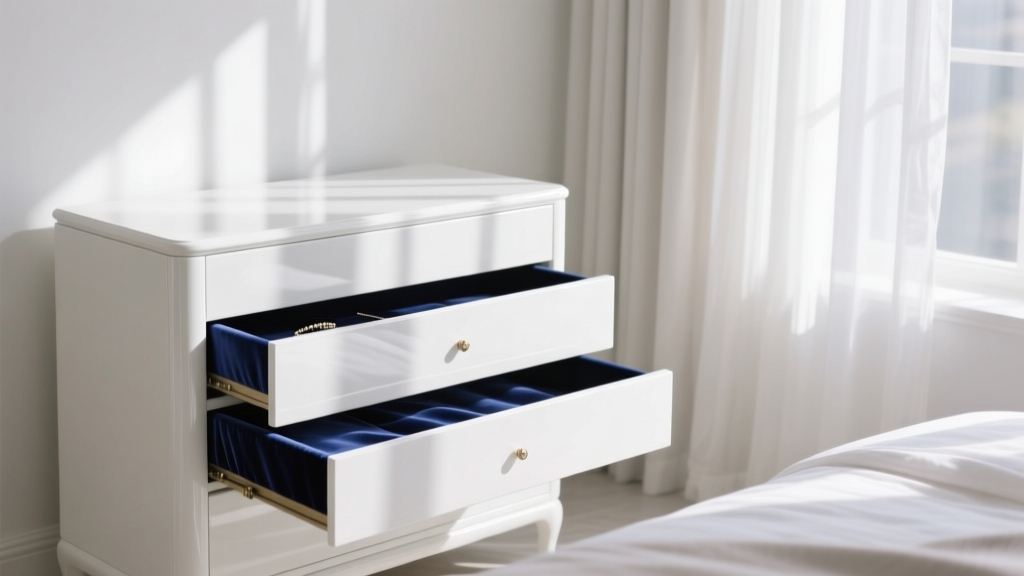
The Chemistry of White Finishes: Why Your Armoire Yellows
A white jewelry box armoire is more than just a storage unit; it is a focal point of luxury and organization in your dressing space. However, maintaining the pristine, snow-white finish requires an understanding of material science and environmental factors. The most common complaint among owners of white furniture is photo-oxidation, a chemical reaction where ultraviolet (UV) light breaks down the molecular bonds in the finish, leading to a yellow or amber tint. This is particularly prevalent in older nitrocellulose lacquers and certain oil-based polyurethanes.
According to the Smithsonian Museum Conservation Institute, painted and lacquered furniture must be shielded from direct UV exposure and extreme humidity fluctuations. In 2026, while many high-end manufacturers utilize advanced aliphatic polyurethane topcoats that resist yellowing, the fundamental vulnerabilities of white pigments remain if subjected to harsh chemical cleaners. Ammonia-based glass cleaners, often mistakenly used on high-gloss armoire mirrors and surrounding frames, will strip the protective wax layers and accelerate the yellowing of the white substrate.
High-Gloss Lacquer vs. Matte Painted Wood vs. Vegan Leather
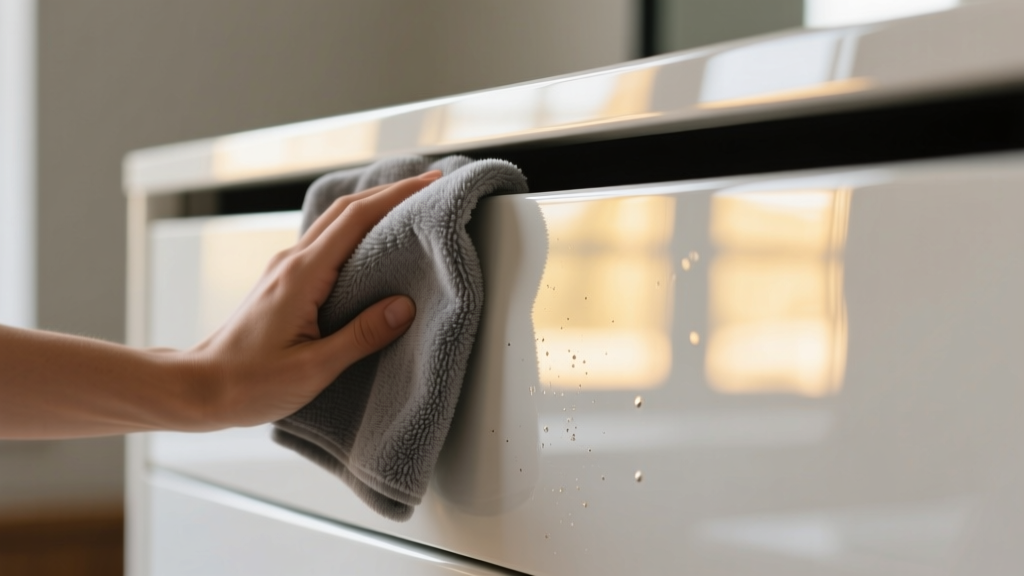
The cleaning protocol for your armoire depends entirely on its exterior material. High-gloss lacquer requires a 300-GSM (grams per square meter) edgeless microfiber cloth to prevent micro-marring. Matte painted wood, conversely, should never be rubbed aggressively, as the friction can burnish the surface, creating unwanted glossy patches. For white vegan leather (polyurethane) wrapped armoires, UV exposure causes the plasticizers to migrate to the surface, resulting in a sticky residue and eventual cracking. These require a dedicated pH-balanced leather conditioner applied bi-annually to maintain structural integrity.
Interior Lining Maintenance: Beyond Simple Dusting
The interior of a premium white jewelry box armoire is typically lined with velvet, micro-suede, or anti-tarnish microfiber. These textiles act as a filtration system, trapping airborne sulfur compounds and moisture that cause silver and copper alloys to tarnish. Over time, these fibers become saturated with dead skin cells, cosmetic dust, and metallic oxidation particles. Simply wiping the interior with a damp cloth will crush the fibers and destroy their anti-tarnish properties.
The 3-Step Micro-Vacuum and Refresh Protocol
To properly maintain the interior ecosystem without damaging delicate ring rolls or necklace snap-hooks, follow this quarterly protocol:
- Step 1: HEPA Extraction. Use a vacuum cleaner equipped with a HEPA filter and a soft-bristle upholstery attachment. Set the suction to the lowest possible setting to avoid pulling the fabric away from its cardboard or MDF backing. Move in the direction of the velvet nap to lift trapped particulates.
- Step 2: Lint Rolling. For stubborn cosmetic dust or pet hair that the vacuum misses, use a fresh, high-tack lint roller. Press gently; do not drag, as dragging can cause micro-tears in aged micro-suede.
- Step 3: Anti-Tarnish Replenishment. The Gemological Institute of America (GIA) emphasizes the importance of controlled storage environments. Even if your armoire features built-in treated cloth, you must supplement it. Place 3M Pacific Silvercloth strips or activated charcoal sachets in the bottom of the deepest drawers, replacing them every six months to maintain optimal sulfur absorption.
Hardware and Hinge Preservation
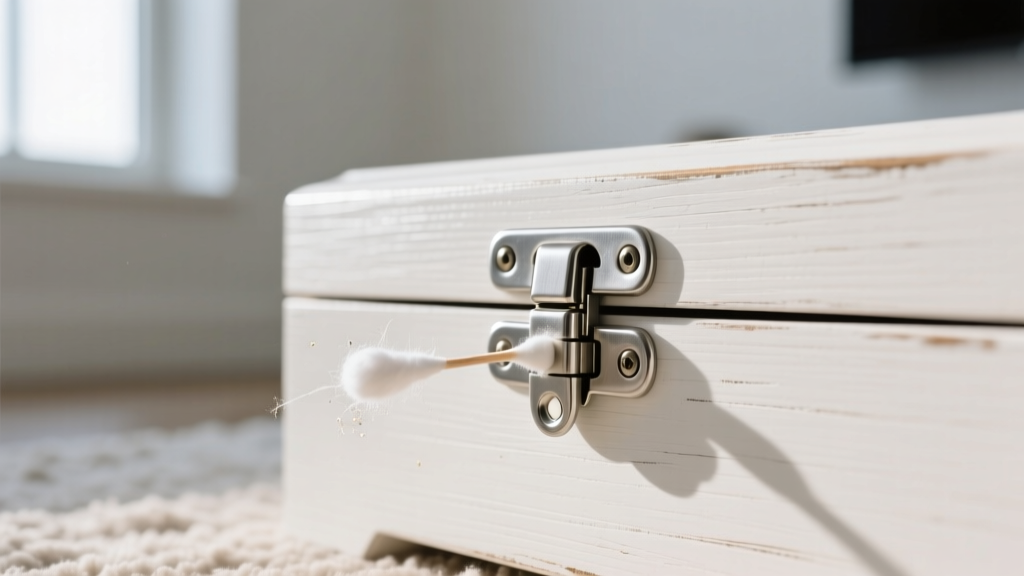
The mechanical components of a large armoire—drawer slides, piano hinges, and locking mechanisms—are under constant stress. On a white armoire, hardware is often finished in contrasting polished chrome, brushed brass, or white enamel. White enamel hardware is highly susceptible to chipping, while brass can develop a patina that some desire but others wish to prevent.
Never use standard WD-40 on armoire hinges. The petroleum distillates in standard lubricants will attract dust, create a black sludge, and can easily drip onto the pristine white interior lining, causing permanent oil stains. Instead, use a PTFE (Teflon) dry lubricant. PTFE sprays dry in seconds, leaving a microscopic, non-stick film that repels dust and eliminates squeaking without the risk of oily runoff.
| Cleaning Agent | Chemical Profile | Safe for White Lacquer? | Safe for Vegan Leather? | Recommended Use Case |
|---|---|---|---|---|
| Ammonia Glass Cleaner | Alkaline (pH 11+) | No (Causes yellowing) | No (Dries out PU) | Avoid entirely on furniture |
| Dish Soap & Distilled Water | Neutral (pH 7) | Yes | Yes | General surface dusting |
| Rubbing Alcohol | Solvent | No (Dissolves topcoat) | No (Strips color) | Only for spot-treating metal hardware |
| Carnauba Wax Paste | Natural Lipid | Yes (High-gloss only) | No | Bi-annual gloss protection |
Environmental Controls and Placement
Where you place your white jewelry box armoire dictates its lifespan. HVAC vents are the silent killers of fine furniture. The constant cycling of dry, heated air in the winter, followed by humid, cooled air in the summer, causes the underlying MDF or solid wood core to expand and contract. This micro-movement eventually cracks the rigid white lacquer finish, particularly around the joints and drawer lips.
Maintain a relative humidity (RH) level between 40% and 50% in the room where the armoire is stored. If the armoire must be placed near a window, apply a UV-blocking window film (rated for 99% UV rejection) to the glass. This preserves the optical brighteners used in the white paint without requiring you to keep the room in perpetual darkness.
Troubleshooting Common White Armoire Failures
Even with meticulous care, accidents happen. Knowing how to triage specific stains can save you from costly professional refinishing.
Perfume and Hairspray Overspray
Aerosolized cosmetics contain alcohols and polymers that can etch into high-gloss white finishes, leaving a dull, frosted haze. If you notice overspray, do not scrub. Instead, lay a warm, damp microfiber cloth over the affected area for three minutes to soften the polymer resin, then gently wipe it away. Follow up with a light application of automotive detailing spray wax to restore the gloss and fill minor etching.
Ink and Dye Transfer
If a leather watch strap or a dyed jewelry pouch transfers color onto the white interior lining or exterior shell, time is of the essence. For hard surfaces, a melamine foam sponge (used dry) can lift the dye through micro-abrasion, but it must be used with extreme caution as it will dull high-gloss finishes. For velvet interiors, use a specialized textile spot-lifter designed for upholstery, testing it first on an inconspicuous area under the bottom drawer.
Tarnish Bleed on White Velvet
Occasionally, heavily oxidized silver left on white velvet will leave a grey or black shadow. This is metallic particulate embedded in the fibers. A standard jewelry polishing cloth will only smear it. Use a specialized vulcanized rubber tarnish-eraser block, gently dabbing (not rubbing) the affected velvet fibers to pull the metallic dust out of the weave.
By treating your white jewelry box armoire as a precision instrument rather than a simple wooden box, you ensure that both the exterior aesthetic and the internal protective environment remain flawless for decades. Consistent, chemically appropriate care is the ultimate safeguard for your most treasured accessories.


