Lori Greiner Jewelry Armoire: Material & Build Analysis
We analyze the Lori Greiner jewelry armoire's materials, comparing its MDF frame, mirrored glass, and velvet lining to solid wood alternatives.

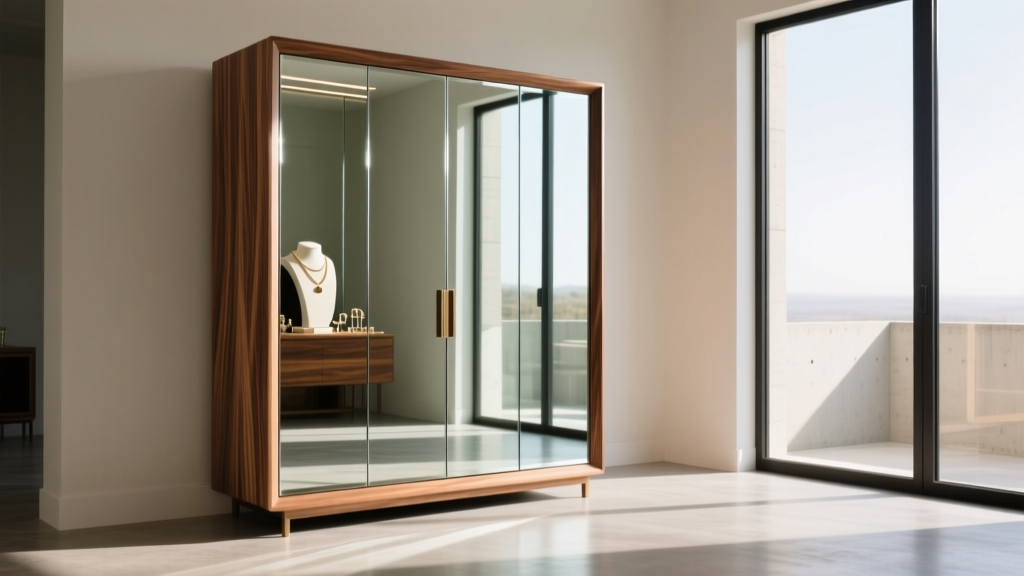
Introduction to the Lori Greiner Jewelry Armoire Line
When it comes to accessible, high-volume jewelry organization, few names carry the immediate recognition of Lori Greiner. The QVC titan and 'Shark Tank' investor has built a massive empire on practical, space-saving organizational tools, with her jewelry armoires standing out as a flagship category. However, as consumers become more educated about material longevity and archival jewelry storage in 2026, a critical question emerges: what exactly are these armoires made of, and how do their materials impact the preservation of precious metals and gemstones?
This comprehensive material analysis dissects the core components of the standard Lori Greiner jewelry armoire—specifically the mirrored, freestanding models. We will evaluate the structural integrity of the composite wood frames, the optical and chemical properties of the integrated mirrors, and the crucial, often-overlooked interior linings that dictate whether your silver will tarnish or your gold will scratch.
Core Frame Materials: MDF vs. Solid Wood vs. Acrylic
The structural backbone of most Lori Greiner mirrored armoires is not solid hardwood, but rather Medium-Density Fiberboard (MDF) or high-density particleboard, finished with a high-gloss polyurethane paint or a thin wood veneer. Understanding the material science of MDF is essential for evaluating the armoire's lifespan.
Density, Weight Bearing, and Screw Retention
MDF is engineered by breaking down hardwood or softwood residuals into wood fibers, combining them with wax and a synthetic resin binder, and forming panels under high heat and pressure. According to the Architectural Woodwork Institute (AWI), standard MDF boasts a density of roughly 600 to 800 kg/m³, making it significantly heavier and more uniform than natural pine or poplar. This uniformity prevents the warping and bowing that plagues solid wood armoires exposed to seasonal humidity fluctuations.
However, MDF has a distinct mechanical weakness: poor screw-holding strength under repetitive stress. The hinges on a heavy mirrored armoire door bear immense dynamic loads. Over time, the coarse threads of standard wood screws can strip the MDF fibers, leading to sagging doors. To mitigate this, higher-end manufacturing runs utilize threaded metal inserts (T-nuts) or specialized particleboard screws with deeper, wider threads to distribute the shear force across a larger surface area of the composite core.
Moisture Resistance and Edge Banding
Unlike solid oak or walnut, untreated MDF acts like a sponge when exposed to liquid water, swelling and losing its structural cohesion. In a bathroom or high-humidity dressing room, the vulnerability lies in the edge banding. If the PVC or melamine edge banding applied to the MDF panels is improperly sealed at the factory, ambient moisture will infiltrate the core. When evaluating any Greiner armoire, inspecting the seam tightness of the edge banding is the single most reliable indicator of long-term durability.
The Mirror Integration: Glass vs. Acrylic (PMMA)
The signature aesthetic of the Lori Greiner armoire is its full-length mirrored facade. But is it real glass or a lightweight acrylic substitute?
Optical Clarity and Scratch Resistance
Authentic models utilize 3mm to 4mm float glass with a silvered backing. Glass provides superior optical clarity (a refractive index of roughly 1.52) and is highly resistant to micro-scratches from routine dusting. In contrast, acrylic (Polymethyl Methacrylate, or PMMA) is 15 times lighter and shatter-resistant, but it has a much lower Mohs hardness rating. Dust particles, which often contain microscopic quartz (Mohs 7), will permanently scratch an acrylic mirror if wiped with a dry cloth.
The Threat of Desilvering (Mirror Rot)
The most common failure mode for mirrored armoires is desilvering, commonly known as 'mirror rot.' This occurs when moisture and airborne sulfur compounds penetrate the edge of the glass and oxidize the silver backing layer, creating black, creeping borders. The Woodworking Network notes that proper edge sealing with a specialized mirror mastic or silicone is required to prevent this. If your armoire is placed in a humid environment, ensuring the mirror edges are sealed with a clear, non-acetic silicone caulk can extend the mirror's life by decades. Never use ammonia-based glass cleaners on these armoires, as the ammonia will seep into the edges and rapidly destroy the silver backing.
Interior Linings: Velvet, Suede, and Tarnish Prevention
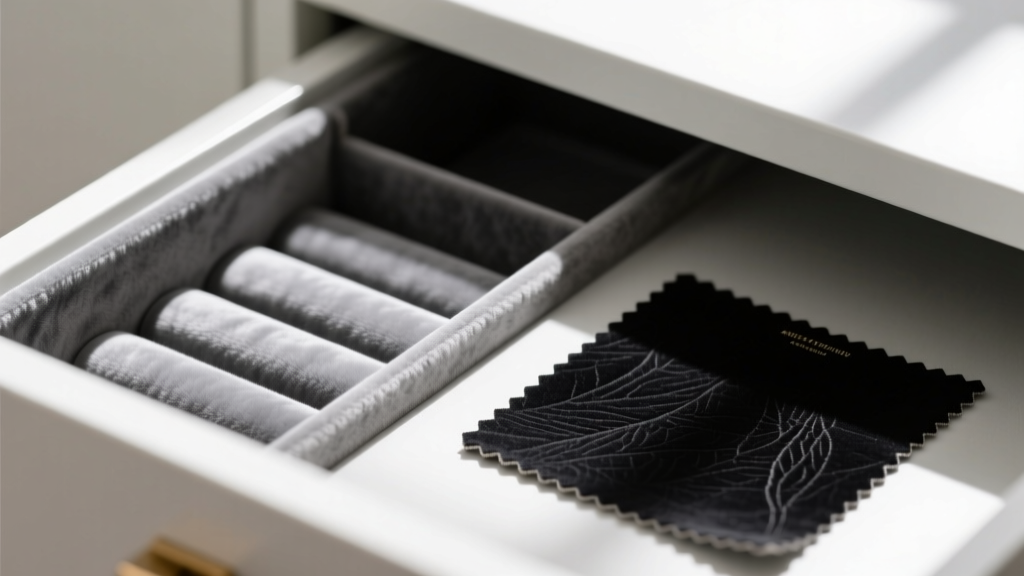
The interior lining of a jewelry armoire is not merely decorative; it is the primary chemical interface between your storage environment and your precious metals. The standard Lori Greiner armoire typically features a grey or black polyester-blend velvet lining. While soft to the touch, standard poly-velvet presents significant chemical risks for long-term storage.
The Chemistry of Tarnish and Lining Materials
Silver tarnishes when it reacts with hydrogen sulfide (H2S) in the air, forming silver sulfide. Standard polyester velvet does not absorb or neutralize these gases; in fact, the dense pile can trap ambient moisture against the metal, accelerating galvanic corrosion if dissimilar metals (like silver and copper) are stored in close proximity. The Gemological Institute of America (GIA) strongly recommends storing silver in environments that actively inhibit sulfur exposure.
| Material Type | Tarnish Inhibition | Moisture Wicking | Scratch Protection | Relative Cost |
|---|---|---|---|---|
| Standard Poly-Velvet | Poor (Traps Moisture) | Low | Excellent | $ |
| Acid-Free Suedette | Moderate | Medium | Very Good | $$ |
| Pacific Silvercloth | Excellent (Absorbs H2S) | High | Good | $$$$ |
| Microfiber Suede | Poor | Low | Excellent | $$ |
Upgrading Your Armoire's Interior
If you own a Lori Greiner armoire lined with standard poly-velvet and plan to store sterling silver or porous gemstones like pearls and opals, you must introduce an active anti-tarnish agent. Placing 3M Anti-Tarnish Strips or camphor blocks in the enclosed drawers will absorb the ambient sulfur compounds before they reach your jewelry. For a permanent upgrade, many archival storage enthusiasts line the bottom of the MDF drawers with custom-cut sheets of treated anti-tarnish flannel, which contains microscopic silver particles designed to sacrifice themselves to sulfur gases, protecting your actual jewelry.
Hardware, Hinges, and Environmental Off-Gassing
The final material considerations involve the mechanical hardware and the chemical footprint of the armoire itself.
Hinge Mechanics and Load Distribution
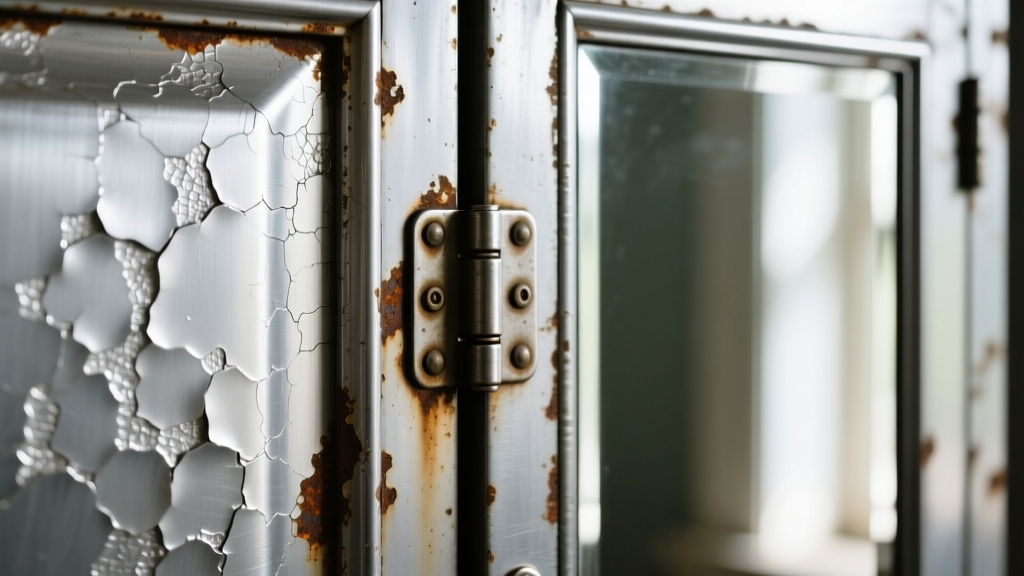
The hinges on full-length mirrored armoires are typically stamped steel or cast zinc alloy. Zinc alloy offers excellent corrosion resistance and allows for complex, decorative casting, but it is brittle under sudden impact. Steel hinges are stronger but prone to surface rust if the electroplated finish (usually a thin layer of nickel or chrome) is compromised. When assembling the armoire, it is vital to calibrate the hinge tension screws to ensure the heavy mirrored door does not pull away from the MDF frame over time.
VOCs and Indoor Air Quality
Because MDF is bound together with formaldehyde-based resins, off-gassing of Volatile Organic Compounds (VOCs) is a legitimate concern, particularly when the armoire is first unboxed. In 2026, strict indoor air quality regulations mean that reputable manufacturers must comply with CARB Phase 2 or TSCA Title VI standards, which severely limit formaldehyde emissions to less than 0.11 ppm. Nevertheless, it is highly recommended to unbox and air out any composite wood armoire in a well-ventilated garage or patio for 48 to 72 hours before moving it into a bedroom or dressing area. This prevents the initial burst of VOCs from settling onto your jewelry or affecting your indoor air quality.
The Verdict: Is the Material Build Worth the Price?
The Lori Greiner jewelry armoire represents a triumph of accessible design and spatial efficiency, but it is not an archival-grade vault. The use of MDF ensures a warp-resistant, heavy, and stable frame at a fraction of the cost of solid hardwood, while the real glass mirror provides excellent optical clarity for outfit checking. However, the standard polyester velvet lining and the inherent vulnerabilities of MDF edge-banding and mirror desilvering require proactive maintenance from the owner.
By understanding the material properties of your storage unit—sealing the mirror edges, reinforcing the hinge points, and supplementing the interior lining with anti-tarnish agents—you can transform this mass-market organizational tool into a highly effective, long-lasting sanctuary for your jewelry collection.


