Thomas Pacconi Jewelry Armoire Care & Maintenance Guide
Preserve your Thomas Pacconi jewelry armoire with expert cleaning tips for wood finishes, velvet interiors, mirrors, and anti-tarnish upgrades.

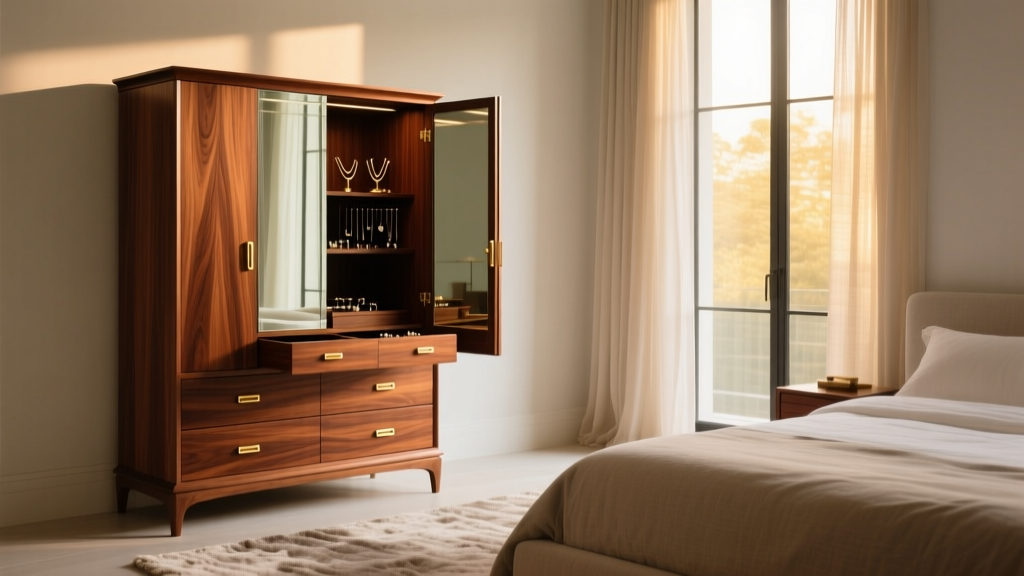
The Anatomy of an Heirloom Storage Piece
Thomas Pacconi jewelry armoires represent a high-water mark in functional, elegant jewelry storage. Known for their solid wood construction, beveled mirrors, and plush velvet or suedette interiors, these pieces are designed to last generations. However, the diverse materials used in their construction—from nitrocellulose lacquer wood finishes to delicate silver-backed mirrors and fibrous interior linings—require highly specific maintenance protocols. As of 2026, modern conservation techniques allow us to preserve these armoires far better than traditional, often damaging, household cleaning methods.
Neglecting the specific material needs of your armoire can lead to mirror desilvering, velvet matting, sticky drawer tracks, and an internal micro-climate that actually accelerates jewelry tarnish. This comprehensive guide breaks down the exact care, maintenance, and cleaning procedures required to keep your Thomas Pacconi armoire in pristine, museum-quality condition.
Exterior Preservation: Wood and Mirrors
The exterior of a Thomas Pacconi armoire is typically crafted from oak, cherry, or walnut veneers over solid wood cores, sealed with either a polyurethane topcoat or a traditional lacquer. The large front mirrors are often beveled and feature a delicate silver or aluminum backing.
Preventing Mirror Desilvering
The most common mistake owners make is spraying glass cleaner directly onto the armoire's mirror. Ammonia-based cleaners can seep behind the beveled edges and degrade the reflective backing, causing "black edge rot" or desilvering. According to the American Institute for Conservation, moisture and harsh chemicals are the primary enemies of antique and vintage mirror backings.
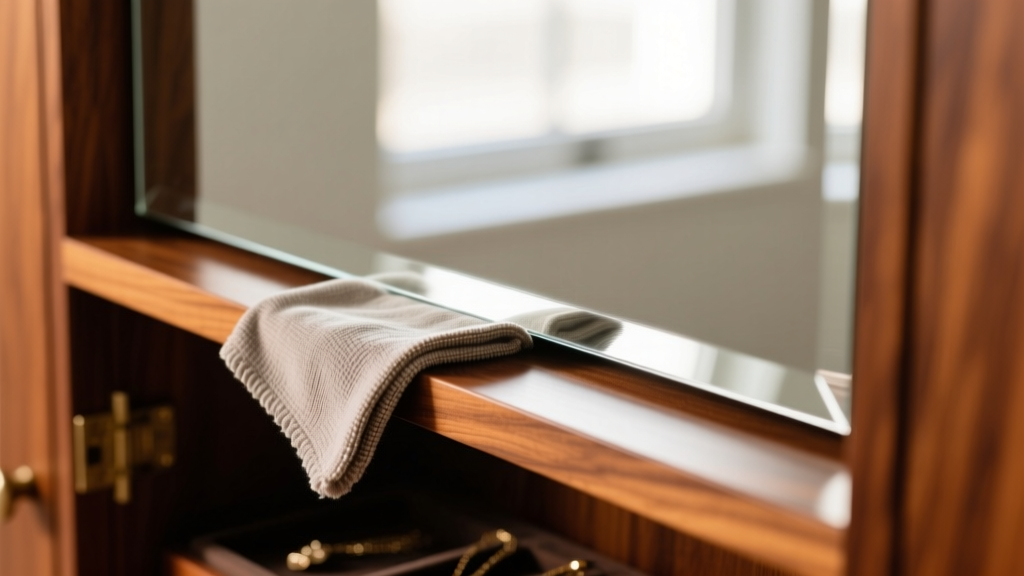
- The Correct Method: Spray a specialized, ammonia-free glass cleaner (or a 50/50 mix of distilled white vinegar and distilled water) directly onto a low-lint microfiber cloth.
- Application: Wipe the mirror gently, stopping a half-inch away from the beveled edge or wooden frame to prevent liquid migration.
- Drying: Immediately buff dry with a secondary, completely dry microfiber cloth to prevent water spotting.
Nourishing the Wood Veneer and Finish
Dusting should be performed weekly using a clean, dry electrostatic duster. For deeper cleaning, avoid silicone-based polishes (like standard aerosol sprays), which create a cloudy buildup over time. Instead, use a high-quality paste wax (such as carnauba-based wax) once every 12 to 18 months. Apply a thin layer with a soft cotton cloth, let it haze for 15 minutes, and buff it out. This feeds the wood and provides a protective barrier against humidity fluctuations, as detailed in Bob Vila's wood care archives.
Interior Care: Velvet, Suedette, and Flocking
The interior lining of your armoire is a magnet for microscopic debris. Every time you handle jewelry, you transfer trace amounts of skin oils, dead skin cells, and cosmetic residue onto the fabric. Over time, this creates a gray, matted appearance and can actually transfer acidic oils back onto your stored metals.
Extracting Embedded Micro-Dust
Do not use standard vacuum attachments, as the hard plastic edges can snag and tear the velvet pile. Instead, use a HEPA-filtered micro-vacuum equipped with a soft horsehair brush attachment. Run the brush gently in the direction of the velvet nap to lift embedded dust without crushing the fibers.
Spot Treatment for Oils and Tarnish Transfer
If you notice dark smudges (often caused by oxidized silver rubbing against the fabric) or oil stains, spot cleaning is required.
- Mix a few drops of pH-neutral baby shampoo into a bowl of distilled water.
- Dip a soft-bristled upholstery brush into the suds only—avoid soaking the brush in the water.
- Gently agitate the stained area in a circular motion.
- Blot immediately with a dry, absorbent microfiber towel.
- Allow the drawer to remain open in a low-humidity room for 24 hours to ensure the underlying wood substrate does not warp from trapped moisture.
Mechanical Maintenance: Hinges and Drawer Glides
Thomas Pacconi armoires feature numerous small drawers and heavy drop-down doors. Over time, wooden tracks can swell, and metal hinges can stiffen. A common but disastrous fix is using standard WD-40, which attracts dust, turns into a gummy sludge, and stains the interior fabric.
For sticky wooden drawer tracks, rub a block of pure beeswax or paraffin wax along the bottom runners. For metal hinges and modern roller glides, use a PTFE (Polytetrafluoroethylene) dry lubricant spray. PTFE dries completely clear, leaves no oily residue, and provides long-lasting friction reduction without risking your jewelry or the armoire's interior lining.
Cleaning Agents: What to Use and What to Avoid
Using the wrong chemical agents can permanently damage the composite materials of your jewelry storage. Refer to this quick-reference matrix before reaching for a cleaning supply.
| Armoire Component | Safe Cleaning Agents | Agents to Strictly Avoid |
|---|---|---|
| Wood Finish | Carnauba paste wax, damp microfiber, mild dish soap | Silicone sprays, bleach, ammonia, abrasive scrubs |
| Beveled Mirrors | Distilled vinegar/water mix, ammonia-free glass cleaner | Ammonia, abrasive sponges, direct liquid spraying |
| Velvet / Suedette | HEPA vacuum, pH-neutral upholstery foam, distilled water | Harsh stain removers, excessive water, steam cleaners |
| Drawer Tracks | Beeswax, PTFE dry lubricant, graphite powder | WD-40, petroleum jelly, cooking oils, wet silicone |
Climate Control and Anti-Tarnish Integration
An enclosed armoire can trap ambient humidity and volatile organic compounds (VOCs) emitted by the wood or adhesives, creating a micro-climate that accelerates tarnish. According to the Gemological Institute of America (GIA), silver tarnish is primarily caused by a reaction with hydrogen sulfide and sulfur dioxide in the air, compounded by high humidity.
To transform your Thomas Pacconi armoire into a true preservation vault, implement the following upgrades:
- Activated Charcoal Sachets: Place small, breathable bamboo charcoal bags in the corners of the larger drawers to passively absorb excess moisture and VOCs.
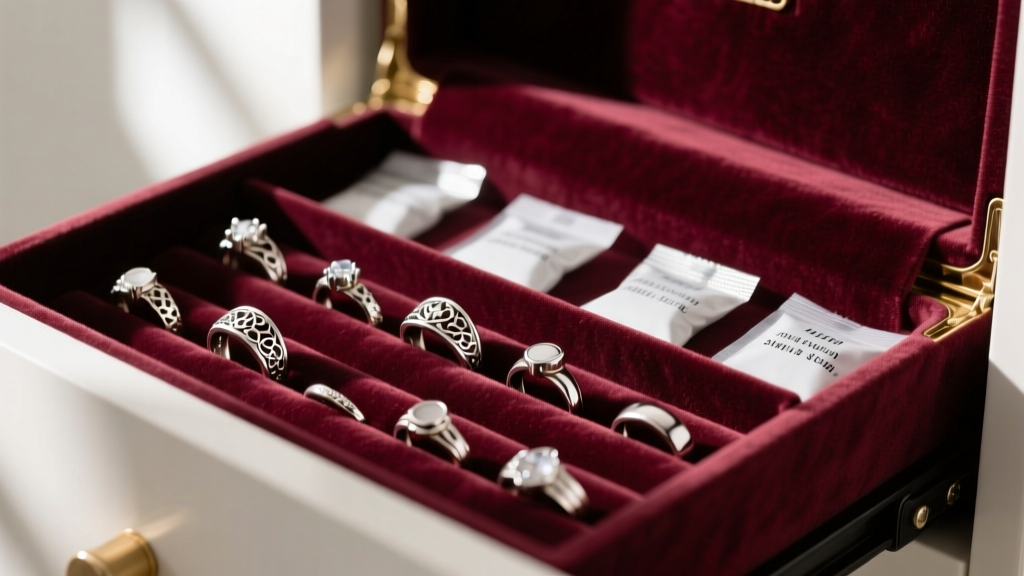
- Anti-Tarnish Strips: Utilize 3M or similar anti-tarnish intercept strips. These contain copper-based polymers that chemically bind to airborne sulfur gases before they can reach your sterling silver. Replace these strips every 6 to 12 months.
- Pacific Silvercloth Liners: For your most valuable heirloom pieces, line the bottom of specific drawers with Pacific Silvercloth, a specialized cotton flannel embedded with microscopic silver particles that sacrifice themselves to neutralize sulfur.
- Silica Gel Desiccants: Use indicating silica gel packets (which change color when saturated) in the ring roll compartments. Recharge them by baking them in an oven at 250°F (120°C) for two hours when they lose their effectiveness.
The 2026 Seasonal Maintenance Checklist
To maintain the structural integrity and aesthetic brilliance of your armoire, adhere to this bi-annual schedule:
Spring Maintenance
- Empty all drawers and HEPA-vacuum the velvet interiors.
- Inspect mirror edges for early signs of desilvering.
- Replace expired anti-tarnish strips and recharge silica gel packets.
- Apply PTFE dry lubricant to all metal hinges and door supports.
Autumn Maintenance
- Apply a fresh coat of carnauba paste wax to the exterior wood veneer.
- Spot-clean any oil or cosmetic transfers on the suedette lining.
- Wax the wooden drawer runners with pure beeswax to prepare for winter humidity drops.
- Check the armoire's leveling feet to ensure the heavy, multi-drawer structure remains perfectly plumb, preventing long-term joint stress.
Expert Insight: Never place a Thomas Pacconi armoire directly in the path of an HVAC vent or in direct, unfiltered sunlight. UV radiation will bleach the cherry or walnut veneers over time, while rapid temperature shifts from heating vents will cause the wood to expand and contract, eventually cracking the lacquer finish and loosening the mirror adhesives.
By treating your Thomas Pacconi jewelry armoire not just as a piece of furniture, but as a specialized preservation environment, you ensure that both the storage unit and the precious metals it houses remain flawless for decades to come.


