Beyond the Claire's Jewelry Box: Material Upgrades for Fine Metals
Discover why your starter Claire's jewelry box damages fine metals. Compare PU leather, MDF, and archival materials for safe jewelry storage.

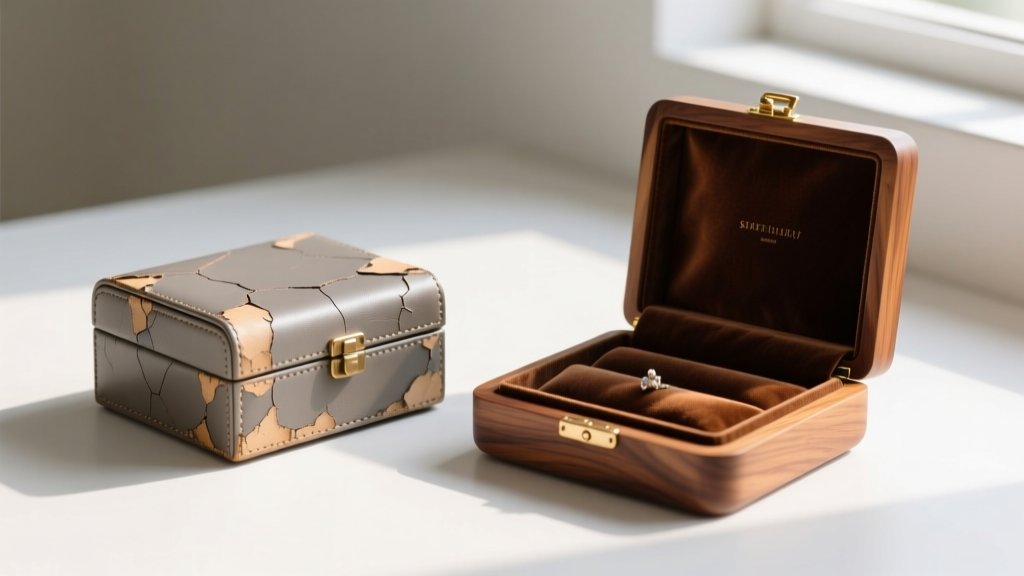
For many jewelry enthusiasts, the very first piece of storage they ever owned was a classic Claire's jewelry box. These mass-market, brightly colored organizers are a nostalgic rite of passage, perfect for housing early collections of costume jewelry, enamel charms, and fashion accessories. However, as your collection matures in 2026—incorporating solid sterling silver, gold vermeil, precious gemstones, and high-karat gold—the materials used in these entry-level boxes transition from mere storage vessels to active chemical threats.
Upgrading your storage is not just about aesthetics; it is a critical exercise in material science and preservation. In this guide, we dissect the exact material properties of standard starter boxes, explain the chemistry of how they degrade fine metals, and provide a comprehensive framework for selecting archival-grade upgrades.
The Material Anatomy of a Starter Box
To understand why a standard Claire's jewelry box fails to protect fine jewelry, we must break down its three primary material components and their inherent chemical instabilities.
1. The Core: MDF and Particleboard
Most affordable jewelry boxes utilize Medium-Density Fiberboard (MDF) or particleboard for their structural core. These engineered woods are bound together using urea-formaldehyde resins. Over time, especially in environments with fluctuating humidity, these resins undergo slow hydrolysis, off-gassing formaldehyde and other volatile organic compounds (VOCs). While formaldehyde itself is more of a respiratory irritant, the acidic micro-environment it creates inside a closed, unventilated box accelerates the corrosion of base metals and degrades the nacre of pearls.
2. The Exterior: Polyurethane (PU) Faux Leather
The outer wrapping is typically a polyurethane (PU) synthetic leather. PU is highly susceptible to a degradation process known as hydrolysis. Within three to five years, the polymer chains break down, causing the material to become sticky, flake, and peel. This sticky residue can transfer to the interior of the box or to your hands, eventually contaminating the porous surfaces of gemstones like turquoise and opals.
3. The Lining: Synthetic Velvet and Polyester
The interior lining is almost universally a synthetic polyester or nylon velvet. While soft to the touch, these petroleum-based plastics are entirely non-breathable. They trap ambient humidity against the metal surfaces. Furthermore, the dyes used in cheap synthetic velvets are often not colorfast and can transfer onto porous stones or light-colored metals when exposed to high humidity.
The Chemistry of Tarnish and Adhesive Off-Gassing
The most devastating flaw of mass-market jewelry storage lies in the industrial adhesives used to bind the fabric lining to the MDF core. According to the Gemological Institute of America (GIA), environmental pollutants are a primary catalyst for jewelry degradation. Many cheap industrial glues contain trace amounts of sulfur and chlorine compounds.
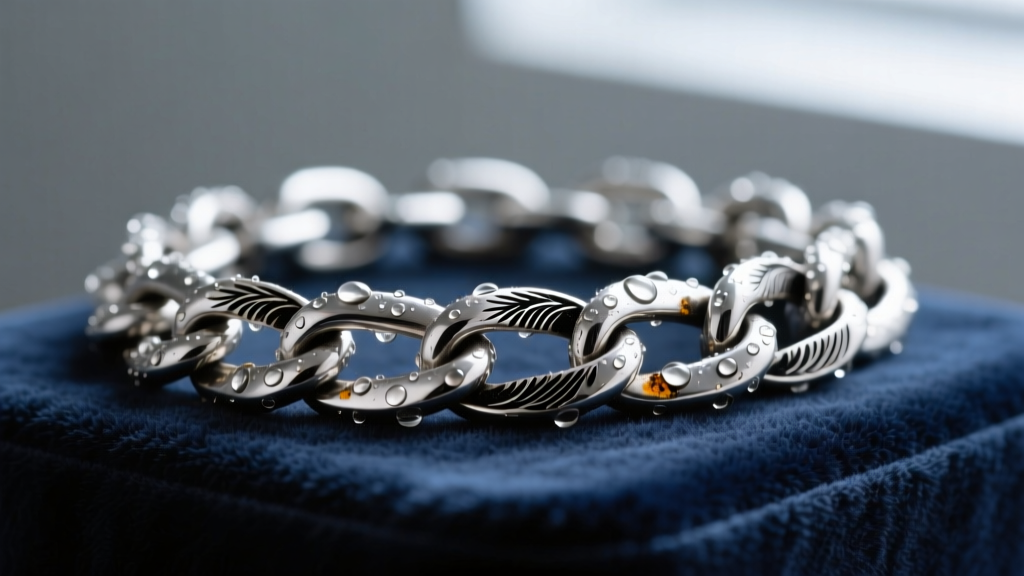
When sterling silver (an alloy of 92.5% silver and 7.5% copper) is exposed to sulfur compounds off-gassing from these adhesives, a rapid chemical reaction occurs, forming silver sulfide ($Ag_2S$). This manifests as the black, corrosive layer we recognize as tarnish. In a sealed Claire's jewelry box, the concentration of these off-gassed compounds has nowhere to dissipate, creating a highly concentrated sulfur chamber that can severely tarnish a pristine silver chain in a matter of weeks.
The Oddy Test Standard: In museum conservation, materials are subjected to the "Oddy Test" to determine if they off-gas corrosive volatiles. Standard MDF and synthetic adhesives fail this test miserably, causing severe corrosion on silver, copper, and lead coupons within 28 days. Fine jewelry demands storage materials that would pass rigorous conservation standards.
Material Comparison Matrix: Starter vs. Archival
When planning your 2026 storage upgrade, use this comparison matrix to understand the functional differences between entry-level materials and professional archival alternatives.
| Component | Standard Claire's Box Material | Archival Upgrade Material | Chemical Risk Profile | Expected Lifespan |
|---|---|---|---|---|
| Structural Core | MDF / Particleboard | Kiln-Dried Solid Walnut or Cherry | MDF off-gasses acidic VOCs; Solid wood is stable if properly sealed. | 3-5 Years vs. Lifetime |
| Exterior Shell | PU Faux Leather | Full-Grain Leather or Cast Acrylic | PU suffers hydrolysis (peeling); Acrylic is chemically inert. | 2-4 Years vs. Decades |
| Interior Lining | Polyester Synthetic Velvet | Acid-Free Suedette or Pacific Cloth | Polyester traps moisture; Archival linings breathe and neutralize gases. | 5 Years vs. 15+ Years |
| Adhesives | Sulfur/Chlorine-based Industrial | pH-Neutral Starch or Water-Based | Industrial glues cause rapid silver sulfide formation. | N/A |
Archival Linings: The Science of Protection
The lining is the only material that maintains prolonged, direct contact with your jewelry. Upgrading this layer is the single most impactful change you can make for your collection's longevity.
Pacific Silvercloth and Zinc Carbonate
For sterling silver collections, Pacific Silvercloth remains the gold standard. Unlike standard anti-tarnish strips that merely absorb gases, Pacific cloth is embedded with microscopic particles of zinc carbonate during the manufacturing process. The zinc carbonate acts as a sacrificial anode, preferentially reacting with hydrogen sulfide and sulfur dioxide in the air before those gases can reach your silver. According to The Silver Institute, this active neutralization process keeps silver polished for years without the need for abrasive chemical dips.
Acid-Free Suedette for Gold and Gemstones
For gold, platinum, and gemstone jewelry, an acid-free, pH-neutral suedette (a high-grade microfiber) is ideal. The primary concern here is the Mohs scale of mineral hardness. While gold is relatively soft (Mohs 2.5-3), diamonds and sapphires are extremely hard (Mohs 9-10). A high-quality suedette provides a dense, non-abrasive cushion that prevents micro-scratches on precious metals while ensuring that harder gemstones do not tear the fabric, which can happen with cheap, loosely woven synthetic velvets.
Structural Cores and Exterior Shells
Moving away from MDF requires an understanding of safe woods and plastics. Not all natural materials are safe for jewelry storage.
The Danger of Cedar and Pine
While cedar is famous for repelling moths in clothing closets, it is highly detrimental to jewelry. Cedar and pine contain natural aromatic oils and acidic resins that off-gas continuously. These acids can etch the surface of pearls, corrode copper alloys (like rose gold), and degrade the silk threads used in pearl stringing.
The Safe Woods: Walnut and Cherry
Kiln-dried American Black Walnut and Cherry are the premier choices for heirloom jewelry boxes. They are dimensionally stable, meaning they will not warp and crush delicate chains when humidity shifts. Crucially, they must be finished with an inert sealant, such as a water-based polyurethane or traditional shellac, to lock in any residual natural tannins.
Acrylic (PMMA) vs. PVC
If you prefer modern, transparent storage to view your collection, you must ensure the plastic is cast acrylic (PMMA) and not Polyvinyl Chloride (PVC). PVC off-gasses plasticizers and chlorine, which causes a destructive phenomenon known as "bronze disease" on copper-bearing alloys and creates a highly acidic environment that destroys organic gems like coral and amber. The American Institute for Conservation strictly advises against PVC in any archival storage environment.
Transitioning Your Collection Safely
Upgrading from a Claire's jewelry box to an archival system requires a methodical approach to ensure you do not trap existing contaminants inside your new storage environment.
- Deep Clean Before Storage: Never transfer worn jewelry directly into a new archival box. Skin oils, lotions, and environmental sulfur must be removed. Wash pieces in a mild, phosphate-free dish soap and dry them completely with a lint-free microfiber cloth.
- Condition the New Environment: If your new wooden box has a strong "new wood" or finish odor, let it air out in a well-ventilated room for 72 hours before introducing jewelry.
- Implement Active Humidity Control: Place indicating silica gel packets (which change color when saturated) in the hidden compartments of your new box. Maintain an internal relative humidity between 40% and 50%. Below 30%, organic gems like opals and emeralds risk crazing and cracking; above 60%, mold and rapid oxidation become significant risks.
Your jewelry collection is an investment of both capital and sentiment. By understanding the material science of storage and leaving the limitations of mass-market starter boxes behind, you ensure that your fine metals and gemstones remain as pristine in 2046 as the day you acquired them.


