Troubleshoot a Granddaughter Jewelry Box: Tarnish & Tangle Fixes
Learn how to troubleshoot a granddaughter jewelry box. Fix tarnish caused by MDF, stop tangled chains, and upgrade linings to protect heirlooms.

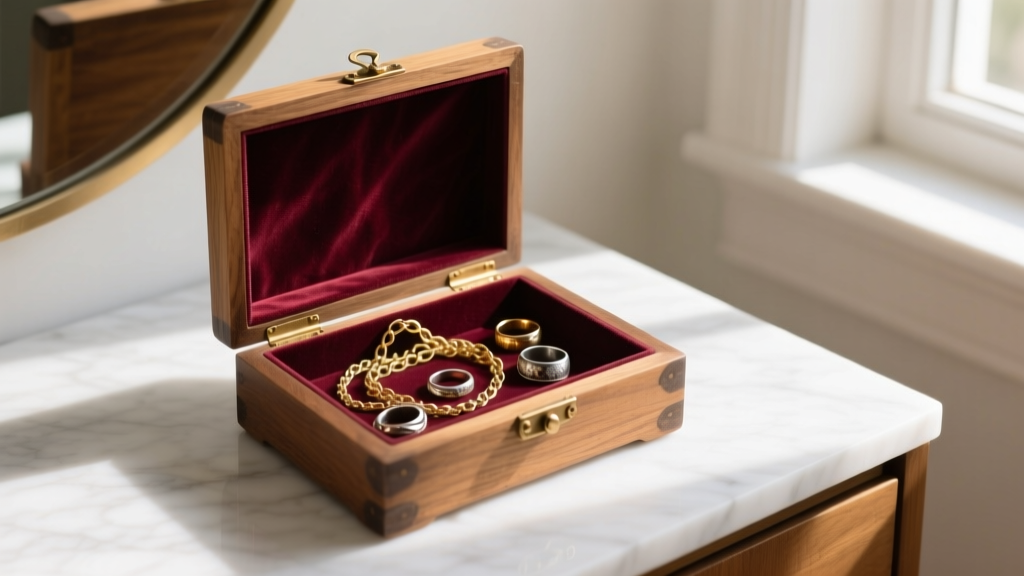
The Hidden Dangers of Mass-Market Gift Boxes
Gifting a granddaughter jewelry box is a cherished rite of passage, often marking a milestone birthday, graduation, or the passing down of a family heirloom. However, the sentimental value of these boxes frequently masks a destructive reality. Many commercially available keepsake boxes, particularly those priced under $50, are constructed from materials that actively degrade the jewelry they are meant to protect. If you notice your granddaughter’s silver rings turning black or her gold-plated pendants losing their luster within months of storage, the box itself is likely the culprit.
The core issue lies in the manufacturing materials. Mass-market boxes are typically built from Medium-Density Fiberboard (MDF) and wrapped in Polyvinyl Chloride (PVC) faux leather. MDF is manufactured using urea-formaldehyde resins, which continuously off-gas volatile organic compounds (VOCs). When trapped in a closed environment, these acidic gases react with the copper and zinc alloys found in sterling silver and karat gold, accelerating chemical tarnishing. Furthermore, the plasticizers used to make PVC faux leather flexible eventually break down, releasing sulfur-containing compounds that cause rapid, severe blackening of silver pieces.
Troubleshooting Tarnish: Upgrading the Interior
If the jewelry inside the box is showing signs of premature oxidation, you do not necessarily need to discard the box. Instead, you can troubleshoot and neutralize the interior environment. The first step is to remove any existing felt or synthetic velvet linings, as these are often treated with acidic dyes that promote corrosion.
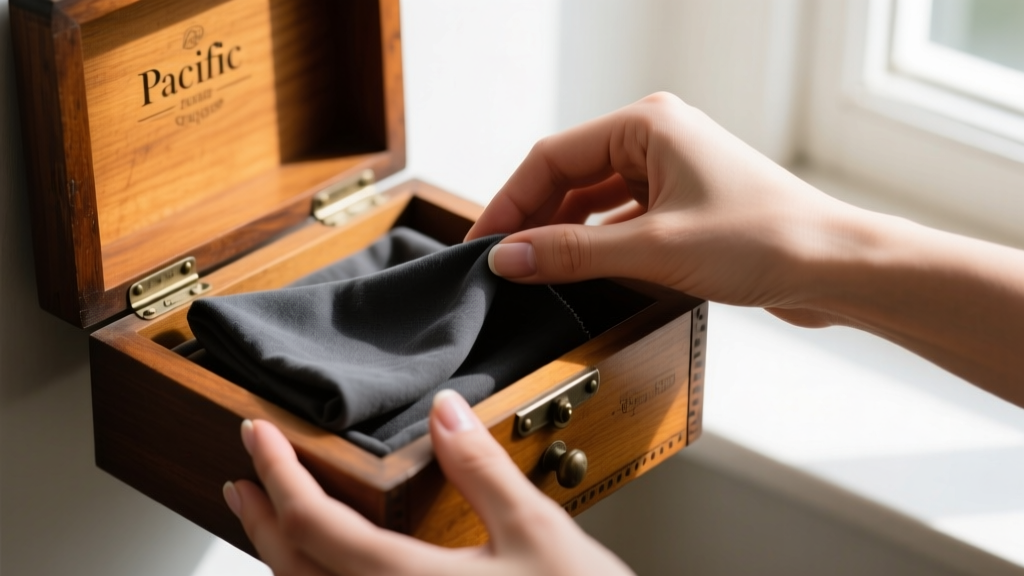
Implementing Anti-Tarnish Solutions
To create a safe microclimate inside a granddaughter jewelry box, you must introduce materials that intercept and absorb corrosive gases before they reach the metal. According to the Smithsonian Museum Conservation Institute, controlling the immediate environment is the most effective way to prevent silver sulfide formation.
- Pacific Silvercloth: Line the bottom of the drawers and the inside of the lid with authentic Pacific Silvercloth. This material is embedded with microscopic silver particles that act as a sacrificial anode, absorbing hydrogen sulfide and other tarnishing gases before they can attack your granddaughter’s jewelry.
- 3M Anti-Tarnish Strips: For smaller compartments or ring rolls, tuck a 3M anti-tarnish strip into the corner. These copper-based strips absorb sulfur compounds and remain effective for 6 to 12 months in a semi-enclosed space.
- Activated Charcoal Packets: Place small, breathable sachets of activated bamboo charcoal in the main compartment to absorb excess ambient moisture and VOCs off-gassing from the MDF frame.
Solving the Chain Tangle Epidemic
A common structural failure in traditional keepsake boxes is the “spaghetti drawer”—a large, undivided open space where delicate necklaces and bracelets inevitably knot together. Tangled chains are not just a nuisance; the friction from untangling them can weaken links, break solder points, and scratch soft gemstones like pearls or opals. The Gemological Institute of America (GIA) emphasizes that proper physical separation is critical for preventing mechanical damage to delicate chains and prong-set stones.
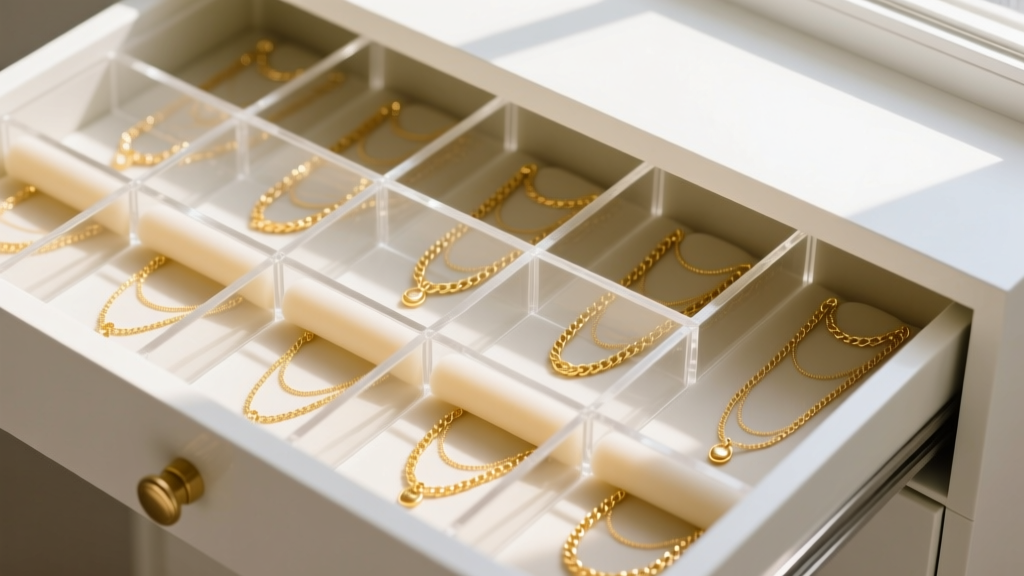
Retrofitting with Modular Inserts
To troubleshoot a tangle-prone drawer, measure the interior dimensions (length, width, and depth) and retrofit the space with modern organizational inserts. Avoid cheap plastic grids that can scratch metals. Instead, opt for the following solutions:
- Silicone Slit Inserts: Purchase modular silicone jewelry rolls. The high-friction silicone grips the chains, holding them taut and preventing the clasps from slipping through the links. You can cut these to size with standard scissors to fit the exact dimensions of the box drawer.
- Flocked Acrylic Dividers: Use clear acrylic dividers lined with acid-free flocking. These create rigid, individualized cells for bangles and longer chains, ensuring that metals never touch one another, which prevents galvanic corrosion when different metals (like silver and copper) are stored in humid conditions.
- Velvet Ring Rolls: For the top tray, replace flat ring cushions with tight, velvet-covered rolling slots that keep rings upright and prevent gemstones from rubbing against adjacent metal bands.
Material Comparison: Identifying the Risks
Understanding what your granddaughter jewelry box is made of will dictate your troubleshooting strategy. Below is a breakdown of common box materials and their associated risks to fine jewelry.
| Material Component | Tarnish / Damage Risk | Recommended Troubleshooting Fix |
|---|---|---|
| MDF / Particleboard Frame | High (Off-gasses formaldehyde and acidic VOCs) | Seal interior wood with water-based polyurethane; line with Silvercloth. |
| PVC Faux Leather Wrap | Severe (Releases sulfur-based plasticizers over time) | Store jewelry in individual anti-tarnish zip bags before placing in the box. |
| Synthetic Felt Lining | Moderate (Often dyed with acidic, sulfur-rich compounds) | Rip out and replace with 100% cotton flannel or acid-free velvet. |
| Brass / Nickel Hardware | Low to Moderate (Can transfer oils and cause contact tarnish) | Ensure jewelry does not rest directly against metal hinges or clasps. |
Fixing Structural and Hardware Failures
Beyond chemical and organizational issues, the physical hardware of a gifted jewelry box often fails within the first few years of daily use. Loose hinges, misaligned lids, and broken mirror mounts are frequent complaints. Troubleshooting these mechanical failures requires the right adhesives and techniques.
If the lid hinges are pulling away from the MDF frame, standard wood glue will fail because MDF lacks the porous grain structure needed for PVA glue to penetrate. Instead, use a two-part epoxy resin or a cyanoacrylate (superglue) combined with a baking soda filler to create a hardened, synthetic anchor point for the hinge screws. For misaligned lids that fail to close flush—allowing dust and humidity to enter—gently bend the brass hinge pins with needle-nose pliers to adjust the tension and seal the box tightly.
When to Retire the Heirloom Box
While retrofitting and troubleshooting can extend the life of a granddaughter jewelry box, there are specific failure modes that indicate it is time to retire the piece entirely. If the MDF frame has swollen due to humidity exposure, the structural integrity is compromised, and the off-gassing rate will only increase. Similarly, if the interior has developed a persistent, sharp chemical odor that cannot be neutralized with charcoal or baking soda, the resins are actively breaking down. In these cases, the safest course of action is to salvage the sentimental hardware or nameplate, transfer the upgraded anti-tarnish linings to a new, solid-wood or archival-grade acrylic storage case, and preserve the memory without sacrificing the jewelry.


