Mens Jewelry Case Guide: Leather vs Wood vs Carbon Fiber Materials
Discover the best mens jewelry case materials. We compare full-grain leather, walnut wood, and carbon fiber for durability and anti-tarnish.

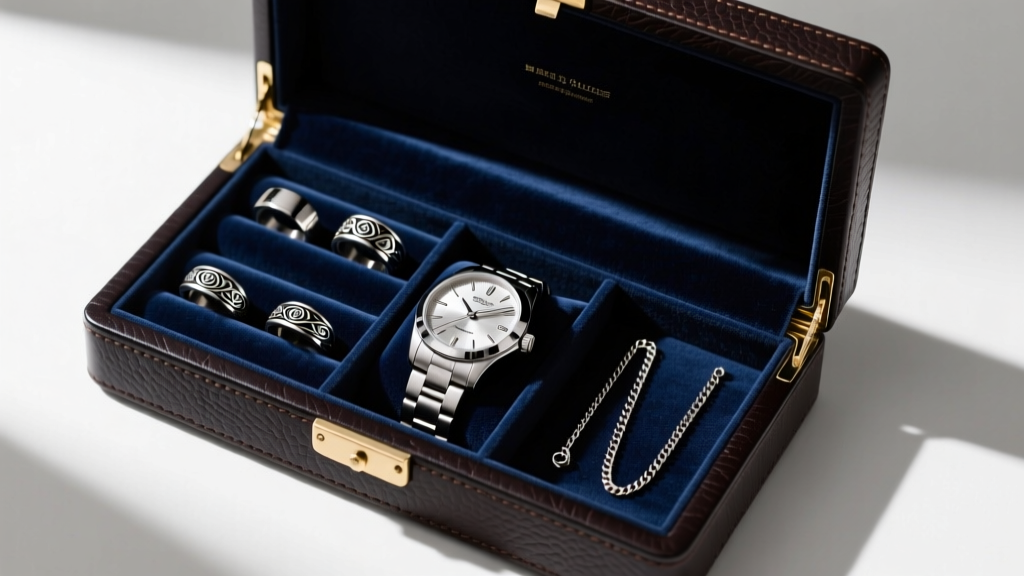
When investing in high-end timepieces, precious metal rings, and artisanal bracelets, the storage environment is just as critical as the pieces themselves. A premium mens jewelry case is not merely a decorative box; it is a micro-climate vault designed to mitigate impact, regulate humidity, and prevent chemical degradation. Yet, the market is flooded with aesthetically pleasing cases that utilize inferior materials, leading to accelerated tarnishing, scratched crystals, and hardware failure. Understanding the material science behind exterior shells, interior linings, and structural hardware is essential for protecting your collection.
In this comprehensive material comparison, we dissect the physical and chemical properties of the most popular mens jewelry case constructions. From the heritage appeal of vegetable-tanned leather to the aerospace-grade resilience of carbon fiber, we evaluate how these materials perform in real-world scenarios.
The Exterior Shell: Hard vs. Soft Material Showdown
The exterior material dictates a case's impact resistance, weight, water resistance, and overall longevity. Men typically gravitate toward three primary categories: leather, wood, and advanced composites.
Full-Grain Leather: The Heritage Standard
For a classic mens jewelry case, full-grain, vegetable-tanned leather remains the gold standard. Unlike genuine or top-grain leather, full-grain retains the entire thickness of the hide, offering superior tensile strength. A high-quality case will typically use 4 to 5-ounce (1.6mm to 2.0mm) thick hides. According to the Leather Working Group, vegetable tanning utilizes natural tannins from tree bark, which is crucial because chrome-tanned leathers can sometimes off-gas residual chemicals that react with silver and copper alloys.
Pros: Develops a rich patina, excellent shock absorption, naturally water-resistant when waxed. Cons: Heavy, requires occasional conditioning, vulnerable to prolonged moisture exposure. Failure Mode: Cheaper leather cases use fiberboard cores wrapped in bonded leather. Over time, the adhesive degrades, causing the exterior to peel and the core to warp, compromising the structural integrity of the interior trays.
Carbon Fiber & Ballistic Nylon: The Modern Traveler
For the frequent flyer, a carbon fiber or ballistic nylon mens jewelry case offers unparalleled strength-to-weight ratios. Carbon fiber cases are typically constructed using a 3K twill weave embedded in an epoxy resin matrix. This creates a shell that is virtually impervious to crushing forces, protecting delicate watch crystals and gemstone settings from luggage compression.
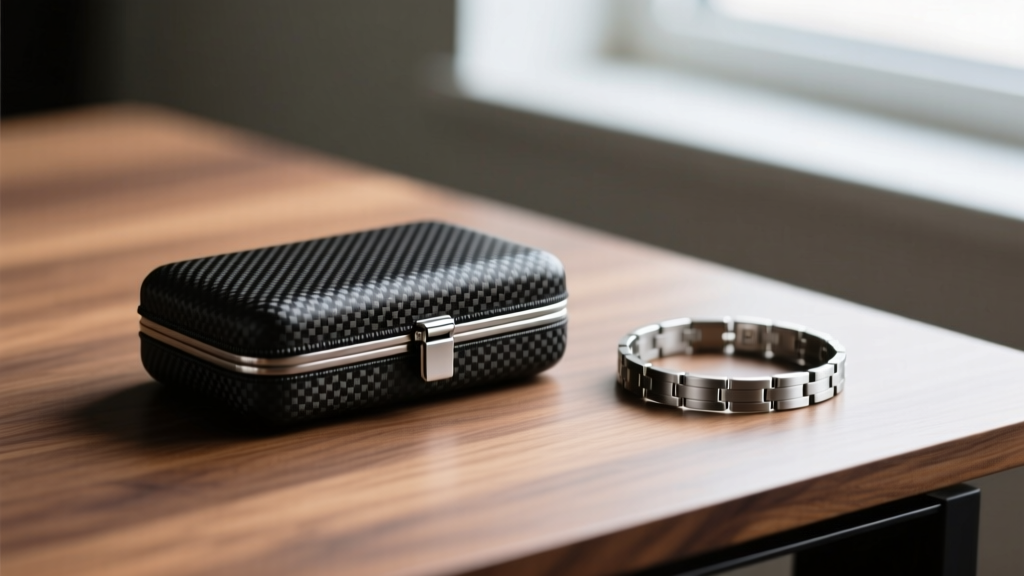
Ballistic nylon (specifically 1050-denier or 1680-denier) is another top-tier soft-shell option. Originally developed for flak jackets, it resists abrasion and tearing far better than standard polyester or canvas. When paired with a thermoformed EVA (ethylene-vinyl acetate) hard shell underneath, it provides rigid protection while maintaining a flexible, scratch-free exterior that won't damage the interior of a leather duffel bag.
Hardwood: The Vault Approach
Walnut, mahogany, and oak offer a stately, permanent presence on a dresser. However, wood requires careful engineering. The Smithsonian Museum Conservation Institute warns that raw wood emits acetic acid and other volatile organic compounds (VOCs) as it ages. In an enclosed space, these acidic vapors will rapidly accelerate the formation of silver sulfide (tarnish) on sterling silver and can corrode copper alloys and pearl surfaces.
To safely use a hardwood mens jewelry case, the interior must be hermetically sealed with a non-reactive barrier, such as a water-based polyurethane or an acrylic film, before any fabric lining is applied. Kiln-dried American Black Walnut is preferred for its stability and low moisture content, minimizing the risk of warping that can misalign the lid and compromise the seal.
Interior Linings: The Hidden Anti-Tarnish Heroes
The exterior shell protects against physical trauma, but the interior lining dictates the chemical environment. The wrong fabric can trap moisture and abrasive dust, while the right material actively intercepts corrosive gases.
| Lining Material | Tarnish Inhibition | Scratch Resistance | Moisture Management | Best For |
|---|---|---|---|---|
| Pacific Silvercloth | Exceptional (Intercepts H2S) | High | Moderate | Sterling silver, copper, brass |
| Alcantara | Low (Neutral) | Exceptional | Low | High-polish watches, gold, platinum |
| Standard Microfiber | Low | Moderate | High (Traps moisture) | Stainless steel, costume jewelry |
| Untreated Flannel | None (Can harbor sulfur) | Low | Moderate | Avoid for long-term storage |
Pacific Silvercloth is the premier choice for a mens jewelry case housing silver pieces. This specialized cotton flannel is embedded with microscopic silver particles. As hydrogen sulfide (H2S) gases enter the case, they react with the embedded silver rather than your actual jewelry, effectively sacrificing the cloth to keep your rings and chains pristine. For luxury watches with sapphire crystals and 18k gold cases, Alcantara—a synthetic ultramicrofiber—is ideal. It is entirely chemically inert, lint-free, and provides a luxurious, non-abrasive cradle that prevents micro-scratches on high-polish bezels.
Hardware and Hinges: The Critical Failure Points
A common oversight when evaluating a mens jewelry case is ignoring the hardware. Hinges, latches, and clasps bear the brunt of mechanical stress and are highly susceptible to galvanic corrosion.
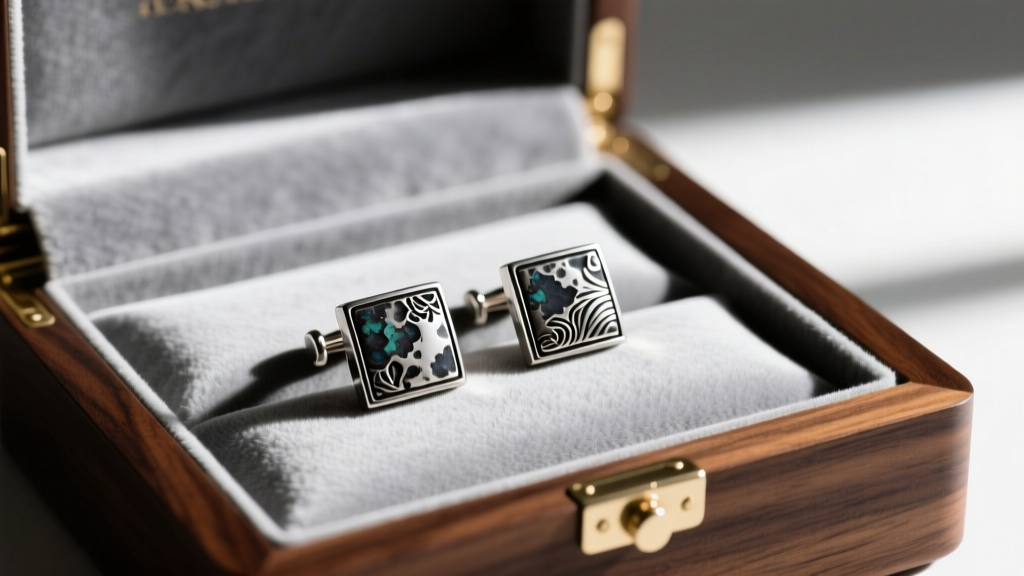
The Hinge Hierarchy: Avoid cases that utilize Zamak (a zinc alloy) for hinges and clasps. Zamak is prone to 'zinc pest,' a destructive intergranular corrosion that causes the metal to expand, pit, and eventually crumble into powder, especially in humid environments. Instead, look for 304 or 316L marine-grade stainless steel hardware. 316L contains molybdenum, which drastically increases resistance to chlorides and industrial solvents, ensuring the hinges remain smooth and rust-free even if the case is stored in a humid bathroom or taken on coastal trips.
Furthermore, the hinge design matters. Piano hinges (running the entire length of the lid) distribute stress evenly, preventing the lid from sagging over time. If butt hinges are used, they must be precision-machined with steel pins; brass pins in steel hinges will wear down rapidly due to the hardness differential.
Decision Matrix: Choosing Your Case by Lifestyle
Selecting the right material configuration depends entirely on how and where you use your jewelry. Use this framework to match the material properties to your specific needs.
- The Frequent Flyer (Road Warriors & Business Travelers): Opt for a thermoformed ballistic nylon or carbon fiber exterior with an Alcantara interior. You need crush resistance for checked or overhead luggage, and a lightweight profile. Ensure the case features a YKK AquaGuard zipper or a stainless steel combination lock to prevent accidental spills in transit.
- The Horology Collector (Watch Enthusiasts): Choose a hardwood case (sealed against VOCs) or a full-grain leather valet. The interior must feature removable, oversized pillows wrapped in untreated, lint-free microfiber to prevent stretching leather watch straps. The Gemological Institute of America (GIA) notes that proper cushioning is vital to prevent gemstones from knocking against metal bezels during transport.
- The Silver & Heritage Collector: A vegetable-tanned leather exterior paired exclusively with a Pacific Silvercloth interior is non-negotiable. Ensure the case has a tight-fitting lid with a magnetic or mechanical clasp to create a semi-sealed environment, minimizing the exchange of sulfur-rich ambient air.
- The Minimalist (Everyday Carry): A slim, 3K carbon fiber or aluminum alloy tray with a silicone-injected interior. Silicone provides excellent grip, keeping a single wedding band or signet ring from sliding around, while the hard shell easily slips into a briefcase or glovebox without adding bulk.
Final Thoughts on Material Integrity
A mens jewelry case is an investment in the preservation of your personal assets. By prioritizing full-grain leathers, VOC-sealed hardwoods, and aerospace composites for the exterior, and pairing them with chemically inert or active anti-tarnish linings, you ensure your collection remains as immaculate as the day it was acquired. Always inspect the hardware grades and interior adhesives before purchasing, as these hidden components ultimately dictate the lifespan of the case itself.


