How to Convert a Pink Snap On Tools Jewelry Box Vault
Learn how to convert a heavy-duty pink Snap-on tools box into a secure, anti-tarnish jewelry vault with custom EVA foam inserts and climate control.

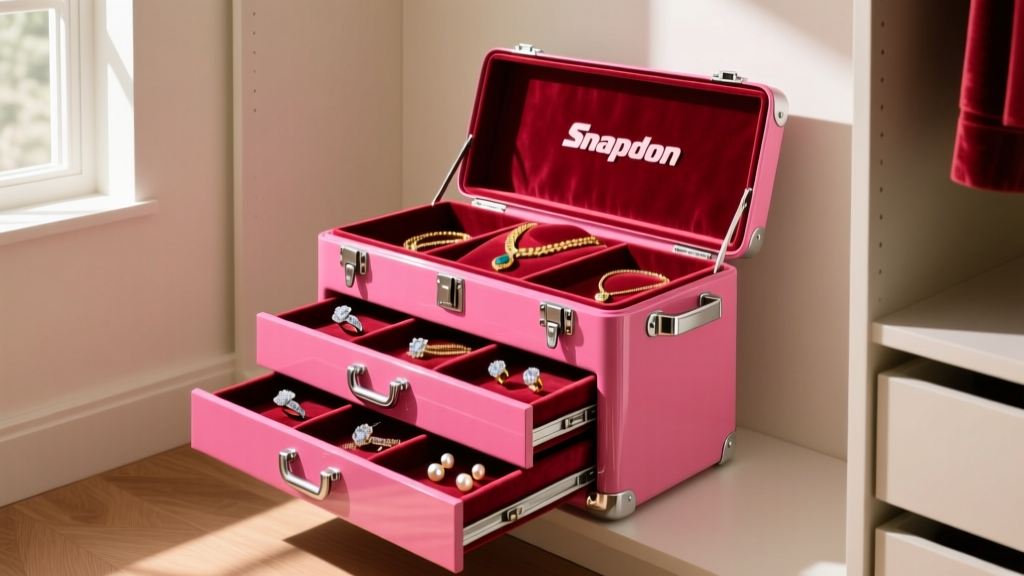
When it comes to protecting high-value jewelry collections, standard wooden valet boxes and fabric-lined drawers often fall short. They offer minimal security, poor weight distribution, and inadequate climate control. Enter an unconventional but increasingly popular solution among serious collectors and industrial-chic enthusiasts: the heavy-duty mechanic’s chest. Specifically, converting a pink snap on tools jewelry box—often sourced from limited-edition breast cancer awareness runs or custom powder-coated restorations—into an indestructible, climate-controlled jewelry vault. This guide provides a meticulous, step-by-step framework for transforming industrial steel storage into a luxury preservation environment.
Why Repurpose a Heavy-Duty Mechanic’s Chest?
Standard jewelry organizers are typically constructed from MDF, thin aluminum, or plastic, designed to hold mere ounces of metal. A professional-grade tool chest, however, is engineered for extreme abuse.
- Weight Capacity: High-end ball-bearing drawer slides can support 100 to 200 lbs per drawer, easily accommodating dense gold bullion, heavy silver chains, and massive gemstone collections without sagging.
- Material Durability: Constructed from 18-gauge to 20-gauge cold-rolled steel, these chests are virtually impervious to forced entry compared to standard wooden jewelry armoires.
- Modularity: The deep, flat drawers provide a blank canvas for custom EVA foam carving, allowing you to create bespoke inserts for oversized statement pieces that wouldn't fit in traditional ring rolls.
Step 1: Sourcing and Prepping Your Pink Snap-On Box
Snap-on and similar premium tool brands occasionally release pink tool chests for charitable causes, making them highly sought after. If you cannot source an authentic limited-edition pink Snap-on roll cab, you can purchase a used steel drawer unit and have it professionally powder-coated in a high-gloss or matte hot pink (RAL 3020 or similar).
Deep Cleaning and Degreasing
Mechanic chests are often coated in microscopic layers of automotive grease, oil, and metallic dust. Before introducing porous gemstones or precious metals, you must strip the interior. Use a Trisodium Phosphate (TSP) solution to degrease the steel drawers. Rinse thoroughly with distilled water to avoid tap-water mineral deposits, and allow the drawers to air-dry completely in a low-humidity environment. According to the Gemological Institute of America (GIA), airborne chemical residues and oils can severely degrade the luster of pearls and porous stones like turquoise, making this prep step non-negotiable.
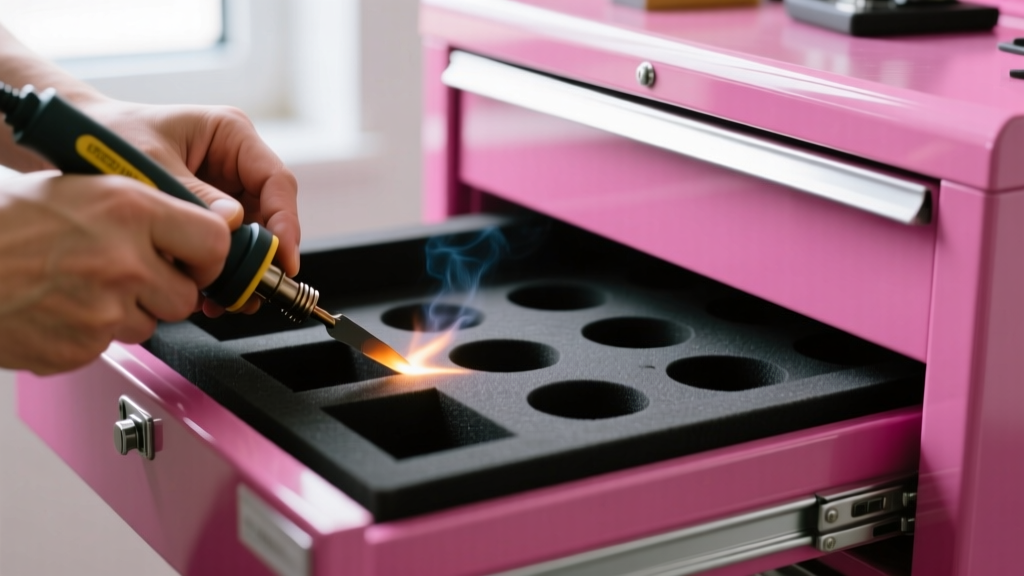
Step 2: Designing Custom EVA Foam Inserts
To prevent jewelry from sliding and scratching against the steel, you must line the drawers. Avoid standard polyurethane foams, which can off-gas acidic compounds over time. Instead, use Cross-Linked Polyethylene (XLPE) or EVA (Ethylene-Vinyl Acetate) foam with a density of 2lb to 4lb. EVA foam is chemically inert, moisture-resistant, and carves cleanly.
Carving Techniques for Different Jewelry Types
- Rings and Studs: Use a hot wire cutter or a CNC router to carve precise 1-inch diameter cylindrical wells. Line the bottom of each well with a thin layer of plush velvet to prevent prong snagging.
- Necklaces and Chains: Carve elongated, serpentine channels (often called "snake channels") that allow chains to lay flat without overlapping. This eliminates the friction that causes micro-scratches on high-polish gold.
- Watches and Cuffs: Create wide, rectangular trenches lined with acid-free microfiber. Ensure the depth is at least 2.5 inches so watch crystals do not press against the drawer above when closed.
Pro Tip: Leave a 1/4-inch gap between the foam insert and the steel drawer walls. Steel expands and contracts with temperature fluctuations, and a tight fit can cause the foam to buckle and warp over time.
Step 3: Installing Anti-Tarnish and Climate Control
Silver and copper alloys tarnish when exposed to hydrogen sulfide and moisture. A sealed steel drawer can actually trap ambient humidity, accelerating the tarnishing process if not properly managed. Jewelers of America strongly recommends maintaining a stable, low-humidity environment for long-term precious metal storage.
Integrating Pacific Silvercloth
Before placing your foam inserts, line the interior walls and the underside of the drawer above with Pacific Silvercloth. This specialized flannel is embedded with microscopic silver particles that act as a sacrificial anode, absorbing and neutralizing tarnish-causing gases before they reach your jewelry.
Active Humidity Management
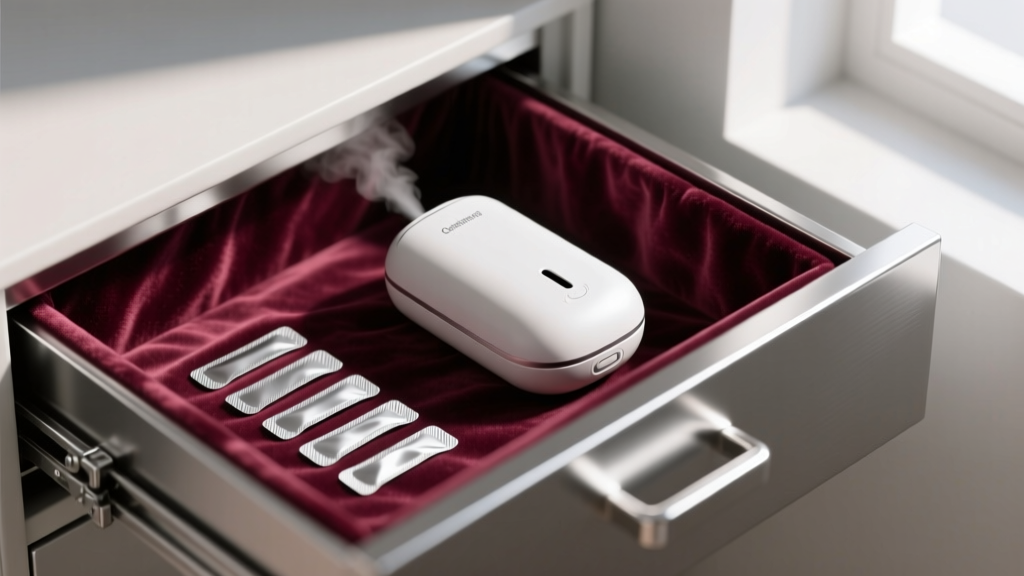
Desiccant packets (like silica gel) require frequent baking and replacement, making them impractical for a high-end vault. Instead, install a rechargeable electronic mini-dehumidifier (such as the Eva-Dry E-333) in the corner of your primary drawer. These units use silica gel beads that recharge via a standard wall outlet and can maintain a relative humidity (RH) level below 45%, the critical threshold for preventing silver sulfide formation.
Step 4: Upgrading Security and Drawer Slides
While the 18-gauge steel of a pink snap on tools jewelry box provides immense physical resistance, the factory-installed cam locks are often low-security tubular locks that can be picked in seconds.
Lock and Slide Upgrades
- High-Security Cylinders: Replace the central locking mechanism with a Medeco or Abloy high-security cylinder. These feature restricted keyways and hardened steel inserts that resist drilling and picking.
- Biometric Sliders (2026 Tech): For the ultimate modern upgrade, retrofit the top drawer with a flush-mounted capacitive biometric fingerprint slider. Ensure the wiring is routed through the rear grommet holes to keep the interior clean.
- Soft-Close Dampeners: Heavy steel drawers can slam shut with significant force, which can fracture fragile gemstones like opals or emeralds due to acoustic shock. Install hydraulic soft-close dampeners on the drawer slides to ensure a gentle, controlled closure every time.
Material & Upgrade Comparison Chart
| Component | Standard Jewelry Box | Converted Snap-On Tool Vault | Upgrade Recommendation |
|---|---|---|---|
| Drawer Slides | Wooden runners / Plastic wheels (15 lb limit) | Steel ball-bearing (100+ lb limit) | Add hydraulic soft-close dampeners |
| Interior Lining | Synthetic felt / Polyurethane foam | Custom carved 4lb EVA Foam | Line with Pacific Silvercloth |
| Security Lock | Brass padlock / Simple combination | Factory tubular cam lock | Medeco deadbolt or Biometric slider |
| Climate Control | None | Sealed steel environment | Rechargeable electronic dehumidifier |
Maintenance and Care for Your Industrial Vault
Even the most robust storage solution requires a maintenance schedule. Every six months, inspect the ball-bearing slides and apply a light coat of synthetic PTFE lubricant to ensure smooth operation. Check the indicator window on your electronic dehumidifier; if the silica beads have turned from orange to green, plug the unit into a wall outlet to bake out the accumulated moisture. Finally, gently vacuum the EVA foam inserts using a brush attachment to remove dust and dead skin cells that can attract pests or degrade the foam over time.
By merging the indestructible nature of professional automotive storage with the meticulous preservation science of high jewelry, your pink snap on tools jewelry box conversion will serve as both a stunning conversation piece and an impenetrable fortress for your most prized possessions.


