How To Store Jewelry Properly: A Material-Based Buying Guide
Discover how to store jewelry properly with our material-based buying guide. Learn which linings, woods, and climate controls prevent tarnish and damage.

The Invisible Enemies: Why Generic Jewelry Boxes Fail
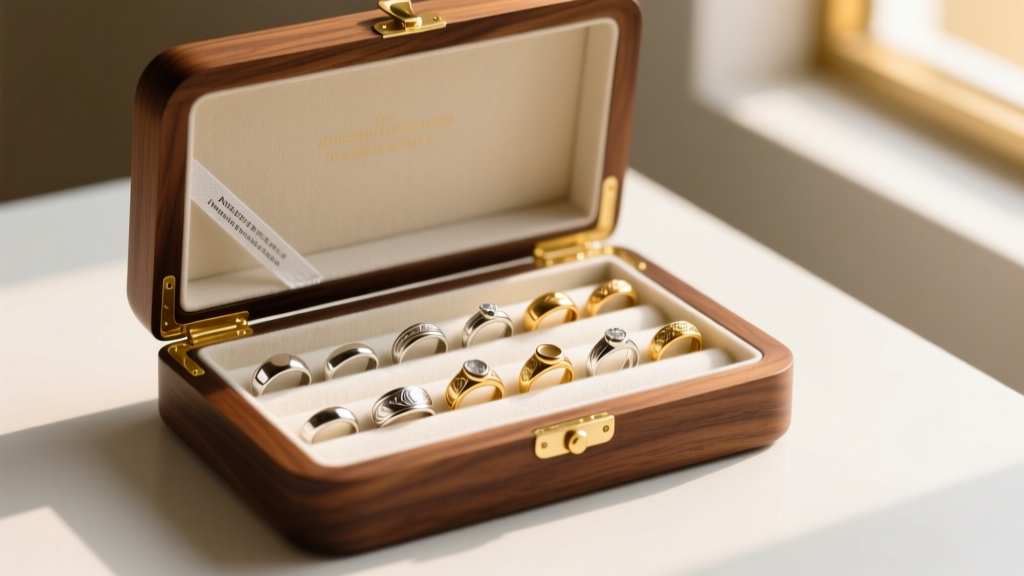
When learning how to store jewelry properly, the first step is unlearning the assumption that a velvet-lined box from a department store is sufficient. In 2026, the market is flooded with aesthetically pleasing but chemically hostile storage solutions. The primary culprits of jewelry degradation are hydrogen sulfide (H2S) in the air, volatile organic compounds (VOCs) off-gassing from cheap adhesives, and improper humidity control. According to the Library of Congress, tarnish is an electrochemical reaction accelerated by sulfur-bearing gases and high relative humidity (RH). If your current storage system utilizes synthetic felt, MDF (medium-density fiberboard), or PVC plastics, you are actively accelerating the degradation of your collection.
Material Matching: What to Look For in a Storage System
A true archival-grade storage system does not use a one-size-fits-all approach. Different metals and gemstones react uniquely to their micro-environments. When evaluating a jewelry organizer, you must match the interior lining and structural materials to the specific vulnerabilities of your pieces.
Silver and Copper: The Anti-Tarnish Imperative
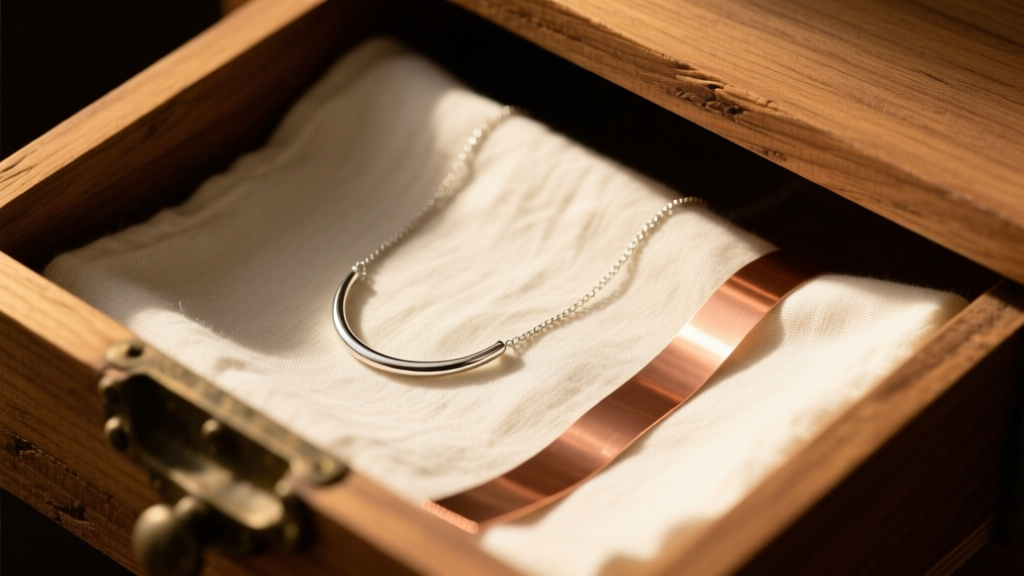
Sterling silver (92.5% silver, 7.5% copper) is highly susceptible to sulfur. When shopping for silver storage, look for linings made from Pacific Silvercloth or treated flannel. Pacific Silvercloth is embedded with microscopic silver particles that act as a sacrificial anode, trapping H2S gases before they reach your jewelry. Avoid standard velvet, which is often treated with sulfur-based dyes. Additionally, ensure the box has a tight seal to limit air exchange, and always include copper-based anti-tarnish strips in the compartment.
Gold and Platinum: Scratch Prevention and Archival Plastics
While high-karat gold and platinum do not tarnish, they are relatively soft and prone to micro-scratches. The focus here is on physical separation and archival-safe plastics. If you are buying acrylic or plastic organizers, verify that they are made from Polyethylene (PE) or Polypropylene (PP). Never use Polyvinyl Chloride (PVC), which emits plasticizers and hydrochloric acid gas over time, potentially damaging gemstone settings and degrading the metal's luster.
Pearls, Opals, and Emeralds: The Moisture Paradox
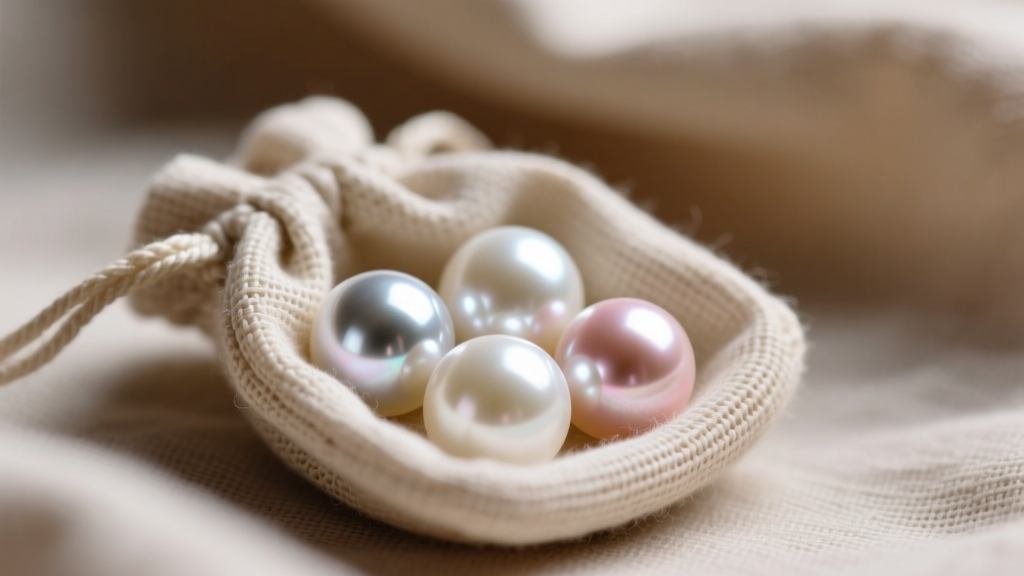
Organic gems and porous stones require a completely different approach. The Smithsonian Museum Conservation Institute warns against storing moisture-dependent gems in airtight environments. Pearls and opals contain trace amounts of water; sealing them in plastic or a heavily desiccated safe will cause them to dehydrate, craze, and crack. Look for breathable, unbleached cotton or linen pouches. Never store pearls hanging, as the silk thread will stretch and weaken over time.
The 2026 Buyer’s Matrix: Storage Materials Decoded
Use this decision matrix when evaluating the interior specifications of potential jewelry storage purchases. This framework separates marketing fluff from genuine material science.
| Jewelry Type | Primary Threat | Ideal Lining Material | Materials to Strictly Avoid | Target RH Level |
|---|---|---|---|---|
| Sterling Silver | Hydrogen Sulfide (Tarnish) | Pacific Silvercloth, Treated Flannel | Standard Velvet, Recycled Wool Felt | Below 45% |
| Gold / Platinum | Micro-scratches, Abrasion | Acid-free Tissue, PE/PP Plastics | PVC, Rough Suede, Shared Compartments | 30% - 50% |
| Pearls / Opals | Dehydration, Crazing | Unbleached Cotton, Linen | Airtight Plastic, Silica Gel Packets | 45% - 55% |
| Costume / Base Metals | Adhesive Failure, Verdigris | Silicone-treated Paper, Polyethylene | MDF, Particleboard, High Humidity | Below 40% |
Hardware, Hinges, and Wood Selection: The Hidden Destroyers
The exterior shell of a jewelry box is just as critical as the interior lining. Many mid-tier boxes on the market are constructed from MDF or particleboard. These engineered woods are bound together with urea-formaldehyde resins that continuously off-gas VOCs. These gases can cause the adhesives in costume jewelry to fail and can create a hazy film on polished gemstones.
The Wood Hierarchy
- Optimal: Solid Walnut, Cherry, or Maple. These closed-grain hardwoods are stable, do not emit harmful acids, and provide excellent structural integrity for heavy hinges.
- Proceed with Caution: Bamboo. While technically a grass and highly sustainable, bamboo is often laminated using formaldehyde-heavy adhesives. Only purchase bamboo organizers certified as CARB Phase 2 compliant for low VOC emissions.
- Avoid: Oak. Oak contains high levels of tannic acid, which can off-gas and cause severe corrosion to silver and iron-based alloys. Also avoid aromatic cedar for direct metal contact, as the natural terpenes can react with soft alloys.
The Felt Trap
Felt is a notoriously poor choice for jewelry storage, yet it remains common in budget organizers. Recycled wool felt contains sulfur from the natural breakdown of keratin proteins, acting as a direct catalyst for silver tarnish. Synthetic acrylic felt, while sulfur-free, generates static electricity that attracts abrasive dust particles directly to your polished metals. Always opt for unbleached, untreated cotton or specialized archival linings.
Climate Control: Integrating Desiccants and Strips
Even the best-constructed wooden armoire cannot regulate its internal micro-climate without intervention. Understanding how to store jewelry properly requires active climate management.
Anti-Tarnish Strips
For enclosed drawers and boxes, integrate copper-based anti-tarnish strips (such as those manufactured by 3M). These strips utilize a proprietary copper resin that chemically binds to sulfur-bearing gases, neutralizing them. A standard 1-inch strip protects a 1-cubic-foot enclosed space for up to 6 months. Replace them bi-annually as part of your routine maintenance.
Desiccants and Humidity Buffering
Moisture is the electrolyte that drives the tarnishing process. Keep the internal RH of your silver and base-metal storage below 45%. Use indicating silica gel (which changes color when saturated) rather than standard white packets. Indicating silica can be baked in an oven at 250°F (120°C) to recharge it indefinitely. However, never place silica gel in the same compartment as pearls, opals, or emeralds, as the rapid desiccation will cause irreversible structural fracturing.
Final Verdict: Building Your Modular System
There is no single "perfect" jewelry box. The most effective strategy for serious collectors in 2026 is a modular approach. Invest in a solid walnut or powder-coated steel outer cabinet to eliminate VOC off-gassing, then populate the interior with interchangeable, material-specific trays. Use Pacific Silvercloth rolls for your silverware, individual PE zip-bags with anti-tarnish tabs for daily-wear gold, and breathable linen rolls for your organic gems. By aligning your purchasing decisions with the chemical realities of material degradation, you transition from simply putting your jewelry away to actively preserving its structural and financial value for generations.


