Technical Anatomy of an Anti-Tarnish Jewelry Organizer Bag
Discover the material science, anti-tarnish textiles, and EVA core geometry that define a high-performance jewelry organizer bag for secure travel.

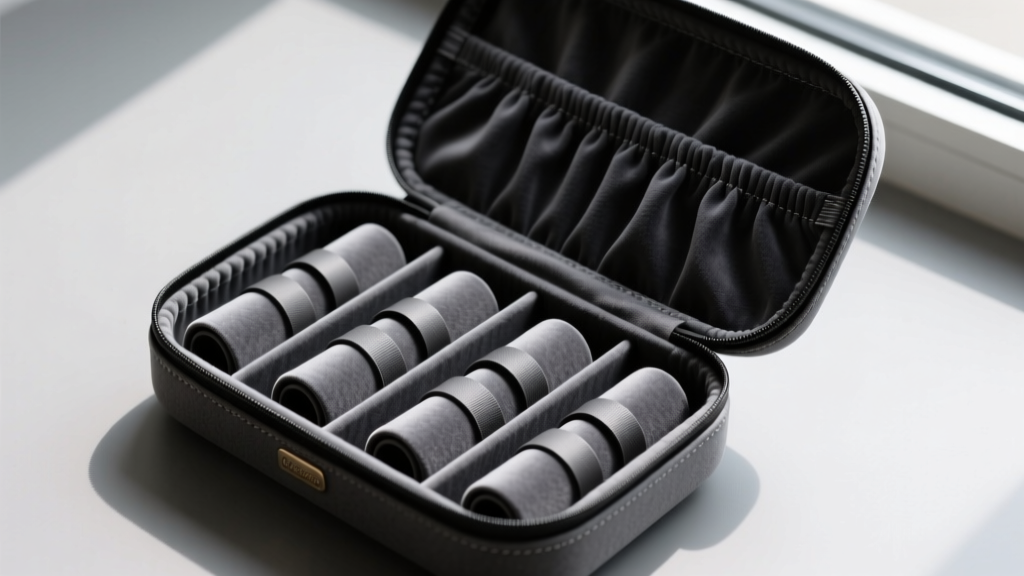
When evaluating travel storage for high-value accessories, the term 'pouch' is a gross misnomer for what modern engineering has achieved. A premium jewelry organizer bag is not merely a fabric sack; it is a micro-climate controlled, impact-resistant vault designed to mitigate chemical degradation and physical abrasion. For collectors and frequent travelers, understanding the material science behind these organizers is critical. The difference between a $20 generic pouch and a $150 engineered travel case lies in textile chemistry, structural geometry, and hardware tolerances. This deep dive explores the technical specifications that separate true preservation gear from basic compartmentalization.
The Chemistry of Tarnish and Textile Interventions
Silver and copper alloys are highly susceptible to atmospheric corrosion, specifically reacting with hydrogen sulfide (H₂S) and sulfur dioxide (SO₂) present in ambient air and human perspiration. This electrochemical reaction forms silver sulfide (Ag₂S), the black tarnish that degrades surface reflectivity. A standard velvet-lined bag offers zero chemical intervention; it merely provides a physical barrier against dust.
Advanced anti-tarnish jewelry organizer bags utilize sacrificial anode technology at the textile level. The industry gold standard is Pacific Silvercloth, a specialized cotton flannel embedded with microscopic silver particles. Because the embedded silver has a higher surface area and reacts preferentially with sulfur compounds, it acts as a sacrificial anode, neutralizing H₂S gas before it can reach your actual jewelry. This process effectively delays tarnishing for up to a decade, provided the bag remains sealed and the textile is never washed (which strips the active metallic particles).

Activated Carbon vs. Zinc-Embedded Cotton
While silver-embedded cotton targets sulfur, high-end organizers also integrate activated carbon liners to absorb volatile organic compounds (VOCs) and ambient moisture. Activated carbon boasts a surface area of approximately 3,000 square meters per gram, creating a massive adsorption network for corrosive gases. When evaluating a jewelry organizer bag, look for dual-layer linings: an outer layer of zinc or silver-embedded cotton for sulfur neutralization, and an inner core of activated carbon mesh for moisture and VOC control.
Structural Geometry: EVA Foam Cores and Crush Resistance
The structural integrity of a jewelry organizer bag dictates its ability to protect gemstone settings and delicate chains from compressive forces inside a packed suitcase. Cheap organizers rely on flexible polyurethane (PU) foam or stiffened cardboard, both of which fail under sustained point-loads. Premium organizers utilize Ethylene-Vinyl Acetate (EVA) foam, a closed-cell copolymer that offers superior shock absorption and memory retention.
EVA foam is measured on the Shore C hardness scale. A high-performance jewelry organizer bag typically employs an EVA core with a Shore C hardness between 45 and 55. This specific density provides enough rigidity to prevent the bag from collapsing when stacked under heavy garments, while maintaining enough elasticity to absorb sudden kinetic impacts without transferring the shockwave to brittle gemstones like emeralds or opals.
| Core Material | Shore Hardness | Compression Set (22hrs) | Impact Protection |
|---|---|---|---|
| EVA Foam (Premium) | 45-55 C | < 5% | Excellent (Closed-cell) |
| PU Foam (Standard) | 20-30 A | 15-20% | Moderate (Open-cell) |
| Recycled Paperboard | N/A | High (Creasing) | Poor (Rigid but brittle) |
Lining Tribology: Friction, Pile Height, and Gemstone Safety
The interior lining of a jewelry organizer bag must navigate a complex tribological challenge: it must possess a low enough coefficient of friction to allow smooth insertion and removal, yet provide enough surface grip to prevent items from sliding into one another during transit. Furthermore, the textile pile must interact safely with varying Mohs hardness scales, as documented by the GIA Gem Encyclopedia.
Brushed cotton and standard flannel are notorious for generating micro-lint, which can become permanently lodged in the pavilion facets of brilliant-cut diamonds or the intricate filigree of vintage gold work. The superior alternative is sheared microfiber. Microfiber is typically an 80/20 blend of polyester and polyamide, split at the fiber level to create a dense, ultra-fine pile. However, the cutting process is critical. If the microfiber is 'looped' rather than 'sheared', the microscopic loops act like tiny snares.
The Snag Hazard: Prongs and Pile
When a platinum or white gold prong setting catches on a looped microfiber textile, the tensile strength of the synthetic fiber can actually bend the metal prong, loosening the gemstone. A premium jewelry organizer bag will exclusively use sheared (sueded) microfiber, where the loops are mechanically cut and heat-sealed, creating a flat, velvet-like surface that glides over delicate prongs and marquise-cut points without resistance.
Hardware and Seal Integrity
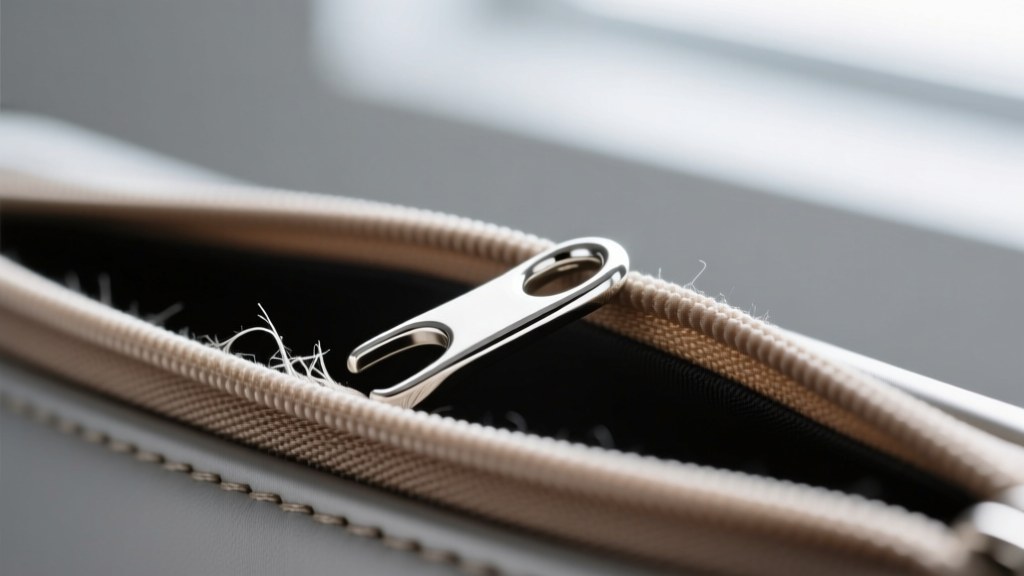
The zipper is the most common point of failure in travel storage. Generic brass or aluminum zippers often suffer from tooth misalignment and oxide buildup, leading to jamming. More importantly, standard metal zippers create micro-gaps between the teeth, allowing sulfur-rich air and fine dust to infiltrate the anti-tarnish micro-climate.
Expert-grade organizers utilize YKK Excella (highly polished metal elements) or YKK Vislon (molded plastic) zippers equipped with an anti-tarnish coating. For maximum seal integrity, coil zippers with a reverse configuration (where the flat backing of the tape faces outward) are preferred. This creates a continuous, flush seal that drastically reduces particulate ingress. Furthermore, the zipper pull should feature a leather or silicone tab to prevent the metal pull from scratching the exterior PU leather or ballistic nylon shell when folded back.
Expert Procurement Framework
When sourcing a jewelry organizer bag for high-value transit, demand the following technical specifications from the manufacturer:
- Core: Minimum 4mm thickness of closed-cell EVA foam (Shore C 45+).
- Lining: Sheared, non-looped microfiber or zinc-embedded Pacific Silvercloth.
- Hardware: YKK reverse-coil or Vislon zippers with anti-oxidation treatment.
- Elastics: Woven elastane bands with a minimum 20% spandex content to prevent permanent deformation (creep) when holding heavy signet rings or thick chain links.
- Gussets: Reinforced hinge gussets with double-stitched nylon bonding thread to prevent seam blowout under repeated articulation.
Ultimately, a true jewelry organizer bag is an exercise in applied materials science. By prioritizing closed-cell structural cores, sacrificial anode textiles, and precision-milled hardware, you transition from simply carrying your collection to actively preserving its metallurgical and gemological integrity.


