Antique Porcelain Jewelry Box: Material Properties & Care Guide
Explore the material science of the antique porcelain jewelry box. Compare its anti-tarnish properties, glaze chemistry, and expert conservation tips.

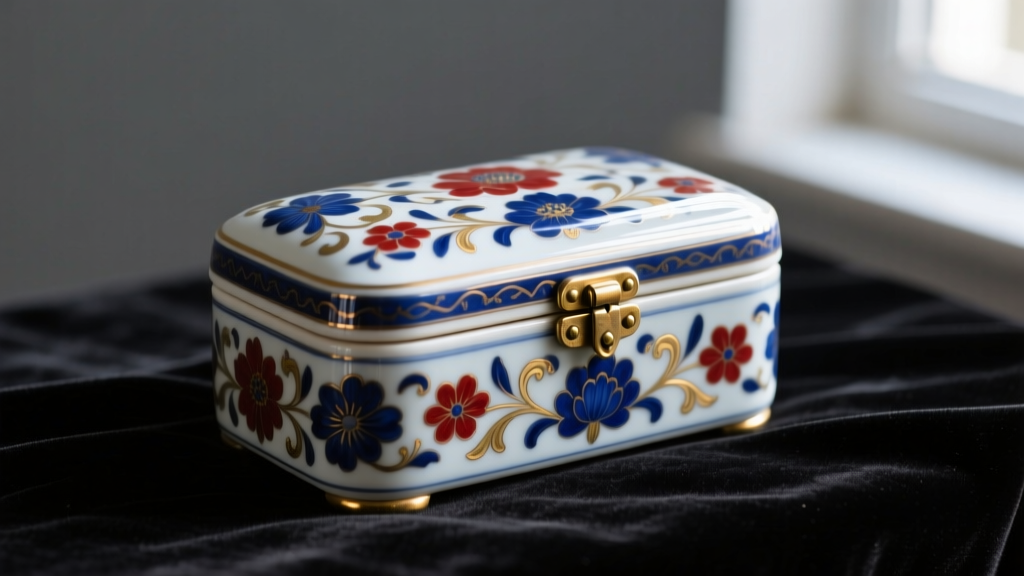
The Material Science of Antique Porcelain
When collectors, archivists, and horologists evaluate long-term storage solutions for precious metals and gemstones, the antique porcelain jewelry box occupies a unique and highly functional tier. Unlike organic materials that degrade or emit corrosive gases, true hard-paste porcelain offers a chemically inert sanctuary. To understand why these 18th and 19th-century vessels remain superior for jewelry preservation, we must examine the material science of vitrified ceramics.
True hard-paste porcelain is composed of kaolin clay and petuntse (porcelain stone), fired at extreme temperatures ranging from 1,200°C to 1,400°C. At these temperatures, the silica and feldspar melt into a glassy matrix, a process known as vitrification. According to The Metropolitan Museum of Art, this vitrification reduces the water absorption rate of the ceramic body to near zero (typically less than 0.5%). For jewelry storage, this absolute lack of porosity is critical; it means the box will not absorb ambient humidity, thereby depriving the electrochemical reactions that cause silver tarnish and copper verdigris of their necessary moisture catalyst.
Porcelain vs. Traditional Antique Storage Materials
While antique mahogany chests and silverplate caskets possess undeniable aesthetic charm, their material properties can actively damage the items they are meant to protect. Below is a comparative analysis of common antique storage materials based on their chemical stability and preservation metrics.
| Material | Water Absorption | Off-Gassing Risk | Tarnish Acceleration | Mohs Hardness |
|---|---|---|---|---|
| Hard-Paste Porcelain | < 0.5% | None (Inert) | Zero | 6.5 - 7.0 |
| Aged Mahogany Wood | 8% - 12% | High (Acetic Acid) | High | 1.5 - 2.5 |
| Antique Cut Glass | 0% | None | Zero | 5.5 - 6.0 |
| Tortoiseshell / Horn | 10% - 15% | Moderate (Sulfur) | Severe | 2.0 - 2.5 |
| Silverplate Brass | 0% | Low | High (Galvanic) | 3.0 - 4.0 |
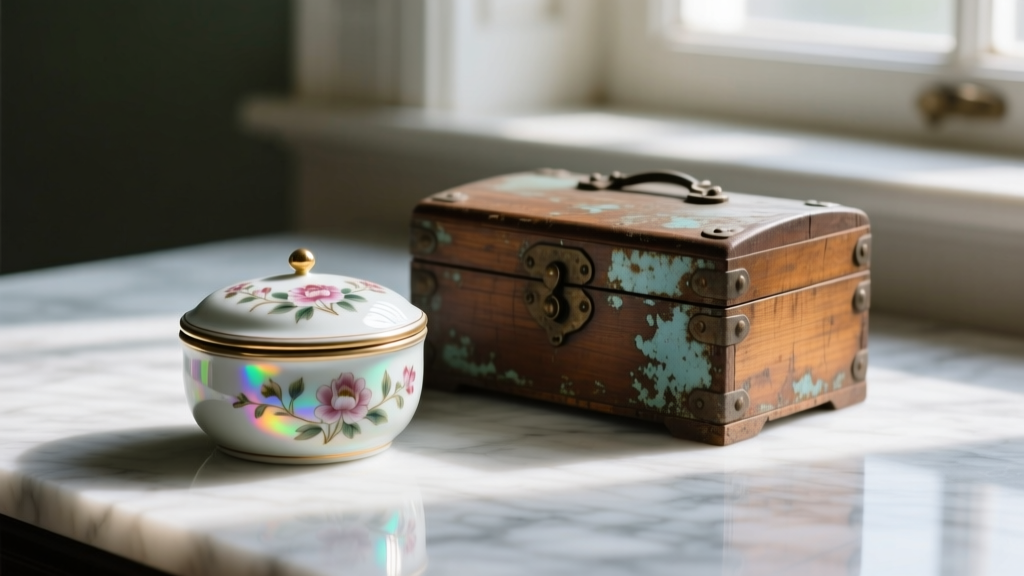
As the data illustrates, organic materials like aged mahogany continuously emit volatile organic compounds (VOCs), primarily acetic and formic acids. In enclosed spaces, these acids accelerate the corrosion of silver alloys and degrade pearl nacre. Glass is similarly inert to porcelain but lacks the thermal insulation and structural opacity that protects light-sensitive gemstones (like amethyst or kunzite) from UV degradation.
The Anti-Tarnish Advantage: Chemical Inertness
The primary enemy of sterling silver is hydrogen sulfide, which reacts with the copper alloyed in 925 silver to form silver sulfide (tarnish). While an antique porcelain jewelry box cannot scrub hydrogen sulfide from the air, its completely non-porous glaze prevents the trapping of microscopic dust particles and atmospheric moisture. Dust is highly hygroscopic; it pulls moisture from the air and holds it against the metal surface. Because porcelain is easily wiped clean to a microscopic level, it eliminates the dust-moisture matrix that accelerates localized galvanic corrosion.
Understanding Glaze Crazing and Moisture Traps
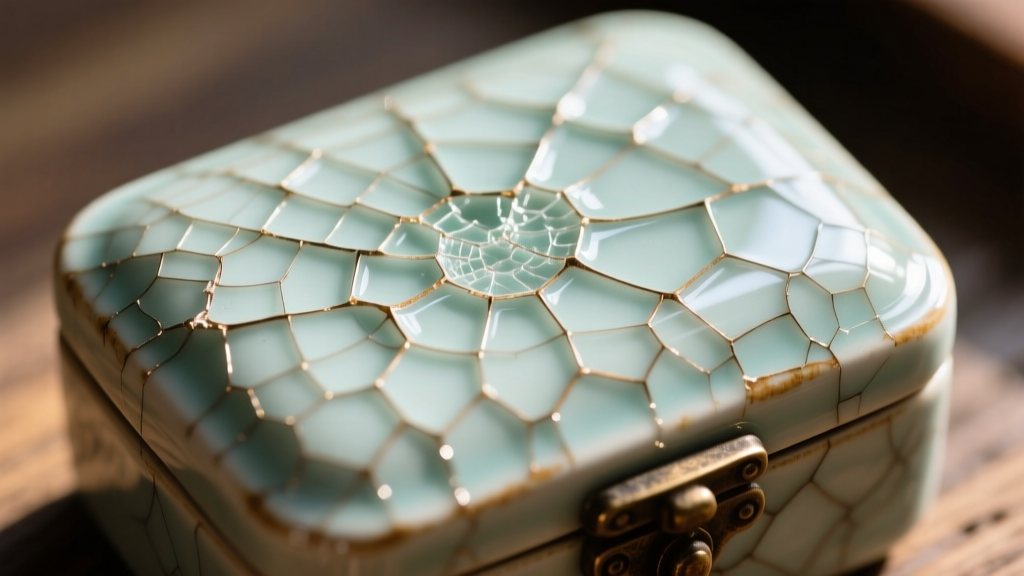
However, not all antique porcelain is flawless. Collectors must inspect for "crazing"—a network of fine micro-cracks in the clear protective glaze. Crazing occurs when the coefficient of thermal expansion (CTE) between the clay body and the overlying glaze is mismatched. If the glaze shrinks more than the clay body during the cooling phase of the kiln firing, tension causes it to crack. According to conservation guidelines from the Victoria and Albert Museum, deep crazing can harbor dirt, oils, and moisture, effectively negating the non-porous advantage of the porcelain. When sourcing an antique box, prioritize pieces with intact, uncrazed glazes, particularly on the interior surfaces where jewelry will rest.
Sourcing and Authenticating Vintage Porcelain Boxes
The market for antique porcelain is vast, but identifying pieces suitable for functional jewelry storage requires specific knowledge. European hard-paste manufacturers like Meissen (Germany), Sèvres (France), and Limoges producers (France) offer the highest material density. When evaluating a piece, look for underglaze cobalt blue maker's marks, which indicate the piece was fired at the highest temperatures, ensuring maximum vitrification.
Conversely, be cautious of 18th-century English "soft-paste" porcelain (such as early Chelsea or Bow). Soft-paste was fired at lower temperatures (around 1,100°C) because English potters initially lacked access to true kaolin deposits. Soft-paste is more porous, softer (Mohs 4.5-5.5), and highly susceptible to scratching from metal jewelry clasps and prongs. Always verify the paste hardness before using a soft-paste box for daily diamond or sapphire storage, as these gems (Mohs 9-10) will easily scour the interior base over time.
Conservation and Cleaning Protocols
Maintaining the interior environment of an antique porcelain jewelry box requires strict adherence to museum-grade conservation practices. Never use commercial glass cleaners, ammonia-based solutions, or abrasive polishing compounds. Ammonia can react with metallic overglaze enamels (like gold or silver luster accents), causing permanent clouding or flaking.
For routine cleaning, use a solution of deionized water and a few drops of non-ionic surfactant (such as Orvus WA Paste). Apply with a microfiber cloth, ensuring no liquid pools in the hinge crevices or the interior corners. The Getty Conservation Institute emphasizes that preventive care—such as keeping the box away from direct sunlight and extreme temperature fluctuations—is vital to preventing further glaze degradation and protecting the delicate metal hinges that often accompany these pieces.
The Lead Glaze Warning (Pre-1850s)
A critical safety consideration for collectors of early soft-paste or heavily enameled porcelain is the historical use of lead oxide as a flux in low-temperature glazes. While the lead in fully vitrified, high-fire hard-paste porcelain is generally locked within the silica matrix, low-fire overglaze enamels can degrade over centuries, potentially leaching heavy metals. If you are storing bare-skin jewelry (like wedding bands or post earrings) in a pre-1850s box with vibrant, raised overglaze enamels, it is highly recommended to line the interior with an archival-quality, acid-free polyethylene foam. This provides a physical barrier, ensuring both the safety of the wearer and the preservation of the fragile historic enamel.
Final Thoughts on Material Selection
The antique porcelain jewelry box is far more than a decorative vanity item; it is a triumph of early material engineering. Its vitrified, chemically inert, and non-hygroscopic properties make it an unparalleled choice for the long-term preservation of precious metals and sensitive gemstones. By understanding the nuances of paste hardness, glaze integrity, and proper conservation, collectors can utilize these historic vessels exactly as they were intended—safeguarding treasures for generations to come.


