Build the Perfect Do It Yourself Jewelry Holder: Expert Guide
Discover how to build a custom do it yourself jewelry holder. Learn about anti-tarnish woods, brass hardware, and velvet lining grades for safe storage.

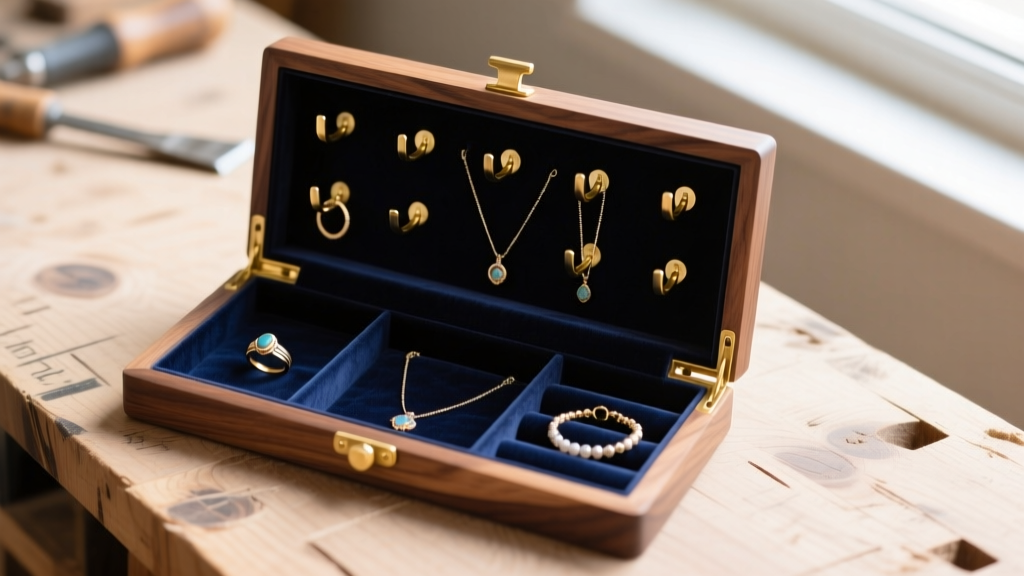
The Hidden Dangers of Commercial Organizers
When you purchase a mass-produced jewelry box from a big-box retailer, you are often unknowingly introducing a chemical hazard to your precious metals and gemstones. Most commercial organizers are constructed from Medium-Density Fiberboard (MDF) or cheap particleboard, bound together with urea-formaldehyde resins. As of 2026, despite improvements in manufacturing standards, these composite woods continue to off-gas volatile organic compounds (VOCs) and trace sulfur derivatives for years. According to the Environmental Protection Agency (EPA), these off-gassing chemicals are trapped inside the enclosed micro-environment of a jewelry box, accelerating the oxidation and tarnishing of silver, copper, and brass jewelry. Building a do it yourself jewelry holder allows you to control every single material, ensuring a chemically inert, archival-grade storage environment for your collection.
Selecting the Right Base Materials
The foundation of any high-quality jewelry display is the wood. However, not all woods are safe for precious metals. The primary enemy of silver and copper is acetic acid, which is naturally present in many hardwoods as tannic acid. When enclosed, these acidic vapors cause a corrosive reaction known as 'pink disease' on silver, leaving a permanent, pitted residue that requires professional polishing to remove.
According to the comprehensive data provided by The Wood Database, woods like Red Oak and White Oak have a highly acidic pH ranging from 3.5 to 4.5. These must be strictly avoided for direct jewelry storage. Instead, you want to select dimensionally stable, low-acidity hardwoods. Hard Maple (pH 5.5-6.0) and Black Walnut (pH 5.0-5.5) are exceptional choices. They offer tight, closed-grain structures that sand to a glass-like finish without requiring heavy chemical fillers.
Material Comparison Chart
| Material | Acidity (pH) | Tarnish Risk | Best Application | Est. Cost (per bd ft) |
|---|---|---|---|---|
| Red Oak | 3.5 - 4.5 | High | Avoid for jewelry | $5.00 |
| Hard Maple | 5.5 - 6.0 | Low | Frames, heavy bases | $7.50 |
| Black Walnut | 5.0 - 5.5 | Very Low | Premium displays | $12.00 |
| MDF / Particleboard | N/A (High VOC) | Extreme | Avoid entirely | $2.00 |
Hardware Specifications for Heavy Loads
The hooks and rails you choose dictate the structural integrity of your do it yourself jewelry holder. Never use standard steel or zinc-plated cup hooks from a general hardware store. The electroplating process used on cheap zinc hooks often leaves behind sulfur residues, which will instantly tarnish any silver chain draped over them. Furthermore, steel hooks are prone to micro-rusting in humid environments like bathrooms or coastal bedrooms.
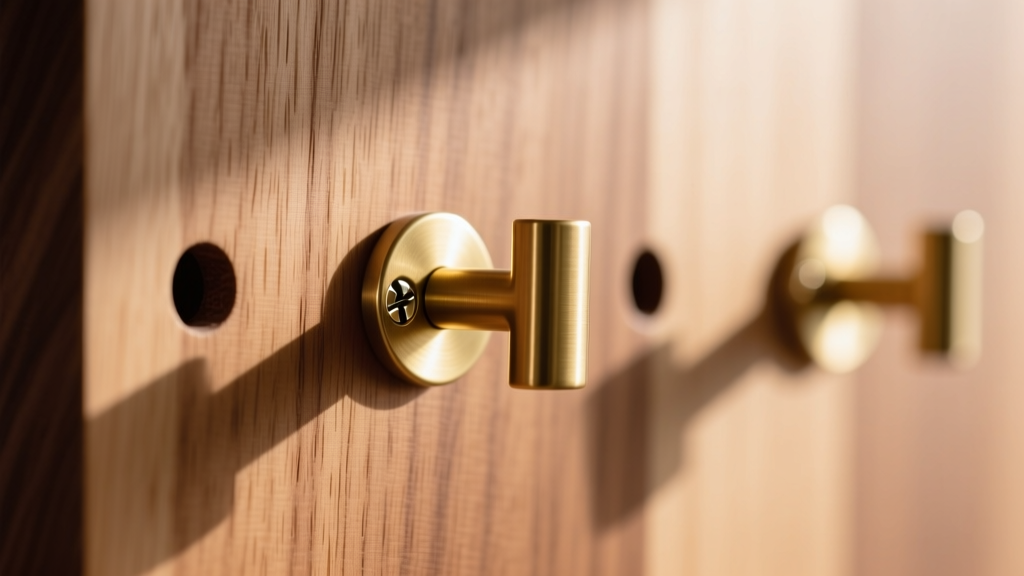
Instead, source solid brass hardware. Specifically, look for C260 cartridge brass, which is highly inert and will not react with precious metals. For hanging heavy statement necklaces (which can weigh upwards of 150 grams), use #3 or #4 solid brass cup hooks with a minimum thread length of 1/2 inch. When installing these into hardwoods like maple, always drill a pilot hole using a 3/32-inch bit to prevent the brass threads from shearing off under torque. For modular hanging rods, use 1/4-inch solid brass dowel pins seated in epoxy-filled blind holes.
Dimensional Planning and Spacing
A common failure in DIY builds is inadequate spacing, leading to tangled chains and scratched gemstones. When mapping out your board, adhere to these strict dimensional guidelines:
- Long Necklaces (24-30 inches): Require a minimum of 5 inches of horizontal clearance between hooks. The vertical drop zone must be completely clear of lower-tier hooks.
- Bracelets and Bangles: Utilize 1-inch diameter hardwood dowels wrapped in felt, spaced 3 inches apart to prevent metal-on-metal clinking.
- Stud Earrings: Drill 1/16-inch holes spaced exactly 1.5 inches apart in a grid pattern. This accommodates standard 20-gauge and 18-gauge earring posts without forcing the friction backs against the wood.
- Dangle Earrings: Use a staggered zig-zag hook pattern with 2.5 inches of vertical drop clearance to prevent the gems from resting on the hooks below them.
Lining and Anti-Tarnish Barriers
If you are building a shadowbox or a tray-style holder, the lining material is your final line of defense against atmospheric hydrogen sulfide, the primary culprit behind silver tarnish. Standard craft felt is dyed with sulfur-heavy chemicals and will ruin your jewelry. You must use 100% acid-free rayon felt or, ideally, treated Pacific Silvercloth.
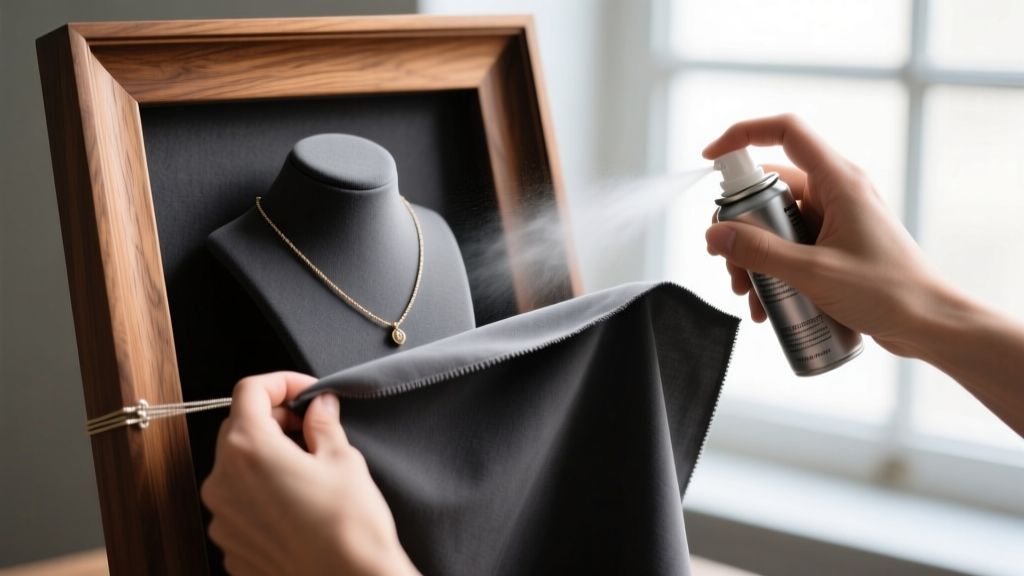
Pacific Silvercloth is embedded with microscopic silver particles that act as a sacrificial anode, absorbing tarnish-causing gases before they reach your actual jewelry. When mounting this cloth to your wooden trays, avoid standard super glue (cyanoacrylate), which 'blooms' and leaves a white, crusty residue that can transfer to your pieces. Instead, use an acid-free PVA adhesive like Lineco Neutral pH Adhesive, or a 3M Super 77 multi-purpose spray adhesive applied in a well-ventilated area, allowing it to cure for 48 hours before introducing jewelry.
Finishing and Sealing Without Off-Gassing
Raw wood is porous and can absorb ambient humidity, leading to warping and the harboring of atmospheric pollutants. However, traditional oil-based polyurethanes and lacquers trap solvents that off-gas for months. As of 2026, the gold standard for sealing jewelry holders is the use of hardwax oils, such as Rubio Monocoat or Osmo Polyx-Oil. These plant-based finishes bond molecularly with the topmost fibers of the wood, curing through oxidation rather than solvent evaporation. Once cured (typically within 5 to 7 days), they emit zero VOCs and provide a satin, water-resistant barrier that feels incredibly smooth to the touch.
Expert Tip: Always seal both the front and the back of your wooden boards. Sealing only the face creates an imbalance in moisture absorption, which guarantees the board will warp or 'cup' over time, ruining the flush mount of your wall display.
Modular Expansion and Magnetic Mounting
The ultimate advantage of a do it yourself jewelry holder is the ability to adapt it as your collection grows. Instead of building one massive, immovable board, design a modular system. Use a French cleat system for the main wall mount, allowing you to easily lift and rearrange entire sections. For smaller, interchangeable trays (such as a dedicated ring tray or a watch module), embed N42-grade neodymium rare earth magnets into the back of the trays and the main board. This allows you to swap out seasonal modules—perhaps replacing a heavy scarf-hanging module in the winter with a delicate chain-display module in the summer—without ever needing to unscrew or damage the wood.
Troubleshooting Common DIY Failure Modes
Even with the best materials, builders often encounter mechanical failures. Here is how to solve the most common issues:
- Hook Pull-Out: If you are mounting heavy hooks into softer woods like cedar or pine, the threads will eventually strip. To fix this, drill your pilot hole slightly larger, fill it with a mixture of two-part clear epoxy and fine sawdust, and let it cure completely before threading the brass hook into the new, hardened composite material.
- Chain Slippage: Smooth brass hooks can cause delicate chains to slide off. Use a jeweler's file to cut a tiny, 1-millimeter groove on the inside curve of the hook. This creates a mechanical catch that holds thin 1mm snake chains securely in place.
- Velvet Delamination: If your felt lining is peeling at the edges, it is likely due to wood dust preventing adhesion. Always wipe the wood surface with denatured alcohol and a tack cloth immediately before applying your adhesive to ensure a permanent, chemical-free bond.
By meticulously selecting low-acidity hardwoods, inert brass hardware, and archival-grade linings, your custom build will not only organize your collection but actively preserve it for decades to come.


