The 2026 Buying Guide to Premium Jewelry Display Cards
Discover the best jewelry display cards for 2026. Learn about cardstock weights, anti-tarnish coatings, and sizing for professional merchandising.

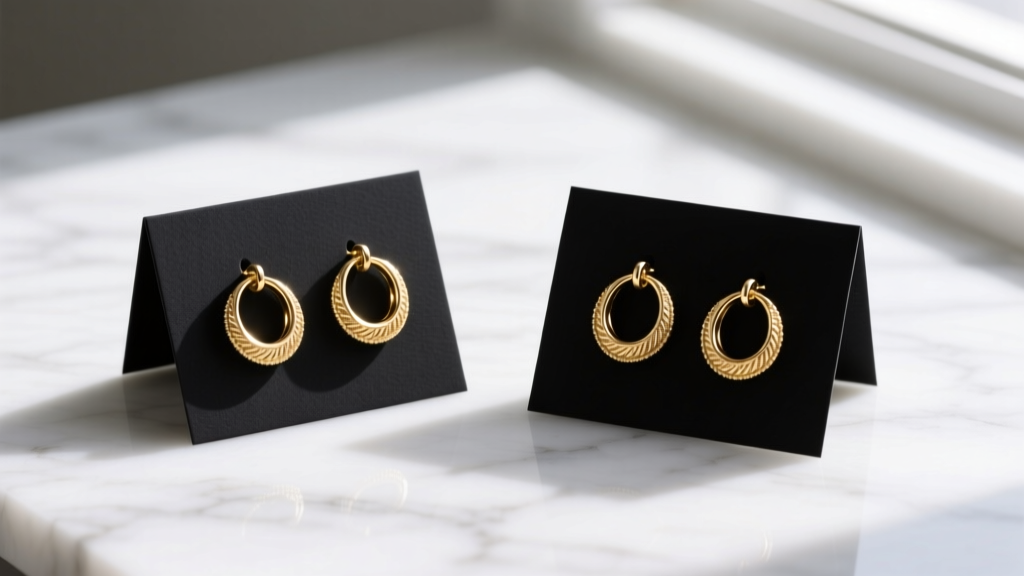
The Silent Salesperson: Why Display Cards Matter in 2026
In the highly competitive landscape of jewelry merchandising, the unboxing and presentation experience is just as critical as the craftsmanship of the pieces themselves. As we move through 2026, consumer expectations for luxury presentation have shifted heavily toward sustainable, archival-quality materials. Jewelry display cards are no longer mere pieces of cardboard; they are engineered substrates designed to protect delicate metals, communicate brand value, and facilitate seamless retail handling. Whether you are an independent artisan selling at high-end craft fairs or a boutique owner managing a sprawling inventory, understanding the technical specifications of jewelry display cards is essential for protecting your margins and your merchandise.
This comprehensive buying guide breaks down the material science, dimensional standards, and fastening mechanics you need to evaluate before sourcing your next batch of display packaging.
The Science of Substrate: Cardstock Weights and Archival Standards
The foundation of any premium jewelry display card is its substrate. The wrong paper chemistry can lead to structural failure, while off-gassing from acidic compounds can actively tarnish silver and degrade porous gemstones like pearls and turquoise.
Understanding Point (pt) vs. GSM
In the packaging industry, thickness is measured in points (pt) or grams per square meter (gsm). For jewelry display cards, anything below 14pt (approximately 350 gsm) will warp under the tension of heavy necklaces or feel flimsy to the consumer. Here is the professional grading scale for 2026:
- 14pt to 16pt (350 - 400 gsm): Economy grade. Suitable for lightweight stud earrings and temporary pop-up shop inventory. Prone to bending if stored vertically.
- 18pt to 20pt (450 - 500 gsm): Standard premium. The industry workhorse for mid-tier boutiques. Offers excellent rigidity for standard earring and pendant cards.
- 24pt to 32pt (600 - 800 gsm): Luxury/Archival grade. Often constructed from layered cotton-rag or high-alpha-cellulose. Required for heavy statement pieces, bridal jewelry, and high-carat gemstone presentations.
Archival Certification and pH Neutrality
According to preservation guidelines outlined by the Library of Congress, paper products intended for long-term contact with sensitive materials must be acid-free and lignin-free. Standard wood-pulp cardstock contains lignin, which breaks down over time to release acidic compounds and sulfur dioxide. This off-gassing accelerates the oxidation of sterling silver and copper alloys. When sourcing premium jewelry display cards, demand a pH-neutral (8.0 to 8.5) substrate buffered with calcium carbonate. This alkaline reserve neutralizes environmental acids, ensuring your inventory remains untarnished while sitting in display cases or shipping boxes.
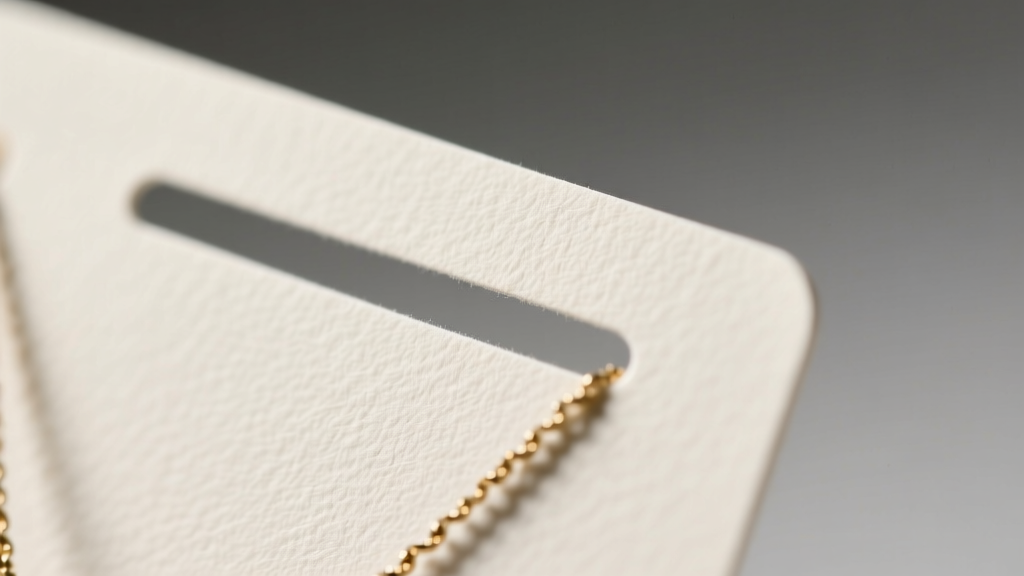
Surface Finishes: Tactile Psychology and Tarnish Prevention
The surface coating of your jewelry display cards dictates both the tactile experience of the customer and the micro-environment surrounding the jewelry. In 2026, visual merchandisers are moving away from high-gloss UV coatings, which can look dated and trap fingerprint oils, in favor of more sophisticated finishes.
Soft-Touch Lamination vs. Uncoated Cotton
Soft-touch aqueous coatings provide a velvety, suede-like feel that instantly elevates the perceived value of a piece. However, buyers must be cautious: low-quality soft-touch coatings can sometimes exhibit 'blocking' (sticking together in high humidity) or leave microscopic residue on high-polish 18k gold. Alternatively, uncoated 100% cotton-rag cards offer a highly textured, organic aesthetic favored by eco-conscious and artisanal brands. Cotton fibers are naturally more durable and tear-resistant than wood pulp, meaning the die-cut slits will not fray after repeated insertions.
Flocking and Anti-Tarnish Treatments
For ultra-luxury presentations, electrostatic flocking (applying rayon or nylon fibers to an adhesive-coated board) provides a velvet-like surface. When combined with Pacific Silvercloth or proprietary anti-tarnish chemical treatments embedded in the paper fibers, these cards act as active preservation tools. The Gemological Institute of America (GIA) frequently notes that improper storage materials are a leading cause of surface degradation in organic gems; thus, investing in treated, flocked substrates is a non-negotiable for pearl and opal vendors.
Dimensional Standards and Die-Cut Configurations
Selecting the correct dimensions is crucial for visual balance. A card that is too large obscures the jewelry in a crowded display case, while a card that is too small looks disproportionate and fails to support the weight of the chain. Below is the standard sizing matrix utilized by professional merchandisers:
| Card Category | Standard Dimensions | Primary Use Case | Die-Cut Configuration |
|---|---|---|---|
| Stud / Mini | 2.0' x 2.0' | Small studs, single charms | Single center hole (2mm) |
| Standard Earring | 3.5' x 2.5' | Drops, hoops, dangle earrings | Dual top slits or holes |
| Pendant / Charm | 3.0' x 4.0' | Pendants with short chains | Top center slit + bottom anchor |
| Bracelet / Watch | 4.0' x 6.0' | Tennis bracelets, watches | Multi-slit or foam-insert slot |
| Statement Necklace | 6.0' x 8.0' | Heavy collars, bridal sets | Reinforced top notches |
When ordering custom die-cuts, pay attention to the kerf (the width of the cut). Laser cutting leaves a microscopic burnt edge on dark cardstock, which can transfer soot to white gold or platinum. Always specify steel-rule die-cutting for clean, burnished edges on premium jewelry display cards.
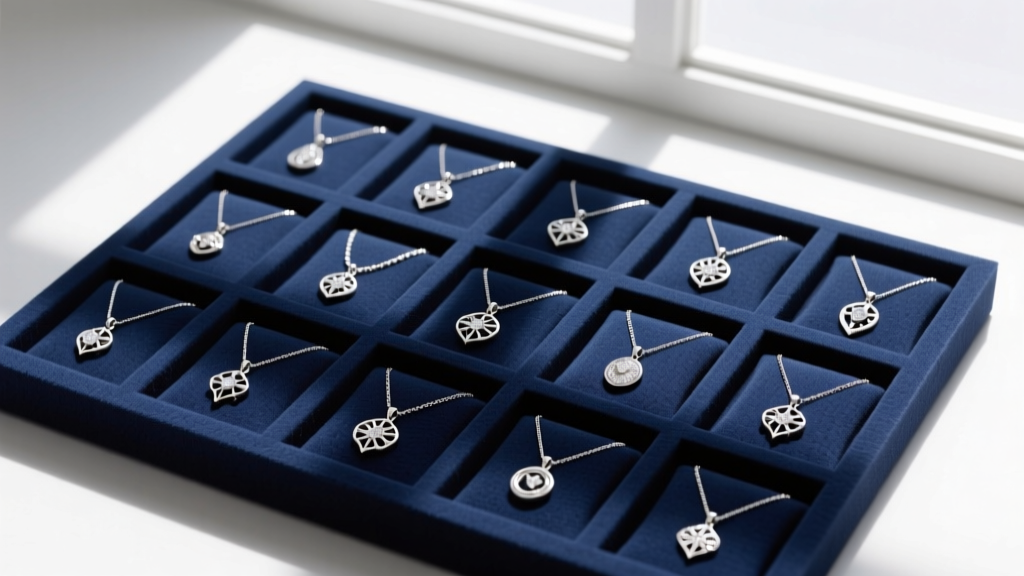
Fastening Mechanics: Slits, Holes, and Foam Integration
How the jewelry physically interfaces with the card is a frequent point of failure in cheap packaging. The mechanics of the fastening system must accommodate the specific gauge of the jewelry wire or the thickness of the chain.
Slit Tolerances and Wire Gauges
Standard earring cards utilize straight slits, but the width of these slits must be matched to your jewelry. A standard 20-gauge (0.8mm) earring post requires a slit width of no more than 1/16th of an inch. If the slit is too wide (e.g., 1/8th of an inch), the earring will slip through and become tangled. Conversely, if you sell heavy 14-gauge ear wires, a narrow slit will tear the cardstock upon insertion. High-end manufacturers use precision-matched steel dies to ensure slit tolerances are held to +/- 0.1mm.
Foam Inserts for Security
For bracelets and heavy necklaces, paper slits are insufficient. Premium brands utilize cards with integrated EVA (Ethylene-Vinyl Acetate) or PE (Polyethylene) foam pads. EVA foam is preferred for its high density and smooth surface, which prevents micro-scratches on polished metals. The foam is precision-slit to allow chains to be tucked away securely, keeping the clasp hidden and the pendant perfectly centered on the display face.
2026 Pricing Tiers and Sourcing Strategies
Budgeting for jewelry display cards requires balancing upfront unit costs against the long-term value of brand perception and inventory protection. Here is what you can expect to pay in the current market:
- Economy / Bulk (14pt - 16pt, standard wood pulp): $0.05 to $0.12 per unit. Requires minimum order quantities (MOQs) of 5,000+. Best for high-volume, low-margin fashion jewelry.
- Boutique Premium (18pt - 20pt, soft-touch or matte lamination): $0.18 to $0.35 per unit. MOQs typically range from 1,000 to 2,500. The sweet spot for independent designers and online DTC brands.
- Luxury Archival (24pt+ cotton-rag, flocked, anti-tarnish treated): $0.60 to $1.50+ per unit. Often produced in smaller domestic runs with MOQs as low as 500. Essential for fine jewelry, high-karat gold, and investment-grade gemstones.
Final Verdict: Building Your Merchandising Arsenal
Upgrading your jewelry display cards is one of the highest-ROI investments a jewelry brand can make. By prioritizing archival-grade, pH-neutral substrates, you actively protect your inventory from chemical degradation. By selecting precise die-cut tolerances and appropriate GSM weights, you eliminate the frustrating customer experience of torn cards and tangled chains. As you audit your packaging supply chain for 2026, demand material safety data sheets (MSDS) from your printers, insist on steel-rule die-cutting, and never compromise on the tactile finish. Your jewelry deserves a stage that reflects its true craftsmanship.


