Japanese Vintage Jewelry Box Materials: Urushi & Kiri Wood
Discover the material properties of an authentic Japanese vintage jewelry box. Compare Urushi lacquer, Kiri wood, and silk linings for optimal care.

The Anatomy of Traditional Japanese Jewelry Storage
When evaluating high-end jewelry storage, collectors and horologists often overlook the profound material science embedded in traditional Japanese woodworking. An authentic Japanese vintage jewelry box is not merely a decorative container; it is a meticulously engineered microclimate designed to protect precious metals, pearls, and gemstones from environmental degradation. Unlike Western vintage boxes that rely on metal hinges, iron nails, and chemically treated woods, traditional Japanese boxes utilize Sashimono—a complex joinery technique that interlocks wood without a single metal fastener. This absence of internal iron or steel eliminates the risk of rust-induced off-gassing, a primary catalyst for accelerated silver tarnish and pearl degradation.
In 2026, as collectors increasingly prioritize archival-grade storage for investment pieces, understanding the specific material properties of these vintage artifacts is critical. From the hygroscopic behavior of Paulownia wood to the enzymatic polymerization of Urushi lacquer, every element of a Japanese vintage jewelry box serves a distinct conservation purpose.
Kiri (Paulownia) vs. Hinoki (Cypress): The Core Woods
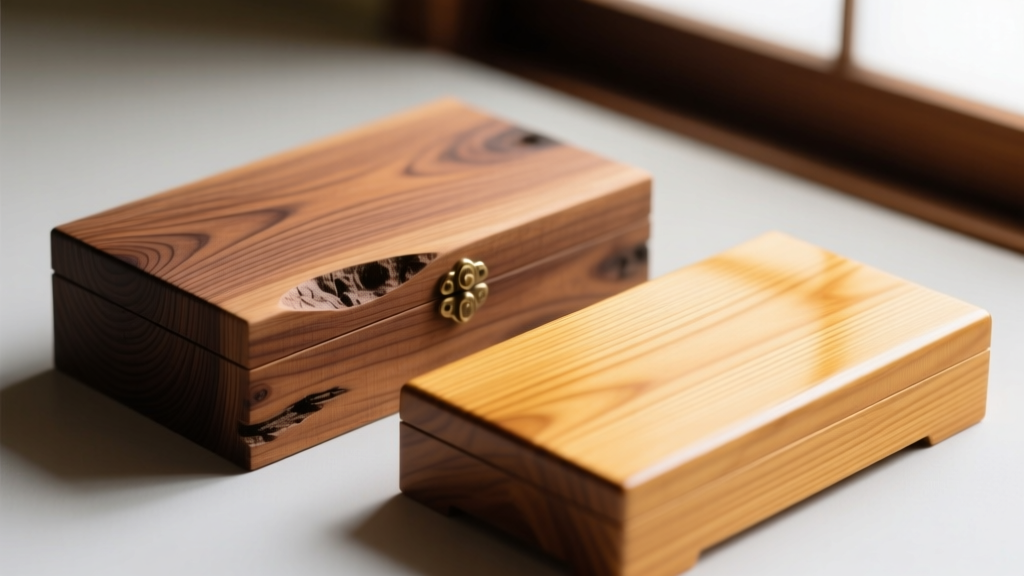
The structural foundation of most premium Japanese vintage jewelry boxes is Kiri (Paulownia tomentosa) or Hinoki (Chamaecyparis obtusa). These woods are selected not for their density, but for their unique chemical and physical stability.
The Hygroscopic Marvel of Kiri Wood
Paulownia is exceptionally lightweight, boasting a specific gravity of just 0.25 to 0.28, making it one of the lightest hardwoods in the world. However, its true value lies in its dimensional stability and moisture regulation. According to The Wood Database, Kiri wood possesses a remarkably low thermal conductivity and high resistance to warping. When ambient humidity rises, the wood swells microscopically, creating an airtight seal at the drawer joints that locks out moisture. Conversely, in dry conditions, it contracts slightly, allowing the interior to breathe. This passive humidity buffering is vital for preventing the micro-cracking of opals and the dehydration of natural pearls.
Hinoki and Natural Pest Resistance
Hinoki cypress, often reserved for the most luxurious Meiji and Taisho-era boxes, contains hinokitiol, a natural antimicrobial and insect-repelling compound. This eliminates the need for chemical pest deterrents like mothballs or cedar oils, which can react adversely with porous gemstones like turquoise and lapis lazuli.
Urushi Lacquer: The Ultimate Protective Coating
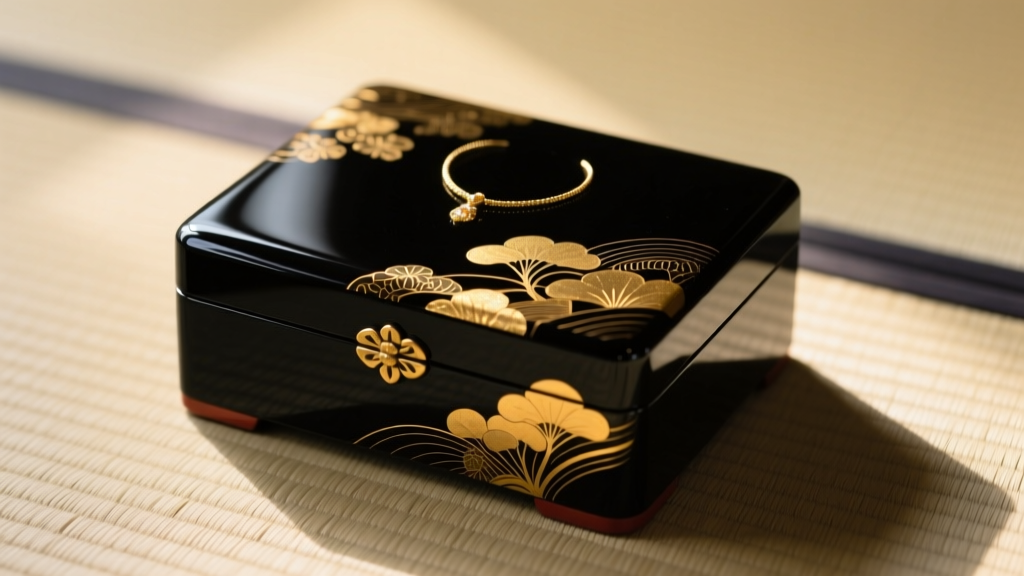
The exterior of a high-grade Japanese vintage jewelry box is typically finished with Urushi, a natural lacquer derived from the sap of the Toxicodendron vernicifluum tree. While toxic in its liquid state due to the presence of urushiol, the curing process transforms it into an inert, virtually indestructible polymer.
Unlike modern polyurethane or nitrocellulose finishes that cure through solvent evaporation, Urushi cures via enzymatic oxidation. This process requires a highly specific environment: temperatures around 25°C (77°F) and humidity levels between 75% and 80%. The resulting polymer matrix is highly resistant to acids, alkalis, and water. For jewelry storage, this means the exterior shell acts as an impermeable barrier against airborne sulfur compounds and industrial pollutants that cause silver sulfide tarnish. The Metropolitan Museum of Art notes that properly cured Urushi can survive centuries without degrading, provided it is shielded from prolonged ultraviolet light.
Hardware and Linings: Copper, Iron, and Silk
The interior environment of a jewelry box is just as critical as its exterior shell. Western vintage boxes from the Victorian and Art Deco periods frequently utilized velvet or felt linings. Unfortunately, many mid-century velvet manufacturing processes employed sulfur-based dyes and adhesives. As documented by the Smithsonian Museum Conservation Institute, sulfur off-gassing from these textiles is a primary cause of rapid silver tarnishing in enclosed spaces.
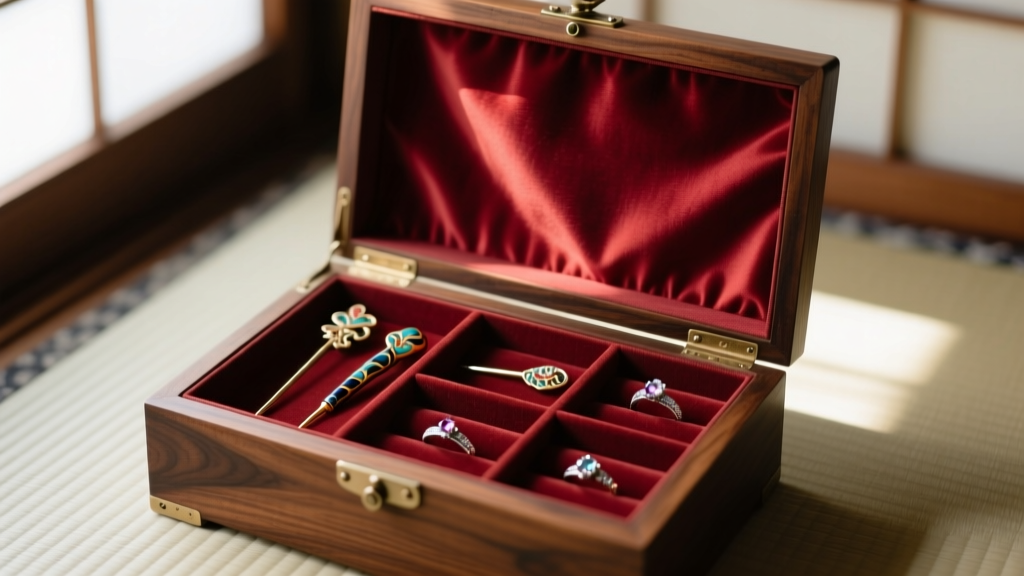
Authentic Japanese vintage boxes circumvent this issue by utilizing pure silk linings. Silk is a protein fiber that is naturally low in sulfur and free from the harsh chemical mordants used in synthetic velvets. Furthermore, the hardware on Japanese Tansu-style boxes is typically crafted from copper alloys or wrought iron, applied exclusively to the exterior. Any interior metal fittings are isolated from the wood and lined with silk to prevent direct contact with stored metals, avoiding galvanic corrosion.
Material Comparison: Japanese vs. Western Vintage Boxes
How do Japanese vintage materials stack up against their Western counterparts and modern mass-market alternatives? The following table outlines the functional differences in jewelry conservation.
| Material Feature | Japanese Vintage (Showa/Meiji) | Western Vintage (Victorian/Mid-Century) | Modern Mass-Market |
|---|---|---|---|
| Core Wood | Kiri (Paulownia) / Hinoki | Mahogany / Walnut / Oak | MDF / Particleboard |
| Joinery | Sashimono (Interlocking, no nails) | Dovetail with iron/steel nails | Staples and chemical glues |
| Exterior Finish | Urushi (Natural enzymatic lacquer) | Shellac / Early Polyurethane | Acrylic / Veneer sealants |
| Interior Lining | Raw or naturally dyed Silk | Velvet / Felt (High sulfur risk) | Synthetic Suede / PU Leather |
| Tarnish Prevention | Excellent (Airtight, sulfur-free) | Poor to Moderate (Off-gassing risk) | Moderate (Requires anti-tarnish strips) |
Sourcing and Authenticating Showa and Meiji Era Boxes
When sourcing a Japanese vintage jewelry box in today's market, provenance and era dictate both the price and the material integrity. Pieces from the Meiji era (1868–1912) often feature intricate maki-e (sprinkled gold powder) designs and command prices ranging from $800 to over $3,000. Show era (1926–1989) pieces are more accessible, typically priced between $150 and $600, and offer excellent functional storage with slightly simpler aesthetics.
Identifying Material Failure Modes
Because Urushi lacquer is sensitive to UV radiation, boxes kept in sunlit display windows often exhibit micro-crazing or a chalky, degraded surface. This photodegradation compromises the moisture barrier. Additionally, Kiri wood requires a stable ambient relative humidity (ideally 45-55%). If a vintage box has been stored near an HVAC vent or in a severely arid climate, the interlocking joints may have loosened, breaking the airtight seal that protects the jewelry inside.
Maintenance Protocols for Vintage Japanese Wood
Caring for these materials requires strict adherence to traditional conservation methods. Never use modern chemical polishes, aerosol sprays, or silicone-based cleaners like Pledge on an Urushi finish; the solvents will permanently cloud the lacquer. Instead, dust the box with a soft, lint-free microfiber cloth. For deeper nourishment, apply a microscopic amount of pure camellia oil (tsubaki oil) or high-grade carnauba wax using a soft cotton cloth, buffing gently to restore the deep, translucent luster of the vintage finish. By respecting the material science of these exceptional pieces, collectors can ensure their jewelry remains pristine for generations to come.


