How to Choose the Perfect Jewelry Tray With Lid for Beginners
Discover how to choose the best jewelry tray with lid for your collection. Learn about anti-tarnish materials, stackability, and daily organization tips.

Why Beginners Need a Jewelry Tray With Lid
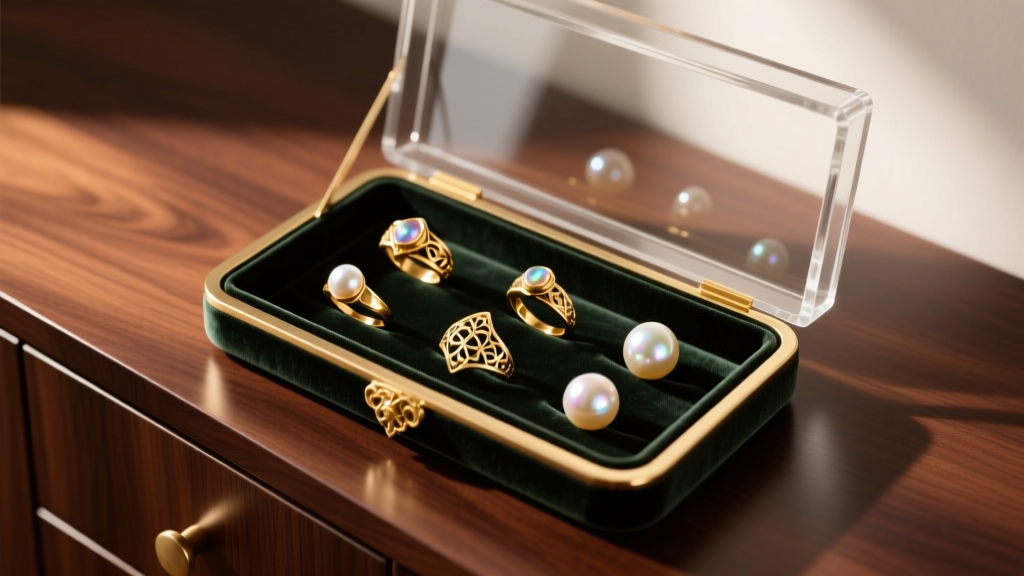
When building your first serious jewelry collection, storage is often an afterthought. Many beginners default to open ceramic bowls, cheap plastic organizers, or the original branded boxes. While these might seem convenient, they expose your pieces to dust, humidity, and physical damage. A dedicated jewelry tray with lid is the ultimate beginner-friendly upgrade. It bridges the gap between high-end safes and messy drawer dumps, offering daily accessibility while protecting your investments from environmental degradation.
According to the Jewelers of America, improper storage is one of the leading causes of premature wear, scratched gemstones, and severe metal tarnishing. A lidded tray creates a physical barrier against these elements, serving as both a display piece and a protective vault for your daily wear items.
The Science of the Lid: Creating a Tarnish-Resistant Microclimate
To understand why a lid is non-negotiable, you need to understand how tarnish works. Silver, copper, and brass alloys react with hydrogen sulfide and sulfur dioxide in the air to form silver sulfide—that dull, blackish film that ruins a piece's luster. An open tray allows constant air circulation, accelerating this chemical reaction.
A well-fitted lid reduces air exchange by up to 80%, effectively creating a stable microclimate. When you combine a tight-fitting lid (such as a tempered glass top or a snug PU leather cover) with anti-tarnish interior linings, you drastically slow down oxidation. This means you spend less time polishing with abrasive compounds and more time actually wearing your jewelry.
Decoding Interior Materials: Velvet, Microfiber, and Anti-Tarnish Cloth
The exterior of your tray might be leather or wood, but the interior lining is where the real magic happens. Beginners often assume all soft fabrics are safe for jewelry, but this is a costly mistake. Certain synthetic dyes and acidic glues used in cheap linings can actually cause 'off-gassing,' releasing chemicals that pit pearls and corrode soft metals like gold.
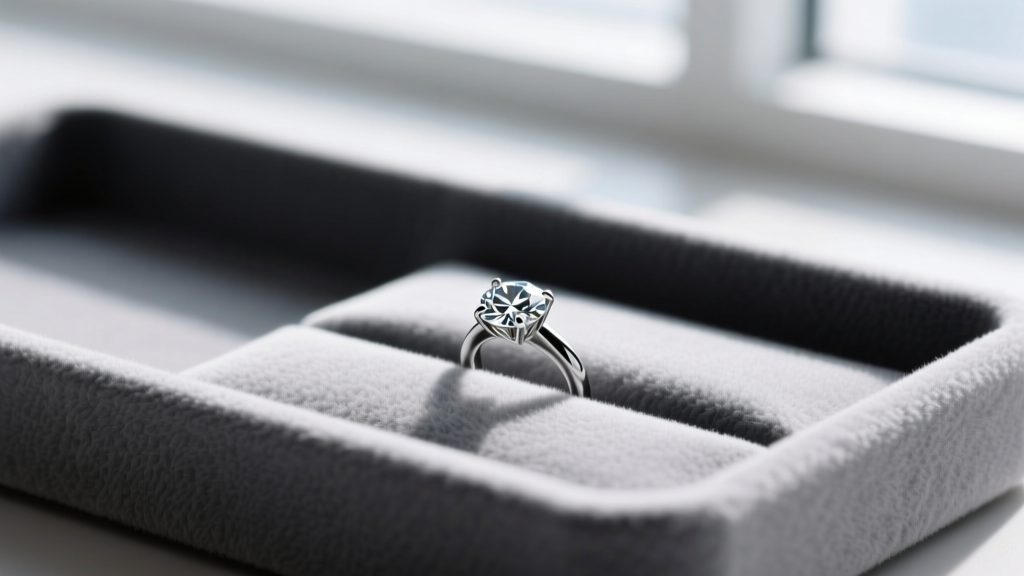
When shopping for a jewelry tray with lid, look for these three premium interior materials:
- Cotton-Backed Velvet: Traditional and luxurious. Ensure it is cotton-backed rather than synthetic, as natural fibers breathe better and trap less moisture.
- Ultra-Fine Microfiber: The absolute best choice for diamond jewelry. The Gemological Institute of America (GIA) notes that diamonds attract grease and dust easily. Microfiber is lint-free and won't snag on delicate pavé settings or micro-prongs.
- Impregnated Anti-Tarnish Cloth: Often branded as Pacific Silvercloth, this material is embedded with microscopic silver particles that act as a sacrificial anode. The cloth absorbs hydrogen sulfide gases before they can reach your actual jewelry, turning black itself over time while keeping your pieces pristine.
Material Comparison Chart
| Interior Material | Tarnish Resistance | Price Range | Best Used For |
|---|---|---|---|
| Standard Velvet | Low | $15 - $30 | Fashion jewelry, short-term display |
| Microfiber | Medium | $25 - $50 | Diamonds, gemstones, daily wear gold |
| Anti-Tarnish Cloth | High | $60 - $120+ | Sterling silver, heirloom pieces, pearls |
Compartment Geometry: Sizing Matters More Than Slot Count
A common beginner trap is buying a tray based on the sheer number of compartments. A tray boasting '100 slots' is useless if those slots are too shallow for your cocktail rings or too narrow for your chain bracelets. Proper compartment geometry prevents physical damage and the dreaded 'chain tangle' effect.
Here are the exact dimensions you should look for based on your collection:
- Ring Slots: Look for padded slots measuring at least 20mm x 20mm. Anything smaller will crush the prongs of your rings when you push them in, potentially loosening the center stone.
- Earring Channels: Post earrings need horizontal channels with 10mm to 15mm spacing to prevent the posts from bending under the weight of the tray lid.
- Adjustable Dividers: For necklaces and bracelets, seek out trays with removable wooden or acrylic dividers. This allows you to create custom 70mm+ wide channels for bangles or long, uninterrupted zones for 18-inch chains.
Hardware, Stackability, and Weight Distribution
As your collection grows, a single tray won't suffice. This is where stackability becomes a critical feature. However, not all stackable trays are engineered equally. You need to pay close attention to the hardware and structural integrity.
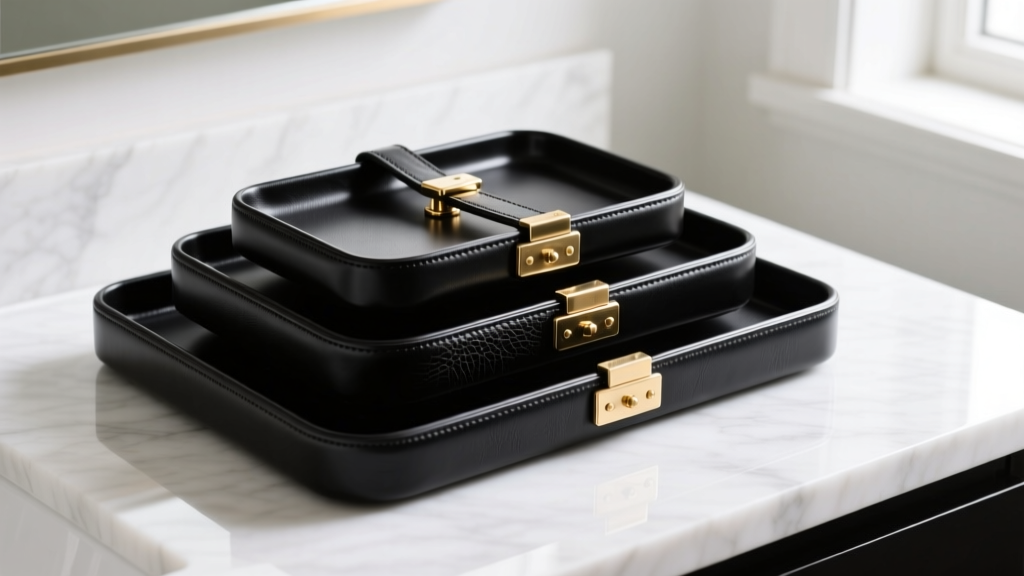
High-quality stackable trays feature interlocking lips—a slight recess on the top of the lid that perfectly matches the base of the tray above it. This prevents sliding and accidental toppling. Avoid trays that rely solely on friction or magnets for stacking, as a slight bump to your dresser can send your entire collection crashing to the floor.
Furthermore, consider weight distribution. If you are stacking heavy bangles and metal watches on the top tray, the lid of the bottom tray must be rigid (preferably reinforced wood or thick acrylic). A flimsy PU leather lid will bow under the weight, pressing down onto the delicate jewelry in the lower tray and causing scratches.
Maintenance and Troubleshooting Common Failure Modes
Even the best jewelry tray with lid requires minimal maintenance to function optimally. Over time, the interior microclimate can become compromised if you ignore a few basic care protocols.
Expert Troubleshooting Tip: If you open your tray and notice a faint 'chemical' or musty odor, your interior lining is likely off-gassing PVC or degrading synthetic glues. Remove your jewelry immediately. To neutralize the environment, wipe the interior with a barely damp cloth and let it air-dry completely. Then, drop in a few 3M Anti-Tarnish strips and a silica gel packet to absorb residual moisture and sulfur.
Remember that anti-tarnish strips and silica gel packets have a finite lifespan. Replace 3M strips every six months, and reactivate or replace silica gel packets when they change color (if using indicator crystals). Never use liquid silver polish inside the tray, as the harsh chemicals can permanently stain the microfiber or velvet lining.
Final Verdict: Building Your First Tray System
Investing in a high-quality jewelry tray with lid is one of the smartest moves a beginner can make. It forces you to organize your pieces methodically, protects them from the invisible threats of humidity and sulfur, and elevates the ritual of getting dressed each morning. Start with a mid-tier microfiber or velvet tray featuring a tempered glass lid and interlocking stackability. As your collection expands into fine silver and heirloom pieces, you can seamlessly upgrade to anti-tarnish cloth interiors, stacking them securely atop your original foundation.


