The Ultimate 1950s Jewelry Box Buying Guide & Authenticity Tips
Discover how to authenticate, evaluate, and buy a vintage 1950s jewelry box. Learn about mid-century materials, hardware, and restoration tips.

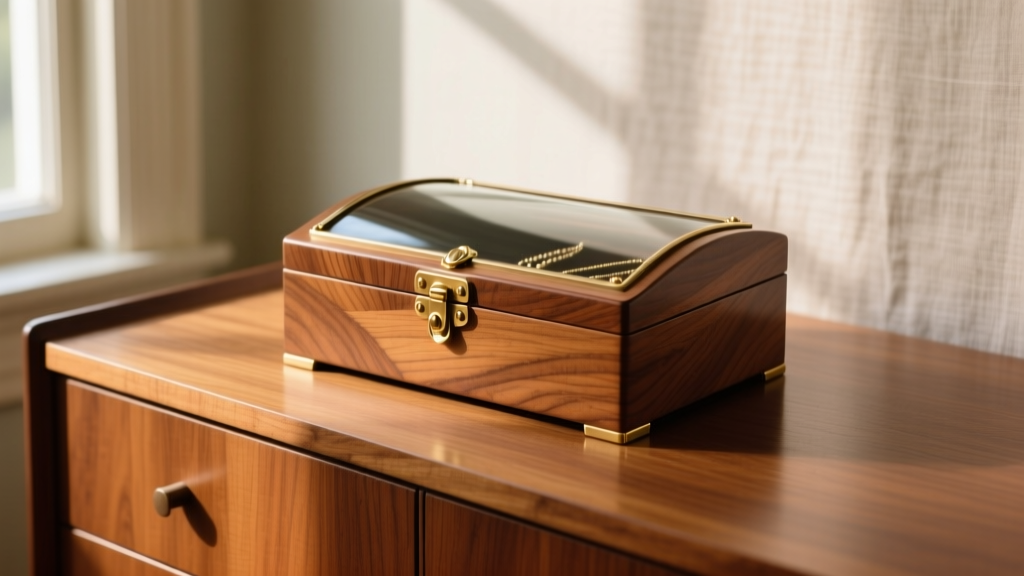
The Allure of Mid-Century Jewelry Storage
The post-war economic boom of the 1950s ushered in an era of unprecedented optimism, reflected beautifully in the domestic objects of the time. For collectors and jewelry enthusiasts in 2026, a genuine 1950s jewelry box represents the perfect intersection of Atomic Age aesthetics and functional craftsmanship. Unlike contemporary mass-produced storage, mid-century boxes were built with distinct material grades, specialized hardware, and an eye for architectural design. However, navigating the vintage market requires a trained eye to differentiate between authentic mid-century pieces, later reproductions, and damaged antiques that harbor hidden threats to your precious metals.
This comprehensive buying guide breaks down the exact materials, structural hallmarks, and hidden failure modes you must evaluate before investing in a vintage 1950s jewelry box.
Key Materials: Wood Veneers, Lucite, and Glass
The 1950s was a transitional decade for manufacturing. Woodworking techniques allowed for stunning, exotic veneers to be applied to more stable, affordable substrates, while the plastics industry introduced revolutionary new polymers to the consumer market.
Wood Substrates and Veneer Grades
Authentic 1950s wooden boxes rarely feature solid hardwood construction due to the warping issues associated with solid lumber in varying humidity. Instead, look for high-grade birdseye maple, burled walnut, or ribbon mahogany veneers pressed over a poplar or multi-ply birch substrate. A common failure mode in poorly stored vintage boxes is veneer delamination, where the original hide glue or early PVA adhesives dry out, causing the thin wood layer to bubble or flake near the brass escutcheons. Always inspect the corners and the bottom panel for lifting.
The Lucite Revolution
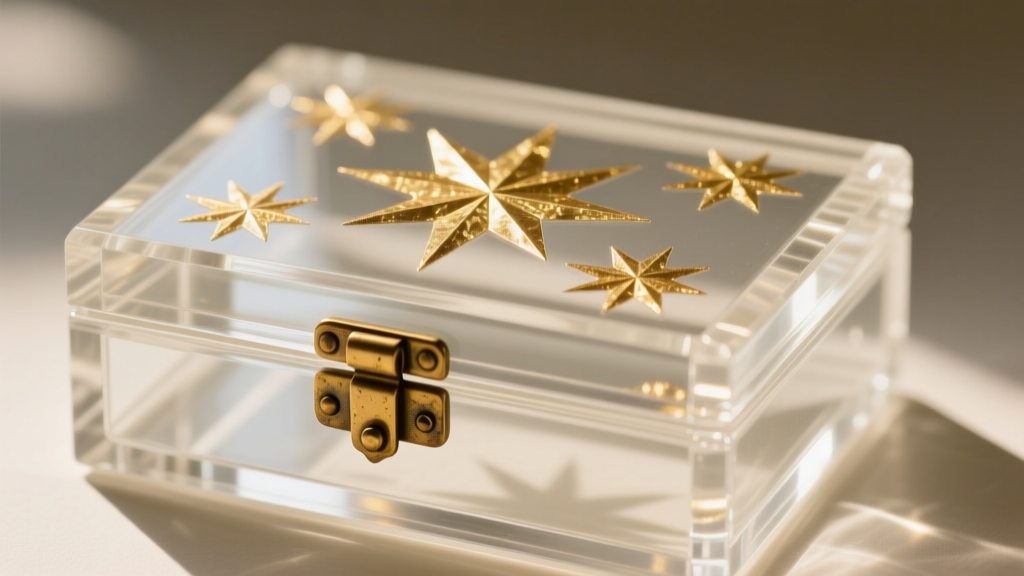
While glass remained popular for lid inserts, cast acrylic—trade-named Lucite—became a hallmark of high-end 1950s jewelry storage. Brands like Claire F. and Kofahl utilized thick, cast Lucite to create seamless, geometric boxes. When evaluating a plastic 1950s jewelry box, you must distinguish between cast Lucite and early polystyrene. Polystyrene is brittle, prone to severe UV yellowing, and often exhibits a cloudy, crazed micro-fracture pattern. Cast Lucite, conversely, remains optically clear, feels substantially heavier, and can be polished back to a factory shine using a three-step Novus Plastic Polish kit.
Hardware and Hinge Anatomy
The hardware on a 1950s jewelry box is often the most reliable indicator of its authenticity and quality. During this era, hardware transitioned from heavy, cast solid brass to stamped brass and, increasingly, zinc alloy die-casts.
- Solid Brass and Stamped Brass: High-end boxes from makers like Mele & Co. featured solid brass piano hinges or heavy-duty brass butt hinges. These should have a warm, golden undertone. If the metal is heavily pitted but reveals a yellowish core when scratched gently, it is solid brass.
- Zamak (Pot Metal): Many mid-tier 1950s boxes utilized Zamak, a zinc-aluminum alloy. While it allowed for intricate, sculptural lock barrels and handles, Zamak is highly susceptible to a degradation process known as zinc pest. If the hardware looks swollen, heavily pitted with a white powdery residue, or feels unusually brittle, the Zamak is degrading from the inside out and cannot be restored.
- Lock Mechanisms: Original 1950s lock barrels often feature a simple tubular key design. Ensure the key is present and that the internal tumbler hasn't seized due to decades of oxidized lubricants. A drop of synthetic watch oil can often free a stuck mid-century lock.
The Hidden Danger: 1950s Linings and Silver Tarnish
Perhaps the most critical aspect of buying a vintage 1950s jewelry box is understanding the chemical composition of its original interior lining. This is a massive point of failure for unprotected silver collections.
During the 1950s, manufacturers frequently used early synthetic foams, rubber-based adhesives, and certain acetate rayons to line the interiors and create padded ring rolls. According to the Gemological Institute of America (GIA), these aging organic compounds and sulfur-containing vulcanized rubbers off-gas hydrogen sulfide and sulfur dioxide. When these gases are trapped inside a closed box, they react rapidly with the copper in sterling silver, forming a thick, black layer of silver sulfide.
If you plan to store sterling silver, antique gold, or porous gemstones like pearls and turquoise, you must completely strip the original 1950s lining. Replace it with modern, acid-free flannel or Pacific Silvercloth, which actively neutralizes tarnish-causing gases.
Atomic Age Motifs and Design Verification
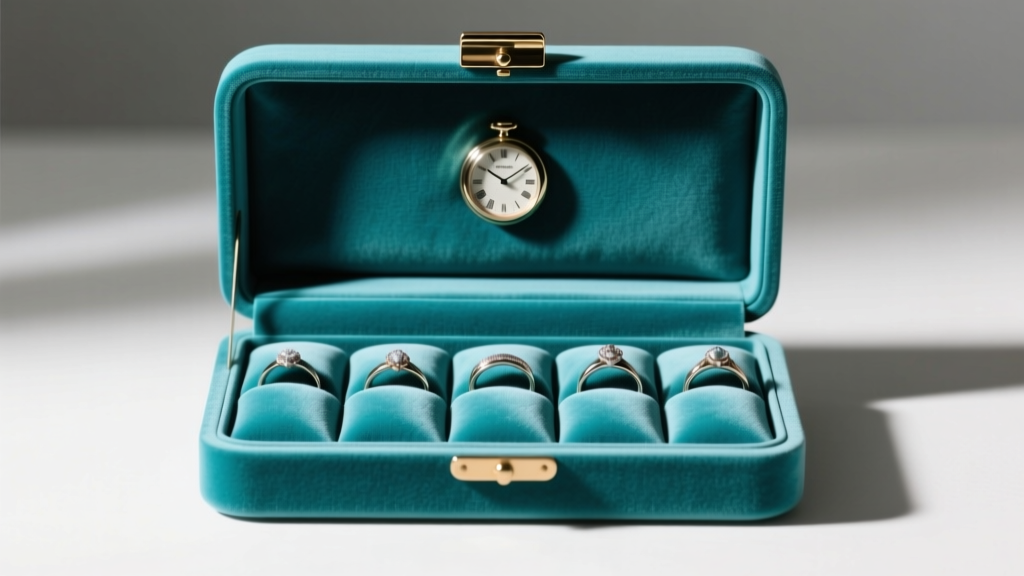
To verify a box's 1950s provenance, look for specific design motifs that defined the Atomic Age. Starburst patterns, boomerang shapes, and asymmetrical drawer configurations are highly characteristic. Pastel color palettes were incredibly popular in mid-century linings—look for original chartreuse, powder blue, or turquoise velvet. If a box features a highly uniform, laser-cut MDF interior with modern polyurethane foam, it is likely a late-1990s or 2000s reproduction mimicking the mid-century style.
Pricing Guide and Market Value
The vintage market in 2026 places a premium on pristine, unrestored examples or professionally restored pieces with period-accurate materials. Below is a valuation framework based on current data from Kovels Antique Collecting Guides and recent sales on Ruby Lane Vintage Market.
| Condition Grade | Material / Hardware | Est. 2026 Market Value | Required Action |
|---|---|---|---|
| Mint / Excellent | Cast Lucite / Solid Brass | $250 - $550 | None; museum-quality preservation. |
| Good | Walnut Veneer / Stamped Brass | $120 - $220 | Interior lining replacement for safe storage. |
| Fair | Particle Board / Zamak Alloy | $40 - $90 | Hardware rebuild and veneer regluing. |
| Poor / Parts | Water-damaged / Missing Keys | $15 - $35 | Complete gutting; salvage hinges only. |
Sourcing and Final Authentication Tips
When hunting for a 1950s jewelry box, estate sales remain the most lucrative source for underpriced, high-quality pieces. Online platforms like 1stDibs and Etsy are excellent for finding rare designer pieces, but prices are heavily marked up. Always request high-resolution macro photos of the hinges, the interior seams, and the lock barrel. Check the underside of the box for manufacturer stamps, such as the iconic WOLF script or the Mele & Co. crest, which were often stamped directly into the wood or affixed via a small brass plaque. By prioritizing material integrity and understanding the chemical realities of vintage storage, you can secure a stunning mid-century centerpiece that safely houses your collection for decades to come.


