Is a Burl Wood Jewelry Box Worth the Investment? Value Guide
Discover if a burl wood jewelry box is worth the premium price. We break down market costs, veneer vs. solid wood, and interior lining value.

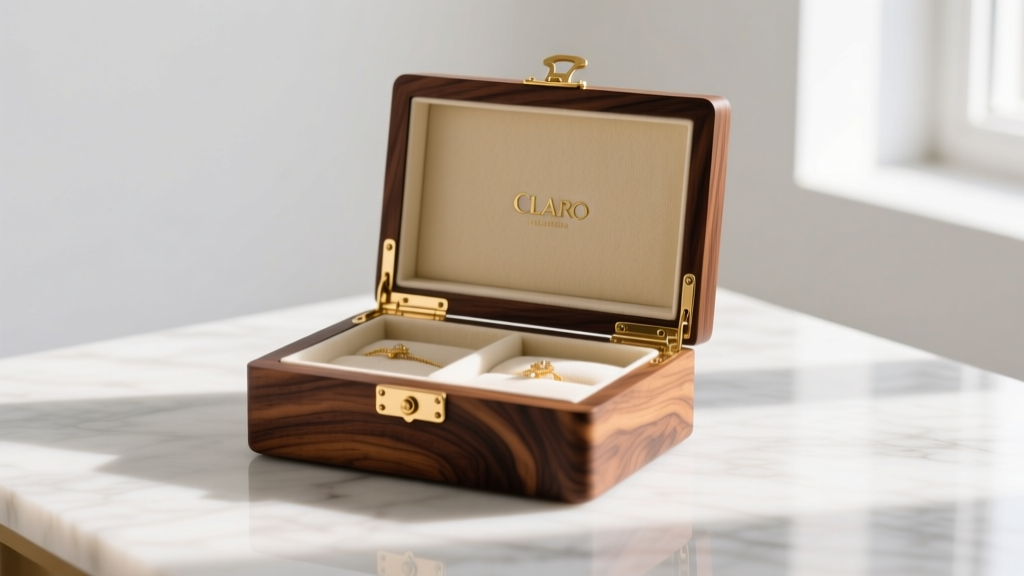
When browsing high-end jewelry storage, few materials command the immediate reverence of burl wood. With its swirling, hypnotic grain patterns and deep, translucent chatoyancy, a burl wood jewelry box is often marketed as the ultimate heirloom piece. But as collectors and everyday wearers alike look to protect their investments in 2026, a critical question emerges: is the premium price tag actually justified by the functional value, or are you simply paying for aesthetic novelty?
As a jewelry storage specialist, I frequently see collectors make costly mistakes—either overpaying for mass-produced veneer disguised as solid wood, or investing in a stunning exterior only to discover the interior lining is actively tarnishing their silver and degrading their pearls. This comprehensive value assessment breaks down the true cost of burl wood, the hidden traps of the luxury storage market, and exactly what you should expect to pay for genuine, protective craftsmanship.
The Anatomy of Burl Wood: Why It Commands a Premium
To assess value, you must first understand the material. A burl is not a specific species of tree; it is a biological anomaly. According to the Woodworkers Journal, burls are caused by a tree undergoing severe stress—such as a fungal infection, viral attack, or physical injury. This stress causes the wood grain to grow in a highly deformed, swirling pattern, resulting in the prized 'eyes' and chaotic figure that make burl wood so visually striking.
Because burls are relatively rare and difficult to harvest without damaging the host tree, the raw material is inherently expensive. The most highly sought-after varieties in luxury jewelry box manufacturing include:
- Claro Walnut Burl: Native to the Pacific Northwest, prized for its dramatic reddish-brown tones and high-contrast figuring.
- Amboyna Burl: Sourced from Southeast Asia, this is one of the densest and most expensive burls in the world, featuring a golden-red hue and tight, metallic-looking grain.
- Maple Burl: Lighter in color with a more subtle, creamy aesthetic, often used in contemporary or Scandinavian-inspired storage designs.
The scarcity of large, solid burl blocks means that true solid-wood burl boxes are exceptionally rare and carry a correspondingly high price tag. This scarcity is the primary driver of the 'luxury' markup, but it also opens the door for deceptive manufacturing practices.
Market Price Tiers: What You Actually Get for Your Money
The term 'burl wood jewelry box' is used liberally across the market, applied to everything from $40 department store finds to $5,000 bespoke commissions. Understanding the structural differences across these price tiers is the first step in making an informed budget decision.
| Price Tier | Cost Range (2026) | Core Material | Interior Lining | Hardware & Joinery |
|---|---|---|---|---|
| Entry-Level | $45 - $120 | MDF/Particleboard with paper-thin rotary-peeled veneer | Synthetic felt (often acidic) | Stamped zinc hinges, glued butt joints |
| Mid-Tier Artisan | $250 - $650 | Baltic Birch plywood substrate with flat-sawn, book-matched veneer | LusterLoc treated anti-tarnish fabric | Solid brass butt hinges, mitered spline joints |
| Heirloom Solid | $1,200 - $5,000+ | Solid Claro Walnut or Amboyna burl blocks | Pacific Silvercloth & acid-free suedette | Cast brass quadrant hinges, French dovetails |
If your budget is under $150, you are almost certainly purchasing MDF wrapped in a micro-thin layer of burl veneer. While this can still look attractive on a dresser, it holds no intrinsic heirloom value and is highly susceptible to moisture damage and edge peeling.
Veneer vs. Solid Burl: The Biggest Value Trap
The most common pitfall for buyers seeking a burl wood jewelry box is mistaking high-quality veneer for solid wood. Veneer itself is not inherently bad; in fact, applying a stable burl veneer over a high-grade Baltic birch core can prevent the warping that solid burl wood is notorious for. However, you should not be paying solid-wood prices for a veneered box.
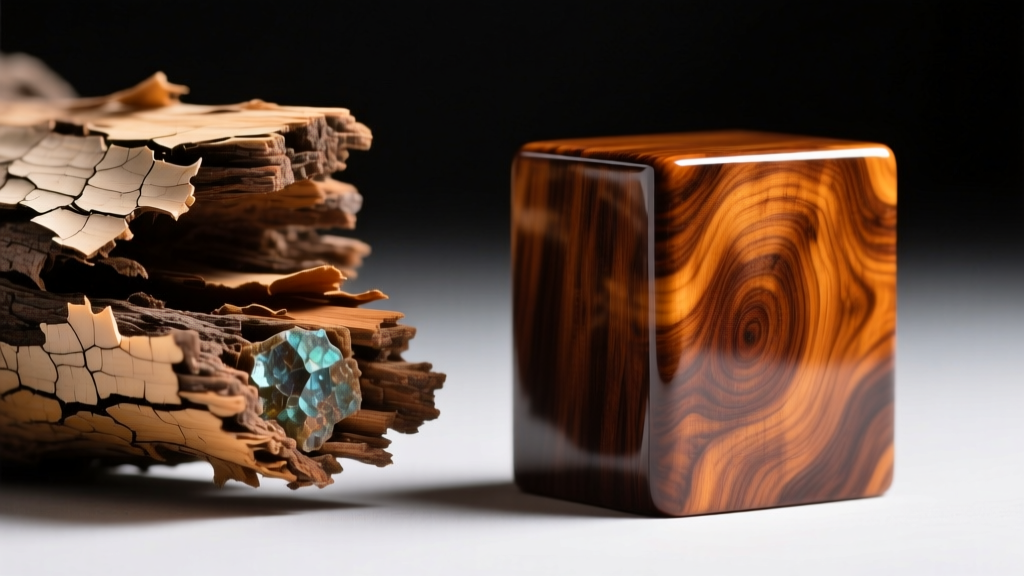
To accurately assess the value proposition, perform these three physical checks if you are shopping in person, or request specific macro-photography if buying online:
- The Edge Banding Test: Inspect the corners and edges. Veneered boxes use 'edge banding'—a thin strip of wood glued to the side to hide the MDF core. If you see a faint, perfectly straight glue line or a slight repetition in the grain pattern wrapping around the corner, it is veneer.
- The Acoustic Tap: Tap the lid lightly with your knuckle. Solid burl wood produces a dense, high-pitched 'click.' Veneered MDF produces a dull, hollow 'thud' due to the compressed sawdust core.
- The Weight Assessment: Solid Amboyna and Claro Walnut are incredibly dense woods. A solid 10-inch box will feel surprisingly heavy, whereas an MDF counterpart will feel deceptively light and unbalanced when the lid is open.
The Interior: Where True Jewelry Storage Value Lies
A breathtaking burl exterior is entirely useless if the interior environment degrades your collection. According to the Gemological Institute of America (GIA), improper storage is a leading cause of accelerated tarnishing and gemstone abrasion. When evaluating the budget-to-value ratio of a jewelry box, the interior lining is where the true functional ROI is determined.
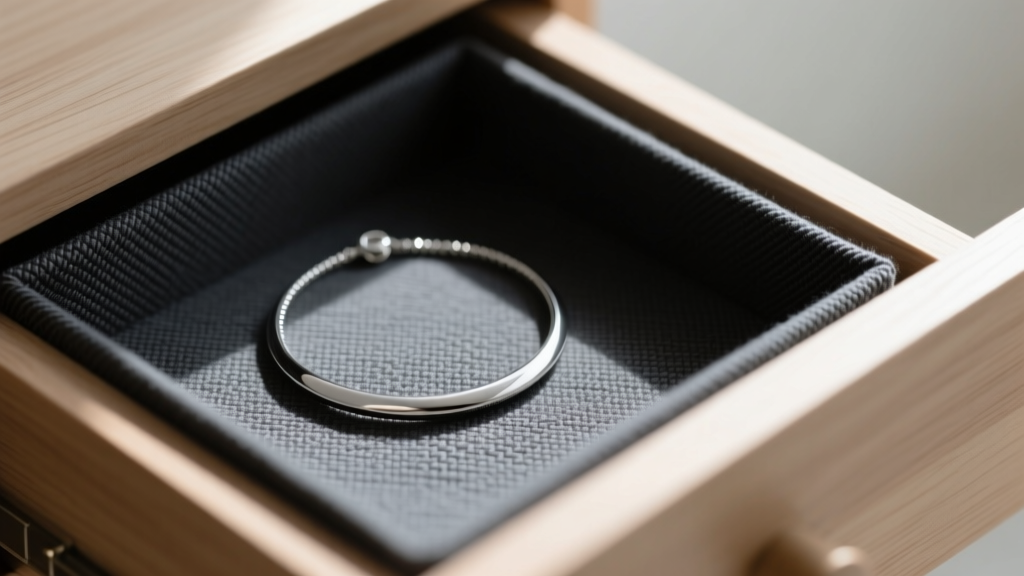
Cheaper boxes utilize standard synthetic felt or untreated cotton. These materials can trap ambient moisture and, in the case of some cheap dyes, off-gas acidic compounds that actively pit sterling silver and dull pearls. When investing in the mid-to-high tier ($250+), demand the following interior specifications:
Pacific Silvercloth vs. Standard Treated Fabrics
Many mid-tier boxes use 'tarnish-resistant' fabrics sprayed with chemical inhibitors. These chemicals evaporate over 2 to 3 years, rendering the box useless for silver protection. True heirloom boxes utilize Pacific Silvercloth. This material is woven with thousands of microscopic silver particles that act as a sacrificial anode. The hydrogen sulfide in the air tarnishes the embedded silver dust rather than your jewelry. It never loses its effectiveness and requires no chemical reapplication.
Acid-Free Suedette and Compartmentalization
For gold, platinum, and gemstones, the lining must be completely acid-free and pH-neutral. High-end boxes use ultra-suede or premium acid-free suedette. Furthermore, assess the compartment depth. Shallow, poorly divided trays force necklaces to tangle and diamonds (which rank a 10 on the Mohs scale) to scratch adjacent gold and silver pieces. A high-value box will feature deep, individualized slots and dedicated, padded ring rolls that prevent metal-on-metal contact.
Hardware and Joinery: The Hidden Cost Cutters
The final metric in our value assessment is the structural integrity of the box. Burl wood, particularly solid burl, expands and contracts with humidity changes. If the box is constructed using simple glue and stamped steel hinges, the joints will inevitably fail, and the hinges will rust or bind.
In a premium burl wood jewelry box, look for French dovetail joinery or mitered corners reinforced with contrasting wood splines. The hardware should be solid cast brass or stainless steel. Quadrant hinges (the folding arms that hold the lid open at a precise 90-degree angle) are a hallmark of luxury storage, preventing the lid from falling backward and snapping the rear joinery. If a box costs over $500 but relies on cheap, plated zinc butt hinges, walk away—the manufacturer has invested entirely in the exterior visual and neglected the mechanical longevity.
The Verdict: Is a Burl Wood Jewelry Box Worth Your Budget?
So, is a burl wood jewelry box worth the investment? The answer depends entirely on your budget tier and material expectations.
If you are spending under $150, you are buying a decorative novelty item, not a protective heirloom. At this price point, you are better off purchasing a high-quality, anti-tarnish travel roll or a specialized modular acrylic organizer that offers superior functional protection for your gems.
However, if your budget allows for the $600 to $2,000+ range, a master-crafted burl wood box—featuring book-matched Claro walnut veneer over a stable core, or solid Amboyna construction, paired with Pacific Silvercloth and cast brass hardware—is an exceptional investment. It provides a stable, chemically neutral microclimate for your most valuable pieces while serving as a stunning, generational artifact. By scrutinizing the veneer quality, demanding active anti-tarnish linings, and verifying the joinery, you ensure your storage solution protects your jewelry's financial and sentimental value for decades to come.


