Troubleshooting Your Coffin Jewelry Box: Hinge, Lining & Tarnish Fixes
Fix common coffin jewelry box issues. Learn expert troubleshooting for stuck hinges, peeling velvet linings, and hidden tarnish traps in gothic storage.

The Unique Anatomy of Gothic Storage
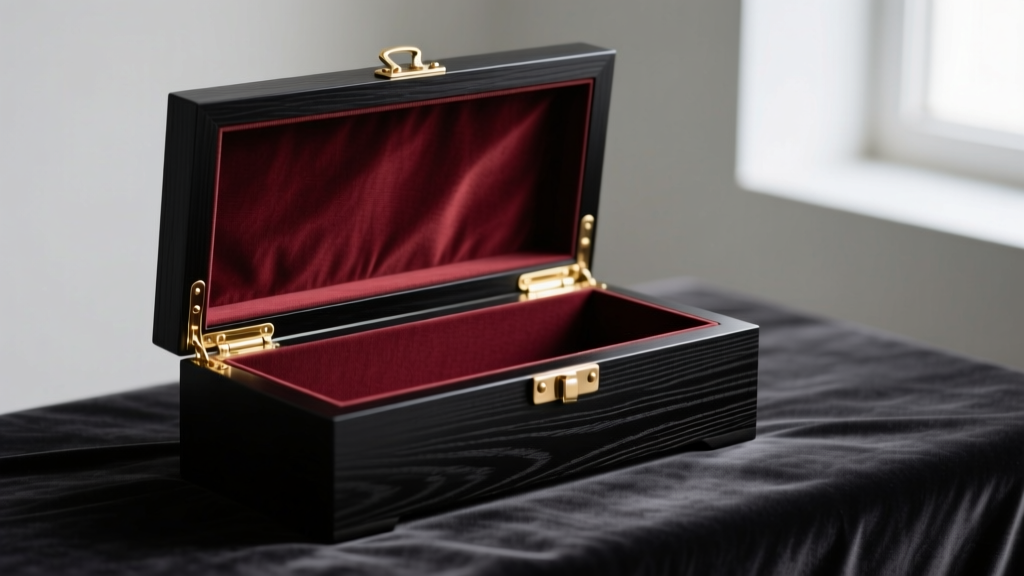
Coffin jewelry boxes are a staple in alternative fashion, gothic collections, and antique curio cabinets. However, their distinct hexagonal or octagonal geometry introduces structural vulnerabilities that standard rectangular jewelry boxes simply do not face. The angled lid places uneven torsional stress on the hardware, while the deep, tapered interior often traps humidity and off-gassing compounds. If you have noticed your sterling silver turning black overnight, your lid sagging, or the interior velvet peeling away in brittle chunks, you are experiencing the classic failure modes of mass-produced gothic storage.
Troubleshooting a coffin jewelry box requires an understanding of both mechanical stress and conservation chemistry. Below, we break down the most common structural and chemical failures found in these unique organizers and provide professional-grade solutions to restore them to archival quality.
Troubleshooting Hardware: Hinges and Clasps
The most frequent mechanical failure in a coffin jewelry box is hinge detachment or lid misalignment. Because the lid of a coffin box is wider at the top and tapers toward the foot, standard two-hinge configurations often fail to support the weight of heavy wooden lids, especially when adorned with cast-metal gothic embellishments.
Fixing Misaligned and Stripped Hinges
Manufacturers often use short, 1/2-inch wood screws directly into soft MDF or pine. Over time, the obtuse angle of the open lid acts as a lever, stripping the screw holes. To fix this:
- Remove the damaged hardware: Carefully unscrew the failing butt hinges.
- Rebuild the screw holes: Do not use standard wood filler, which lacks shear strength. Instead, use a two-part epoxy wood consolidant or the traditional hardwood dowel method. Drill out the stripped hole, glue a hardwood dowel in place with aliphatic resin (wood glue), let it cure for 24 hours, and trim it flush.
- Upgrade the hardware: Replace cheap zinc-alloy hinges with 18-gauge solid brass or 316L stainless steel butt hinges. For heavy lids, consider routing a shallow channel to install a cut-to-size piano hinge, which distributes the torsional load across the entire straight edge of the box.

Unjamming Cast-Metal Gothic Locks
Ornate skull or bat-wing clasps are typically made from pot metal or zinc alloys. These are highly susceptible to 'zinc pest'—a destructive intercrystalline corrosion that causes the metal to swell, crack, and jam. If your locking mechanism is stuck, avoid forcing it, which will snap the brittle casting. Apply a micro-drop of a dry PTFE (Teflon) lubricant directly into the keyway or latch joint. Unlike WD-40, which attracts dust and gums up small mechanisms, PTFE dries completely clean. If the metal has already begun to crumble from zinc pest, the clasp must be carefully removed and replaced with a solid brass or stainless steel alternative.
The Velvet Lining Dilemma: Adhesives and Acid Traps
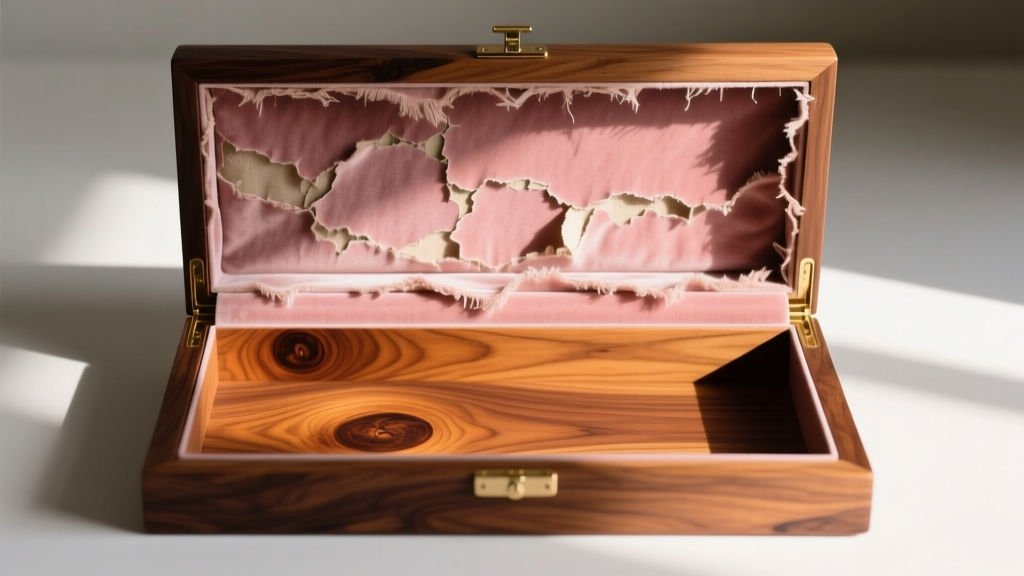
Peeling interior lining is not just an aesthetic issue; it is a chemical hazard to your jewelry. Mass-market coffin boxes frequently use cheap polyester 'velvet' adhered with acidic hot-melt glues or cyanoacrylate (super glue). As these adhesives degrade, they release volatile organic compounds (VOCs) that accelerate tarnishing. Furthermore, the synthetic fibers themselves can generate static electricity, attracting dust and micro-abrasives to your gemstones.
Safe Adhesive Removal and Re-lining
To troubleshoot a failing interior, you must completely remove the old lining and adhesive residue. According to the American Institute for Conservation's guidelines on adhesives, mechanical removal combined with a mild, non-polar solvent is safest for the underlying wood. Use a plastic scraper to lift the fabric, then gently rub the residual glue with a cotton swab dipped in odorless mineral spirits. Avoid acetone, which can dissolve the wood's existing finish and drive adhesive deeper into the grain.
When re-lining, abandon standard craft glues. Use a pH-neutral, conservation-grade adhesive like Jade 403 or Lascaux 498 HV. These polyvinyl acetate (PVA) and acrylic dispersions remain flexible, do not off-gas harmful acids, and will not stain the fabric over time.
| Material | Archival Rating | Tarnish Risk | Best Use Case |
|---|---|---|---|
| Standard Polyester Velvet | Poor | High (Static & Dyes) | Costume jewelry, non-reactive metals |
| Cotton Flannel | Good (if unbleached) | Medium (Traps moisture) | Short-term travel storage |
| Rayon/Cotton Blend Velvet | Excellent | Very Low | Sterling silver, pearls, fine gold |
| Pacific Silvercloth | Superior | None (Active protection) | Long-term silver storage in humid climates |
Wood Sealing and Tarnish Acceleration
The most insidious problem with wooden coffin jewelry boxes is invisible: wood off-gassing. Woods commonly used in gothic furniture, particularly oak, pine, and cedar, emit acetic acid, formic acid, and hydrogen peroxide as they age. In an enclosed, unventilated space like a jewelry box, these gases concentrate and will rapidly turn sterling silver black, corrode copper alloys, and degrade the nacre on pearls.
The Off-Gassing Problem and Solution
If you open your coffin box and smell a sharp, acidic, or heavy 'woody' scent, your jewelry is at risk. The Canadian Conservation Institute strongly advises against storing sensitive metals in unsealed wood enclosures. To troubleshoot this, you must create an impermeable vapor barrier between the wood and your jewelry.
- Strip the interior: Remove all fabric and old glue down to bare wood.
- Apply a vapor barrier: Coat the entire interior (including the underside of the lid) with three thin coats of a water-based polyurethane or a conservation-grade acrylic varnish like Krylon UV-Resistant Clear Acrylic Coating. Avoid oil-based polyurethanes, as they take weeks to fully cure and off-gas their own solvents during that time.
- Cure time: Allow the box to air out in a well-ventilated room for at least 14 days before re-lining. This ensures all carrier solvents have completely evaporated.
- Add anti-tarnish interceptors: Before laying down your new archival velvet, place a sheet of 3M Anti-Tarnish Strip or activated carbon cloth at the very bottom of the box to absorb any residual ambient sulfur compounds.
Expert Insight: Never store pearls, opals, or amber in a freshly sealed wooden box, even with archival linings. These organic gems require a slight exchange of ambient humidity to prevent cracking. A sealed wooden coffin box is best reserved for metals, hard gemstones, and glass-based cameos.
Step-by-Step Restoration Framework
For collectors looking to fully rehabilitate a vintage or damaged coffin jewelry box, follow this sequential framework to ensure structural integrity and chemical safety:
- Phase 1: Teardown & Assessment (Day 1): Remove all hardware, hinges, and clasps. Strip the interior lining. Inspect the wood for micro-fractures at the mitered corners, which are common stress points in hexagonal boxes.
- Phase 2: Structural Repair (Days 2-3): Inject aliphatic resin into any corner separations and clamp using a nylon strap. Replace stripped screw holes with hardwood dowels.
- Phase 3: Chemical Sealing (Days 4-7): Apply three coats of water-based acrylic varnish to the interior. Allow 48 hours of curing between coats.
- Phase 4: Hardware Upgrades (Day 18): Mount upgraded 18-gauge brass hinges and solid metal clasps. Ensure the lid sits flush without requiring downward pressure to close, which stresses the front clasp.
- Phase 5: Archival Lining (Days 19-20): Cut rayon-blend velvet to size using a fresh rotary blade for clean edges. Adhere using Jade 403 PVA, applying even pressure with a soft silicone brayer to prevent air bubbles.
Conclusion
A coffin jewelry box is a striking, thematic way to house a curated collection, but its unique geometry and typical manufacturing shortcuts demand proactive maintenance. By upgrading the hardware to handle the torsional load of the angled lid, replacing acidic synthetic linings with archival materials, and sealing the wood to halt corrosive off-gassing, you can transform a failing novelty item into a museum-grade storage solution. Regular troubleshooting not only preserves the dramatic aesthetic of the box but ensures your most prized gothic and vintage pieces remain pristine for decades.


