Evaluating Your Jewelry Holder Clay Options: A Value Guide
Discover if a handmade jewelry holder clay piece is worth your money. We compare polymer, ceramic, and air-dry options for durability and price.

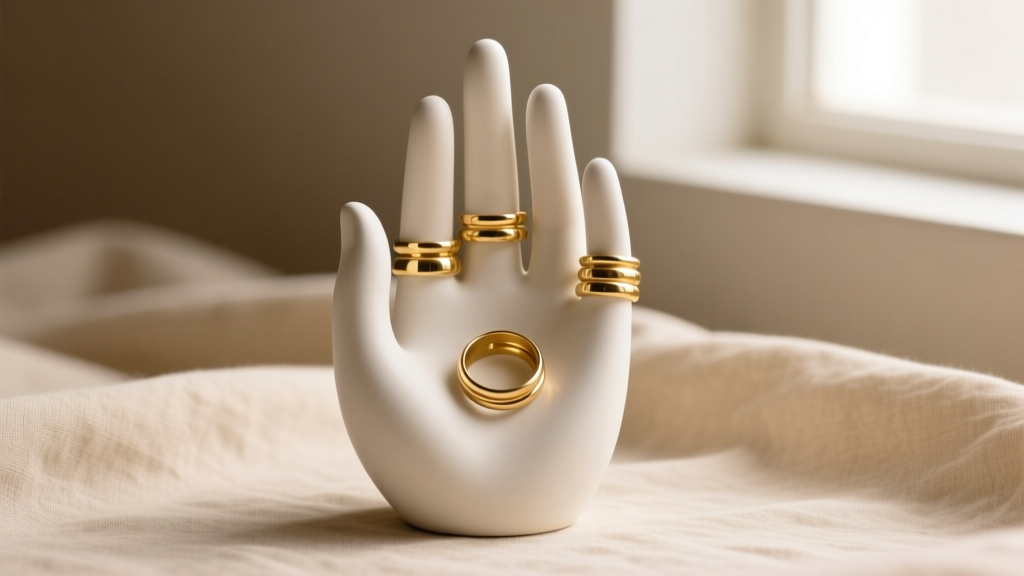
The Rise of Sculptural Clay Organizers
In the realm of boutique jewelry organization, sculptural displays have transitioned from mere functional tools to vanity centerpieces. When shopping for a jewelry holder clay creation, buyers are immediately confronted with a massive variance in pricing and material quality. A quick search on artisan marketplaces reveals polymer clay ring cones for $12 sitting right next to kiln-fired ceramic necklace trees priced at $85. But does a higher price tag guarantee better protection for your fine jewelry? As a jewelry organization specialist, I frequently see enthusiasts accidentally damage their sterling silver and gold vermeil pieces by storing them on the wrong type of clay. This comprehensive value assessment breaks down the chemistry, structural integrity, and true cost-to-value ratio of the three primary clay types used in jewelry storage.
Material Breakdown: Polymer vs. Ceramic vs. Air-Dry
To accurately assess value, we must first understand the material science behind these organizers. Not all clay is created equal, and the curing process drastically alters how the material interacts with precious metals.
Polymer Clay (PVC-Based)
Brands like Sculpey and Fimo dominate the handmade market. Polymer clay is essentially a polyvinyl chloride (PVC) plastisol. It cures at low temperatures (around 275°F / 135°C) in a standard home oven. While it allows for incredible color blending and intricate sculptural details, unsealed polymer clay can leach plasticizers over time. If your silver rings sit directly on unsealed polymer for months, the chemical transfer can cause a stubborn, cloudy film on the metal that requires specialized polishing compounds to remove.
Ceramic and Stoneware (Kiln-Fired)
Ceramic clay is fired in a kiln at temperatures exceeding 2,200°F (Cone 6 to Cone 10). At these temperatures, the silica in the clay vitrifies, turning it into a glass-like, non-porous surface. When finished with a food-safe or jewelry-safe glaze, ceramic is entirely inert. It will not off-gas, leach chemicals, or trap moisture, making it the gold standard for long-term metal storage.
Air-Dry Clay (Cellulose/Water-Based)
Air-dry clays are cheap, accessible, and popular for DIY crafts. However, they cure through evaporation, leaving a highly porous, micro-sponge-like structure. Unless sealed with a two-part epoxy resin, air-dry clay constantly absorbs and releases ambient humidity.
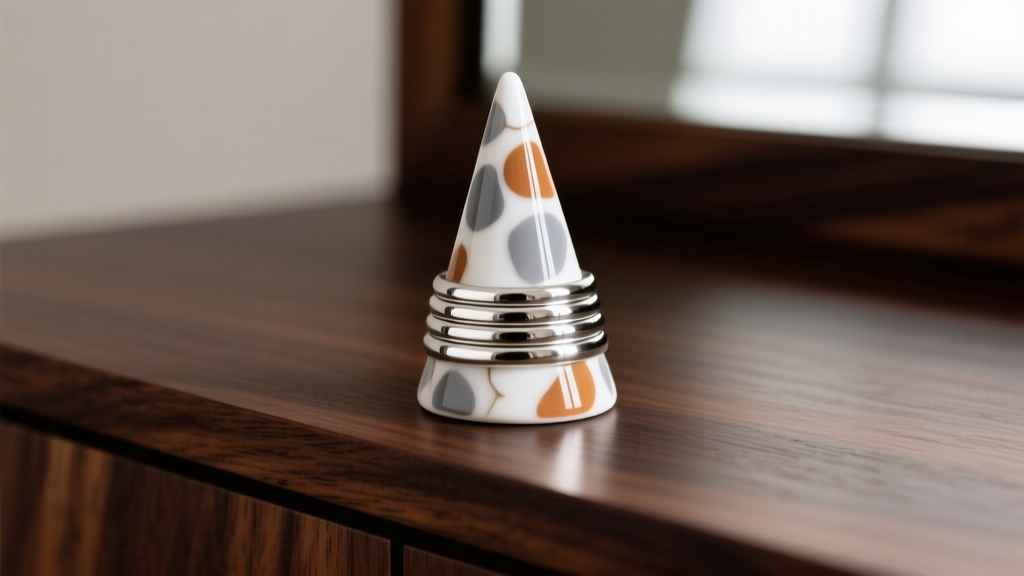
Comparative Value and Risk Matrix
The table below synthesizes the practical data you need to evaluate a jewelry holder clay piece before purchasing.
| Material Type | Average Price Range | Porosity & Moisture | Tarnish Risk to Silver | Best Use Case |
|---|---|---|---|---|
| Polymer Clay | $12 - $28 | Non-porous (but leaches plasticizers) | Moderate (if unsealed) | Temporary display, costume jewelry |
| Ceramic / Stoneware | $35 - $95 | Zero (when glazed) | None | Fine jewelry, heirloom storage, daily wear |
| Air-Dry Clay | $5 - $18 | Highly porous | Severe (traps humidity) | Painted decor, non-metal accessories |
The Hidden Tarnish Risk: Moisture and Sulfur
The most critical factor in jewelry storage is tarnish prevention. Sterling silver is an alloy containing 92.5% silver and 7.5% copper. It is the copper that reacts with sulfur and moisture in the air to create silver sulfide—the black tarnish you see on neglected jewelry. According to the Gemological Institute of America (GIA), controlling the micro-climate around your jewelry is essential for preservation.
This is where unsealed air-dry clay fails the value test entirely. Because it is essentially a hardened sponge, it traps ambient humidity. When you wrap a sterling silver chain around an unsealed air-dry clay tree, you are creating a high-humidity micro-environment that accelerates copper oxidation by up to 40% compared to open-air storage. Furthermore, some cheap clay pigments contain trace amounts of sulfur compounds. As noted by the metallurgical experts at Rio Grande, sulfur is the primary catalyst for silver sulfide formation. A $15 air-dry clay holder could easily ruin a $300 silver necklace, entirely negating any upfront budget savings.
Pro-Tip for Restoration: If you have stored silver on a porous clay holder and notice severe blackening, do not use abrasive pastes. Use a non-abrasive electrochemical silver dip or a specialized polishing cloth infused with anti-tarnish agents to safely lift the sulfur bonds without stripping the silver layer.
Structural Stability and Weight Distribution
Aesthetics mean nothing if the organizer tips over and scratches your pearls. When evaluating the budget versus value of a jewelry holder clay item, you must consider the physics of its design. Necklace trees require a high base-to-height ratio to remain stable.
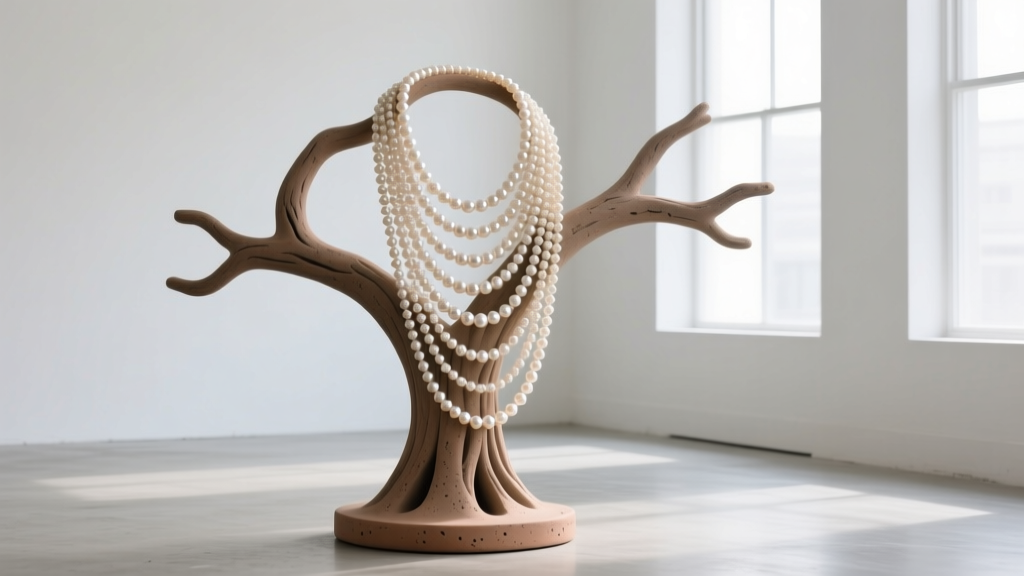
Polymer clay is relatively lightweight and often reinforced with an internal aluminum wire armature. If a maker uses too thin a wire gauge (e.g., 20-gauge or higher), the prongs of the jewelry tree will bend under the weight of heavy chain necklaces or pendant clusters. Ceramic clay, on the other hand, possesses natural mass. A well-thrown ceramic base acts as a built-in counterweight. When assessing a ceramic piece, flip it over. If the base is hollowed out too aggressively to save on material and shipping weight, it will lack the necessary center of gravity to support layered gold chains, which can easily weigh upwards of 40 to 60 grams.
Price vs. Value: Decoding Artisan Markups
Why does a ceramic jewelry holder clay piece cost $75 while a polymer one costs $15? Understanding the artisan's overhead helps you recognize true value.
- The Polymer Premium: You are paying for sculpting time and color mixing. The material cost is negligible (under $2). Ensure the piece is sealed with a UV-resistant polyurethane topcoat to prevent yellowing and plasticizer leaching.
- The Ceramic Reality: Ceramic makers face a 15% to 20% shrinkage rate during drying and firing. They must pay for kiln electricity (which runs at high amperage for 12+ hours), specialized glaze chemicals, and the risk of kiln explosions. A $65 price tag for a glazed ceramic organizer is actually a highly reasonable reflection of material science and labor.
- The Air-Dry Red Flags: Avoid paying more than $10 for air-dry clay organizers. If an artisan is selling an unsealed, air-dry clay hand-shaped ring holder for $35, they are capitalizing on the "handmade" aesthetic while utilizing a material fundamentally unsuited for fine jewelry storage.
Final Verdict: Which Clay Type Wins?
If your primary goal is the safe, long-term storage of fine metals, gemstones, and pearls, glazed ceramic clay is the undisputed winner of the value assessment. While the initial investment of $40 to $95 is higher, its inert nature, structural mass, and zero-tarnish risk make it a permanent, protective fixture on your vanity. Polymer clay is a fantastic, budget-friendly alternative for daily-wear costume jewelry or temporary display, provided it has been properly sealed by the maker. Air-dry clay should be strictly avoided for metal storage unless you are willing to apply a two-part epoxy sealant yourself. Ultimately, true value in jewelry organization is measured not just by the price of the holder, but by the preservation of the precious items it cradles.


