How to Choose and Install a Wall Jewelry Box: A Beginner's Guide
Learn how to choose, install, and organize a wall jewelry box. This beginner-friendly guide covers materials, weight limits, and anti-tarnish tips.

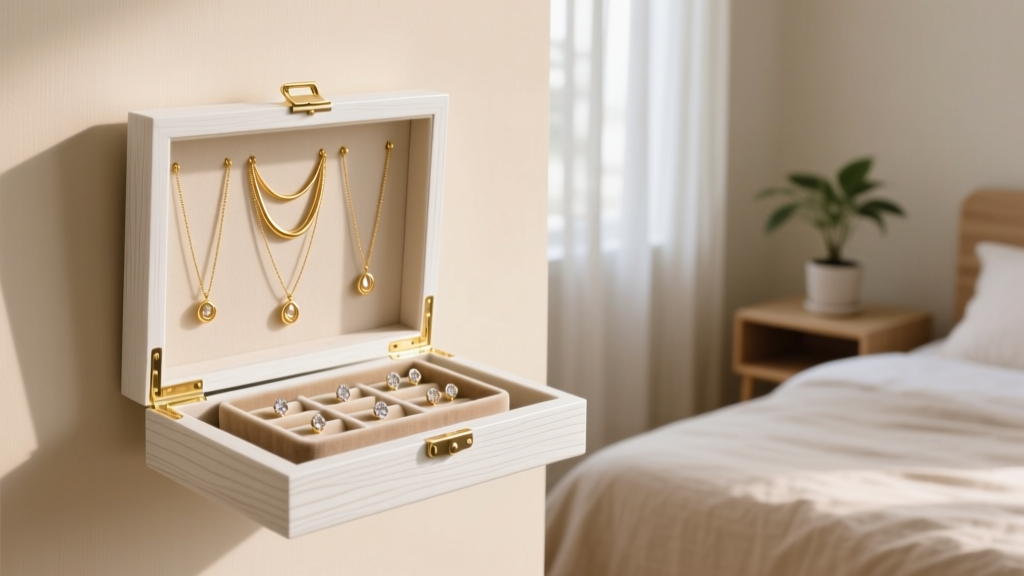
For jewelry enthusiasts and casual wearers alike, managing a growing collection can quickly become overwhelming. Drawers become tangled nests, and dresser-top trays collect dust. Enter the wall jewelry box: a space-saving, visually appealing, and highly functional storage solution that transforms your accessories into a display while keeping them protected. If you are new to wall-mounted storage, navigating the options—from materials and anti-tarnish linings to drywall anchoring—can feel daunting. This beginner-friendly explainer will walk you through exactly how to choose, install, and organize a wall jewelry box to ensure your collection remains pristine, untangled, and secure.
Why Choose a Wall-Mounted Jewelry Organizer?
The primary advantage of a wall jewelry box is spatial efficiency. By utilizing vertical real estate, you free up valuable drawer space and countertop surface area. This is particularly beneficial for apartment dwellers or those with compact bedrooms. Beyond space-saving, wall-mounted cabinets keep your jewelry at eye level, streamlining your morning routine. You can see exactly what you own at a glance, reducing the likelihood of forgetting about pieces buried at the bottom of a traditional jewelry box. Furthermore, hanging storage is vastly superior for necklaces and bracelets, as gravity keeps the chains straight, eliminating the frustrating pendulum effect that causes knots and tangles.
Door-Mounted vs. Flush-Mounted: Which is Right for You?
Before purchasing, you must decide where the box will live. There are two primary installation styles:
- Over-the-Door Models: These feature hooks that drape over a standard interior door (usually 1.375 to 1.75 inches thick). They are renter-friendly, require zero drilling, and are highly portable. However, they can swing when the door opens and may scratch the door frame if not padded with felt.
- Flush-Mounted (Wall-Screwed) Models: These are anchored directly into the drywall or wall studs. They offer superior stability, can support significantly more weight, and provide a sleek, built-in aesthetic. This guide will primarily focus on flush-mounted wall jewelry boxes, as they require more technical consideration.
Material Breakdown: Wood, MDF, and Metal
The exterior and interior framing materials dictate both the durability and the chemical safety of your storage environment.
Solid Wood vs. MDF
Solid wood (like oak, walnut, or bamboo) is the premium choice. It is structurally robust, holds screws well, and naturally regulates minor humidity fluctuations. However, it is heavier and more expensive. Medium-Density Fiberboard (MDF) is a budget-friendly alternative. While modern MDF is durable, cheaper, unsealed MDF can occasionally off-gas volatile organic compounds (VOCs) or trap moisture, which can accelerate the tarnishing of sensitive metals like sterling silver. If you opt for MDF, ensure the interior is fully sealed with a non-reactive paint or laminate.
Metal Framing
Powder-coated steel or aluminum frames are incredibly durable and offer a modern, industrial aesthetic. Metal does not warp or off-gas. The critical factor here is the powder coating; ensure it is fully cured and smooth, as rough metallic burrs can easily scratch soft gold or gemstones.
The Science of Anti-Tarnish Linings
The interior lining of your wall jewelry box is just as important as the exterior shell. Tarnish on silver and copper is primarily caused by a chemical reaction with hydrogen sulfide and moisture in the air. According to the Gemological Institute of America (GIA), storing silver in a dry, enclosed environment with anti-tarnish materials is the most effective way to prevent oxidation.
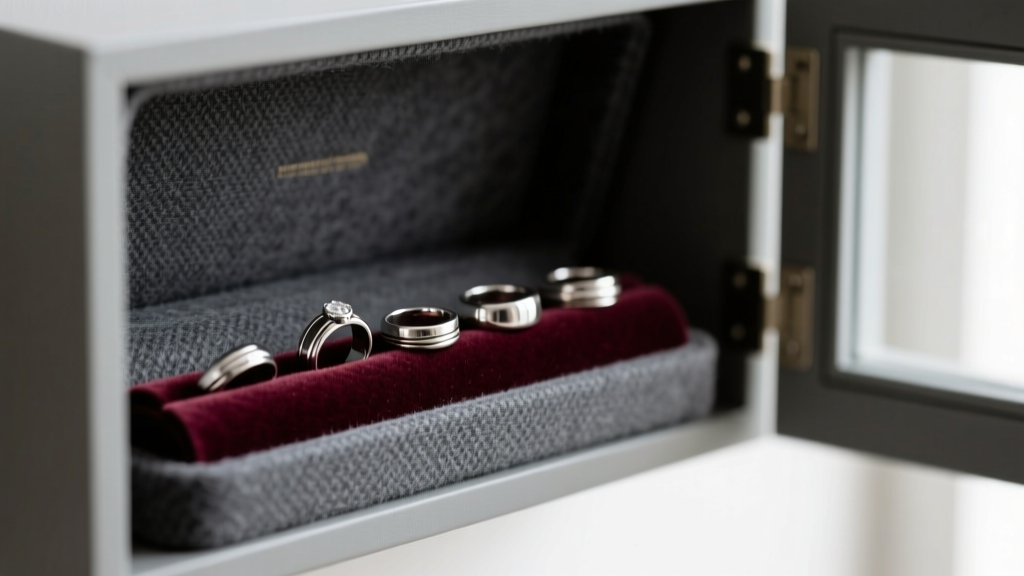
Look for wall jewelry boxes lined with Pacific Silvercloth or specially treated anti-tarnish flannel. These fabrics are embedded with microscopic silver particles that act as a sacrificial anode. The airborne sulfur compounds react with the silver particles in the cloth rather than your jewelry, effectively neutralizing the tarnish threat. Standard velvet or untreated felt will not stop tarnish and can sometimes trap ambient moisture against the metal. If your chosen box lacks anti-tarnish lining, you can easily retrofit it by purchasing anti-tarnish strips (like 3M brand) and tucking them into the corners of the cabinet.
Weight Capacity and Installation Types
A common beginner mistake is underestimating the weight of a fully loaded jewelry box. A medium-sized wooden cabinet (24x30 inches) can easily weigh 15 pounds empty. Add hundreds of metal accessories, glass perfume bottles, and heavy statement pieces, and the total weight can exceed 35 pounds. Standard plastic drywall anchors will inevitably fail under this dynamic load, potentially ripping out of the wall and damaging both your drywall and your jewelry.
To ensure a secure installation, you must use the correct hardware for your wall type. As detailed by the experts at Family Handyman, selecting the right anchor is critical for heavy, frequently accessed items.
| Anchor Type | Best Use Case | Weight Capacity (1/2" Drywall) | Pros & Cons |
|---|---|---|---|
| Plastic Expansion Anchors | Lightweight, hollow metal boxes | 10 - 15 lbs | Cheap and easy, but highly prone to pulling out under heavy loads. |
| Threaded Drywall Anchors (E-Z Ancors) | Small to medium MDF boxes | 20 - 40 lbs | Excellent grip and easy to install without pre-drilling, but can strip if over-tightened. |
| Molly Bolts (Hollow Wall Anchors) | Medium to large wooden cabinets | 30 - 50 lbs | Expands behind the drywall for a permanent, secure grip. Requires precise drill bit sizing. |
| Toggle Bolts (Strap or Butterfly) | Heavy, oversized armoires or safes | 50 - 100+ lbs | The absolute strongest option for drywall. Requires drilling a large clearance hole. |
| Wood Studs (Direct Screwing) | Any heavy box aligned with framing | 100+ lbs per stud | The safest method. Use a stud finder to locate 16-inch or 24-inch on-center framing. |
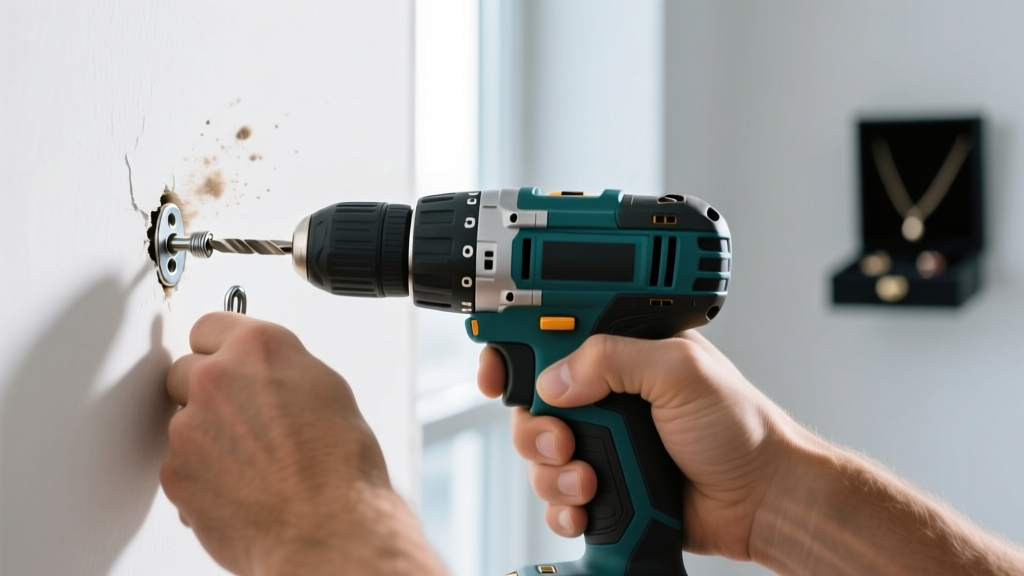
Pro Tip: Always use a digital level during installation. If a wall jewelry box is mounted even slightly crooked, the internal hooks will hang at an angle, causing necklaces to slide toward one side and cluster together, leading to tangles.
Strategic Organization: Preventing Tangles and Scratches
Once your wall jewelry box is securely mounted, how you load it determines its daily functionality. Different jewelry types require specific spatial arrangements to prevent damage.
Necklace Spacing and Drop Length
Necklaces are the most prone to tangling. To prevent this, ensure your wall box has a minimum vertical drop of 18 to 24 inches. More importantly, horizontal spacing is critical. Hooks should be spaced at least 2.5 inches apart. If hooks are too close, the center of gravity of a heavy pendant will cause the chain to swing into its neighbor, creating a knot. Store choker and princess-length chains on the top row, and longer matinee or opera-length chains on the bottom hooks.
Earring Grids vs. Slotted Cards
For stud earrings, look for a box that includes a slotted fabric card or a perforated metal grid. This keeps the pairs together and prevents the posts from scratching other items. Hoop and drop earrings should be hung on dedicated wire loops or horizontal bars to maintain their shape and prevent the clasps from bending.
Ring Rolls and Watch Pillows
Rings should be stored in velvet rolls with individual compartments. Ensure the compartments are wide enough (at least 1 inch) so that the metal bands do not rub against each other. For watches, use specialized microfiber pillows that keep the bands clasped and prevent the crystals from pressing against the glass of adjacent timepieces.
Common Beginner Mistakes to Avoid
- Ignoring Humidity: Never install a wall jewelry box in a bathroom. The extreme fluctuations in heat and humidity from showers will rapidly degrade anti-tarnish linings and accelerate the oxidation of copper and silver alloys.
- Overloading Doors: If you choose an over-the-door model, do not hang heavy, beaded statement necklaces on the highest hooks. The repeated slamming of the door will create a whipping motion that can snap delicate chains or loosen gemstone prongs.
- Mixing Hardness Levels: Diamonds are a 10 on the Mohs hardness scale, while gold is a 2.5 to 3. Never store diamond rings in the same open compartment or un-partitioned tray as gold or silver bangles, as the diamonds will easily scratch the softer metals.
Final Thoughts
Investing in a high-quality wall jewelry box is an investment in the longevity of your collection. By prioritizing anti-tarnish linings, understanding the structural requirements of your drywall, and organizing your pieces with intentional spacing, you can create a stunning, functional display that keeps your accessories safe and ready to wear. Take the time to measure your space, choose the right anchors, and enjoy the peace of mind that comes with a perfectly organized jewelry collection.


