The Lori Greiner Jewelry Organizer: A Beginner's Setup Guide
Discover if the Lori Greiner jewelry organizer is right for your collection. Learn about acrylic grades, gauge limits, and anti-tarnish tips.

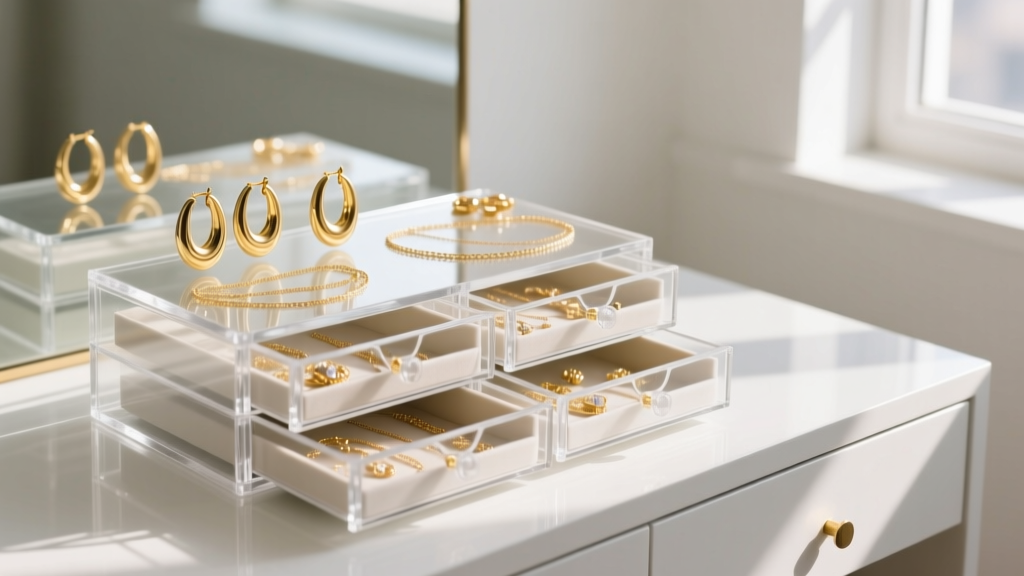
If you have ever watched an episode of ABC's Shark Tank or tuned into a late-night QVC broadcast, you are likely familiar with the 'Show Me Your Jewelry' line. The Lori Greiner jewelry organizer system has become a staple in the bedroom vanities of millions, promising a clutter-free, highly visible way to store everything from delicate gold chains to statement cocktail rings. But for a beginner just starting to curate and protect their jewelry collection, is a modular acrylic system actually the best choice? While the visual appeal is undeniable, understanding the material science, gauge limitations, and environmental vulnerabilities of acrylic storage is crucial before you invest in your first stack.
In this comprehensive beginner's guide, we will look past the television marketing and dive deep into the structural realities of acrylic jewelry organizers. We will cover the Mohs hardness scale, earring post gauge compatibility, and the chemical realities of silver tarnish in open-air environments, ensuring your collection remains as pristine as the day you bought it.
The Appeal of Modular Acrylic Visibility
The primary draw of the Lori Greiner jewelry organizer system is optical clarity combined with modular stackability. Traditional jewelry boxes, often lined with velvet or leather, hide your collection behind closed lids and opaque fabrics. This 'out of sight, out of mind' phenomenon frequently leads to neglected pieces and tangled chains. Acrylic organizers solve this by functioning as a miniature retail display case right on your dresser.
According to her profile on the Shark Tank Blog, Lori Greiner built her empire on the concept of visual organization—products that allow consumers to see exactly what they own at a single glance. For beginners, this visibility is a massive psychological advantage. When you can clearly see your 14k gold stud earrings sitting neatly in a grid, you are far more likely to wear them, rotate your collection, and notice if a clasp is failing before it results in a lost gemstone.
Material Science: Cast vs. Extruded Acrylic
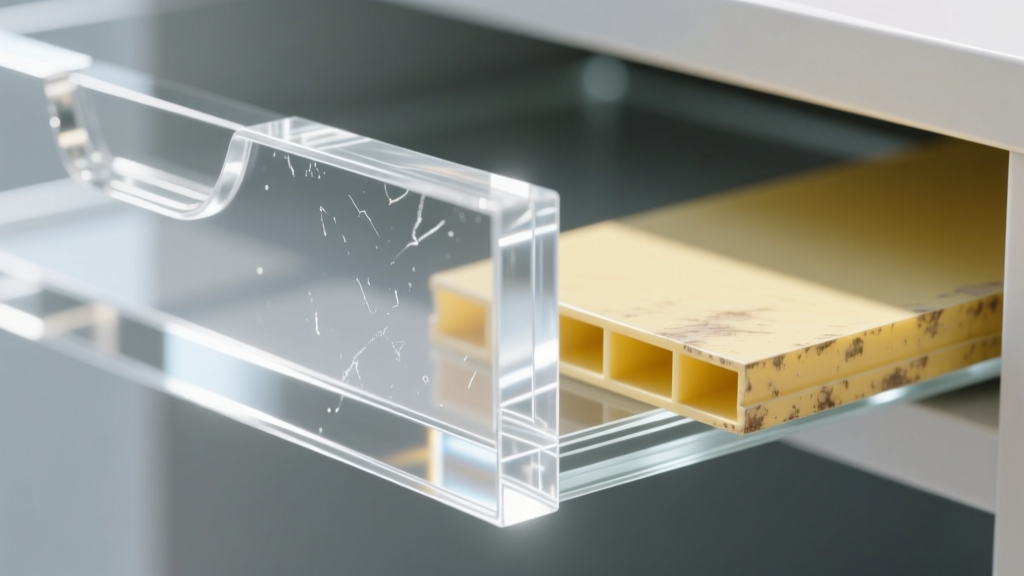
Not all clear plastics are created equal. When shopping for acrylic organizers, you will encounter two distinct manufacturing processes: cast acrylic and extruded acrylic. Understanding the difference is the hallmark of an informed buyer.
Cast Acrylic: This is the premium standard used in high-quality organizers like the official 'Show Me Your Jewelry' line. Cast acrylic is poured into molds, resulting in a material with exceptional optical clarity, higher scratch resistance, and superior UV stability. It will not yellow when exposed to the ambient sunlight of your bedroom window.
Extruded Acrylic: Often found in cheaper, generic knockoff brands on massive e-commerce marketplaces, extruded acrylic is pushed through rollers. It is softer, more prone to micro-scratching, and highly susceptible to UV degradation. Over a period of 12 to 18 months, extruded acrylic will develop a distinct, cloudy yellow tint that completely ruins the aesthetic of your display.
Furthermore, you must consider the Mohs Hardness Scale. Acrylic sits at a mere 3 on the Mohs scale. For context, a diamond is a 10, a sapphire is a 9, and quartz (found in many gemstones and even household dust) is a 7. If you carelessly toss a diamond tennis bracelet into an acrylic drawer, the diamonds will easily scratch and permanently gouge the acrylic base. Always use felt pads or soft microfiber liners in drawers designated for high-hardness gemstones.
Sizing and Gauge Compatibility: The Hidden Catch
One of the most common frustrations for beginners purchasing earring grid organizers is discovering that their favorite pieces do not fit the holes. To understand why, we must look at jewelry wire gauges. The holes in standard acrylic earring grids are typically drilled to a diameter of 1.5mm. While this accommodates the vast majority of commercial fashion jewelry, it creates a bottleneck for thicker, high-end, or body jewelry pieces.
| Jewelry Gauge | Millimeter (mm) | Common Jewelry Type | Acrylic Grid Fit (1.5mm Hole) |
|---|---|---|---|
| 22 Gauge | 0.64mm | Delicate fishhook wires | Fits easily (Loose) |
| 20 Gauge | 0.81mm | Standard stud posts | Fits easily |
| 18 Gauge | 1.02mm | Standard wire hooks | Fits perfectly |
| 16 Gauge | 1.29mm | Thick hoops, some ear wires | Fits snugly |
| 14 Gauge | 1.60mm | Body jewelry, heavy hooks | Will NOT fit |
| 12 Gauge | 2.00mm | Statement ear weights | Will NOT fit |
If your collection features heavy artisan ear wires, tribal ear weights, or 14-gauge body jewelry, a standard drilled grid will be useless. In these cases, beginners should opt for the slotted drawer inserts or open-bin acrylic trays instead of the fixed-hole grids.
The Tarnish Problem: Open-Air Storage Realities
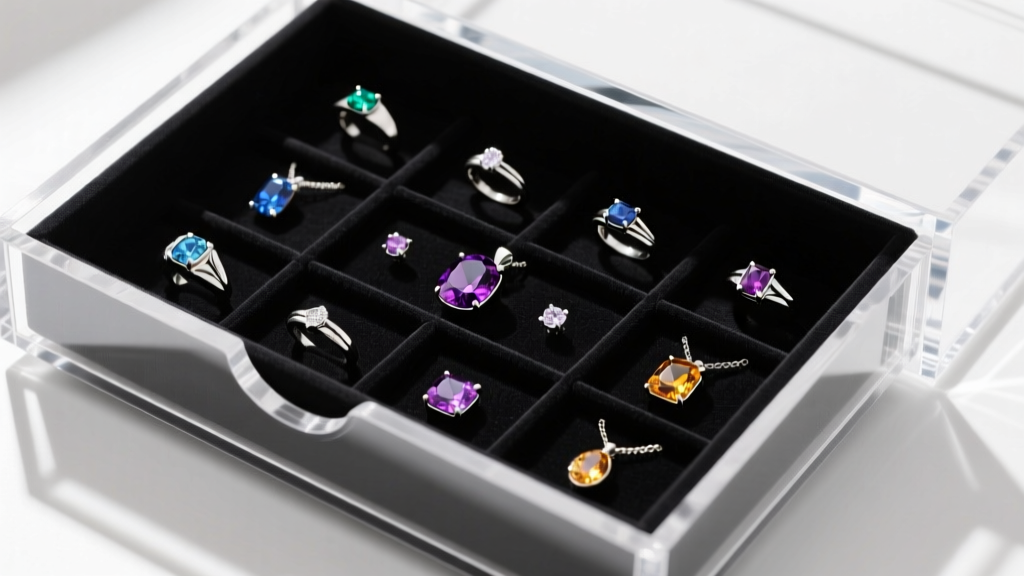
The most significant drawback of any open-air acrylic organizer is its complete inability to prevent tarnish. Tarnish on sterling silver is not a defect; it is a predictable chemical reaction. Silver reacts with hydrogen sulfide (H2S) gas present in the ambient air to form silver sulfide, which manifests as a dull, blackish film on the metal's surface.
Because acrylic drawers are not airtight and lack the sulfur-absorbing properties of specialized materials, your silver pieces are fully exposed to the room's atmosphere. The Gemological Institute of America (GIA) notes that proper gem and metal care requires controlling environmental exposure to pollutants and humidity.
'Acrylic provides fantastic visibility, but zero atmospheric protection. If you are storing sterling silver, oxidized brass, or unprotected copper in an acrylic drawer, you must introduce a chemical sacrificial barrier to halt the oxidation process.'
The Beginner's Tarnish Solution: Never store bare silver in an acrylic drawer. Instead, line the bottom of the drawer with a sheet of Pacific Silvercloth, or drop in a few 3M Anti-Tarnish Strips. These strips utilize specialized zinc and calcium carbonate particles to aggressively absorb hydrogen sulfide gas before it can reach your jewelry, effectively turning an open acrylic drawer into a micro-protected environment. Replace these strips every 6 to 9 months for optimal results.
How to Build Your First Modular Stack
If you are ready to invest in the Lori Greiner jewelry organizer system, do not just buy a random assortment of drawers. A functional stack requires a strategic foundation. Here is the ideal beginner framework for a versatile, 4-tier modular setup:
- Tier 1 (The Base): Start with a deep, open-bin drawer. This is your 'catch-all' for statement necklaces, chunky resin bangles, and oversized cocktail rings that do not fit in standard compartments.
- Tier 2 (The Grid): Add the standard earring grid drawer. Use this exclusively for your 20g and 18g daily-wear studs and lightweight wire hooks.
- Tier 3 (The Hooks): Incorporate a drawer featuring built-in vertical hooks or padded slots. This is essential for preventing the dreaded 'chain tangle' by keeping your 16-inch and 18-inch pendants suspended and separated.
- Tier 4 (The Rolls): Finish with a ring roll or padded velvet-insert drawer. This protects your high-Mohs gemstones (sapphires, rubies, diamonds) from scratching the acrylic and protects the acrylic from being gouged by sharp prongs.
Final Verdict for Beginners
The Lori Greiner jewelry organizer remains a top-tier choice for beginners who prioritize visibility, modularity, and space efficiency. By understanding the limitations of extruded plastics, respecting the gauge sizes of your earring posts, and actively mitigating silver tarnish with anti-tarnish strips, you can transform a simple acrylic box into a professional-grade preservation system. Start small, build your stack intentionally, and your daily accessory routine will never be the same.


