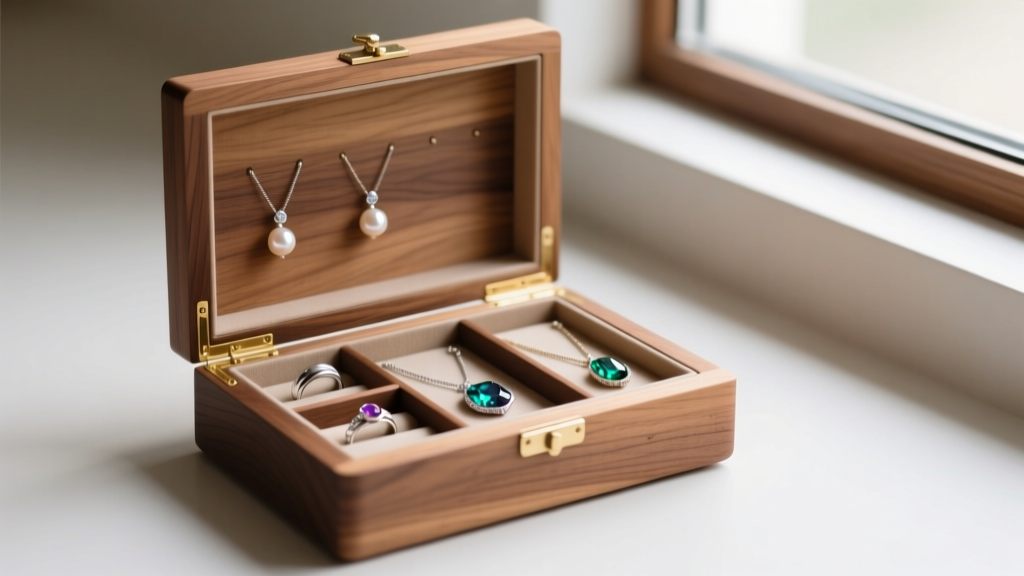
DIY Jewelry Display Buying Guide: Materials & Hardware
Discover the ultimate DIY jewelry display buying guide. Learn which woods, linings, and hardware to buy to build a tarnish-free, custom organizer.

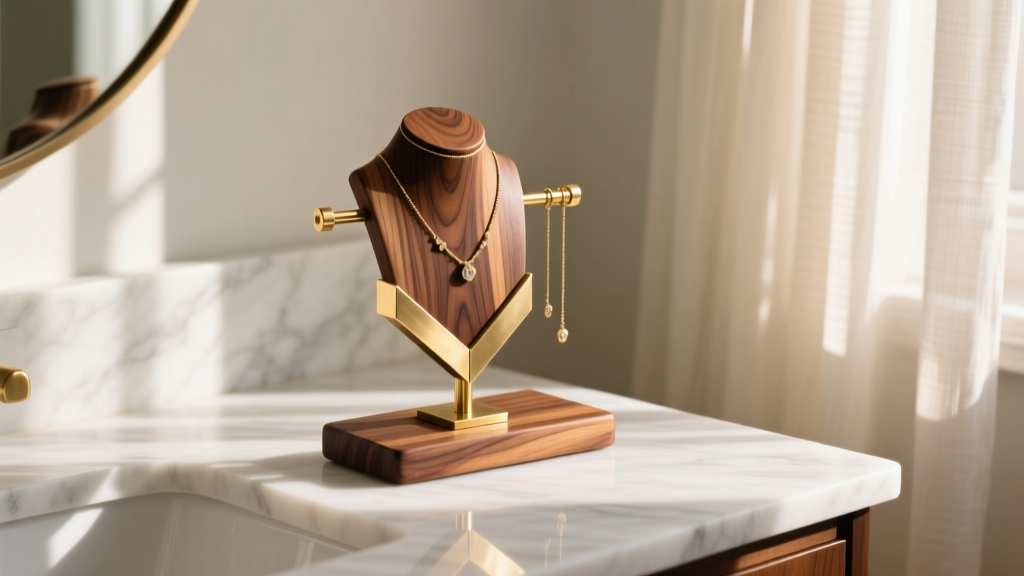
Why Build a Custom DIY Jewelry Display?
The market is flooded with mass-produced jewelry organizers, but serious collectors and independent jewelry makers often find them lacking. Standard displays rarely accommodate heavy statement necklaces, oversized cuff bracelets, or the specific drop-lengths of layered 14k gold chains. Building a DIY jewelry display is not merely a cost-saving measure; it is an exercise in archival preservation and spatial customization. When you source your own materials, you control the chemical environment your jewelry lives in, preventing the accelerated tarnishing and micro-scratching caused by cheap, off-gassing commercial displays.
This buying guide will walk you through the exact material grades, hardware specifications, and chemical considerations you need to evaluate before purchasing supplies for your custom build.
Base Materials: Wood Chemistry and Acrylic Grades
The structural foundation of your display dictates its longevity and its chemical interaction with precious metals. Not all woods and plastics are safe for long-term jewelry storage.
Solid Wood Selection: Tannins and Acidity
When buying lumber for a DIY jewelry display, you must consider the wood's natural chemical composition. Black Walnut and Hard Maple are premier choices due to their dimensional stability and low tannic acid content. Conversely, you must strictly avoid Red Oak and White Oak. Oak species contain high levels of tannins which, in the presence of ambient humidity, can offgas and react with silver and copper alloys, accelerating the formation of silver sulfide (tarnish). Furthermore, avoid aromatic cedar; its natural terpenes and oils can degrade the nacre of pearls and cause micro-fractures in porous gems like opals and turquoise.
The Danger of MDF and Engineered Woods
Medium-Density Fiberboard (MDF) is cheap and easy to paint, making it a popular choice for DIY crafts. However, MDF is typically bound with urea-formaldehyde resins. According to the Environmental Protection Agency (EPA), formaldehyde offgassing is a known indoor air pollutant. In a confined display case, these acidic vapors can severely tarnish sterling silver and degrade the silk threads used in pearl knotting. Always invest in solid hardwoods or high-quality plywood with soy-based or NAUF (No Added Urea-Formaldehyde) binders.
Cast vs. Extruded Acrylic
If your design incorporates clear acrylic tiers or earring holders, you must specify Cast Acrylic (PMMA) rather than Extruded Acrylic. Extruded acrylic is manufactured by pushing molten plastic through a die, creating internal molecular stresses. When you attempt to drill holes for earring posts or T-bar hooks, extruded acrylic is prone to stress-fracturing and melting. Cast acrylic is poured into molds, resulting in a homogeneous, stress-free sheet that machines, drills, and sands beautifully without cracking. Always buy a minimum thickness of 5mm (approx. 3/16") for structural rigidity.
Linings and Anti-Tarnish Integration
The surface your jewelry rests on is just as critical as the ambient air. The Gemological Institute of America (GIA) emphasizes that improper storage materials can cause irreversible abrasion to high-polish metals and soft gemstones. When buying fabric for your DIY display, evaluate the pile height, abrasion resistance, and chemical treatment.
| Material | Cost (per yard) | Pile / Texture | Best Use Case | Anti-Tarnish Properties |
|---|---|---|---|---|
| Pacific Silvercloth | $25 - $35 | Woven cotton/flannel | Sterling silver storage, drawer liners | Excellent (embedded silver particles intercept H2S gas) |
| Ultrasuede (Microfiber) | $40 - $60 | Ultra-smooth, non-woven | High-polish gold, platinum, soft gems | Neutral (Inert, non-abrasive, no chemical interception) |
| Jewelers Velvet | $15 - $25 | Short-pile, dense | Necklace busts, ring rolls, general display | Poor (Can trap moisture and sulfur if not treated) |
| Cork Sheet | $8 - $12 | Textured, porous | Stud earring boards, rustic displays | Poor (Naturally acidic, requires a barrier sealant) |
Hardware: Metallurgy and Sizing Specifications
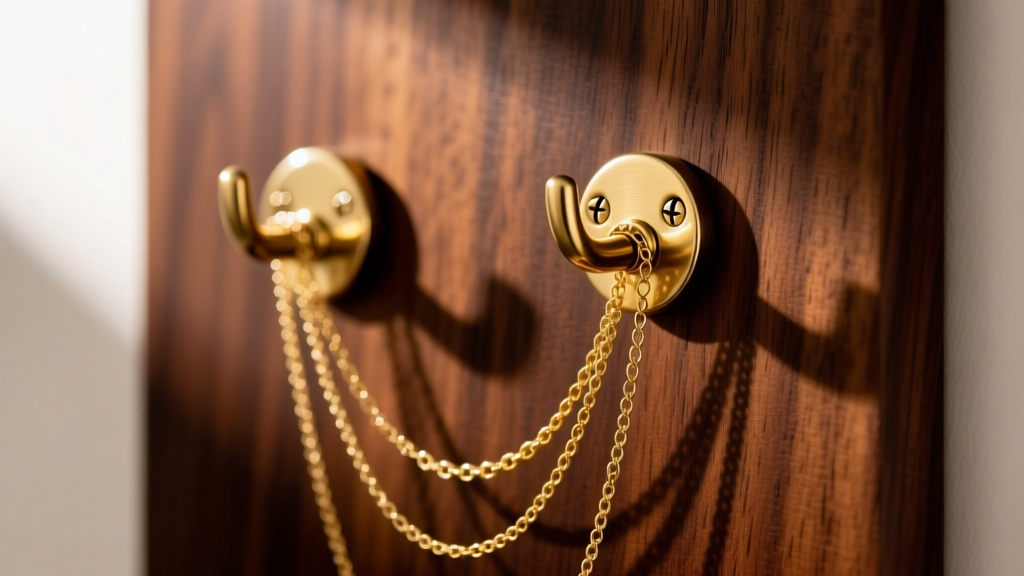
The hooks, pegs, and brackets you select must be metallurgically compatible with the jewelry they hold. A common failure mode in amateur DIY builds is the use of cheap, zinc-plated steel hardware. Over time, the zinc plating wears off, exposing the underlying steel to humidity. The resulting iron oxide (rust) can easily transfer to delicate gold chains or pearl strands, causing permanent staining.
Cup Hooks and S-Hooks
Always purchase solid brass or 304-grade stainless steel cup hooks. Brass is highly resistant to corrosion and possesses a warm aesthetic that complements gold jewelry. For hanging necklaces, look for #4 or #6 brass cup hooks, which provide a shaft length of roughly 1/2" to 5/8", ensuring they grip deeply into hardwoods without splitting the grain. Avoid steel hooks with clear epoxy coatings, as these coatings eventually yellow and peel.
Earring Post Holes
When designing an earring display board, the diameter of your drilled holes is critical. Standard earring posts range from 20-gauge (0.81mm) to 22-gauge (0.64mm). However, friction backs and butterfly clutches require clearance. Use a 1/16" (1.58mm) drill bit for standard posts, and a 3/32" (2.38mm) drill bit if you plan to push the entire friction back through the board. Always sand the edges of acrylic holes with 800-grit sandpaper to prevent micro-scratches on the earring posts during insertion.
Adhesives: The Hidden Threat to Jewelry
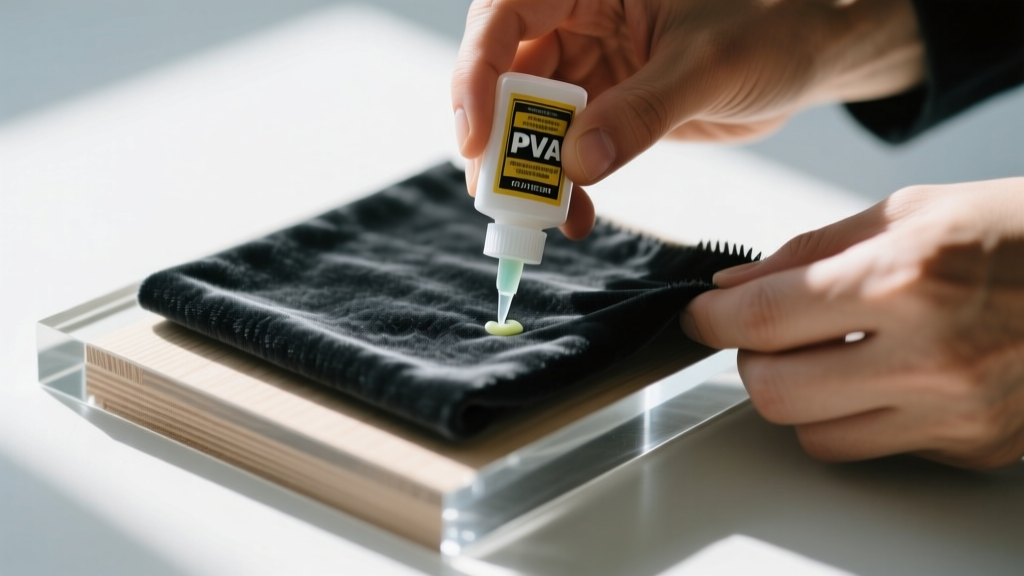
If your DIY jewelry display requires bonding fabric to wood or acrylic, the adhesive you buy is a hidden variable that can ruin your collection. Never use hot glue. Hot glue creates a thick, uneven bond line, transfers intense heat that can warp thin acrylics, and emits acidic vapors as it cools. Furthermore, hot glue becomes brittle over time, leading to peeling velvet.
Instead, invest in an archival-quality, neutral-pH PVA (Polyvinyl Acetate) adhesive, such as Lineco Neutral pH Adhesive. These glues are specifically formulated for museum conservation and bookbinding. They dry clear, remain flexible, and most importantly, they do not offgas sulfur or acidic compounds that trigger silver tarnish or pearl degradation. For bonding metal hardware to acrylic, use a two-part clear epoxy, ensuring it is fully cured (usually 24-48 hours) before introducing any jewelry to the display environment.
Semi-DIY Kits vs. Scratch-Building: A Buyer's Breakdown
If sourcing raw lumber and cutting acrylic sheets feels overwhelming, the market offers a middle ground: modular semi-DIY kits. When evaluating these kits, look beyond the aesthetic renderings and scrutinize the component list.
- Modular Wood Systems: Brands like Wolf and Kikkerland offer modular wooden trays. Look for systems that use dovetail or peg-and-hole joinery rather than metal cam-locks, which can loosen and scratch adjacent pieces.
- Acrylic Stacking Systems: When buying modular acrylic risers, ensure the manufacturer uses machined recesses for stacking. Flat-to-flat acrylic stacking without alignment grooves will result in sliding and scratching every time you remove a piece of jewelry.
- Hardware Inclusions: Most kits include cheap steel hooks. Factor the cost of replacing all included hardware with solid brass hooks into your total budget before purchasing.
Troubleshooting Common DIY Display Failure Modes
Even with the best materials, structural failures can occur if the physics of the display are ignored. Here is how to troubleshoot and prevent the most common issues:
1. Velvet Bubbling and Warping
The Cause: Applying adhesive too sparingly or using a fabric with a heavy rubberized backing that reacts to ambient temperature changes.
The Fix: Use a foam roller to apply a thin, perfectly even layer of PVA adhesive to the substrate, not the fabric. Allow the glue to become tacky (about 3-5 minutes) before laying the velvet down, smoothing from the center outward to push out trapped air.
2. Hook Pull-Out Under Load
The Cause: Heavy statement necklaces (often exceeding 150 grams) exert continuous downward torque on small cup hooks, eventually stripping the wood grain.
The Fix: For any hook expected to hold more than 100 grams, drill a pilot hole slightly smaller than the hook's thread diameter, and inject a drop of thin cyanoacrylate (super glue) into the hole before screwing in the brass hook. The CA glue wicks into the wood fibers, essentially creating a hardened resin thread that makes pull-out nearly impossible.
3. Acrylic Tipping
The Cause: A high center of gravity combined with a narrow base footprint.
The Fix: When buying acrylic sheeting for a tiered display, always purchase a thicker sheet (8mm or 10mm) for the base plate to add ballast weight. Alternatively, route a shallow recess into the bottom of the base and adhere lead-free steel weighting tape (commonly used for golf club fitting) before applying the final velvet liner.
Final Thoughts on Sourcing
Creating a custom DIY jewelry display is a highly rewarding project that bridges the gap between woodworking, material science, and aesthetic design. By prioritizing chemically inert woods, cast acrylics, archival adhesives, and solid brass hardware, you are not just building a storage solution; you are engineering a micro-climate that actively preserves the metallurgical and gemological integrity of your collection. Take the time to source high-grade materials from specialized woodworking and conservation suppliers, and your custom display will protect your jewelry for decades to come.