Best Value Jewelry Box Drawers: 2026 Buyer's Guide
Evaluate jewelry box drawers by material, lining, and price. Our 2026 value guide reveals hidden tarnish risks and best budget investments.

The Hidden Costs of Budget Jewelry Box Drawers
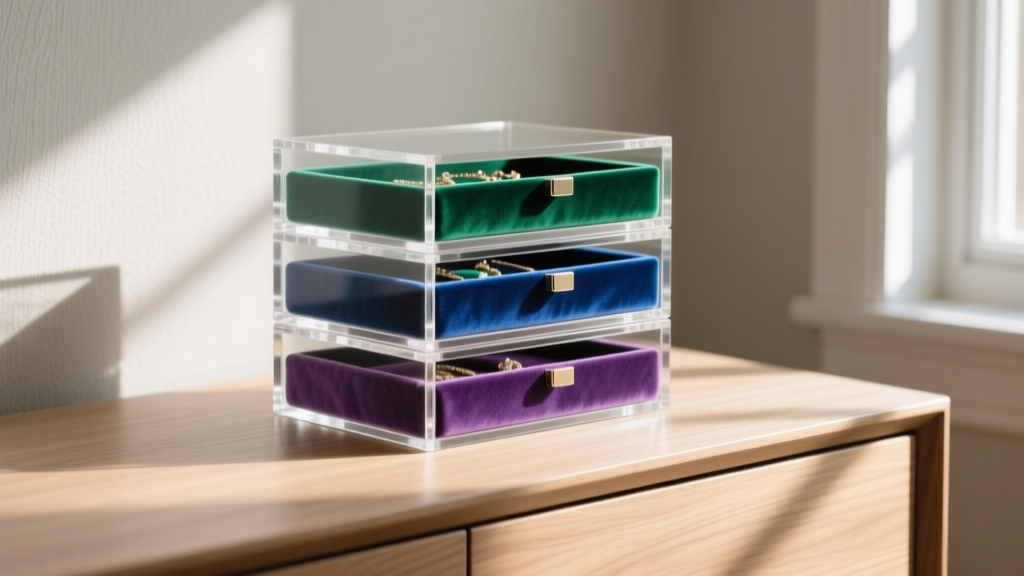
When organizing a growing collection, stackable jewelry box drawers seem like the ultimate modular solution. However, the market is flooded with ultra-cheap options that actively damage the very pieces they are meant to protect. As a jewelry storage specialist, I frequently see collectors lose hundreds of dollars to accelerated tarnishing, scratched gemstones, and warped drawer tracks. In this 2026 value assessment, we bypass the aesthetic marketing and evaluate the true ROI of jewelry box drawers based on material science, hardware longevity, and chemical safety. Whether you are storing delicate 14k gold chains or heavy sterling silver statement pieces, understanding the structural integrity of your storage is non-negotiable.
Material Science: Acrylic vs. Engineered Wood vs. Solid Hardwood
The base material of your jewelry box drawers dictates their lifespan, weight capacity, and chemical neutrality. Here is how the three primary market categories break down from a value perspective.
1. Cast vs. Extruded Acrylic (PMMA)
Clear acrylic drawers are immensely popular for their visibility, but not all acrylic is created equal. Budget models use extruded acrylic, which is prone to yellowing under UV exposure and develops micro-scratches easily. Premium models use cast acrylic (Polymethyl methacrylate), which offers superior optical clarity and scratch resistance. Furthermore, acrylic is softer than many gemstones. If you store loose diamonds or diamond-set rings (Mohs hardness of 10) directly on an acrylic base without a protective insert, the diamonds will permanently gouge the plastic. Always look for cast acrylic with a minimum thickness of 3mm to prevent bowing under the weight of heavy gold chains.
2. Engineered Wood (MDF and Particleboard)
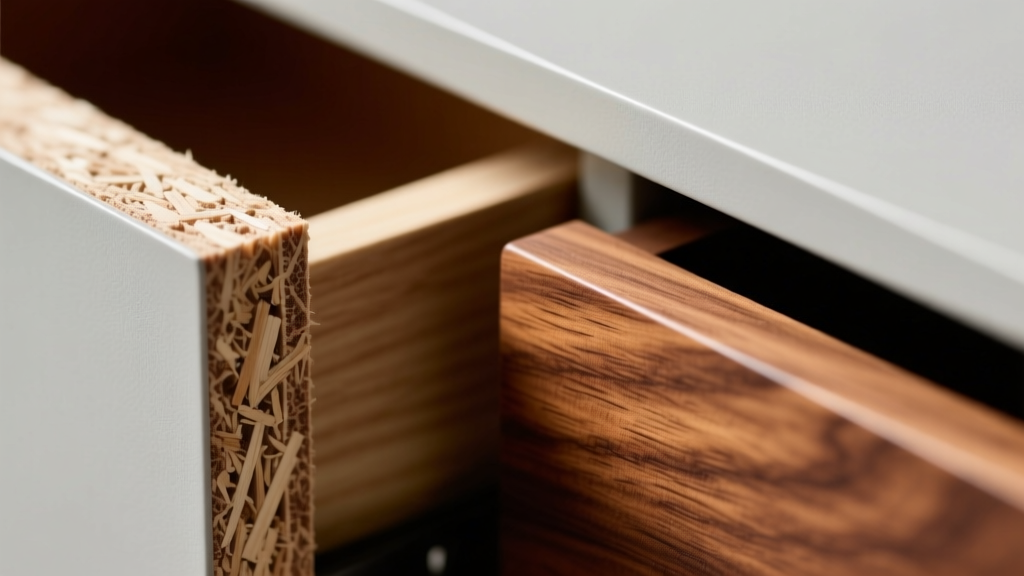
MDF (Medium-Density Fiberboard) is the most common material in the $20–$40 price bracket. While it offers a uniform surface for veneers, MDF is highly susceptible to humidity. In environments with fluctuating moisture, MDF drawer sides will swell, causing the tracks to bind and splinter. More critically, MDF is bound together using urea-formaldehyde resins. According to the EPA guidelines on VOCs, these resins can off-gas volatile organic compounds over time. In an enclosed, poorly ventilated drawer space, these chemical vapors can accelerate the oxidation of reactive metals like copper and brass.
3. Solid Hardwoods
Solid woods like walnut, cherry, and maple represent the highest upfront cost but offer generational longevity. They do not off-gas harmful synthetic resins, and their natural structural integrity allows for complex joinery, such as dovetail or finger joints, which eliminate the need for metal drawer glides that eventually fail. The value proposition here is simple: a $120 solid wood drawer system will outlast five iterations of $25 MDF alternatives.
The Chemistry of Tarnish: Linings, Dyes, and Off-Gassing
The interior lining of jewelry box drawers is arguably the most critical factor for silver and copper collectors. Many budget drawers are lined with synthetic velvet or cheap suede. The manufacturing processes for these synthetic textiles often utilize sulfur-bearing dyes and chemical mordants. When silver is exposed to sulfur in an enclosed, dark space, it rapidly forms silver sulfide—the black tarnish layer that ruins polished finishes. The GIA silver care guidelines emphasize that storing silver in chemically neutral, anti-tarnish environments is essential for preservation.
For true value, seek out jewelry box drawers lined with untreated cotton flannel, acid-free archival paper, or specialized treated fabrics like Pacific Silvercloth. These materials actively intercept and neutralize airborne sulfides before they reach your jewelry. If you already own budget velvet-lined drawers, you can retroactively line them with acid-free tissue paper or specialized anti-tarnish strips to mitigate the chemical risk without replacing the entire unit.
Drawer Runner Mechanics: Where Budget Models Fail
A drawer is only as functional as its tracks. Inexpensive jewelry box drawers typically rely on wooden rabbet joints or cheap plastic friction slides. Over time, friction wears away the finish, leading to wood-on-wood grinding that generates fine sawdust—a nightmare for intricate gemstone settings.
- Side-Mounted Metal Glides: Common in mid-tier ($50–$90) drawers. They offer smooth operation but consume interior width, reducing your usable storage space by up to 1 inch per drawer.
- Undermount Soft-Close Slides: Found in premium ($120+) models. They hide the hardware beneath the drawer, maximizing interior width and providing a luxurious, controlled closing motion that prevents delicate pieces from shifting violently.
- Friction Wood Slides: Found in budget stackable systems. Acceptable only if the drawers are shallow and lightweight; otherwise, they will warp and stick within 12 to 18 months of daily use.
2026 Value Matrix: Price vs. Longevity
To help you allocate your budget effectively, we have categorized the current market offerings into three distinct value tiers based on material integrity and hardware lifespan.
| Tier | Price Range | Primary Materials | Lining Quality | Expected Lifespan | Best For |
|---|---|---|---|---|---|
| Budget | $15 – $35 | Extruded Acrylic, MDF | Synthetic Velvet (High Sulfur Risk) | 1 – 3 Years | Fashion jewelry, beaded pieces, temporary storage |
| Mid-Tier | $45 – $95 | Cast Acrylic, Bamboo, Veneered MDF | Microfiber, Treated Cotton | 4 – 7 Years | Everyday gold/silver, small gemstone collections |
| Premium | $120 – $250+ | Solid Walnut/Cherry, Thick Cast Acrylic | Pacific Silvercloth, Archival Suede | 15+ Years | Heirloom pieces, high-carat gems, investment silver |
The 5-Point Drawer Audit Checklist
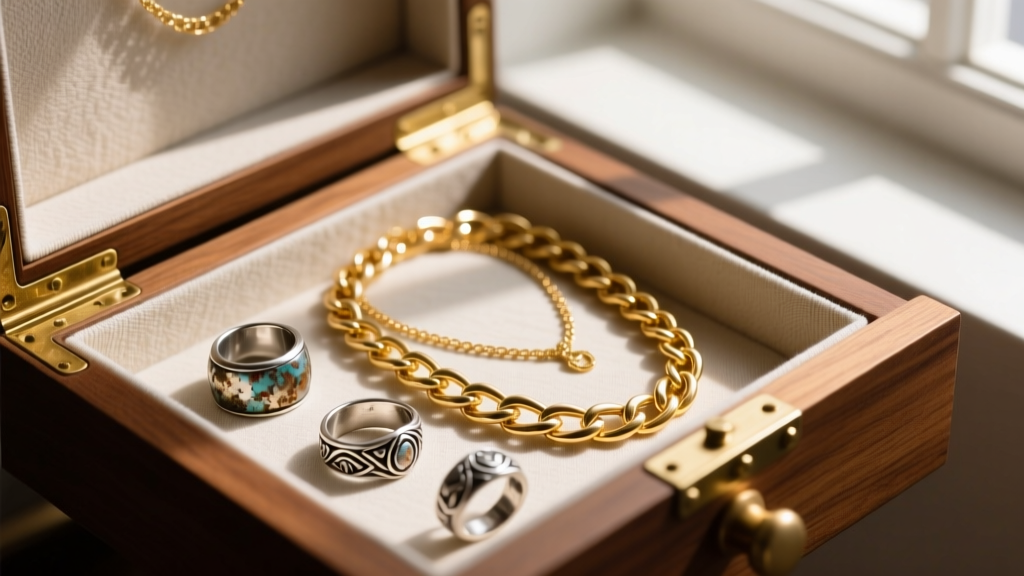
Before purchasing new jewelry box drawers, or when evaluating your current setup, run through this expert audit checklist to ensure your investment is sound:
- The Smell Test: Open a closed drawer that has been shut for 48 hours. If you detect a sharp, chemical, or "new car" odor, the adhesives or MDF resins are off-gassing. Remove reactive metals immediately.
- The Scratch Check: Inspect the bottom of acrylic drawers under a bright LED light. If deep micro-scratches are present, the plastic is degrading and may harbor abrasive dust.
- The Track Alignment: Pull the drawer out to 80% of its extension. It should glide smoothly without lateral wobbling. Wobbling indicates poorly machined tracks that will eventually derail.
- The Lint Test: Rub a piece of dark, polished silver against the velvet lining. If it catches or leaves behind synthetic lint, the textile is too abrasive for high-polish metals.
- The Weight Deflection: Place a 2 lb weight (simulating heavy chains and bangles) in the center of the drawer. If the bottom panel bows more than 2mm, the structural integrity is insufficient for long-term stacking.
Final Verdict: Where to Allocate Your Budget
When investing in jewelry box drawers, prioritize material neutrality and hardware precision over sheer compartment count. A smaller, solid-wood or thick cast-acrylic drawer system lined with archival-grade textiles will protect your collection far better than a massive, multi-tiered MDF tower. In 2026, the smartest collectors are moving away from hyper-segmented, cheap plastic inserts and toward modular, chemically inert wooden drawers that offer customizable, breathable environments for their most prized possessions. Spend your budget on the shell and the lining; the organization can always be adapted later with removable, acid-free dividers.


