How to Upgrade a Dollar Tree Jewelry Box for Tarnish-Free Storage
Learn how to transform a basic dollar tree jewelry box into a premium, anti-tarnish storage solution using expert lining hacks and moisture control.

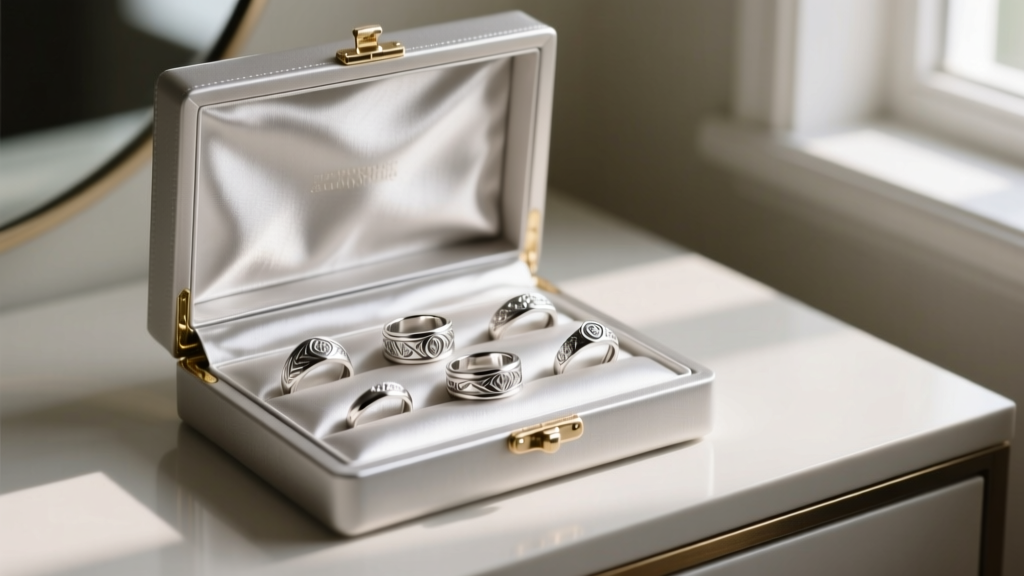
The Allure and the Hidden Danger of Budget Storage
Walking into a craft or discount store, it is easy to be captivated by the aesthetic appeal of a well-designed dollar tree jewelry box. With their faux-leather exteriors, multi-tiered drawers, and plush-looking velvet interiors, these budget organizers seem like an incredible steal for housing your growing collection. However, from a materials science and conservation perspective, standard discount storage boxes are often chemically hostile to fine metals and delicate gemstones.
The core issue lies in the structural materials. Most budget-friendly boxes are constructed from medium-density fiberboard (MDF) or pressed cardboard, held together with acidic adhesives and coated in polyurethane (PU) finishes. Over time, these materials off-gas volatile organic compounds (VOCs) and acidic vapors. When trapped inside a closed drawer, these gases create a micro-environment that rapidly accelerates the oxidation of sterling silver, degrades the nacre on freshwater pearls, and causes cheap alloy fashion jewelry to pit and corrode. Fortunately, with a few archival-grade materials and roughly $30 in upgrades, you can transform a basic discount organizer into a museum-quality safe haven for your valuables.
Phase 1: Neutralizing Off-Gassing with Archival Barriers
Before you can add soft linings, you must seal the acidic substrate of the box itself. According to National Park Service conservation guidelines, porous wood composites must be sealed to prevent acidic migration. The gold standard for this in the archival world is Marvelseal 360, an aluminum-nylon laminate film that provides a complete vapor and gas barrier.
How to Apply the Barrier
Start by emptying the box and wiping down the interior with a slightly damp microfiber cloth to remove any manufacturing dust. Allow it to dry completely. Cut sheets of Marvelseal to fit the interior walls, floor, and ceiling of the main compartment, as well as the inside of each drawer. Using a water-based, acid-free glue (like Lineco Neutral pH Adhesive), carefully adhere the film to the bare MDF before the fabric lining is replaced. The aluminum layer must face inward toward the jewelry to reflect ambient heat and block sulfur gases. This single step stops formaldehyde and acidic off-gassing dead in its tracks, fundamentally altering the chemical environment of the box.
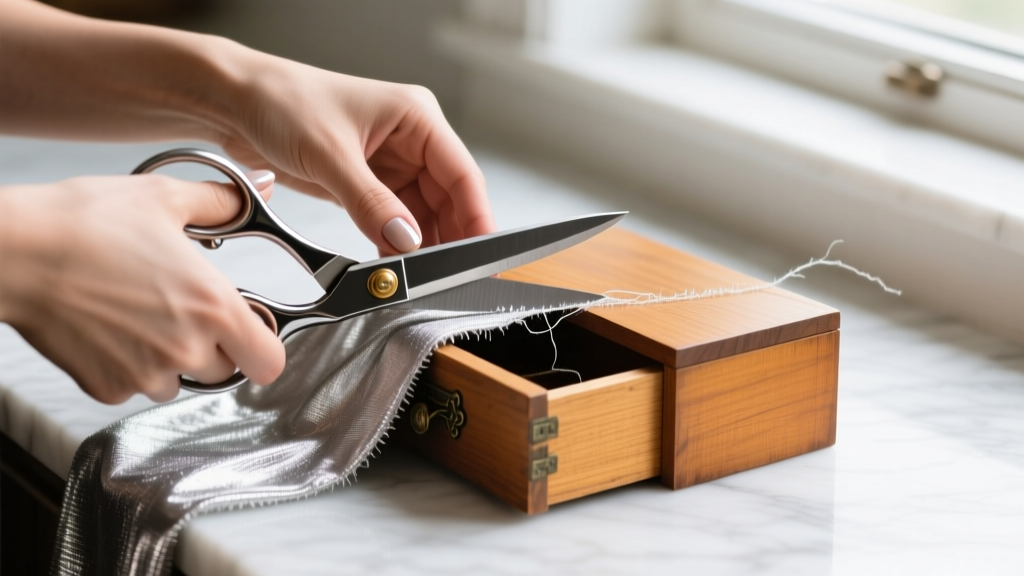
Phase 2: Upgrading the Lining for Active Tarnish Prevention
The standard polyester velvet found in a dollar tree jewelry box offers zero chemical protection. In fact, synthetic fabrics can sometimes generate static electricity, which attracts dust and abrasive micro-particles to your gemstones. To upgrade the lining, you need materials that actively intercept hydrogen sulfide (H2S) gas—the primary culprit behind silver sulfide (black tarnish).
The most effective solution is Pacific Silver Cloth. This is a 100% cotton flannel embedded with microscopic particles of pure silver. The science is elegantly simple: the silver particles in the cloth act as a sacrificial anode. They react with the ambient sulfur gases in the air before those gases can reach your jewelry. Once the cloth turns entirely dark brown or black, it has exhausted its capacity and must be replaced, but it will never transfer tarnish to your items.
Anti-Tarnish Material Comparison
| Material | Mechanism of Action | Lifespan | Best Use Case |
|---|---|---|---|
| Pacific Silver Cloth | Sacrificial silver particles absorb H2S gas | 2 to 5 years | Lining drawers and wrapping heirloom silver |
| 3M Anti-Tarnish Strips | Copper-based resin chemically binds sulfur | 6 to 12 months | Tucking into small, enclosed compartments |
| Activated Charcoal | Physical adsorption of VOCs and moisture | 3 to 6 months | Odor control and general air purification |
| Chalk (Calcium Carbonate) | Absorbs ambient moisture passively | 1 to 2 months | Temporary humidity buffer in large cabinets |
For a comprehensive upgrade, line the bottom of each drawer with Pacific Silver Cloth, and tape a 3M Anti-Tarnish strip to the underside of the box lid where it won't be visually intrusive but can still circulate air.
Phase 3: Micro-Climate and Humidity Control
Tarnish requires moisture to facilitate the chemical reaction between metals and sulfur. If you live in a high-humidity climate, controlling the micro-climate inside your organizer is non-negotiable. However, you should avoid the cheap, opaque white silica gel packets that come in shoeboxes or vitamin bottles. These are often non-indicating and can become saturated within weeks, silently failing to protect your items.
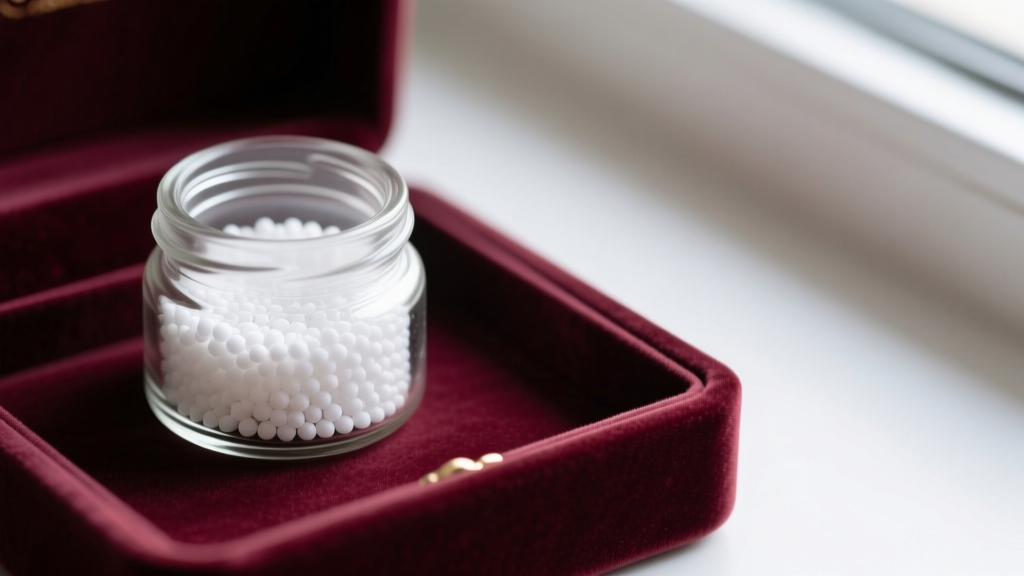
Instead, invest in indicating silica gel beads (typically orange to green, or cobalt-free blue to pink). Place a small, breathable glass or mesh jar filled with these beads in the lowest drawer of your box. Because the beads change color when they reach their moisture absorption capacity (usually around 40% relative humidity), you will know exactly when they need to be recharged. Recharging is as simple as microwaving the beads for two minutes to drive off the trapped water vapor, making them a sustainable, lifelong humidity control solution.
Phase 4: Spatial Configuration and Hardness Awareness
Even with perfect chemical and humidity controls, physical damage remains a threat if the layout is poorly managed. The Gemological Institute of America (GIA) emphasizes that improper storage is a leading cause of micro-scratches and facet abrasion. This is governed by the Mohs scale of mineral hardness.
Diamonds (Mohs 10), sapphires (Mohs 9), and moissanite (Mohs 9.25) will easily scratch 14k gold (Mohs 2.5-3), sterling silver, and softer gemstones like opals (Mohs 5.5-6.5) or turquoise (Mohs 5-6). When configuring your upgraded dollar tree jewelry box, never allow diamond or sapphire pieces to touch softer metals or stones. Utilize acid-free tissue paper to create physical dividers between rings in shared compartments, and always store pearl necklaces flat rather than hanging, as gravity can stretch the silk thread over time and cause the nacre to rub against the clasp.
Maintenance Routine for Upgraded Organizers
An upgraded storage system requires minimal but specific maintenance to remain effective. Every six months, open the box and inspect the Pacific Silver Cloth; if it has turned a deep, uniform brown, order a replacement yard. Check your indicating silica gel; if the orange beads have turned pale green, microwave them immediately. Finally, gently vacuum the interior crevices using a brush attachment covered with a piece of sheer nylon stocking to remove any accumulated dust or dead skin cells, which can harbor acidic salts that degrade metal finishes.
By investing a small amount of time and archival materials, you completely subvert the intended lifespan of a discount organizer. Your dollar tree jewelry box will no longer be a temporary, potentially damaging holding pen, but a chemically stable, highly functional vault capable of preserving your collection for decades.


