Tarte Jewelry Box Full Face: Step-by-Step Storage Guide
Learn how to organize a tarte jewelry box full face of accessories. Step-by-step guide for facial piercings, earrings, and necklaces.

Mastering the Tarte Jewelry Box Full Face Organization Method
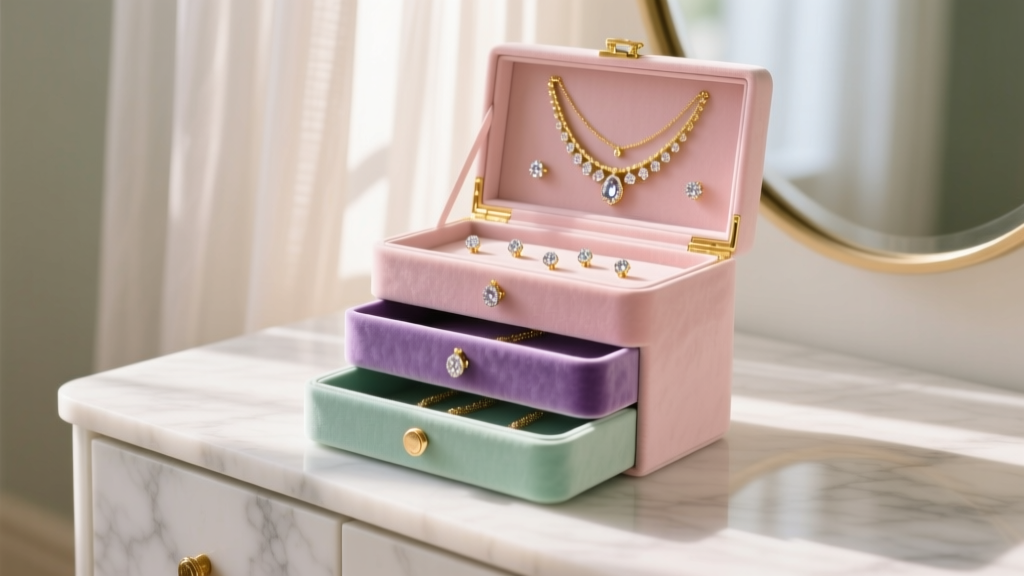
When beauty and fine accessories collide, storage becomes an art form. The viral tarte jewelry box full face setup has taken the organization community by storm in 2026, bridging the gap between high-end cosmetic vanities and secure jewelry storage. Originally designed to hold tiered makeup palettes, these multi-drawer vanity boxes are now being repurposed by collectors to house a complete 'full face' of jewelry—encompassing facial piercings, ear curations, hairpieces, and necklaces.
However, storing a full face of jewelry requires more than just tossing pieces into velvet-lined compartments. Facial piercings demand strict hygiene and specific material care, while delicate gold chains and gemstone ear cuffs require structural support to prevent bending and scratching. This step-by-step guide will show you exactly how to configure your multi-tiered vanity box to protect every piece from your forehead to your collarbone.
Step 1: Prepping the Vanity for Anti-Tarnish and Hygiene
Before placing a single piece of jewelry into your organizer, you must prepare the environment. Velvet drawers look luxurious, but they can trap ambient moisture, accelerating the oxidation process that turns sterling silver black (silver sulfide formation).
- Line the Drawers: If your box lacks high-quality felt, line the bottom of each drawer with Pacific Silvercloth. This specialized flannel is embedded with microscopic silver particles that intercept tarnish-causing gases before they reach your jewelry.
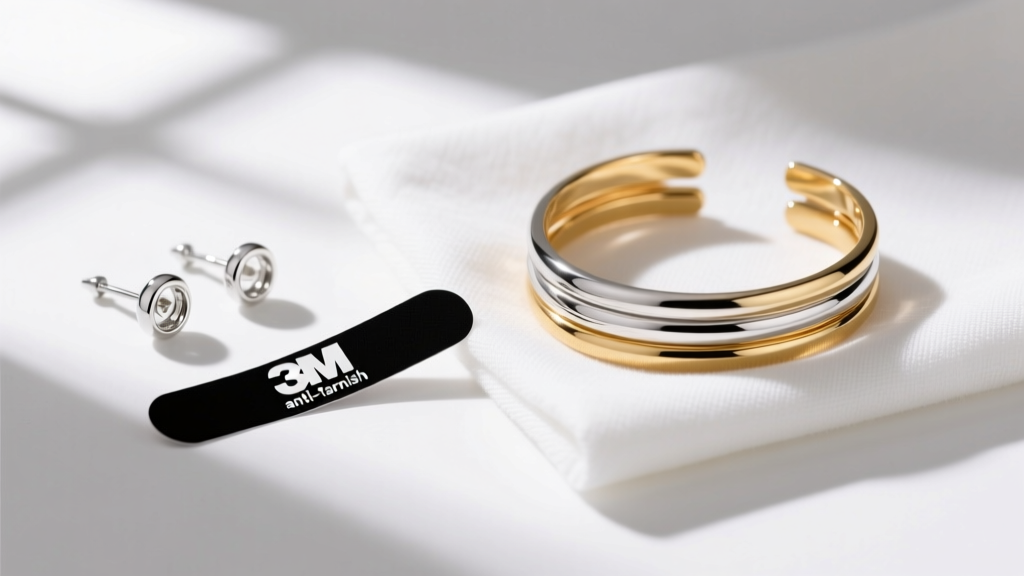
- Add Active Defenses: Place 3M Anti-Tarnish strips (typically $15 for a pack of 10) in the corners of the bottom and middle drawers. These strips absorb hydrogen sulfide and sulfur dioxide from the air.
- Sanitize for Piercings: The top drawer will house facial piercings. Wipe it down with a 70% isopropyl alcohol solution and let it air dry completely to ensure a sterile baseline for any healing or recently worn body jewelry.
Step 2: Top Tier - Facial Piercings and Precision Studs
The top drawer of your tarte jewelry box full face setup should be dedicated exclusively to facial jewelry: nose hoops, septum clickers, eyebrow barbells, and lip labrets. Because these pieces interact directly with mucous membranes and healing tissue, material grade and storage hygiene are non-negotiable.
Organizing by Gauge and Material
Facial jewelry is incredibly small and easily lost in standard ring rolls. Instead, use a divided, medical-grade silicone grid insert. According to the Association of Professional Piercers (APP), only specific materials are safe for long-term wear and storage without degrading. Prioritize storing your ASTM F-136 implant-grade titanium and solid 14k/18k gold pieces here.
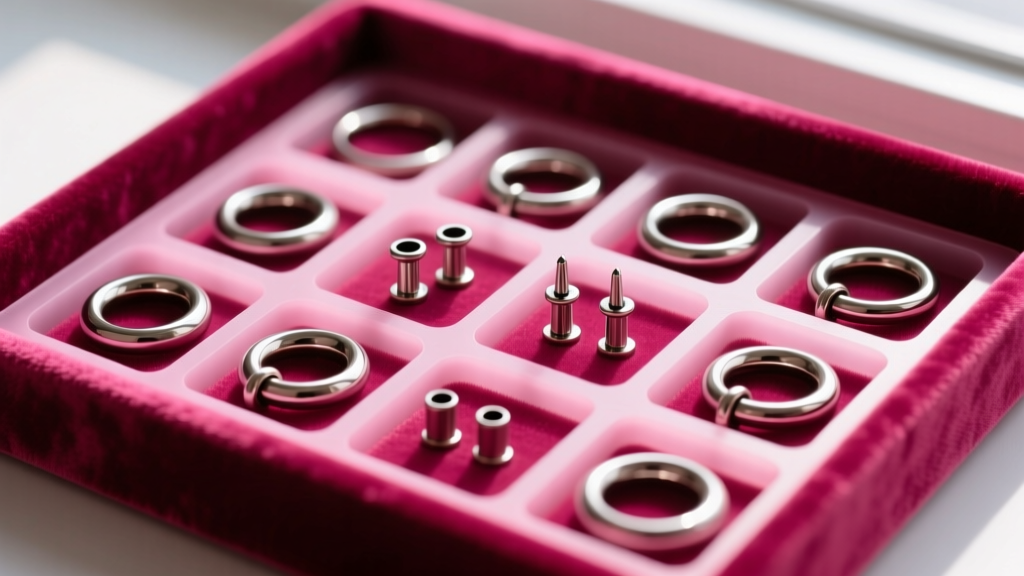
Group your pieces by gauge size to make morning styling effortless:
- 18-Gauge (1.0mm): Delicate nostril screws and L-shaped pins. Store these in the smallest grid slots to prevent the posts from bending.
- 16-Gauge (1.2mm): Standard septum clickers, tragus studs, and eyebrow curved barbells.
- 14-Gauge (1.6mm): Lip rings, Monroe studs, and thicker septum tusks. Keep these in wider compartments so the decorative ends (like opal or PVD-coated gems) do not scratch against one another.
Step 3: Middle Tier - Ear Curations and Hairpieces
The middle drawer is the workhorse of your setup, housing the bulk of your ear curation (helix, conch, rook, and lobe pieces) as well as hair vines, tiaras, and ear cuffs. This tier requires a mix of velvet rolls and flat display pads.
Managing the Mohs Scale of Hardness
When storing earrings, you must consider gemstone hardness. The Gemological Institute of America (GIA) emphasizes that storing jewelry of varying hardness together leads to catastrophic scratching. A diamond (Mohs 10) will easily scratch a gold vermeil ear climber or a sterling silver helix cuff if they are tossed into the same compartment.
Configuration Strategy
- Left Side (Ear Climbers & Cuffs): Lay ear climbers flat on a microfiber pad. Never hang ear cuffs, as the tension clips can warp over time.
- Center (Hoops & Huggies): Use a slotted velvet roll. Thread the post through the slot and secure the backing on the other side to keep the hoops perfectly round.
- Right Side (Hairpieces): Delicate gold hair vines and pearl-studded bobby pins should be wrapped individually in acid-free tissue paper before being placed in a shallow tray to prevent the delicate wirework from snagging on velvet fibers.
Step 4: Bottom Tier - Necklaces and Collarbone Chains
The deepest drawer is reserved for necklaces, chokers, and collarbone chains. The primary enemy here is tangling, which can weaken chain links (especially delicate cable and box chains) and cause permanent kinks.
The Straw Method for Chain Preservation:
To prevent tangling in a deep drawer, thread the delicate end of your chain through a 3-inch piece of a silicone cocktail straw before clasping it. This keeps the chain rigid and completely eliminates knotting. For heavier statement pieces and chokers, utilize a velvet-lined divider tray, laying them flat in an 'S' curve rather than forcing them into tight circles, which stresses the soldered jump rings.
Full Face Storage Data Matrix
Use the following reference table to ensure every piece in your tarte jewelry box full face collection is stored under optimal conditions.
| Jewelry Category | Ideal Drawer Tier | Storage Insert Type | Material Care Note |
|---|---|---|---|
| Nostril Screws (20g-18g) | Top | Silicone Grid (Small) | Keep away from cotton; fibers snag on L-bends. |
| Septum Clickers (16g-14g) | Top | Silicone Grid (Large) | Ensure hinge is completely dry before closing. |
| Helix & Conch Studs | Middle | Slotted Velvet Roll | Store titanium and gold separately from silver. |
| Diamond Ear Climbers | Middle | Individual Microfiber Pouch | Diamonds will scratch adjacent gold vermeil. |
| Delicate Cable Chains | Bottom | Silicone Straw Threading | Prevents micro-kinks in links under 1.5mm width. |
| Heavy Chokers | Bottom | Flat Velvet Divider | Lay in 'S' curve to protect soldered jump rings. |
Routine Maintenance for Your Vanity Setup
Even the best organizational system fails without maintenance. Every three months, remove all jewelry from your vanity box. Vacuum the velvet drawers using a brush attachment to remove dead skin cells, cosmetic dust, and loose fibers that can harbor bacteria—especially critical for the top drawer housing facial piercings.
Replace your 3M anti-tarnish strips every six months, or sooner if the indicator window turns dark brown. Finally, wipe down the exterior of your vanity box with a gentle, non-ammonia glass cleaner to maintain that pristine, aesthetic finish that makes the tarte jewelry box full face setup so visually satisfying on your dresser.
Final Thoughts on Full Face Organization
Transitioning to a tiered vanity system transforms your morning routine from a frustrating treasure hunt into a seamless styling experience. By respecting material grades, gauge sizes, and the physical properties of your gemstones, your organizer becomes a true preservation vault. Whether you are securing a 14-gauge titanium labret or a delicate 18k gold hair vine, this structured approach ensures your full face of jewelry remains pristine, hygienic, and ready to wear.


