Chinese Wood Jewelry Box Review: Budget Value Assessment
We assess the true value of a Chinese wood jewelry box, comparing budget imports to artisan pieces on materials, joinery, and tarnish prevention.

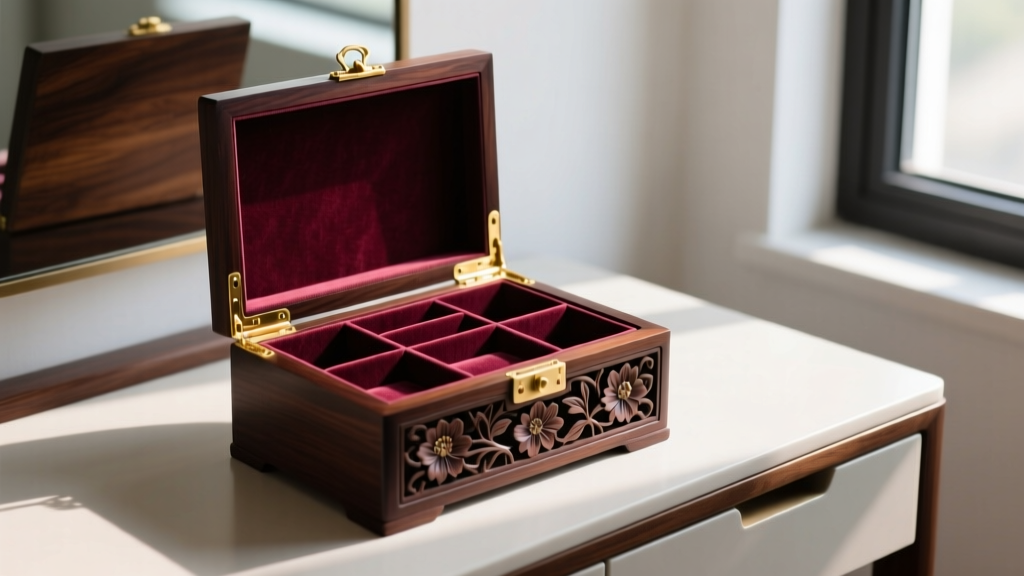
The Allure of the Budget Chinese Wood Jewelry Box
When searching for affordable yet elegant storage, the traditional Chinese wood jewelry box frequently dominates search results and marketplace listings. Priced anywhere from $15 to $150, these boxes promise an aesthetic of antique luxury, often featuring intricate mother-of-pearl inlays, hand-painted silk screens, or rich, glossy lacquer finishes. But from a strict budget and value assessment perspective, do these imported storage solutions actually protect your precious metals and gemstones, or are they merely decorative traps that accelerate tarnish and damage?
In this comprehensive value guide, we deconstruct the materials, joinery, and chemical realities of the modern Chinese wood jewelry box. By understanding the difference between mass-market exports and mid-tier artisan pieces, you can make an informed decision that balances upfront cost with long-term jewelry preservation.
Material Realities: Solid Wood vs. Veneered MDF
The most significant value differentiator in this market is the core material. Budget boxes heavily rely on Medium-Density Fiberboard (MDF) wrapped in a thin paper or wood veneer. While visually appealing from a distance, MDF lacks structural integrity over time. The edges are prone to chipping, and the material swells irreversibly if exposed to the humidity of a bathroom or coastal bedroom.
Genuine solid wood imports typically utilize three specific species, each with distinct physical properties:
- Paulownia (Paulownia tomentosa): With a Janka hardness rating of just 300 lbf, paulownia is exceptionally lightweight and cheap to harvest. While it resists warping, its soft surface dents easily if heavy silver cuffs or metal watches are dropped onto it.
- Camphor (Cinnamomum camphora): Boasting a Janka hardness of 950 lbf, camphor wood is durable and traditionally used to repel moths. However, it naturally emits volatile organic compounds (VOCs). While safe for metals, prolonged exposure to camphor vapor can cloud the surface of porous organic gems like pearls, amber, and tortoiseshell.
- Asian Elm (Ulmus parvifolia): The gold standard for mid-tier imports. Elm offers excellent dimensional stability and a beautiful interlocking grain that resists splitting, making it ideal for heavy, multi-drawer armoires.
Joinery and Hardware: Where Budget Boxes Fail
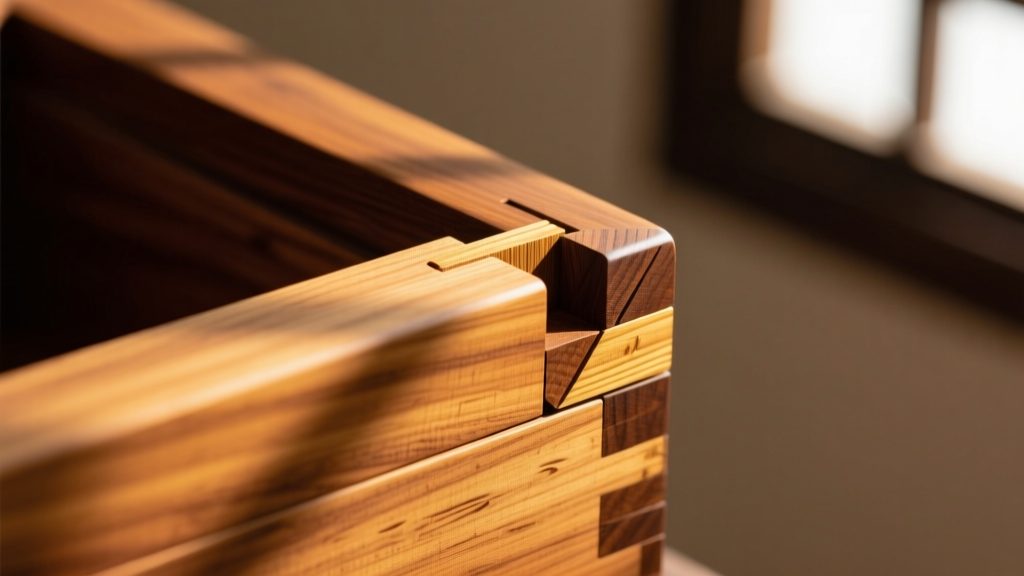
A beautiful exterior means little if the structural joints fail after a year of use. Mass-market boxes under $30 rely on butt joints secured with brad nails and cheap PVA (polyvinyl acetate) wood glue. When the glue dries out or the box is subjected to temperature fluctuations, the corners separate.
Mid-tier boxes ($50–$120) begin to incorporate machine-cut box joints or simple dovetails, which provide mechanical locking strength independent of the adhesive. Furthermore, the hardware—specifically the hinges and clasps—is a major indicator of value. Budget boxes utilize Zamak, a zinc alloy that is plated to look like brass. Zamak is notorious for surface pitting and "zinc pest" when exposed to the sulfur compounds released by tarnishing silver or the high humidity of a bedroom. True value requires solid cast brass or stainless steel hinges, which are typically only found in boxes exceeding the $100 threshold.
The Hidden Costs: Lacquer, Glues, and Tarnish Risks
The most critical, yet least visible, aspect of assessing a Chinese wood jewelry box is understanding its chemical interaction with your jewelry. According to guidelines from the Smithsonian Museum Conservation Institute, wood and wood finishes can off-gas acidic vapors that rapidly accelerate the corrosion of metals and the degradation of organic materials.
Traditional Chinese lacquer, derived from the sap of the Toxicodendron vernicifluum tree (urushi), is completely inert and safe for jewelry once fully cured. However, modern budget imports use nitrocellulose or polyurethane spray lacquers to cut costs. If not allowed to off-gas for several months before use, these synthetic finishes release plasticizers and solvents that will turn sterling silver black and degrade copper alloys.
Similarly, the interior lining is a major risk factor. Budget boxes use synthetic polyester velvet adhered with acidic glues. The Gemological Institute of America (GIA) recommends acid-free, unbleached storage materials to prevent chemical reactions with sensitive metals. High-end imports utilize unbleached cotton or specialized anti-tarnish flannel, though this is rare in the sub-$50 market.
Price Tiers: What You Actually Get for Your Money
To help you evaluate the true price-to-longevity ratio, we have categorized the market into three distinct tiers based on current 2026 import pricing and material analysis.
| Price Tier | Core Material | Joinery & Hardware | Interior Lining | Best Use Case |
|---|---|---|---|---|
| Under $30 | MDF with paper veneer | Staples, butt joints, plated Zamak | Polyester velvet, acidic PVA glues | Short-term storage for fashion jewelry and stainless steel |
| $50 - $120 | Solid Paulownia or Elm | Machine-cut box joints, mixed brass/alloy | Synthetic flannel, low-VOC adhesives | Everyday storage for gold, silver, and hard gemstones |
| $200+ | Aged Elm or Rosewood | Hand-cut dovetails, solid cast brass | Acid-free cotton, natural silk | Heirloom storage for pearls, opals, and high-karat gold |
Final Verdict: How to Maximize Your Investment
Is a budget Chinese wood jewelry box worth the investment? If you are purchasing a sub-$30 MDF box for high-end sterling silver or porous gemstones, the answer is a definitive no; the cost of accelerated tarnishing and potential gemstone damage far outweighs the initial savings. However, if you target the $60 to $100 sweet spot, you can secure a solid elm or paulownia box with decent structural integrity that offers excellent aesthetic value.
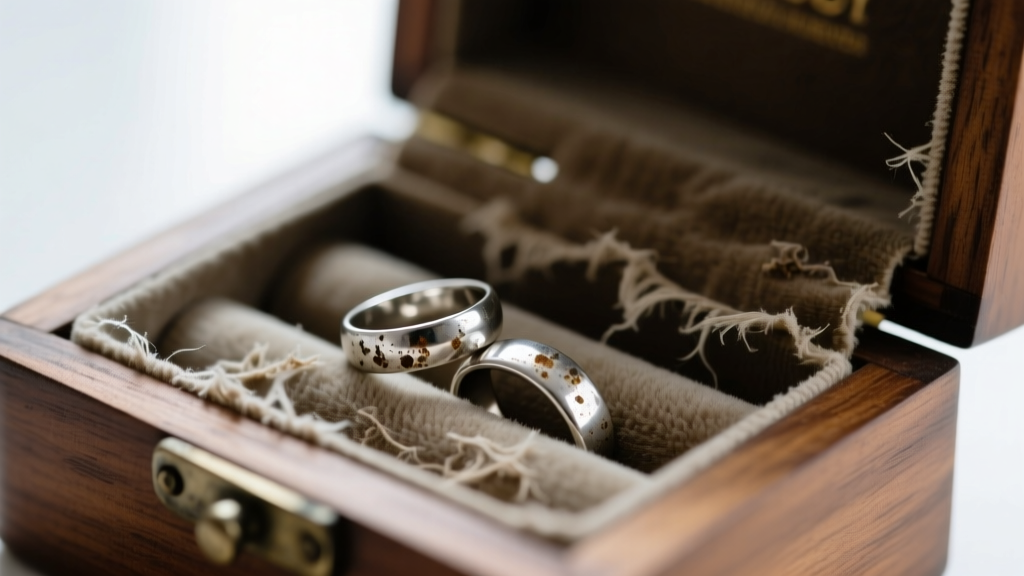
For those who have already purchased a budget import, you can drastically improve its archival safety through a few simple retrofitting steps. First, leave the box open in a well-ventilated, climate-controlled room for at least three weeks to allow synthetic lacquers and glues to fully off-gas. Second, line the bottom of each compartment with a sheet of Pacific Silvercloth or acid-free archival tissue paper to create a physical barrier between your jewelry and the acidic synthetic velvet. Finally, apply a thin coat of Renaissance Wax to the exterior wood to seal the surface and protect the finish from daily handling oils. By understanding the material limitations and taking these proactive steps, you can transform a budget import into a safe, stylish, and highly functional storage solution.


