How to Clean and Maintain a Jewelry Box With Ballerina
Learn expert techniques to clean, maintain, and restore your jewelry box with ballerina mechanisms, velvet interiors, and wood finishes safely.

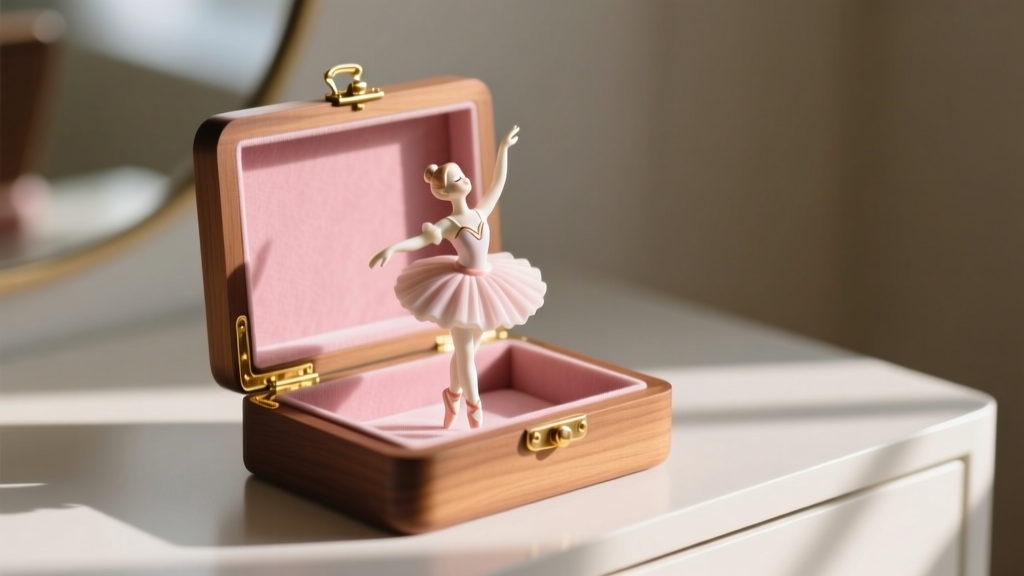
There is a distinct nostalgia attached to a jewelry box with ballerina. Whether inherited from a grandmother or purchased as a vintage keepsake, these mechanical marvels serve as both functional storage and kinetic art. However, maintaining them requires a nuanced approach that bridges horology, textile conservation, and woodworking. Standard jewelry cleaning methods can easily ruin the delicate velvet linings, degrade the wood veneers, or permanently seize the internal music box movement.
In this comprehensive guide, we break down the exact materials, solvents, and lubricants required to properly care for your keepsake box, ensuring both your jewelry and the mechanical ballerina remain in pristine condition for decades.
The Anatomy of a Ballerina Jewelry Box: What You Are Cleaning
Before applying any cleaners, you must identify the materials used in your specific box. Most mid-century and modern ballerina boxes share a common anatomy:
- The Shell: Typically constructed from MDF (medium-density fiberboard) wrapped in a thin wood veneer, polyurethane resin, or occasionally solid walnut or mahogany.
- The Lining: Usually a rayon-blend velvet, flocked felt, or synthetic satin, adhered to a cardboard backing with animal hide glue or PVA.
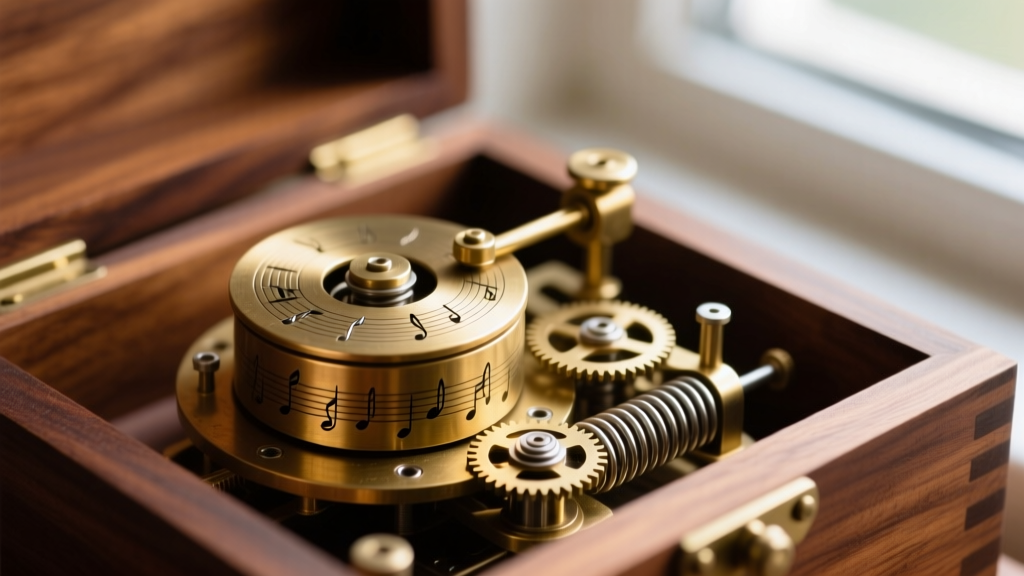
- The Movement: Most boxes feature an 18-note or 36-note mechanical movement manufactured by Sankyo, Yunsheng, or Reuge, powered by a coiled steel mainspring and regulated by a brass governor.
Understanding these distinct zones is critical, as a solvent that safely cleans a polyurethane shell will instantly melt a rayon velvet lining.
Exterior Care: Wood, Resin, and Veneer Maintenance
The exterior of your box is constantly exposed to skin oils, dust, and fluctuating humidity. Avoid commercial furniture polishes like Pledge, which contain silicone. Silicone creates a temporary shine but eventually penetrates the veneer's micro-cracks, making future professional refinishing nearly impossible.
Cleaning Wood Veneers and Solid Wood
For wood finishes, use a microfiber cloth lightly dampened with distilled water to lift surface dust. For deeper conditioning and protection, apply a thin layer of Renaissance Micro-Crystalline Wax Polish. Originally developed by the British Museum, this acid-neutral wax will not bloom or discolor over time. Apply with a lint-free cotton pad, let it haze for 10 minutes, and buff gently.
Cleaning Resin and Polyurethane Shells
For high-gloss resin or faux-leather exteriors, mix one drop of pH-neutral Castile soap into a cup of distilled water. Dampen a microfiber cloth (never spray directly onto the box, as liquid can seep into the seams and warp the MDF core) and wipe the surface. Dry immediately with a separate soft cloth to prevent water spotting.
Interior Lining: Cleaning Velvet, Felt, and Satin
The interior lining of a jewelry box with ballerina mechanisms faces a unique threat: silver sulfide transfer. When unpolished sterling silver rests against velvet, the tarnish (silver sulfide) rubs off, leaving permanent black or yellowish smudges on the fabric. Furthermore, skin oils and lotions degrade the fibers over time, causing them to mat and crush.
Routine Dusting and Debris Removal
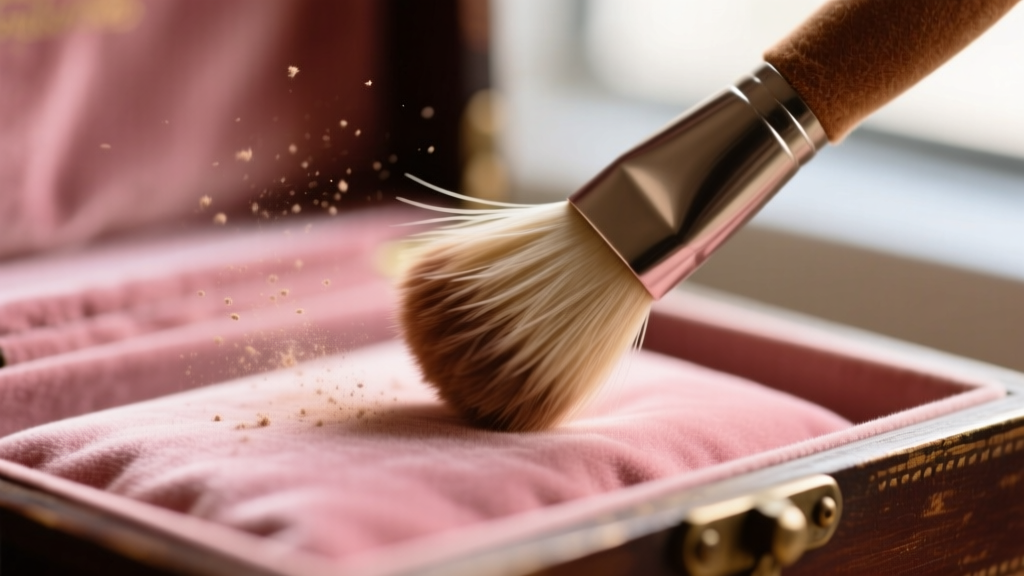
Never use a standard vacuum cleaner on the interior; the suction can rip the delicate cardboard backing away from the wood shell. Instead, use a soft-bristled suede brush or a clean, dry makeup brush to gently agitate the velvet pile and lift trapped dust. For deep crevices, a micro-vacuum with a soft brush attachment (often used for cleaning computer keyboards) is highly effective.
Treating Tarnish Stains and Odors
If the velvet is stained by silver tarnish, do not use water or standard upholstery cleaners, which will cause the cardboard backing to warp and the hide glue to fail. Instead, use a specialized dry textile cleaning sponge (often called a "soot sponge" or vulcanized rubber sponge). Gently dab the stained area; the rubber will lift the metallic particles from the fibers without introducing moisture. To neutralize musty odors, place a small, breathable muslin bag filled with activated bamboo charcoal inside the closed box for 72 hours.
Expert Tip: Never store pearl or opal jewelry in a completely airtight environment, including a tightly sealed vintage ballerina box. These organic and water-bearing gemstones require trace amounts of ambient humidity to prevent cracking. Leave the lid ajar for a few hours each month to allow the interior to breathe.
The Mechanical Heart: Maintaining the Music Box Movement
The most common point of failure in a jewelry box with ballerina is the music box movement. Over time, the lubricants inside the Sankyo or Yunsheng mechanisms dry out, causing the tempo to drag or the governor to squeak.
The WD-40 Warning
Never use WD-40 or standard household oils on a music box movement. WD-40 is primarily a solvent, not a long-term lubricant. It will temporarily free a stuck gear, but as it evaporates, it leaves behind a sticky residue that attracts dust and eventually seizes the pinned cylinder permanently.
Proper Lubrication Techniques
If the music slows down or the ballerina struggles to spin, the movement requires servicing. Using a micro-oiler pin, apply a microscopic drop of Moebius 8000 synthetic clock oil or a dry PTFE (Teflon) lubricant to the main arbor pivots and the governor fan bearings. Avoid getting any oil on the brass pinned cylinder or the steel comb; oil on the comb will dampen the vibration of the teeth, resulting in a muffled, deadened sound.
Anti-Tarnish Upgrades for Vintage Keepsake Boxes
Modern jewelry organizers often feature Pacific Silvercloth or chemically treated anti-tarnish linings. Vintage ballerina boxes lack this technology. However, you can easily retrofit your box without damaging the original velvet.
Purchase 3M Anti-Tarnish Strips or copper-infused anti-tarnish tabs. Cut them into small 1-inch squares and use double-sided fabric tape to adhere them to the underside of the lid or the back walls of the compartments. These strips absorb airborne sulfur compounds, the primary catalyst for silver and copper tarnish, protecting your jewelry while keeping the aesthetic of the original plush lining intact. Replace the strips every 6 to 12 months, depending on your local humidity and sulfur levels.
Troubleshooting Common Ballerina Box Failures
Use the diagnostic table below to identify and resolve the most frequent issues associated with mechanical keepsake boxes.
| Symptom | Root Cause | Expert Solution |
|---|---|---|
| Ballerina figurine sticks or wobbles | Bent spindle or debris in the top bushing | Gently straighten the brass spindle with padded pliers; use compressed air to clear the bushing hole. |
| Music plays too fast or "runs away" | Dried lubricant on the governor fan, causing it to slip | Clean the governor fan pivots with a cotton swab dipped in isopropyl alcohol, then re-oil with clock oil. |
| Velvet lining peeling at the seams | Failure of original animal hide glue due to low humidity | Inject a small amount of flexible PVA (polyvinyl acetate) glue under the seam using a syringe; clamp lightly with binder clips until dry. |
| Grinding noise when winding the key | Stripped plastic gear or slipping mainspring ratchet | Stop winding immediately. The mainspring ratchet pawl is likely worn and requires replacement by a horologist. |
| Hinges squeak or feel stiff | Oxidation on the steel hinge pins | Apply a dry graphite powder to the hinge barrels; avoid liquid oils that can stain the adjacent wood veneer. |
For further reading on the preservation of historical textiles and mechanical objects, consult the guidelines provided by the Library of Congress Preservation Care department. Additionally, the Music Box Society International (MBSI) offers extensive archives on identifying and servicing specific Sankyo and Reuge movements. Finally, for best practices on storing specific gemstones within your newly cleaned box, refer to the GIA Jewelry Care Guide.
By treating your jewelry box with ballerina not just as a container, but as a complex mechanical and textile artifact, you ensure it remains a functional, beautiful heirloom capable of safely housing your most prized collections.


