Matchstick Jewelry Box Care: Cleaning and Restoration
Learn how to clean, restore, and maintain a matchstick jewelry box. Discover anti-tarnish lining tips and wood care to protect your precious gems.

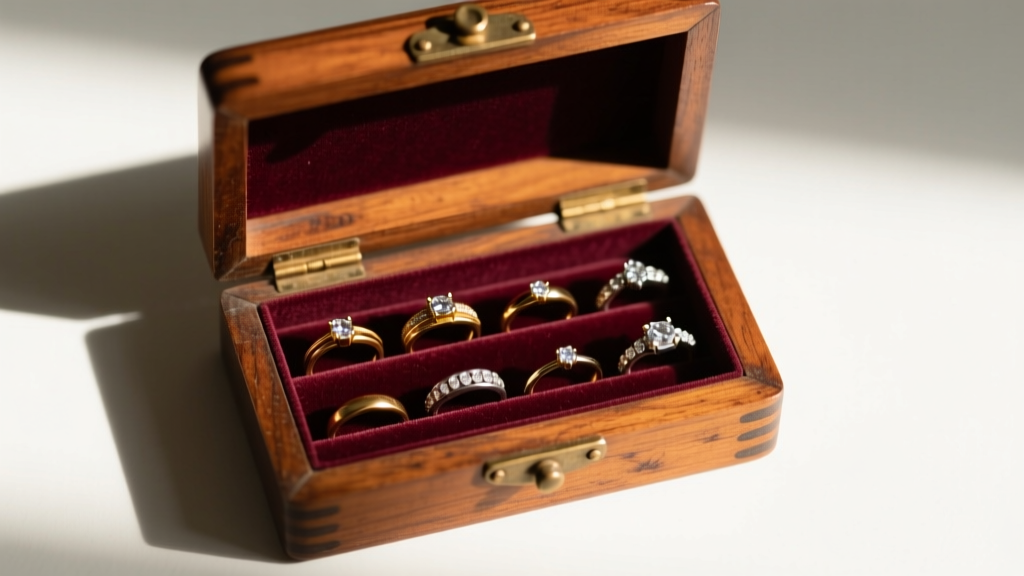
Upcycling vintage and artisan containers into bespoke storage solutions is a hallmark of thoughtful jewelry organization. Among the most charming and compact options is the matchstick jewelry box. Originally designed to house combustible matches, these petite sliding boxes—often crafted from basswood, pine, or heavy-duty pressed cardboard—offer a nostalgic, tactile experience for storing rings, stud earrings, and delicate chains. However, because they were not originally engineered for long-term precious metal preservation, repurposing them requires a meticulous approach to cleaning, structural maintenance, and interior modification.
Without proper intervention, the residual chemicals from a matchbox's original purpose, combined with the natural acidity of untreated wood or cardboard, can accelerate tarnishing and even cause microscopic pitting on silver and gold alloys. This comprehensive guide details the exact protocols for restoring, cleaning, and maintaining a matchstick jewelry box to ensure it remains a safe, functional, and beautiful haven for your most treasured pieces.
The Anatomy of a Matchstick Box: Material Vulnerabilities
Before applying any cleaning agents, it is critical to identify the base material of your matchstick jewelry box. Vintage boxes from the mid-20th century are predominantly constructed from thin veneers of pine or balsa wood, bound with animal-based hide glues or early synthetic PVA (polyvinyl acetate) adhesives. Modern artisan replicas may use laser-cut birch plywood or high-density kraft cardboard.
The most significant hazard to your jewelry is the exterior striker strip. Historically, these strips contained a volatile mixture of red phosphorus, powdered glass, and potassium chlorate. Even on 'safety matches' where the chemicals are separated, the striker strip remains highly abrasive and chemically active. If your matchstick jewelry box retains its original striker strip, it must be carefully removed or sealed. According to conservation guidelines from the National Park Service Museum Handbook, degrading phosphorus compounds can off-gas acidic vapors that will rapidly oxidize sterling silver and degrade the rhodium plating on white gold.
Step-by-Step Exterior Restoration and Cleaning
Cleaning a matchstick jewelry box requires a departure from standard household cleaners. Water-based solutions will warp the thin wood veneers and dissolve the adhesives holding the sleeve and tray together. Follow this dry-cleaning and conditioning protocol to restore the exterior without compromising the structural integrity.
1. Dry Particulate Removal
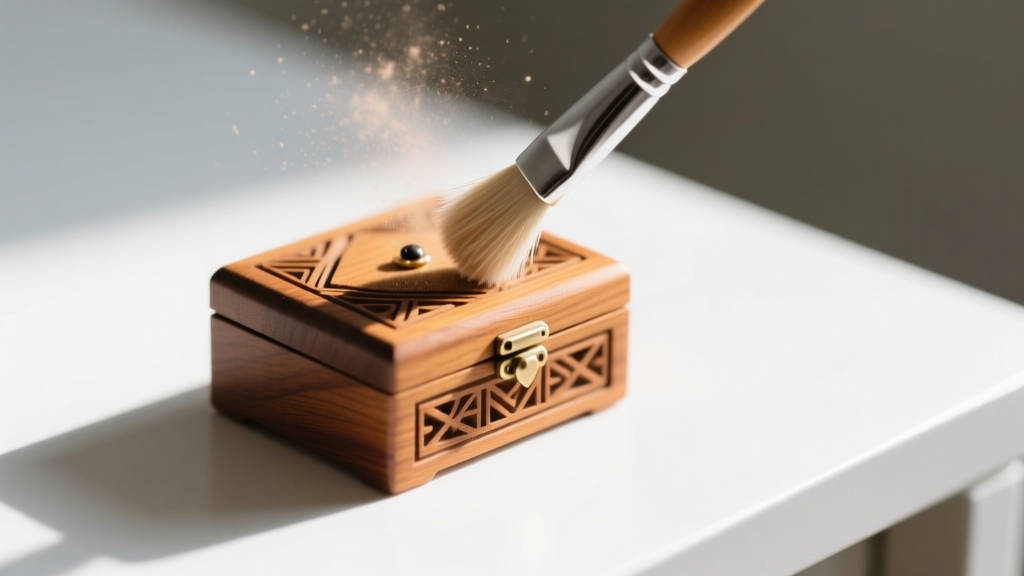
Use a soft-bristled hake brush or a clean, dry makeup brush to gently sweep away dust from the carved crevices and the sliding rails. Avoid compressed air, as the high pressure can force dust deeper into the wood grain or crack fragile, aged veneers.
2. Removing the Striker Strip and Adhesive
If the striker strip is present, gently lift one corner with a plastic spudger or a bamboo skewer. Apply a minuscule amount of citrus-based adhesive remover (such as Goo Gone) to a cotton swab, and carefully dab the glue line. Never apply the solvent directly to the wood, as it will stain the porous surface. Once the strip is removed, wipe the area with a dry microfiber cloth to absorb any residual oils.
3. Wood Conditioning and Sealing
Untreated wood is naturally acidic and will off-gas organic acids (like acetic acid from oak or pine) that cause silver to tarnish. To seal the exterior and neutralize the surface, apply a micro-crystalline wax. Renaissance Wax, a staple in museum conservation, is ideal. Apply a thin layer with a lint-free cloth, let it cure for 15 minutes, and buff it to a soft sheen. This creates a moisture barrier and stabilizes the wood fibers.
Upgrading the Interior: Anti-Tarnish Lining Solutions
The interior of a raw matchstick box is a hostile environment for fine jewelry. The bare wood or cardboard will absorb ambient humidity and transfer acidic oils to your pieces. You must line the interior tray and the sleeve. The Gemological Institute of America (GIA) strongly recommends using chemically inert materials for direct jewelry contact.
| Material | Anti-Tarnish Properties | Installation Difficulty | Best For |
|---|---|---|---|
| Pacific Silvercloth | Excellent (embedded silver particles trap sulfur gases) | Moderate (requires precise cutting and PVA gluing) | Sterling silver rings and chains |
| Acid-Free Archival Tissue | Poor (only provides a physical barrier, no chemical neutralization) | Easy (can be folded and tucked) | Gold jewelry, diamonds, and temporary storage |
| Volara Polyethylene Foam | Excellent (chemically inert, non-off-gassing, closed-cell) | Moderate (requires spray adhesive) | Heavy items, gemstone protection, impact resistance |
| Traditional Velvet/Felt | Poor (often contains sulfur dyes and traps moisture) | Easy | Display purposes only (not recommended for long-term storage) |
Pro-Tip: When adhering your chosen lining to the interior tray, use a pH-neutral, acid-free glue stick or double-sided archival tape. Standard liquid craft glues contain water and solvents that will warp the thin base of the matchstick tray and cause the lining to bubble as it dries.
Maintaining the Sliding Mechanism
The defining feature of a matchstick jewelry box is its friction-fit sliding drawer. Over time, changes in ambient humidity cause the wood to swell, or the friction wears down the rails, resulting in a drawer that is either impossibly stuck or slides out too loosely, risking a spill.
Fixing a Stuck Drawer
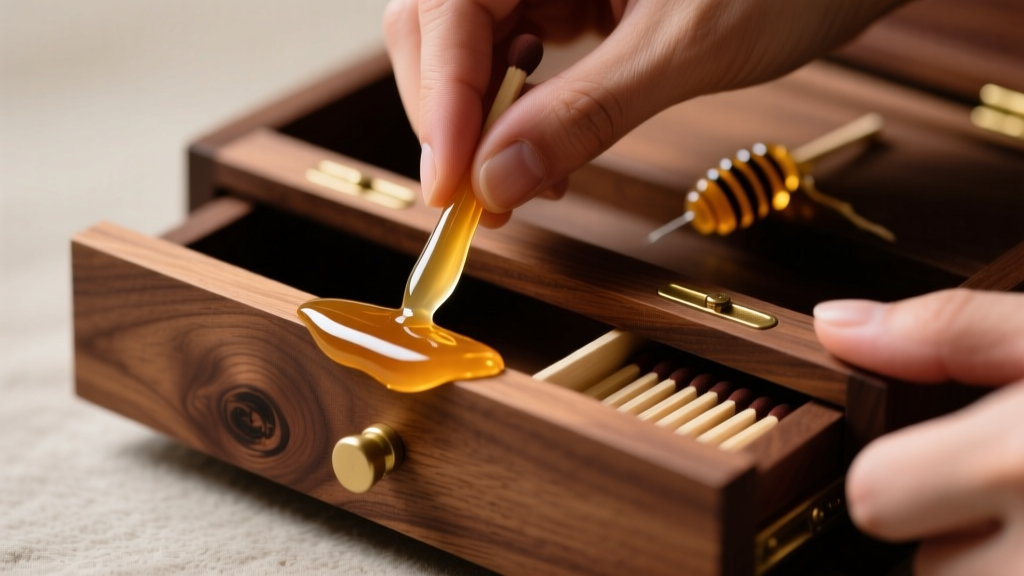
If humidity has caused the wood to swell, do not force the drawer open, as the thin bottom panel will snap. Place the box in a sealed plastic container with a few silica gel desiccant packets for 48 hours to draw out the moisture. Once the wood contracts slightly, rub a block of pure beeswax or paraffin wax along the exterior rails of the inner tray and the interior rails of the outer sleeve. This provides dry lubrication without attracting dust or gumming up the mechanism.
Tightening a Loose Drawer
If the drawer slides out too easily, the wood has worn down. You can build up the friction rails by applying a single layer of thin, acid-free paper tape (like Japanese mulberry paper tape) to the bottom exterior edges of the inner tray. This adds just enough millimeter-thick friction to restore the satisfying, snug glide characteristic of a well-made matchstick box.
Environmental Control and Placement
Because matchstick boxes are constructed from thin, organic materials, they are highly susceptible to environmental fluctuations. To protect both the box and the jewelry inside, adhere to the following environmental parameters:
- Relative Humidity (RH): Maintain an RH between 40% and 50%. Levels above 60% will cause wood warping and accelerate silver tarnishing, while levels below 30% will dry out the wood, causing the veneers to split and the glues to become brittle.
- UV Exposure: Keep the box out of direct sunlight. UV rays will bleach the wood, fade any vintage labels or decorative lithography, and degrade the anti-tarnish properties of treated interior linings.
- Temperature: Store in a climate-controlled room. Avoid placing the box near heating vents or radiators, as rapid temperature spikes will cause the thin wood to cup and crack.
Troubleshooting Common Matchstick Box Issues
Even with meticulous care, vintage and upcycled storage solutions can develop quirks. Here is how to troubleshoot the most common issues encountered with matchstick jewelry boxes:
Issue: A musty, mildew odor is transferring to the jewelry.
Solution: The wood has absorbed ambient odors. Empty the box and place it in a sealed plastic bin with an open box of baking soda or activated charcoal for one week. Do not use liquid odor neutralizers or essential oils, as the wood will absorb the liquids and transfer the oils to your jewelry, potentially damaging porous gems like pearls or opals.
Issue: The decorative paper label on the exterior is peeling or flaking.
Solution: Stabilize the paper using a conservation-grade methyl cellulose adhesive. Apply it sparingly under the lifting edges with a fine brush, press down gently with a Teflon folder, and place a light weight on top until dry. Once secured, you can seal the paper label with a matte UV-protective archival spray to prevent future flaking.
By treating your matchstick jewelry box not just as a container, but as a miniature wooden artifact requiring specific conservation techniques, you ensure that it remains a functional, beautiful, and safe storage solution for your jewelry collection for decades to come. Proper lining, careful humidity management, and the use of museum-grade waxes transform a simple wooden sleeve into a premium archival storage piece.


