Jessica McCormack Jewelry Box: 2026 Luxury Storage Trends
Discover how the Jessica McCormack jewelry box aesthetic is shaping 2026 luxury storage trends, from antique woods to anti-tarnish velvets.

The Rise of the Heirloom Vessel: Beyond Basic Storage
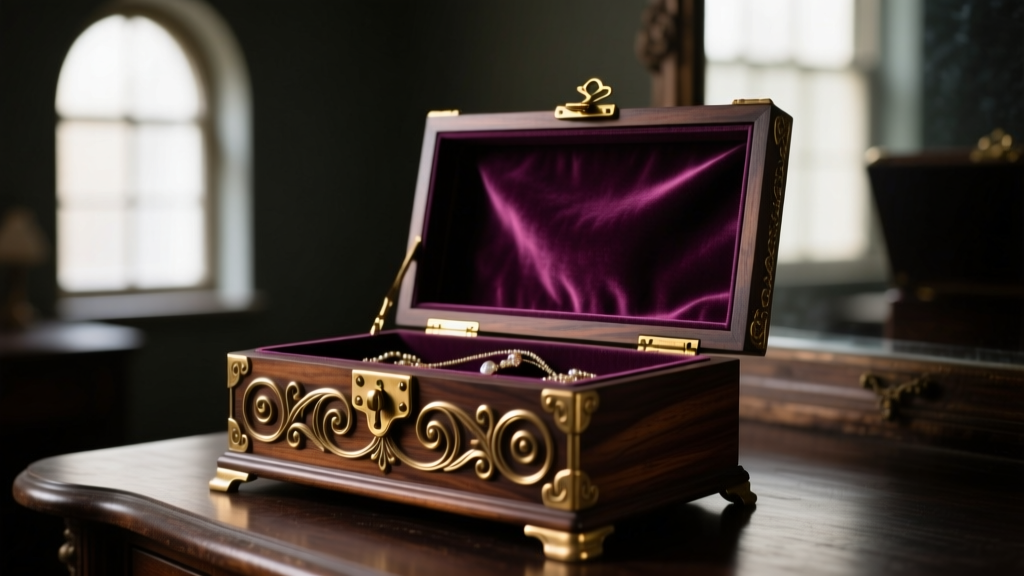
In the upper echelons of high jewelry, the vessel that houses a precious gem is no longer an afterthought; it is an integral part of the collecting experience. As we navigate the luxury landscape of 2026, a distinct shift has occurred. The sterile, gallery-style acrylic and glass displays that dominated the early 2020s have been entirely eclipsed by a return to moody, maximalist, and historically grounded storage solutions. At the very forefront of this movement is the antique-revival aesthetic, a trend heavily influenced by the bespoke packaging of London-based designer Jessica McCormack. When serious collectors and style editors discuss the ultimate vessel, the jessica mccormack jewelry box frequently emerges as the gold standard of dark academia and gothic-romantic packaging.
This is not merely about aesthetics; it is a psychological shift in how we value our adornments. According to luxury market analysts, the 'unboxing' and storage experience now accounts for a significant portion of a high jewelry brand's perceived value. The Jessica McCormack jewelry box, with its ebonized woods, heavy brass hardware, and plush, tarnish-resistant interiors, has effectively rewritten the rules of luxury storage, transforming functional organization into heirloom-worthy art pieces.
Deconstructing the Jessica McCormack Jewelry Box Aesthetic
To understand why this specific aesthetic has captured the 2026 market, we must deconstruct its core design elements. McCormack’s brand is renowned for reimagining Georgian and Victorian motifs with a modern, rock-and-roll edge. Her packaging reflects this exact ethos. It rejects the minimalist 'less is more' philosophy in favor of tactile, historical richness.
- Exterior Woods: Instead of pale, Scandinavian-inspired birches, the trend favors deeply saturated timbers. Macassar ebony, burr walnut, and ebonized oak are the standard, often featuring a hand-rubbed matte finish that highlights the natural, chaotic grain of the wood.
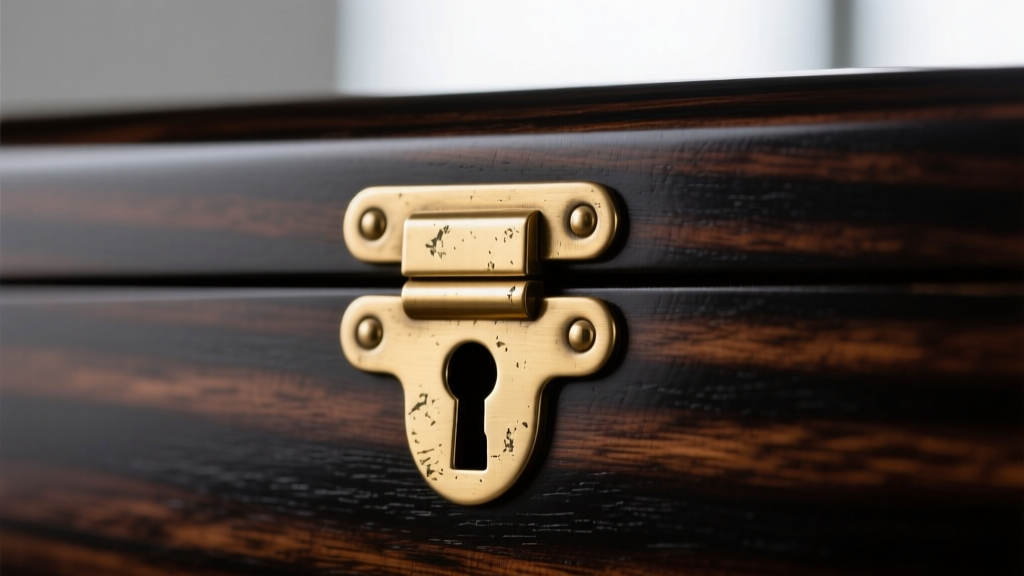
- Hardware and Escutcheons: Flimsy, electroplated gold hinges are out. The 2026 luxury standard demands solid cast brass with a 'living finish'—a patina that oxidizes and darkens over time, mimicking the hardware of a 19th-century apothecary cabinet or a vintage steamer trunk.
- The Silhouette: Rather than flat, sprawling trays, the Jessica McCormack jewelry box aesthetic favors verticality and compartmentalization. Think multi-tiered secretary desks in miniature, complete with hidden drawers, velvet-lined watch winders, and secret compartments for high-security pieces.
Material Science: What Makes Luxury Storage Functional?
While the exterior of a luxury jewelry box serves as a stylistic anchor, the interior is where material science meets preservation. A common misconception among novice collectors is that any soft fabric will protect jewelry. In reality, standard cotton velvets and synthetic suedes can trap moisture and emit volatile organic compounds (VOCs) that accelerate the tarnishing of silver and the degradation of porous gems like pearls and opals. The Gemological Institute of America (GIA) consistently warns against storing sensitive gems in environments with fluctuating humidity and improper chemical linings.
The modern luxury standard, championed by top-tier houses and bespoke trunk makers, utilizes highly engineered linings. Below is a comparison of the materials defining the 2026 high-end storage market.
| Lining Material | Tarnish Resistance | Aesthetic Profile | Market Tier |
|---|---|---|---|
| Standard Cotton Velvet | Poor (Traps moisture) | Classic, but prone to crushing | Entry-Level / Mass Market |
| Pacific Silvercloth™ | Exceptional (Embeds silver particles) | Matte, utilitarian, dark grey | Specialist Preservation |
| Alcantara Microfiber | Good (Low VOC off-gassing) | Suede-like, modern, durable | Mid-Tier Luxury |
| Gainsborough Silk Velvet | Moderate (Requires anti-tarnish strips) | High-luster, opulent, historic | Bespoke / High Jewelry |
In the most elite iterations of the Jessica McCormack jewelry box style, you will find Gainsborough silk velvet paired with hidden 3M Anti-Tarnish strips tucked beneath the floorboards of the compartments. This ensures the opulent visual of deep emerald or oxblood silk without sacrificing the chemical stability required to keep sterling silver and white gold pristine.
The 2026 Market Ripple: Accessible Alternatives and Bespoke Dupes
The influence of this gothic-revival storage trend has rippled down from the bespoke high jewelry sector into the accessible luxury market. While a fully bespoke, hand-carved walnut trunk from a London atelier can easily command prices upwards of $4,500, mid-tier heritage brands have begun adapting the aesthetic for the serious, yet budget-conscious, collector.
Brands like Wolf and Mele & Co. have introduced 2026 capsule collections featuring 'antique-washed' leathers and dark-stained woods that mimic the Town & Country approved heritage look. Furthermore, a thriving ecosystem of bespoke Etsy artisans has emerged, offering custom-built, Victorian-style jewelry cabinets utilizing reclaimed architectural salvage for hardware. These artisans allow collectors to specify the exact gauge of the brass hinges and the specific hue of the anti-tarnish velvet, democratizing the high jewelry unboxing experience for prices ranging from $600 to $1,200.
Curating Your Own Antique-Revival Storage Suite
If you are looking to transition your collection away from minimalist acrylics and embrace the moody, protective embrace of the antique-revival trend, you must approach the purchase with a curator’s eye. Here is a practical framework for building a storage suite that honors the Jessica McCormack aesthetic while providing museum-grade preservation.
- Audit Your Collection's Chemistry: Before buying, separate your porous organics (pearls, coral, tortoiseshell) from your metals. Pearls require a slightly humid environment and should never be stored in airtight plastic or alongside anti-tarnish strips, which can dry them out. Dedicate a specific, unsealed silk-lined drawer for organics.
- Prioritize Solid Wood over MDF: Medium-density fiberboard (MDF) off-gasses formaldehyde and other acidic resins that can severely damage soft metals and gemstone coatings over time. Always insist on solid hardwoods or exterior-grade, sealed plywoods if investing in a large armoire.
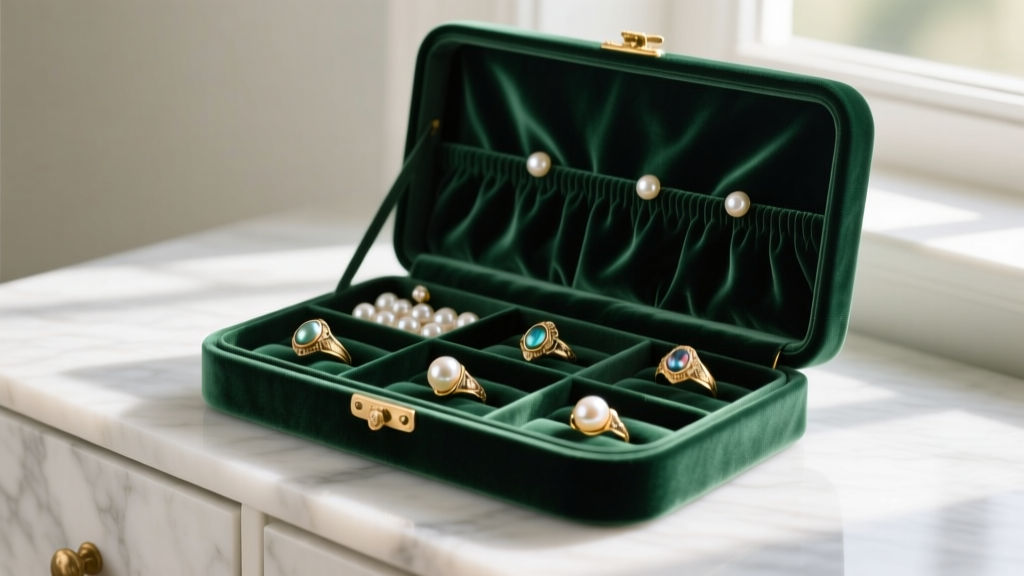
- Invest in Modular Velvet Inserts: The hallmark of luxury storage is customization. Look for boxes that feature removable, velvet-wrapped dividers. This allows you to reconfigure the space as your collection evolves, ensuring that heavy gold chain bracelets do not crush delicate Edwardian filigree rings.
- Integrate Active Climate Control: For large, cabinet-style storage, consider integrating a miniature, battery-operated hygrometer. Keeping the internal relative humidity (RH) between 40% and 50% is the sweet spot for preventing both silver tarnish and gemstone desiccation.
'The true mark of a connoisseur is not just the rarity of the jewels they possess, but the reverence with which they are kept. The vessel is the guardian of the legacy.'
Final Thoughts on the Future of High Jewelry Packaging
The dominance of the Jessica McCormack jewelry box aesthetic in 2026 signals a broader cultural desire for permanence, history, and tactile engagement in an increasingly digital world. We are no longer satisfied with storing our most intimate, valuable objects in mass-produced, soulless plastic. By embracing dark woods, living brass, and chemically engineered silks, we are not just organizing our jewelry; we are building modern heirlooms that will outlast the very pieces they protect. Whether you are investing in a bespoke London trunk or commissioning a local woodworker to craft a custom walnut valet, the era of the jewelry box as a standalone work of art has definitively arrived.


