Mini Jewelry Case Care: Cleaning and Maintenance Guide
Learn how to properly clean, maintain, and protect your mini jewelry case. Expert tips on caring for leather, velvet, and anti-tarnish linings.

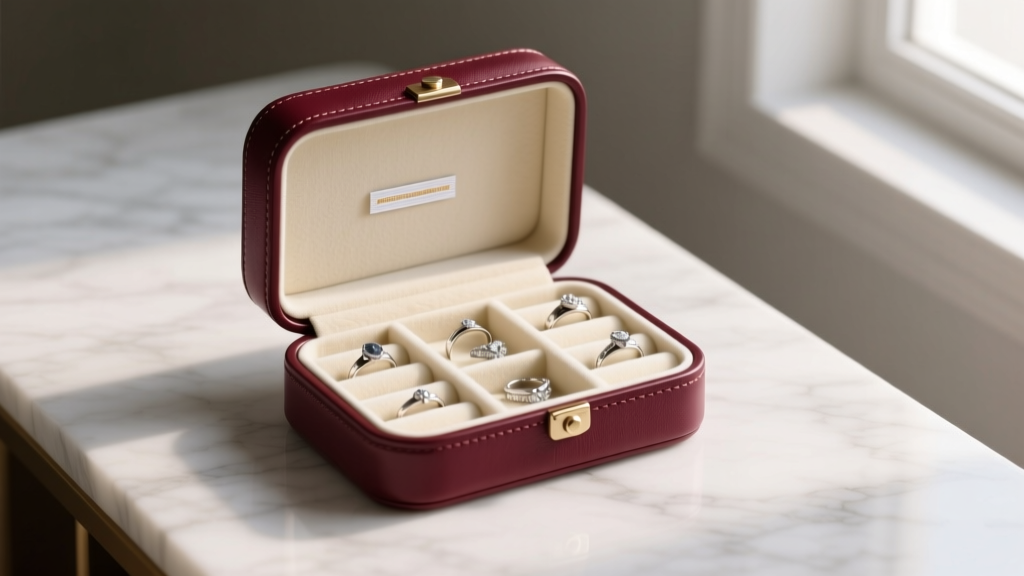
The Hidden Dirt: Why Mini Jewelry Cases Need Regular Care
When we think about jewelry maintenance, our focus naturally gravitates toward the pieces themselves—polishing silver, ultrasonically cleaning diamonds, and checking prong tension. However, the micro-environment where these pieces are stored is often entirely neglected. A mini jewelry case is particularly susceptible to accumulating hidden grime. Because of their compact size and frequent use during travel, these cases are regularly exposed to cosmetic residue, ambient humidity, dead skin cells, and the friction of daily handling.
Failing to maintain your case does more than just make it look worn; it actively compromises the preservation of your jewelry. According to the Gemological Institute of America (GIA), environmental contaminants and trapped moisture are primary catalysts for accelerated tarnishing and gemstone degradation. By establishing a rigorous cleaning and maintenance protocol for your mini jewelry case, you protect both your investment in the organizer and the precious metals and stones it houses.
Material-Specific Cleaning Protocols for Exteriors
The exterior of your case dictates its durability and aesthetic, but different materials require vastly different chemical approaches. Using the wrong solvent can permanently strip dyes or degrade synthetic coatings.
Full-Grain and Top-Grain Leather
Genuine leather is porous and highly reactive to harsh chemicals. Never use isopropyl alcohol, baby wipes, or standard household cleaners on a leather mini jewelry case, as these will strip the natural tanning oils and cause the material to crack.
- Dust Removal: Use a soft horsehair brush to gently sweep dust out of the stitching and crevices.
- Deep Cleaning: Apply a pH-neutral saddle soap with a damp (not wet) microfiber cloth. Work in gentle, circular motions to lift oils and lotion residue.
- Conditioning: Every six months, apply a thin layer of carnauba-based leather wax. This creates a breathable moisture barrier that protects the leather from the humidity fluctuations common in hotel rooms and airplanes.
Polyurethane (PU) and Vegan Leather
While vegan leather is less porous, it is highly susceptible to hydrolysis—a chemical breakdown triggered by prolonged exposure to moisture and heat, which causes the surface to peel.
- Cleaning: Mix a few drops of mild, fragrance-free dish soap into distilled water. Wipe the exterior with a microfiber cloth, then immediately dry it with a separate, clean towel to prevent water from seeping into the seams.
- Protection: Avoid leaving PU cases in direct sunlight or hot vehicles, as UV radiation accelerates the plasticizer breakdown in synthetic leathers.
Hard-Shell EVA and Polycarbonate
Hard-shell mini cases offer excellent crush protection for travel. The Leather Working Group and material scientists note that while synthetics are durable, they attract static dust.
- Sanitization: You can safely wipe EVA and polycarbonate exteriors with a 70% isopropyl alcohol solution to kill bacteria and dissolve hairspray or perfume overspray.
- Scratch Buffing: For minor scuffs on glossy polycarbonate, a micro-abrasive plastic polish applied with a buffing pad can restore the original luster.
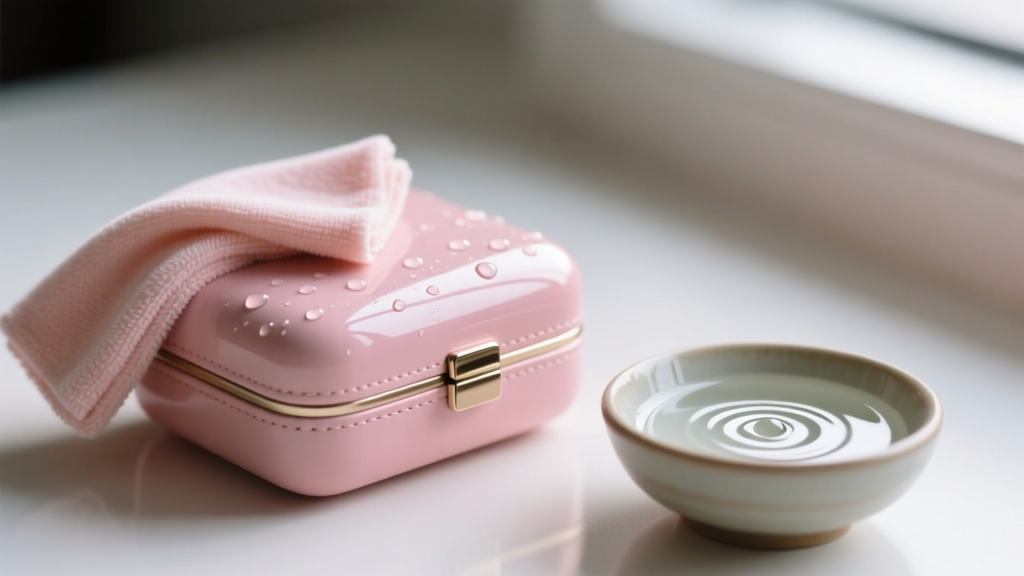
Caring for the Interior: Velvet, Suede, and Anti-Tarnish Linings
The interior lining of a mini jewelry case is the most critical component for jewelry preservation, yet it is the most easily ruined by improper cleaning. The tight compartments of a mini case mean that jewelry is in constant, direct contact with these fabrics.
Velvet and Micro-Suede
Water is the enemy of velvet and suede. A single drop can cause permanent water spotting and mat the delicate fibers, creating hard, abrasive patches that can micro-scratch polished gold or silver.
- Dry Brushing: Use a specialized suede brush or a clean, soft-bristled makeup brush to lift dust and skin cells from the ring rolls and necklace snaps.
- Stain Treatment: If makeup or lotion transfers onto the velvet, do not rub it. Instead, use a dry-foam upholstery cleaner. Apply the foam to a cloth (never directly to the case) and gently dab the stain, allowing it to lift the oils without saturating the backing board.
Anti-Tarnish Flannel and Treated Cloths
High-end mini jewelry cases often feature linings treated with zinc or silver salts, or embedded with microscopic silver particles (like Pacific Silvercloth). These materials work by sacrificially tarnishing themselves or absorbing sulfur gases before they can reach your jewelry.
CRITICAL RULE: Never wash, wet, or apply any liquid cleaner to an anti-tarnish lining. Doing so will instantly neutralize the active chemical inhibitors. If the lining becomes soiled, gently vacuum it using a brush attachment covered with a piece of sheer nylon to prevent snagging. Anti-tarnish linings lose their efficacy over time; plan to replace treated inserts every 12 to 18 months depending on use.
Micro-Climate Control: Managing Humidity and Tarnish
Because a mini jewelry case has a very small internal volume, it acts as a micro-climate. If you close a damp necklace inside after wearing it in high humidity, the trapped moisture will rapidly accelerate the oxidation of silver and the rusting of base-metal clasps. Managing this micro-climate is essential for long-term storage.
| Climate Control Agent | Primary Function | Lifespan in a Mini Case | Best Used For |
|---|---|---|---|
| Silica Gel Packets | Absorbs ambient moisture and prevents condensation. | 3-6 months (rechargeable by baking) | Humid climates, post-wear storage, preventing iron/clasp rust. |
| 3M Anti-Tarnish Strips | Absorbs airborne sulfur and hydrogen sulfide gases. | 6-12 months | Sterling silver, copper, and brass jewelry preservation. |
| Activated Charcoal | Neutralizes odors and absorbs trace volatile organic compounds (VOCs). | 12 months | Eliminating musty smells from older cases or vintage pieces. |
| Anti-Tarnish Chalk | Draws moisture and sulfur away from metals. | 6 months | Budget-friendly alternative for silver storage in larger compartments. |

Travel Maintenance: Protecting Hardware and Hinges
The mechanical components of a mini jewelry case—zippers, clasps, and hinges—endure significant stress during travel. A failing zipper can burst open in a suitcase, scattering your collection.
- Zipper Lubrication: If the zipper on your mini case begins to catch, do not use oil-based lubricants like WD-40, which will stain the fabric and attract dirt. Instead, rub the teeth of the zipper with a standard graphite pencil or a block of pure beeswax to restore smooth operation.
- Hinge Tightening: Check the micro-screws on metal hinges every few months. Use a precision eyeglass screwdriver to gently tighten them. If a screw is stripped, a tiny drop of cyanoacrylate (super glue) applied with a toothpick can secure it without bonding the hinge shut.
- Clasp Alignment: For cases with magnetic or snap closures, ensure no metal jewelry chains are caught in the mechanism, as this will weaken the magnetic field or warp the snap over time.
Archival Quality: When to Replace Your Mini Jewelry Case
Not all mini jewelry cases are created equal. Many inexpensive cases are constructed using acidic cardboard cores or untreated wood composites that off-gas sulfur and formaldehyde. Over time, these volatile organic compounds (VOCs) will actually cause your silver and pearls to degrade faster than if they were left out in the open air.
It is time to replace your mini jewelry case if you notice:
- Acidic Off-Gassing: A persistent sour or chemical smell when you open the case, which indicates the breakdown of cheap adhesives and acidic backing boards.
- Flaking Interior Linings: If the velvet or suede is shedding fibers or peeling away from the cardboard, those loose synthetic fibers can become lodged in jewelry clasps and prong settings.
- Warping: If the case no longer closes flush, it is no longer providing a sealed micro-climate, rendering any anti-tarnish strips inside useless.
By treating your mini jewelry case with the same care and precision as the fine jewelry it holds, you ensure a safe, pristine, and tarnish-free environment for your collection, whether it is resting on your vanity or crossing the globe in your carry-on.


