Is an Extra Large Free Standing Jewelry Armoire Worth the Cost?
We break down the true cost, materials, and long-term value of an extra large free standing jewelry armoire to help you budget wisely.

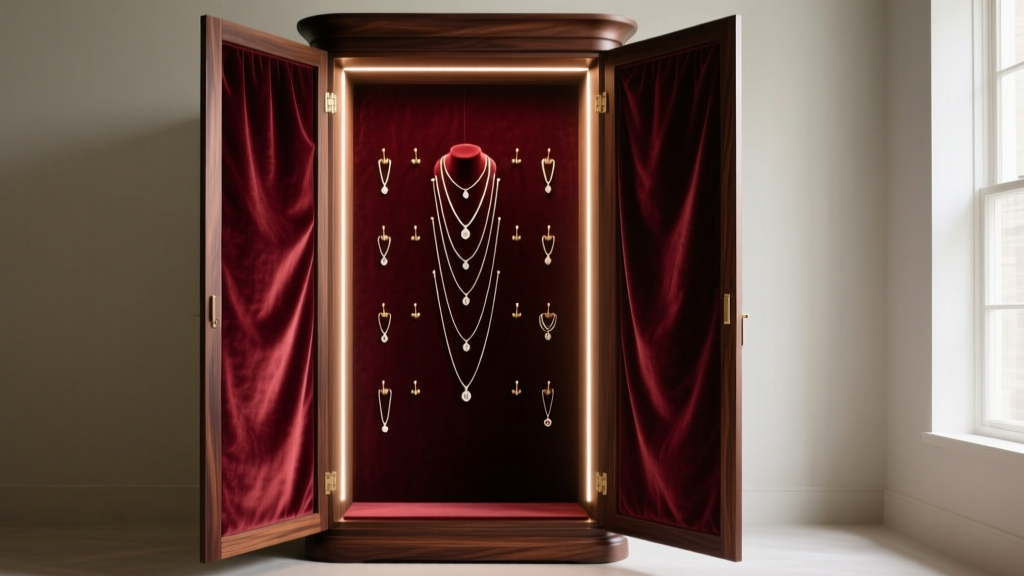
When your collection outgrows standard tabletop valets and dresser-top boxes, the logical next step is floor-standing furniture. However, investing in an extra large free standing jewelry armoire is a significant financial commitment. Prices in the current market range from under $150 for flat-packed imports to well over $1,500 for custom-crafted heirloom pieces. But how do you determine the true value of these towering storage units? Is the premium for solid wood and specialized linings actually worth the investment, or are you simply paying for a larger footprint?
In this comprehensive budget and value assessment, we deconstruct the anatomy of large-scale jewelry storage. We will examine material grades, hardware longevity, and the hidden chemistry of interior linings to help you make a mathematically sound purchasing decision in 2026.
Decoding the Price Tags: What Are You Actually Paying For?
The price discrepancy between a $189 online marketplace armoire and a $1,200 boutique furniture piece is rarely just about brand markup. It comes down to three core pillars of manufacturing: structural density, hardware tolerance, and chemical neutrality. An extra large free standing jewelry armoire must support the dead weight of its own cabinetry plus the concentrated mass of hundreds of metal jewelry pieces. When an armoire exceeds 60 inches in height and 20 inches in width, the physics of leverage and gravity begin to test the limits of budget-friendly construction methods. Understanding these limits is the first step in assessing true value.
Core Construction: Particleboard, MDF, and Solid Wood
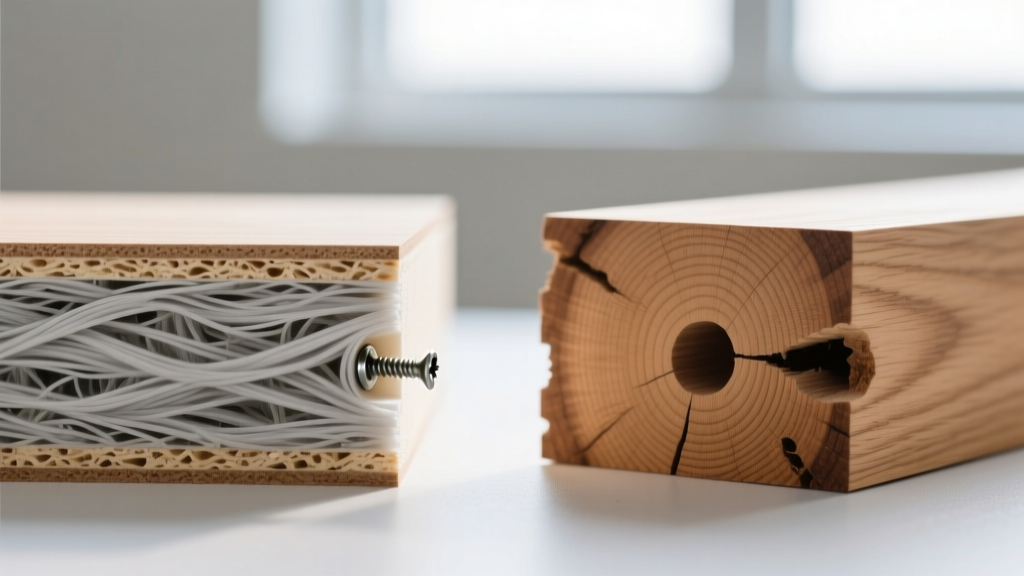
The carcass of the armoire dictates its lifespan. Budget models heavily rely on particleboard or Medium-Density Fiberboard (MDF). While MDF provides a smooth surface for veneers, its screw-holding capability is notoriously poor. According to Bob Vila's guide on engineered woods, MDF lacks the structural grain necessary to grip hardware screws under continuous tension. When you load a wide drawer with heavy sterling silver bangles or dense gemstone necklaces, the repetitive pulling force will eventually strip the screw holes, causing the drawer front to detach from the carcass.
The Mid-Tier Upgrade: Plywood and rubberwood. Furniture-grade plywood offers superior cross-grain tensile strength, resisting the warping that plagues MDF in humid environments. Rubberwood, often marketed as 'plantation hardwood,' is a common mid-tier choice. It is dense, sustainable, and holds dovetail joints securely, offering a massive leap in longevity over composite boards without the premium price tag of domestic hardwoods.
The Heirloom Tier: Solid oak, walnut, or cherry. These woods not only provide generational durability but also feature natural tannins and oils that, when properly sealed, do not off-gas harmful volatile organic compounds (VOCs). If your goal is to protect high-carat gold and untreated silver, solid wood is a non-negotiable value investment.
Interior Linings: The Anti-Tarnish Value Proposition
Perhaps the most critical, yet overlooked, aspect of value assessment is the interior lining. Cheap armoires use standard polyurethane foams or synthetic felts adhered with industrial glues. These materials frequently off-gas sulfur compounds and acidic VOCs. Ironically, the very environment meant to protect your jewelry can accelerate silver sulfide formation, leading to rapid tarnishing.
As noted by the Gemological Institute of America (GIA), proper jewelry care requires storing metals away from harsh chemicals and excessive moisture. High-value armoires justify their price tags by utilizing chemically neutral or actively protective linings:
- Pacific Silvercloth: A specialized cotton fabric embedded with microscopic silver particles that capture and neutralize tarnish-causing gases before they reach your jewelry.
- Activated Carbon Flannel: Often found in premium European armoires, this lining absorbs ambient humidity and sulfur.
- Acid-Free Suede: A synthetic alternative that guarantees zero chemical off-gassing, safe for porous gems like pearls and opals.
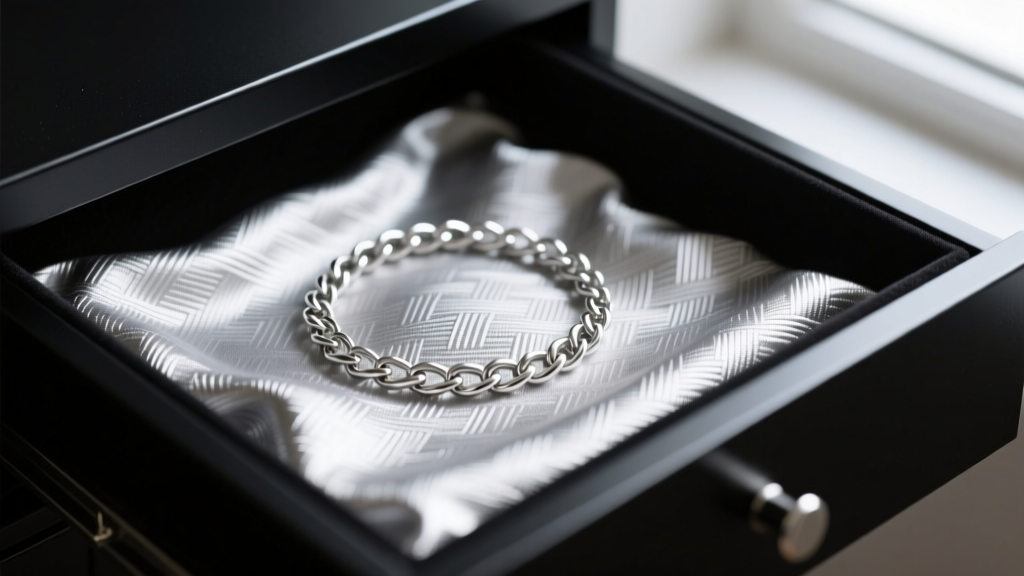
If you are storing heirloom silver or high-karat gold, spending an extra $200-$300 for an armoire with verified anti-tarnish linings will save you thousands in professional polishing and restoration over a decade.
Hardware and Structural Failure Modes
An extra large free standing jewelry armoire is essentially a tall, narrow cabinet with dozens of moving parts. The hardware is where budget units catastrophically fail. Look for the following mechanical specifications when assessing value:
Drawer Slides: Side-Mount vs. Under-Mount
Budget armoires use friction-fit or basic roller slides. Mid-tier units upgrade to side-mount ball-bearing slides. However, for wide drawers (over 18 inches) designed to hold heavy necklace trays, side-mounts can bind if the wood expands. The gold standard for value is under-mount soft-close slides. These hide the mechanism beneath the drawer, distribute weight more evenly, and prevent the 'drawer sag' that misaligns the entire facade of a heavily loaded armoire.
The Center of Gravity Problem
A fully loaded 65-inch armoire can easily exceed 80 pounds, with the majority of the weight concentrated in the upper drawers where necklaces and bracelets are hung. Budget units often feature a flush base, making them dangerously top-heavy. A high-value design will incorporate a weighted kickplate or a flared, extended base to lower the center of gravity, preventing tip-overs without strictly requiring wall anchors (though wall anchoring is always recommended for safety).
2026 Value Assessment Matrix
To help you budget effectively, we have categorized the current market offerings into three distinct value tiers based on material science and hardware longevity.
| Tier | Price Range | Core Materials | Hardware & Linings | Best For |
|---|---|---|---|---|
| Budget | $150 - $280 | MDF, Particleboard, PVC Veneer | Roller slides, standard synthetic felt, magnetic latches | Costume jewelry, lightweight pieces, temporary storage |
| Mid-Tier | $350 - $650 | Furniture-grade Plywood, Rubberwood, Birch | Side-mount ball-bearing slides, acid-free flannel, soft-close hinges | Daily wear gold/silver, moderate collections, long-term renters |
| Heirloom | $800 - $2,500+ | Solid Walnut, Cherry, Oak with Dovetail Joinery | Under-mount slides, Pacific Silvercloth, weighted anti-tip bases | Fine jewelry, estate silver, high-humidity environments, generational use |
Verdict: Calculating Cost-Per-Wear Protection
Is an extra large free standing jewelry armoire worth the cost? The answer depends entirely on the replacement value of your collection and the ambient humidity of your home. If your collection consists primarily of fashion jewelry and stainless steel, a $200 MDF unit with upgraded anti-tarnish strips tossed into the drawers provides sufficient utility. However, if you are safeguarding fine jewelry, untreated sterling silver, or porous gemstones, the mid-tier to heirloom options offer a mathematically sound return on investment. By paying a premium for solid wood joinery, under-mount hardware, and chemically neutral linings, you eliminate the hidden costs of furniture replacement and jewelry restoration, ensuring your storage solution is as enduring as the pieces it holds.


