Wall Mount Jewelry Organizer: Budget & Value Guide 2026
Discover the true value of a wall mount jewelry organizer. We break down materials, hardware costs, and 2026 pricing tiers to find the best budget options.

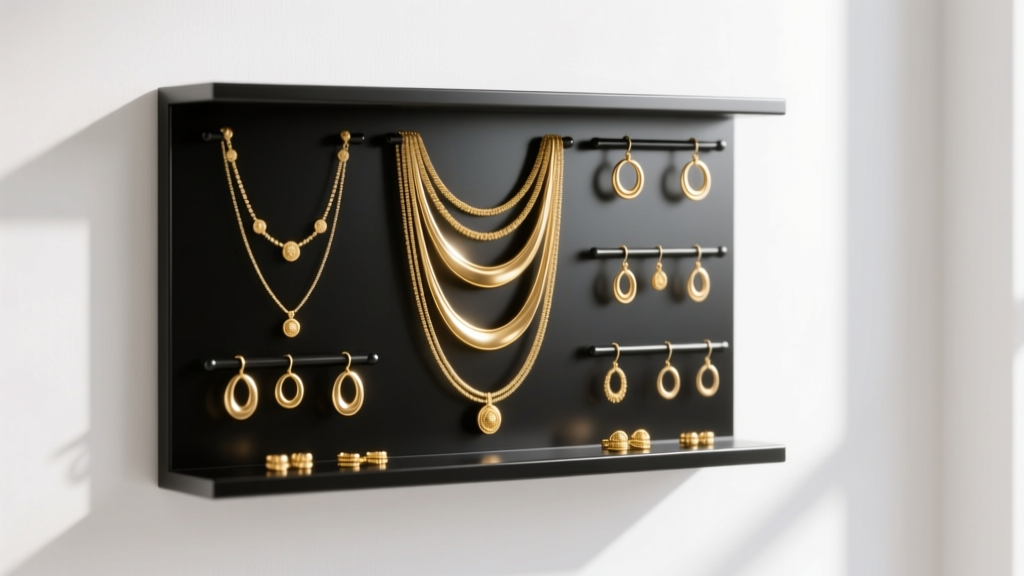
In 2026, the shift toward vertical, space-saving home organization has made the wall mount jewelry organizer a staple in modern bedrooms and dressing areas. However, the market is flooded with options ranging from $12 to over $150, leaving consumers to navigate a minefield of deceptive product photography and misleading material claims. As a budget and value assessment, this guide strips away the marketing fluff to evaluate what you are actually paying for. We will dissect material grades, hardware failure modes, and the hidden costs of cheap anti-tarnish solutions to help you calculate the true cost-per-wear of your jewelry storage.
The True Cost of Cheap Wall Jewelry Storage
When evaluating a budget wall mount jewelry organizer, the initial sticker price is often the least important metric. The true cost reveals itself in failure modes: warped backboards, bent hooks, and accelerated jewelry tarnishing. In the sub-$20 tier, manufacturers almost exclusively use Medium-Density Fiberboard (MDF) or low-grade particleboard. While lightweight, MDF is highly susceptible to humidity fluctuations. In a bathroom-adjacent dressing area or a humid climate, MDF swells and warps within 12 to 18 months, causing the organizer to pull away from the wall.
Furthermore, cheap organizers often utilize untreated synthetic felt or EVA foam liners. These materials trap ambient moisture against your metals and can off-gas volatile organic compounds (VOCs) from the adhesives used to bind them. According to conservation standards cited by Wirecutter's jewelry storage reviews, acidic off-gassing accelerates the corrosion of porous gemstones like turquoise, malachite, and pearls. A $15 organizer that ruins a $200 strand of pearls is a net loss, making material safety a critical component of value assessment.
Material & Hardware Breakdown: What You're Actually Paying For
To accurately assess value, we must break down the physical components of a wall mount jewelry organizer and their associated 2026 manufacturing costs.
Wood Backboards: MDF vs. Solid Hardwoods
- MDF / Particleboard ($10 - $18): Heavy, prone to warping, and often sealed with urea-formaldehyde resins that off-gas. Value rating: Poor.
- Bamboo ($20 - $35): Technically a grass, bamboo is highly renewable, lightweight, and naturally resistant to moisture warping. However, it requires heavy lacquering to prevent splintering, which can trap odors. Value rating: Good.
- Solid Rubberwood or Mango Wood ($40 - $75): Dense, stable, and typically finished with water-based, non-reactive polyurethanes. These woods provide the necessary structural integrity to support heavy beaded necklaces without bowing. Value rating: Excellent.
Hook Metallurgy and Gauge Thickness
The hooks are the primary point of failure. Budget organizers use 18-gauge or 20-gauge electroplated iron wire. At this thickness, a heavy resin pendant or a thick Cuban link chain will permanently bend the hook. Furthermore, electroplated finishes chip easily, exposing the iron core to oxidation, which then transfers rust to your delicate gold and silver chains.
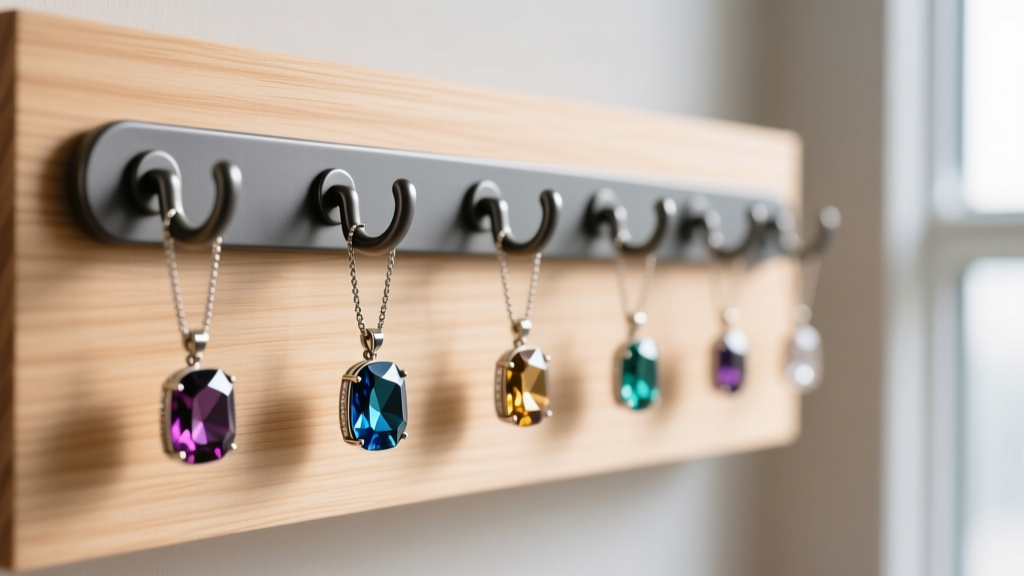
A high-value organizer utilizes 12-gauge to 14-gauge steel wire with a baked-on powder-coated finish. Powder coating is electrostatically applied and heat-cured, creating a barrier that is significantly more resistant to chipping and rust than standard spray paint or electroplating. When assessing a mid-range organizer ($30-$50), look for the term 'powder-coated' in the specifications; it is the single best indicator of long-term hardware durability.
Price vs. Material vs. Lifespan Matrix
The following table illustrates the expected lifespan and material reality of the three primary pricing tiers in the current market.
| Tier | Price Range | Primary Material | Hook Type | Expected Lifespan | Tarnish Risk |
|---|---|---|---|---|---|
| Budget | $12 - $22 | MDF / Plastic | 20g Electroplated Iron | 1 - 2 Years | High (Moisture Trapping) |
| Mid-Range | $25 - $45 | Bamboo / Pine | 16g Powder-Coated Steel | 3 - 5 Years | Moderate |
| Premium | $50 - $95 | Rubberwood / Walnut | 12g Powder-Coated Steel | 10+ Years | Low (Treated Liners) |
Weight Capacity & Anchor Failures (The Hidden Costs)
A critical, often overlooked aspect of budget assessment is the mounting hardware. A standard 24-inch wooden wall mount jewelry organizer weighs roughly 4 pounds empty. Once loaded with 60 pieces of jewelry—including heavy metal cuffs, beaded necklaces, and gemstone pendants—the total weight can easily exceed 12 pounds.
Most budget and mid-range organizers include cheap, ribbed plastic expansion anchors. According to structural guidelines outlined by The Family Handyman, standard plastic anchors in 1/2-inch drywall have a safe shear weight limit of only 3 to 5 pounds. Relying on the included hardware is a guaranteed path to the organizer tearing out of the wall, potentially damaging your drywall and dropping your jewelry.
The Value Correction: To achieve true value, you must factor in a $10 upgrade to threaded drywall anchors (such as E-Z Ancor toggles) which hold up to 50 pounds, or plan your installation to hit wooden wall studs directly. If an organizer requires you to spend an extra $15 on safe mounting hardware, that must be added to the total cost of ownership when comparing it against a premium model that includes heavy-duty toggle bolts in the box.
Anti-Tarnish Liners: A Hidden Value Metric
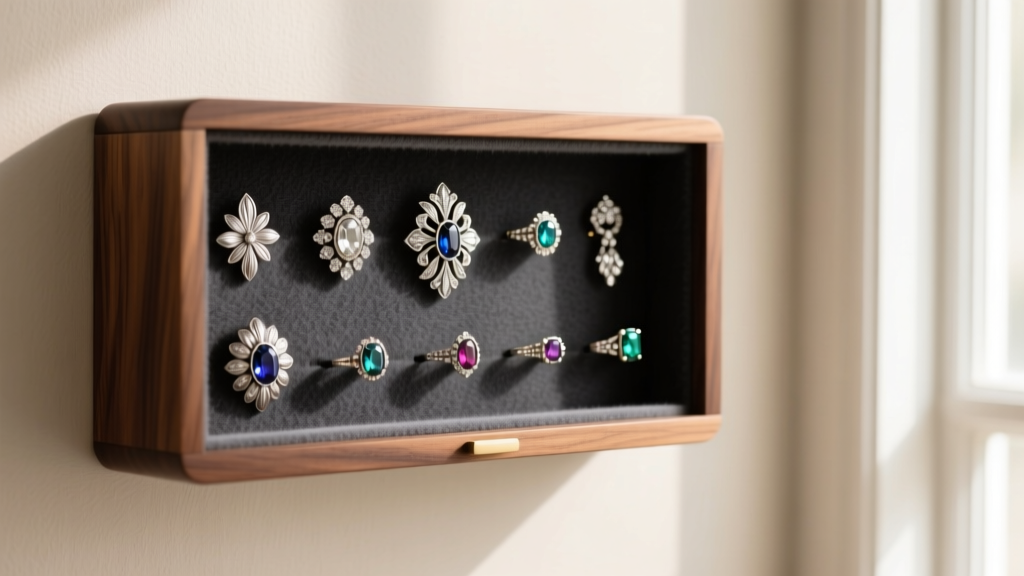
Silver tarnishes when it reacts with hydrogen sulfide and moisture in the air. If your wall mount jewelry organizer features a backing or small ring cushions, the material matters immensely. Budget models use standard polyester felt, which does nothing to halt the chemical reaction of tarnishing and actually holds ambient humidity against the metal.
High-value organizers incorporate anti-tarnish technologies. The gold standard is Pacific Silvercloth, a specialized flannel embedded with microscopic silver particles that absorb and neutralize tarnishing gases before they reach your jewelry. Alternatively, some premium wooden organizers feature built-in, hidden slots for activated charcoal strips, which passively absorb moisture and sulfur compounds. If an organizer in the $40+ range does not explicitly state the use of treated anti-tarnish flannel or moisture-wicking materials, it is overpriced for its actual utility.
Red Flags in Product Descriptions
When shopping online, manufacturers use specific buzzwords to mask poor material quality. Protect your budget by watching out for these deceptive terms:
- 'Eco-Friendly Wood': Often a greenwashed term for low-grade MDF or particleboard made with recycled sawdust and heavy chemical binders.
- 'Rust-Resistant Finish': A vague term that usually means a thin layer of clear spray lacquer over cheap iron, which will flake off within months of use.
- 'Velvet-Lined': Unless specified as 'jewelry-grade' or 'anti-tarnish velvet,' standard craft velvet is highly acidic and will degrade soft metals and pearls over time.
Final Verdict: Calculating Cost-Per-Wear for Your Storage
Ultimately, the best value in a wall mount jewelry organizer is found in the $35 to $55 sweet spot. At this price point, you can reliably secure a solid bamboo or rubberwood frame, 14-gauge powder-coated steel hooks, and safe, non-off-gassing finishes. While the $15 MDF options seem appealing for a quick fix, the inevitable replacement costs, combined with the risk of rust transfer and humidity-induced tarnish to your jewelry collection, make them a poor financial decision.
Treat your jewelry storage as an extension of your collection's maintenance. By investing an extra $25 upfront in proper materials and upgrading your drywall anchors, you secure a wall mount jewelry organizer that will safely display and protect your pieces for the next decade, delivering unmatched long-term value.


