Complete Care and Cleaning Guide for the RE1 Jewelry Box Puzzle
Learn how to properly clean, lubricate, and maintain your RE1 jewelry box puzzle. Protect the wood finish and mechanical tracks with our expert guide.

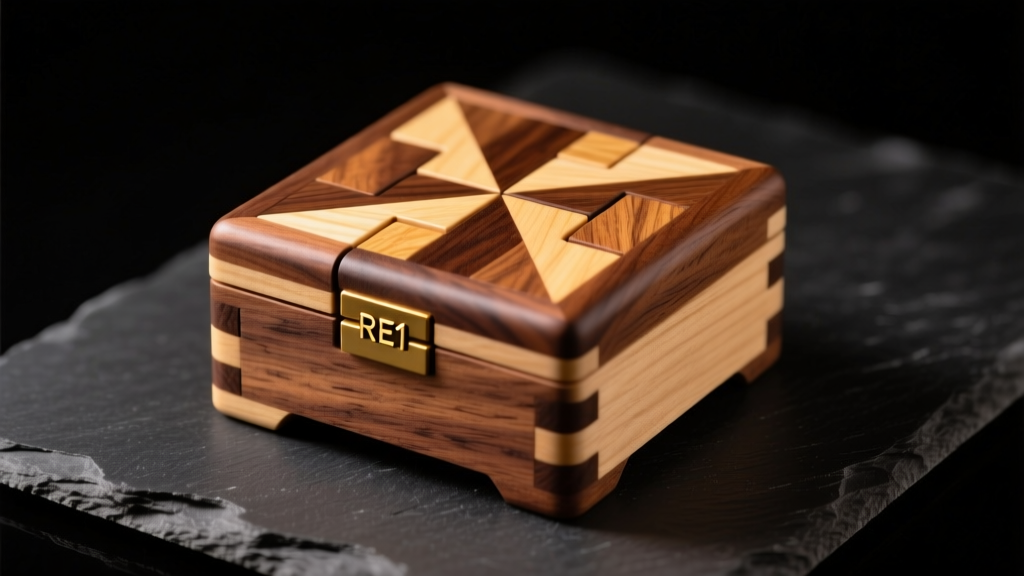
Understanding the Mechanics and Materials of the RE1 Puzzle Box
Owning an RE1 jewelry box puzzle means you are the custodian of both fine jewelry storage and precision mechanical engineering. Unlike standard hinged jewelry boxes, the RE1 model relies on a series of interlocking wooden panels, hidden sliding tracks, and counter-weighted mechanisms to secure its contents. The exterior typically features intricate marquetry—wafer-thin wood veneers (often 0.6mm thick) arranged in geometric patterns over a stable MDF or solid wood core. The interior is lined with anti-tarnish micro-suede to protect precious metals. Because wood is a hygroscopic material that expands and contracts with environmental changes, and because mechanical tracks accumulate microscopic dust over time, the RE1 requires a highly specific maintenance protocol. Neglecting this care can lead to swollen panels, jammed puzzle mechanisms, and degraded interior linings.
To properly maintain this piece, you must treat the wooden exterior, the internal mechanical tracks, and the jewelry-facing fabrics as three entirely separate ecosystems, each requiring distinct cleaning agents and techniques.
Routine Exterior Dusting and Wood Care
The marquetry veneers on the RE1 puzzle box are delicate. Standard feather dusters or rough cotton rags can catch on the microscopic seams between veneer pieces, causing them to lift or chip. Furthermore, commercial furniture polishes often contain silicone, which creates a temporary shine but eventually builds up, penetrating the veneer glue lines and causing structural delamination.
The Proper Dusting Technique
- Tool: Use a clean, ultra-fine microfiber cloth or a soft-bristled makeup brush (like a kabuki brush) for intricate corners.
- Method: Always wipe in the direction of the dominant wood grain. Never apply heavy downward pressure on the geometric seams.
- Frequency: Dust weekly to prevent abrasive particulate buildup.
Applying Protective Wax
Twice a year, the exterior should be treated with a high-grade, solvent-free paste wax. Carnauba-based waxes are ideal because they dry hard and do not contain the softening oils found in liquid polishes. Apply a pea-sized amount to a microfiber cloth, rub it into the wood in circular motions, let it haze for 15 minutes, and buff it off with a clean cloth. This creates a moisture barrier that slows down the wood's absorption of ambient humidity, a critical step for preventing track jams.
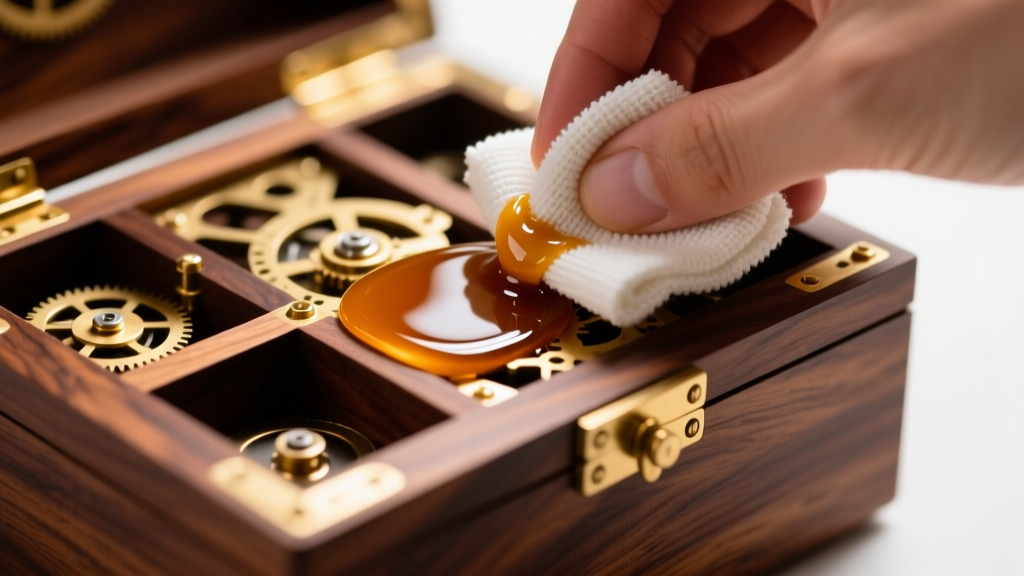
Cleaning the Internal Mechanical Tracks
The most common failure point of any mechanical puzzle box is the sliding track system. As the wooden panels slide, they generate microscopic wood dust. Over time, this dust mixes with ambient humidity, creating a gritty paste that increases friction and eventually seizes the mechanism. According to conservation guidelines from the Smithsonian Museum Conservation Institute, maintaining the structural integrity of wooden mechanical objects requires keeping moving parts free of abrasive debris and using only dry lubricants.
Step-by-Step Track Cleaning
- Purge the Dust: Open all accessible panels. Use a can of compressed air (held at least four inches away to prevent freezing the wood with liquid propellant) to blow out the internal channels and tracks.
- Brush the Grooves: Use a clean, dry interdental brush or a soft-bristled detailing brush to dislodge any compacted dust in the corners of the sliding grooves.
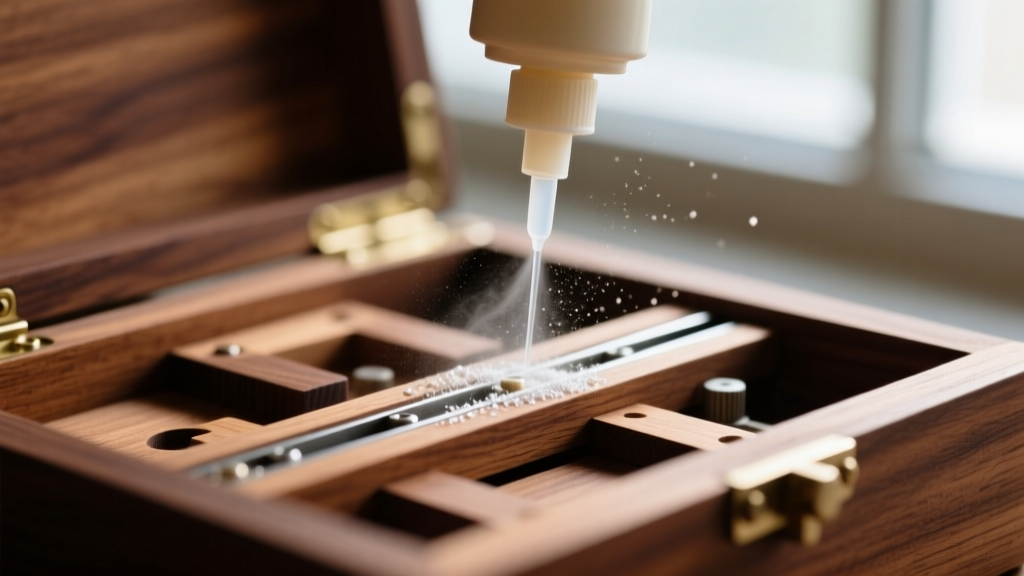
- Apply Dry Lubricant: This is the most critical step. Never use WD-40, mineral oil, or silicone sprays. Liquid lubricants will soak into the end-grain of the wood, causing it to swell and permanently jam the puzzle. Instead, use a PTFE (Teflon) dry film lubricant or finely milled powdered graphite. Apply a microscopic amount directly into the track, slide the panel back and forth to distribute it, and wipe away any excess.
Maintaining the Interior Jewelry Lining
The interior of the RE1 jewelry box puzzle is lined with treated micro-suede or velvet designed to inhibit tarnish. However, these fabrics act as magnets for skin oils, cosmetic residues, and ambient dust. If left uncleaned, the fabric loses its anti-tarnish efficacy and can actually accelerate the oxidation of silver and copper alloys.
The Gemological Institute of America (GIA) emphasizes that jewelry storage environments must remain free of sulfur-bearing compounds and excess moisture. To maintain the interior lining without damaging the anti-tarnish chemical treatment, avoid all liquid fabric cleaners, steam, and water.
Fabric Cleaning Protocol
- Use a high-quality, non-sticky lint roller to lift surface dust and skin cells weekly.
- For embedded grime, use a specialized dry suede eraser or a clean, soft-bristled suede brush to gently agitate the fibers and lift the dirt.
- Place 3M anti-tarnish strips in the hidden compartments, replacing them every six months to supplement the fabric's protective properties.
Cleaning Agents: Approved vs. Prohibited
| Cleaning Agent | Use Case | Status for RE1 Puzzle Box |
|---|---|---|
| Carnauba Paste Wax | Exterior wood sealing | Approved (Bi-annually) |
| PTFE Dry Lubricant | Internal sliding tracks | Approved (As needed) |
| Compressed Air | Dust removal from tracks | Approved (Monthly) |
| Silicone Furniture Polish | Wood shining | Prohibited (Causes delamination) |
| Standard WD-40 / Oils | Metal/Track lubrication | Prohibited (Swells wood tracks) |
| Liquid Fabric Cleaners | Interior suede/velvet | Prohibited (Strips anti-tarnish) |
Troubleshooting Sticky or Jammed Puzzle Mechanisms
If a panel on your RE1 jewelry box puzzle refuses to slide or feels unusually tight, do not force it. Forcing a wooden mechanism will shear the internal guide pins or crack the delicate marquetry veneer. In 90% of cases, a jammed puzzle box is the result of hygroscopic swelling—the wood has absorbed excess moisture from the air, expanding just enough to create binding friction within the tight tolerances of the tracks.
The Dehumidification Fix
Move the puzzle box to a climate-controlled room with a relative humidity (RH) level between 40% and 50%. If your home is particularly humid, place the box in a sealed plastic bin along with several silica gel desiccant packets (ensure the silica gel does not touch the wood directly). Leave it in this environment for 24 to 48 hours. As the wood releases its absorbed moisture, it will contract back to its original dimensions, usually freeing the jammed panel without any mechanical intervention.
Long-Term Storage and Environmental Controls
To ensure the RE1 jewelry box puzzle remains functional for generations, its environmental placement is just as important as physical cleaning. Ultraviolet (UV) light from direct sunlight will rapidly bleach the contrasting wood veneers, destroying the geometric marquetry pattern. Additionally, placing the box near HVAC vents, radiators, or fireplaces subjects it to rapid temperature and humidity fluctuations, which can cause the MDF core to off-gas or the veneers to craze and crack.
Ideally, the box should be kept in a room with a stable temperature of 68°F to 72°F (20°C to 22°C) and a consistent RH of 45%. By combining strict environmental controls with the proper application of dry lubricants and solvent-free waxes, your RE1 puzzle box will continue to operate with factory-level precision while keeping your jewelry collection secure and pristine.
Seasonal Maintenance Checklist
- Spring: Inspect tracks for winter dust buildup; apply compressed air and a micro-dose of PTFE dry lubricant.
- Summer: Monitor ambient humidity; use a dehumidifier in the storage room if RH exceeds 55% to prevent wood swelling.
- Autumn: Apply a fresh coat of carnauba paste wax to the exterior to seal the wood against incoming winter dryness.
- Winter: Replace interior anti-tarnish strips and use a suede brush to lift any accumulated dust from the micro-suede lining.


