How to Restore a Vintage Jewelry Case for Archival Storage
Learn how to evaluate, strip, and restore a vintage jewelry case using archival-grade materials to prevent off-gassing and protect fine metals.

The Hidden Chemistry of Antique Storage
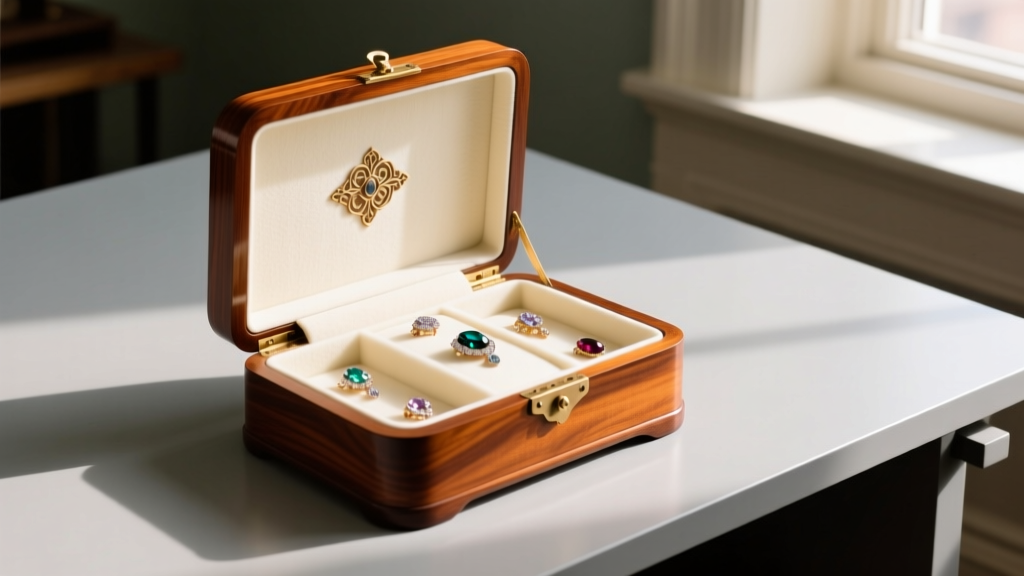
Collectors and enthusiasts often seek out a vintage jewelry case for its undeniable aesthetic charm, exquisite craftsmanship, and historical character. However, from a conservation perspective, an unrestored antique box is often a chemical hazard zone. The very materials that made these cases luxurious in the 19th and early 20th centuries—acidic silk velvets, cellulose nitrate plastics, and animal-based glues—are now actively degrading. As they break down, they release volatile organic compounds (VOCs), sulfur dioxide, and organic acids that accelerate metal corrosion and degrade sensitive gemstones.
If you are housing high-karat gold, sterling silver, natural pearls, or porous stones like turquoise in an unmodified antique box, you are likely accelerating their deterioration. This expert guide details the metallurgical and chemical realities of antique storage and provides a rigorous, step-by-step framework for retrofitting a vintage jewelry case to modern archival standards.
Evaluating the Carcass: Wood Types and Tannin Migration
The structural shell, or carcass, of a vintage jewelry case is typically constructed from hardwoods like oak, mahogany, or walnut, or occasionally from early composite boards. The primary threat posed by the wood itself is acid migration.
Woods, particularly oak, contain high levels of tannic acid. In an enclosed microclimate, tannins off-gas and combine with ambient moisture to create a highly acidic environment. This is particularly devastating to silver and lead-based alloys. According to the Library of Congress guidelines on preventive conservation, unsealed wood can drop the localized pH of a storage microenvironment below 4.5, which is catastrophic for organic gems like pearls and tortoiseshell.
Sealing the Substrate
Before installing new archival linings, the bare wood must be hermetically sealed to prevent tannin bleed. Do not use standard polyurethanes or oil-based varnishes, as these continue to off-gas solvents for months and can cause plasticizer migration. Instead, conservation professionals rely on:
- Paraloid B-72: An ethyl methacrylate copolymer dissolved in acetone. It dries completely inert and provides an excellent vapor barrier.
- Zinsser B-I-N Primer: A shellac-based primer that binds tannins effectively. (Note: Only use this on the exterior or deep structural interior where it will be completely covered, as shellac can yellow over decades).
- Marvel's Mystery Oil / Mineral Oil: Never use these. They remain semi-liquid and will eventually wick into your fabrics and oxidize, causing rancid odors and lipid stains on porous gems.
The Lining Crisis: Identifying and Removing Degraded Fabrics
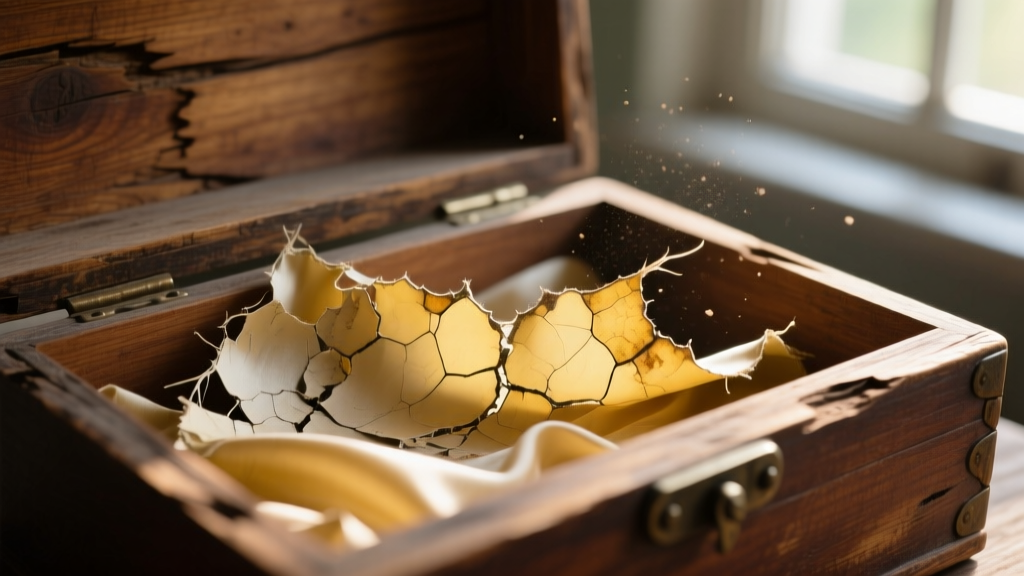
The interior lining is the most critical interface between your jewelry and the storage environment. In a vintage jewelry case, you will typically encounter three historical materials, all of which must be removed.
| Historical Material | Era of Use | Failure Mode & Chemical Hazard | Archival Replacement |
|---|---|---|---|
| Weighted Silk Velvet | 1880s - 1920s | Silk was 'weighted' with metallic salts (tin chloride) to add drape. These salts hydrolyze, releasing hydrochloric acid that shreds the fabric and corrodes silver. | Unbleached, undyed cotton sateen or washed linen. |
| Cellulose Nitrate | 1900s - 1930s | Early plastic used for ring rolls and dividers. Degrades into nitric acid gas, causing rapid 'silver sulfide' blackening and coral dissolution. | Plastazote or Volara (closed-cell polyethylene foams). |
| Early PVC / Vinyl | 1950s - 1970s | Off-gasses phthalate plasticizers, leaving a sticky, acidic residue that permanently etches pearls and softens enamel. | Tyvek (flash-spun polyethylene) or silicone-coated Mylar. |
The Removal Process
Stripping the old lining requires patience and solvent safety. Avoid water-based soaking, which can warp the thin veneer layers of the carcass. Use a specialized adhesive softener or a controlled application of acetone (tested on a hidden area first) to dissolve the animal hide glues or early rubber cements. Scrape gently with Teflon spatulas to avoid scoring the wood veneer.
Hardware and Hinges: Metallurgical Failure Modes
The hardware on a vintage jewelry case—hinges, clasps, and escutcheons—often dictates the structural longevity of the piece. Understanding the metallurgy of these components is essential for proper restoration.
Dealing with Pot Metal and Zamak
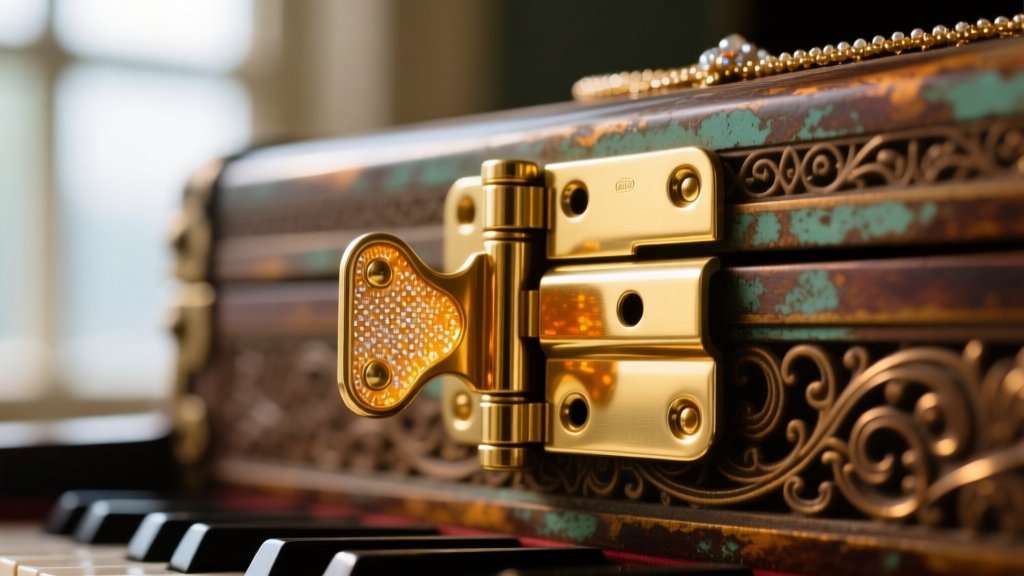
Many mid-century cases utilized 'pot metal' (zinc alloys like Zamak) for decorative clasps and internal mechanisms. Zamak is notoriously susceptible to 'zinc pest'—a crystalline degradation caused by impurities in the alloy that causes the metal to swell, crack, and crumble. If your structural hinges are made of pot metal and show signs of bubbling or intergranular cracking, they cannot be saved. They must be carefully drilled out and replaced with solid brass or stainless steel equivalents to prevent catastrophic lid failure.
Restoring Brass and Steel
For solid brass hardware suffering from verdigris (copper acetate/carbonate buildup), avoid harsh commercial brass polishes containing ammonia, which can cause stress corrosion cracking in high-tension springs. Instead, use a slurry of precipitated calcium carbonate and distilled water applied with a soft bamboo skewer. Once polished, the hardware must be sealed. A microcrystalline wax, such as Renaissance Wax, applied in a thin layer and buffed, will inhibit moisture exchange and prevent future tarnish without altering the visual patina.
Step-by-Step Archival Retrofitting Process
Once the carcass is sealed, stripped, and the hardware stabilized, you can begin the archival retrofitting. This process ensures your vintage jewelry case meets the stringent standards outlined by the Conservation Wiki's guide on Oddy Testing for material safety.
1. Base Padding and Shock Absorption
Do not glue fabric directly to the wood. First, line the base with a 1/8-inch layer of Volara (cross-linked polyethylene foam). Volara is chemically inert, passes the Oddy test flawlessly, and provides excellent shock absorption for heavy brooches and fragile micromosaics. Secure the Volara using Jade 403, an archival-grade polyvinyl acetate (PVA) adhesive that dries clear and remains flexible without off-gassing acidic plasticizers.
2. Creating Custom Compartmentalization
Instead of the rigid, tension-based ring rolls of the past—which stretch and stress shanks—construct modular, low-tension dividers. Cut 1/4-inch Plastazote (another inert polyethylene foam) to create interlocking grid walls. Wrap these foam walls in washed, unbleached cotton sateen. The cotton provides a soft, breathable interface that will not trap moisture against the jewelry, mitigating the risk of localized humidity spikes that lead to metallurgical silver tarnish.
3. Anti-Tarnish Integration
While an archival lining prevents the *introduction* of corrosive gases, it does not actively scavenge existing pollutants. To turn your vintage jewelry case into an active preservation vault, integrate 3M Anti-Tarnish Strips or Pacific Silvercloth panels into the underside of the lid. These materials contain finely divided copper particles or zinc compounds that preferentially react with hydrogen sulfide and sulfur dioxide, sacrificially protecting your silver and copper-alloy pieces. Replace these scavenger strips every 12 to 18 months, depending on the ambient air quality of your home.
Conclusion: Preserving the Past, Protecting the Future
Restoring a vintage jewelry case is an exercise in balancing historical appreciation with modern materials science. By systematically identifying acidic substrates, replacing degraded linings with inert polyethylenes, and stabilizing the metallurgical hardware, you transform a beautiful but dangerous antique into a museum-grade preservation vault. Your collection will retain its luster, and the case will retain its soul, ensuring both survive for the next century of collectors.


