Stand Mirror With Jewelry Storage: 2026 Buying Guide
Discover what to look for in a stand mirror with jewelry storage. Our 2026 buying guide covers glass quality, anti-tarnish linings, and hardware.

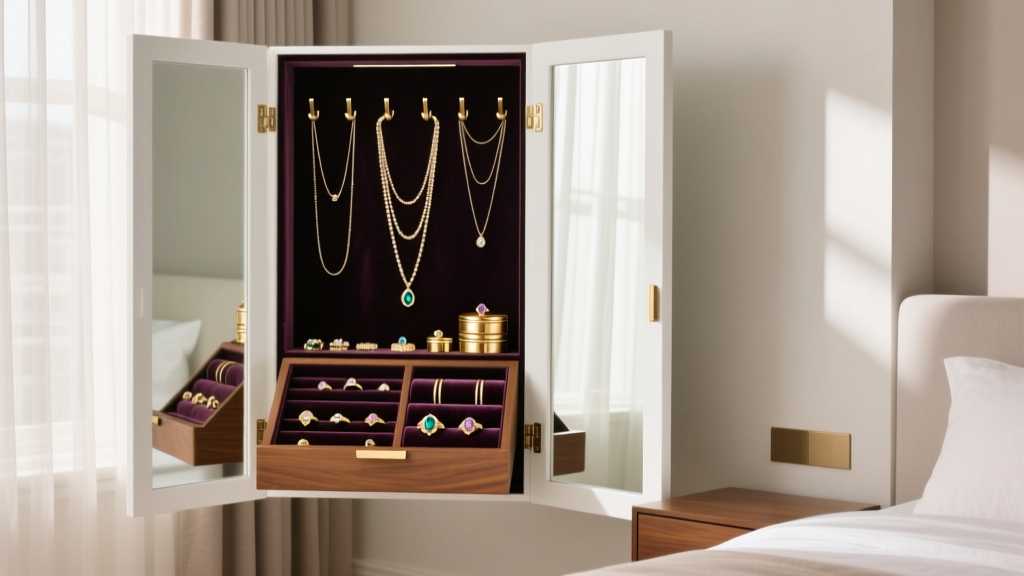
The Dual-Purpose Revolution in Bedroom Organization
In modern interior design, maximizing spatial efficiency without sacrificing aesthetic appeal is paramount. The stand mirror with jewelry storage has emerged as a definitive solution for collectors and minimalists alike. Rather than relegating your accessories to a dark drawer or a cluttered dresser top, these freestanding armoires offer a full-length reflection alongside a secure, organized vault for your most prized pieces. However, the market is flooded with poorly constructed units that warp, tarnish your metals, and fail at the hinges. This comprehensive buying guide breaks down the exact material grades, hardware specifications, and optical standards you need to evaluate before making a purchase in 2026.
Optical Integrity: Glass Thickness and Backing
The primary function of the unit is reflection, yet many budget manufacturers cut corners on the glass. When evaluating a stand mirror with jewelry storage, you must look beyond the frame and inspect the mirror's anatomy.
Thickness and the 'Funhouse' Effect
Standard cheap mirrors use 3mm glass. On a full-length panel spanning 50 inches or more, 3mm glass is highly susceptible to bowing and warping, resulting in a distorted, 'funhouse' reflection. For a true-to-life reflection necessary for evaluating outfit proportions and jewelry drape, insist on 5mm tempered glass. The extra thickness provides structural rigidity, ensuring the reflection remains perfectly flat even if the unit is moved frequently.
Copper-Free Silver Backing
Traditional mirrors use a copper layer over the silver backing to protect against corrosion. However, in humid environments (like a bedroom adjacent to a bathroom), copper oxidizes, leading to the dreaded 'black edge creep' where the mirror's perimeter turns dark and flakes. Premium 2026 models utilize copper-free, silver-backed glass with a specialized protective paint coating. This extends the mirror's lifespan by decades and maintains edge-to-edge clarity.
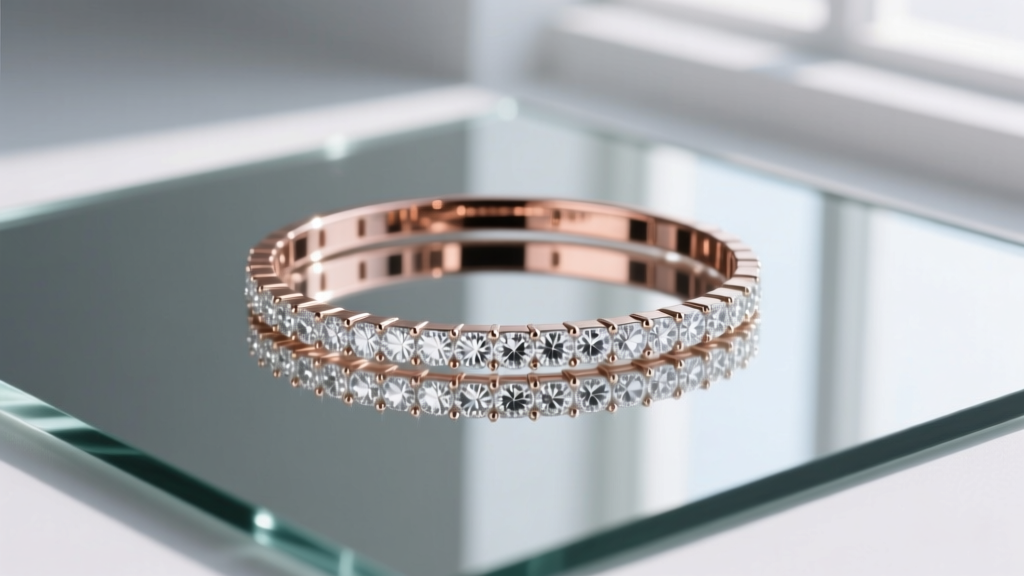
Interior Lining and Anti-Tarnish Technology
Storing fine jewelry requires a controlled micro-environment. According to Tiffany & Co.'s jewelry care guidelines, exposure to airborne pollutants and humidity accelerates the oxidation of sterling silver and the dulling of gold alloys. The interior lining of your stand mirror with jewelry storage is your first line of defense.
- Standard Poly-Flannel: Acceptable for fashion jewelry and stainless steel, but offers zero chemical protection against tarnish.
- Premium Velvet (Short-Pile): Prevents micro-scratches on high-polish metals and gemstone settings. Ensure the velvet is dye-fast so it doesn't transfer color to porous stones like pearls or turquoise.
- Pacific Silvercloth or Zinc-Embedded Fabrics: The gold standard for collectors. These fabrics contain embedded metallic particles that act as sacrificial anodes, absorbing hydrogen sulfide from the air before it can react with your silver. If you own a substantial sterling silver collection, this lining is non-negotiable.
Storage Capacity vs. Spatial Footprint
Not all stand mirrors are created equal. The internal layout must match your specific collection profile. A collector of long pendant necklaces needs vastly different vertical clearance than someone who primarily wears stud earrings and cocktail rings. Below is a structural comparison of the three main tiers available on the market.
| Mirror Tier | Overall Height | Necklace Hooks (Max Drop) | Ring/Earring Capacity | Base Footprint |
|---|---|---|---|---|
| Compact Vanity Stand | 36 - 42 inches | 12 Hooks (8-inch drop) | 40 Rings / 20 Pairs | 14" x 14" |
| Standard Freestanding | 58 - 64 inches | 24 Hooks (16-inch drop) | 80 Rings / 40 Pairs | 18" x 18" |
| Grand Armoire Stand | 65 - 72 inches | 40+ Hooks (24-inch drop) | 150+ Rings / Drawers | 22" x 22" |
When measuring your space, remember to account for the 'swing zone.' A standard full-length door requires at least 24 inches of clearance to open fully without striking a bedframe or wall.
Critical Hardware and Safety Mechanics
The most common failure point in any stand mirror with jewelry storage is the hinge system. A fully loaded armoire door, burdened with heavy glass, wood, and the weight of hanging metal accessories, can easily exceed 25 pounds.
Mortised vs. Surface-Mounted Hinges
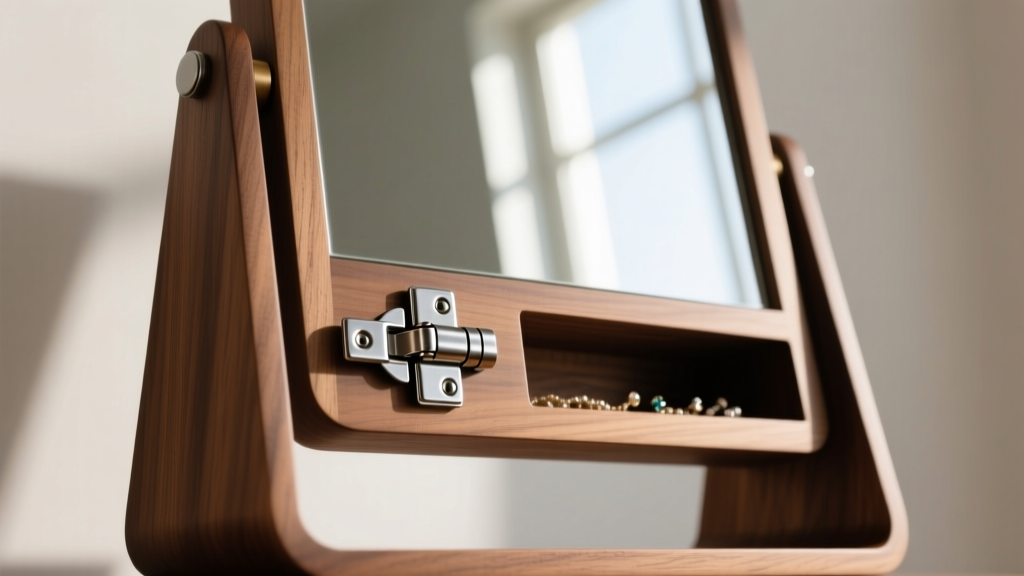
Avoid units that use surface-mounted hinges screwed directly into particleboard. The sheer downward force of gravity will eventually strip the screws, causing the door to sag and the latch to misalign. High-quality models utilize mortised steel hinges that are recessed into the wood frame, distributing the mechanical load across the wood grain rather than relying solely on screw friction.
Magnetic Catches and Weighted Bases
For the door closure, magnetic catches are vastly superior to mechanical friction latches, which wear down over time and require excessive pulling force that can shake the entire unit. Furthermore, safety is paramount. The Jewelers of America emphasizes secure storage environments; in the home, this means preventing tip-overs. Ensure the stand features a weighted base (minimum 15 lbs for full-length models) or includes a discrete anti-tip wall tether kit, especially if you live in an earthquake-prone region or have pets.
Lighting: Why CRI Matters for Jewelry Evaluation
Many modern stand mirrors incorporate LED vanity lighting. However, not all LEDs are suitable for jewelry inspection. The critical metric to look for is the Color Rendering Index (CRI). Standard cheap LEDs have a CRI of 70-80, which washes out colors and makes rose gold look muddy or muddy the fire of a diamond.
For accurate color representation, you need an LED strip with a CRI of 90 or higher. Additionally, pay attention to the color temperature. Avoid 'warm white' (2700K) which artificially yellows white gold and platinum, and avoid 'daylight' (6000K) which casts harsh blue shadows. The ideal specification is Neutral White (4000K), which mimics natural midday light and allows you to accurately judge gemstone clarity and metal tones.
2026 Market Pricing and Value Tiers
Understanding what you are paying for helps separate genuine value from marketing markup. Here is the current pricing landscape for a quality stand mirror with jewelry storage:
- Budget Tier ($70 - $130): Typically features 3mm glass, MDF or particleboard frames, and standard poly-flannel lining. Hinges are usually surface-mounted. Acceptable for fashion jewelry, but not recommended for fine jewelry or humid climates.
- Mid-Tier ($150 - $280): The sweet spot for most buyers. Expect 4mm or 5mm glass, solid rubberwood or acacia frames, short-pile velvet lining, and mortised hinges. Often includes basic 4000K LED lighting.
- Premium Tier ($350 - $600+): Features copper-free silver-backed glass, solid hardwood construction, Pacific Silvercloth anti-tarnish interiors, high-CRI smart lighting, and soft-close hinges. These are heirloom-quality pieces designed to last decades.
Final Verdict: Making Your Selection
Investing in a stand mirror with jewelry storage is an investment in the longevity of your collection and the efficiency of your daily routine. Prioritize 5mm copper-free glass, anti-tarnish interior linings, and mortised hardware above all else. By focusing on these structural and material realities rather than just the exterior aesthetic, you will secure a piece that not only organizes your space but actively protects your most valued accessories for years to come.


