Fixing Your Full Length Mirror With Jewelry Storage IKEA Hack
Discover expert troubleshooting for your full length mirror with jewelry storage IKEA hack. Fix hinge sag, prevent tarnish, and optimize clearance.

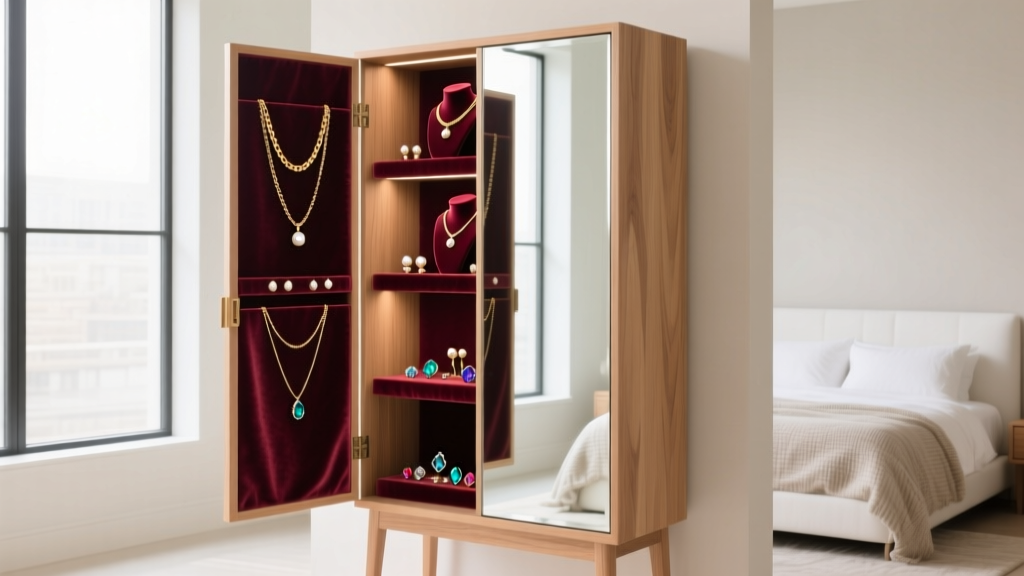
The Elusive Search: Why IKEA Doesn't Make This (And How to Fake It)
If you have spent hours scrolling through catalogs searching for a dedicated full length mirror with jewelry storage ikea product, you already know the frustrating truth: IKEA does not manufacture a single, standalone SKU that combines a true floor-length mirror with a high-capacity hidden jewelry armoire. They offer the tall HOVET or NISSEDAL mirrors, and they offer small jewelry armoires or bathroom mirror cabinets, but never the two combined. This gap in the market has spawned thousands of DIY "IKEA hacks," typically involving mounting a NISSEDAL mirror onto a custom PAX wardrobe door or a KALLAX shelving unit.
However, as a jewelry organization specialist, I see these hacks fail constantly. The physics of hanging heavy metals against particleboard, combined with the chemistry of silver tarnishing, turns what should be a beautiful dressing station into a sagging, tarnished mess. In 2026, with jewelry collections growing heavier and more diverse, troubleshooting these structural and chemical flaws is essential. Here is your master guide to fixing, reinforcing, and perfecting your full-length mirror jewelry storage hack.
Troubleshooting Hinge Sag and Weight Distribution
The most common point of failure in any mirrored storage hack is the hinge. A standard 65x165cm NISSEDAL mirror weighs approximately 24 lbs (11 kg). When you add the weight of the MDF door itself (another 15 lbs) and a dense jewelry collection (easily 5 to 10 lbs of sterling silver, gold, and beaded pieces), you are pushing 50 lbs of dynamic load on hinges designed for lightweight bedroom doors.
Upgrading to Heavy-Duty Hardware
Standard IKEA hinges will sag within six months under this load, causing the mirror door to scrape the floor or fail to latch. You must replace them with heavy-duty, soft-close hinges. I recommend Blum Clip Top 155-degree zero-protrusion hinges. These allow the door to open completely clear of the cabinet interior, which is vital for accessing deep jewelry trays.
| Component | Estimated Weight | Hinge Requirement (Min. 3 Hinges) | Failure Mode if Undersized |
|---|---|---|---|
| NISSEDAL Mirror (65x165cm) | 24 lbs (11 kg) | Standard IKEA Hinges | Gradual door drop, floor scratching |
| Custom MDF Door Panel (3/4") | 18 lbs (8 kg) | Heavy Duty (15 lb rating/pair) | Hinge tearing out of particleboard |
| Heavy Jewelry Collection | 5 - 12 lbs (2 - 5 kg) | Reinforced Mounting Plates | Dynamic swing sag, latch failure |
| Total Dynamic Load | ~54 lbs (24.5 kg) | Blum Heavy-Duty + Threaded Inserts | Catastrophic hinge detachment |
Pro-Tip: Never screw hinges directly into raw IKEA particleboard. The repeated stress of opening a heavy mirrored door will strip the screw holes. Always drill out the hinge cup holes slightly and install brass threaded inserts with machine screws to anchor the hinges permanently.
The Chemistry of Tarnish: Solving the MDF Off-Gassing Problem
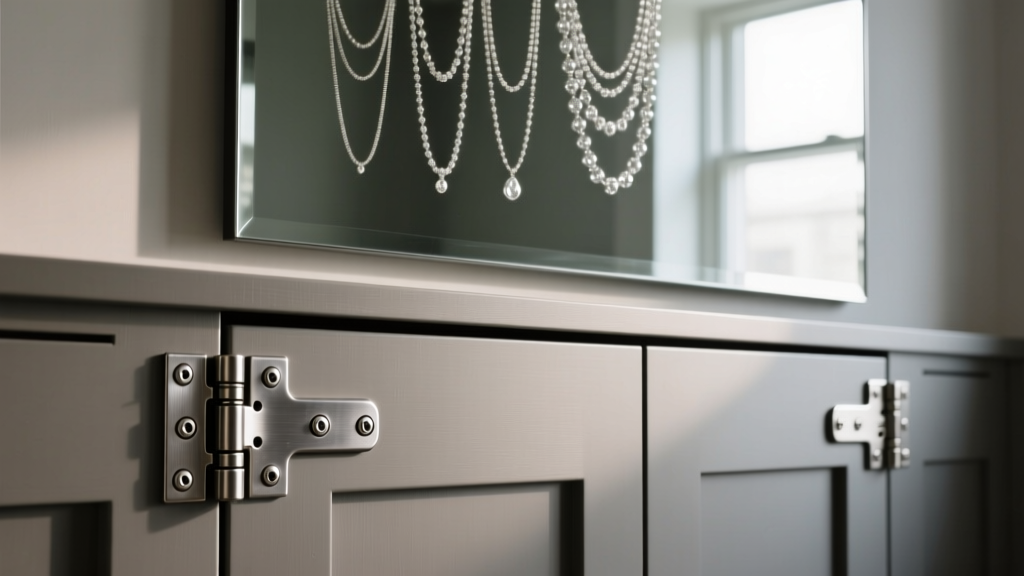
Have you ever noticed that sterling silver stored in a newly built DIY cabinet turns black within weeks, even when untouched? This is not a coincidence; it is a chemical reaction. IKEA furniture is primarily constructed from particleboard and MDF (Medium-Density Fiberboard), which are bound together using urea-formaldehyde resins. These resins, along with certain wood glues, emit trace amounts of sulfur compounds and hydrogen sulfide gas as they off-gas.
When hydrogen sulfide meets the copper alloy in sterling silver (which is 92.5% silver and 7.5% copper), it rapidly forms silver sulfide—the black tarnish layer on your jewelry. To solve this, you must create an impermeable vapor barrier between the MDF and your jewelry.
The Shellac Sealing Protocol
Water-based polyurethanes will not block sulfur gases. You must use a shellac-based primer. Zinsser B-I-N is the industry standard for blocking stubborn odors and chemical off-gassing. Apply two generous coats to every exposed edge and interior surface of your IKEA hack cabinetry. Once cured, line the drawers and hanging zones with 100% cotton velvet. Never use silk or wool linings, as these natural protein fibers contain sulfur-bearing amino acids that will also tarnish your silver.
Expert Insight: For ultimate protection in enclosed mirror cabinets, drop a few 3M Anti-Tarnish Strips into the hidden corners of the shelving. These strips utilize a proprietary copper-based polymer that absorbs airborne sulfides before they can reach your jewelry, lasting up to 6 months in a sealed environment.
Clearance Geometry: Preventing Glass Scratches and Tangles
Another frequent troubleshooting ticket I receive involves necklaces swinging against the back of the mirror glass when the door is shut, resulting in scratched mirrors, broken chains, and tangled pendants. When designing your storage layout behind a full-length mirror, you must calculate the "Swing Zone" based on standard jewelry lengths.
Optimal Depth Requirements by Necklace Type
- Chokers (14-16 inches): Require a minimum of 1.5 inches of clearance from the glass. Best stored on shallow, velvet-lined valet trays.
- Princess Length (18 inches): The most common necklace length. Requires at least 2.5 inches of swing clearance. Use angled peg hooks rather than flat wall hooks to keep the chain pinned back.
- Matinee & Opera (24-36 inches): These long, heavy chains act like pendulums. They require 4+ inches of clearance. Store these in deep, felt-lined drawers rather than hanging them on the back of the mirror door to completely eliminate glass impact risk.
Step-by-Step Troubleshooting Matrix
If your current full length mirror with jewelry storage IKEA setup is already failing, use this diagnostic matrix to identify and correct the issue immediately.
| Symptom | Root Cause | Corrective Action |
|---|---|---|
| Door drags on the floor when opening | Hinge sag due to mirror weight exceeding load limits. | Install a third heavy-duty hinge at the top; replace stripped screws with threaded inserts. |
| Silver jewelry tarnishes rapidly | MDF off-gassing sulfur compounds; improper lining material. | Seal all interior wood with shellac primer; replace silk/wool linings with cotton velvet. |
| Chains tangle and scratch the mirror | Insufficient depth clearance; pendulum effect on door close. | Move long chains to drawers; install magnetic catch at the base to prevent door slamming. |
| Adhesive hooks fall off the mirror | Temperature fluctuations causing adhesive failure on glass. | Never stick hooks to the mirror. Mount a thin plywood backer board to the door frame and hook into that. |
Final Thoughts on Lighting and Ergonomics
A successful jewelry storage hack isn't just about structural integrity; it's about visibility. When you enclose jewelry behind a mirror, you create a dark cave. Integrate battery-operated, motion-sensor LED strip lights (specifically in the 4000K-5000K daylight range) along the interior vertical stiles. This color temperature accurately renders the fire of diamonds and the true hue of colored gemstones without the yellow cast of warm LEDs. By addressing the physics of weight, the chemistry of tarnish, and the geometry of clearance, your DIY full-length mirror armoire will function flawlessly for decades, keeping your collection secure, pristine, and beautifully displayed.


