Best Materials for a Jewelry Box Standing on Your Vanity
Discover the best materials for a jewelry box standing on your vanity. Compare wood, acrylic, and metal properties for optimal tarnish prevention.

The Physics and Chemistry of Vanity Storage
When selecting a jewelry box standing on your vanity, the aesthetic appeal is only half the equation. A freestanding vertical storage unit must balance structural stability, environmental resistance, and chemical inertness. Unlike flat valet trays or under-bed organizers, a vertical jewelry box standing upright occupies a smaller footprint but introduces unique center-of-gravity challenges and microclimate variables. In 2026, modern material science offers a diverse array of options, from sustainably harvested hardwoods to aerospace-grade anodized aluminum. However, choosing the wrong material can lead to catastrophic results, including accelerated silver sulfide tarnishing, gemstone degradation from off-gassing adhesives, or structural toppling. This comprehensive guide breaks down the exact material properties you need to consider to protect your fine jewelry collection.
Hardwood vs. Engineered Wood: Structural and Chemical Integrity
The most traditional choice for a jewelry box standing in a bedroom or dressing area is wood. However, not all woods are created equal, and the chemical composition of the timber and its finishes can severely impact your jewelry.
Solid Walnut, Mahogany, and the Janka Scale
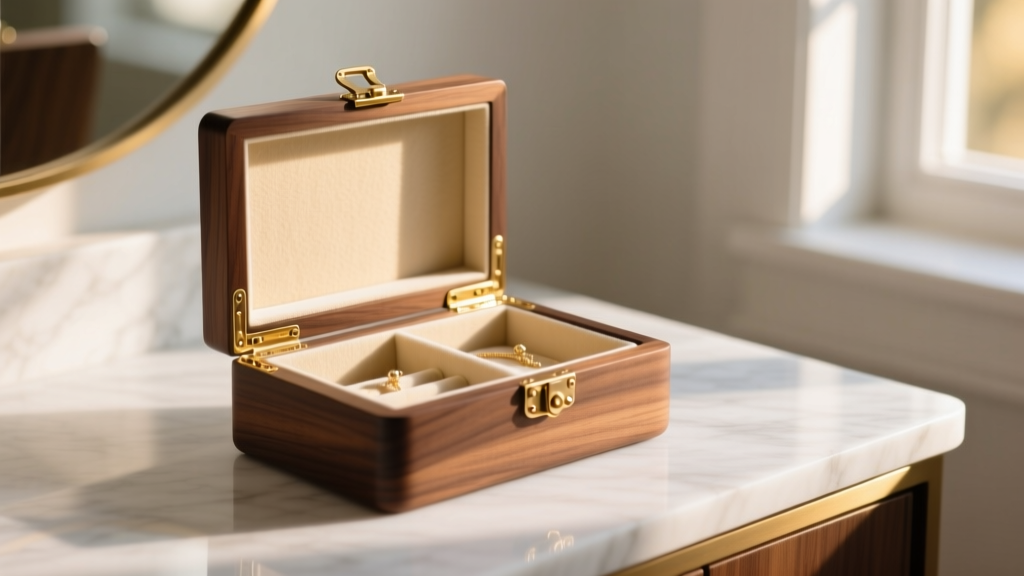
Solid hardwoods are the gold standard for heirloom-quality standing boxes. When evaluating wood, jewelers and conservators look at the Janka hardness rating, which measures the force required to embed a steel ball into the timber. Black Walnut boasts a Janka rating of 1,010 lbf (pounds-force), making it highly resistant to the dings and scratches that occur when heavy gold bangles or platinum chains are placed inside. Honduran Mahogany (around 900 lbf) offers excellent dimensional stability, meaning it will not warp or twist when exposed to the fluctuating humidity of a bathroom-adjacent vanity. Furthermore, solid woods joined with traditional dovetail or mortise-and-tenon joinery provide the necessary base weight to prevent a tall, standing jewelry box from tipping over when heavy drawers are pulled open.
The Hidden Dangers of MDF and Veneer Alternatives
Medium-Density Fiberboard (MDF) and particleboard are common in budget-friendly standing jewelry boxes. While they offer a perfectly smooth surface for high-gloss veneers, they pose a severe chemical threat to your collection. According to the Smithsonian Museum Conservation Institute, the urea-formaldehyde resins used to bind MDF fibers continuously off-gas volatile organic compounds (VOCs) and trace sulfur compounds. In an enclosed, standing jewelry box, these trapped gases accelerate the oxidation of sterling silver and copper alloys, causing rapid black tarnishing. If you must use an engineered wood box, ensure it is sealed with a water-based polyurethane and lined with an activated carbon barrier cloth.
Modern Synthetics: Cast Acrylic and Tempered Glass
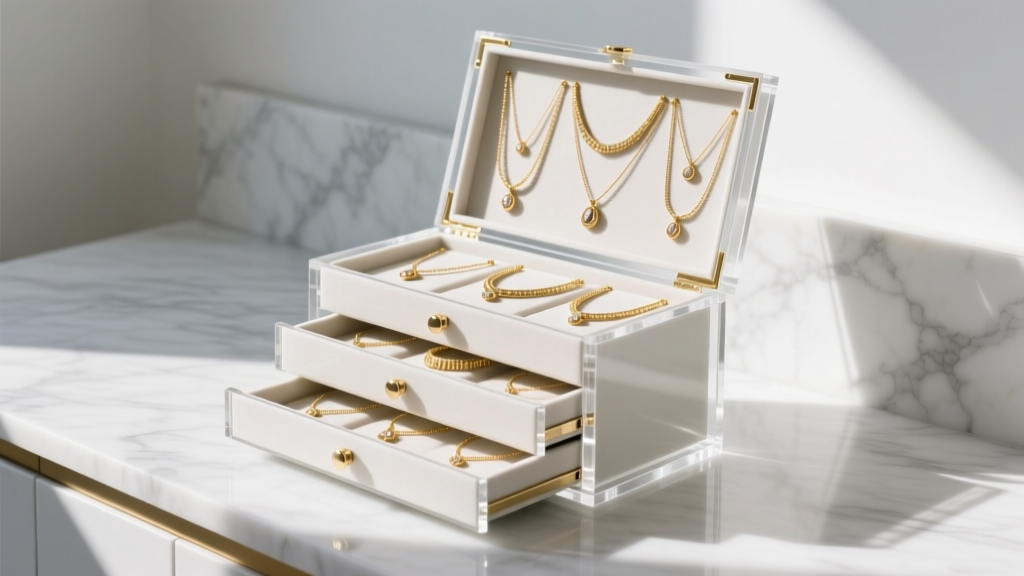
For a contemporary aesthetic, transparent materials allow you to view your collection without opening the drawers, minimizing exposure to ambient humidity and airborne pollutants.
- Cast Acrylic (PMMA): High-quality cast acrylic is chemically inert, meaning it will not off-gas harmful sulfur or acids. It is also highly impact-resistant and lightweight. However, because a standing jewelry box requires a low center of gravity, acrylic boxes must feature weighted metal or glass bases to prevent tipping. Always opt for UV-stabilized cast acrylic to prevent the yellowing and micro-crazing that plagues cheaper extruded acrylics over time.
- Tempered Glass: Glass is entirely non-porous and chemically stable, making it an ideal environment for sensitive pearls and opals. Tempered glass is up to four times stronger than annealed glass, but its significant weight is actually a benefit here, anchoring a tall standing jewelry box firmly to the vanity surface. The primary drawback is the risk of catastrophic shattering if struck by a heavy object, though tempered glass breaks into dull cubes rather than dangerous shards.
Metallic Frameworks: Anodized Aluminum and Solid Brass
Metal standing jewelry boxes are increasingly popular in modern, industrial, or minimalist interiors. The structural rigidity of metal allows for incredibly slim profiles and cantilevered drawer designs that would snap in wood or acrylic.
Anodized Aluminum: Aluminum is lightweight and naturally rust-resistant. Through an electrochemical anodizing process, the surface is converted into a hard, porous aluminum oxide layer that is then dyed and sealed. This sealed surface is completely inert and safe for jewelry storage. However, because aluminum is so light, a standing aluminum box must incorporate a heavy steel or lead-free brass baseplate to maintain stability.
Solid Brass and Copper: Brass offers a luxurious, heavy feel and possesses natural antimicrobial properties. However, raw brass and copper oxidize and develop a patina. More importantly, if the interior of the box is unlined raw brass, the copper content can react with the acids in your skin oils transferred to your jewelry, potentially causing galvanic corrosion on silver or gold-plated items. Always ensure metal boxes feature a baked-on powder coat or a thick, inert interior lining.
The Hidden Variable: Interior Lining Materials
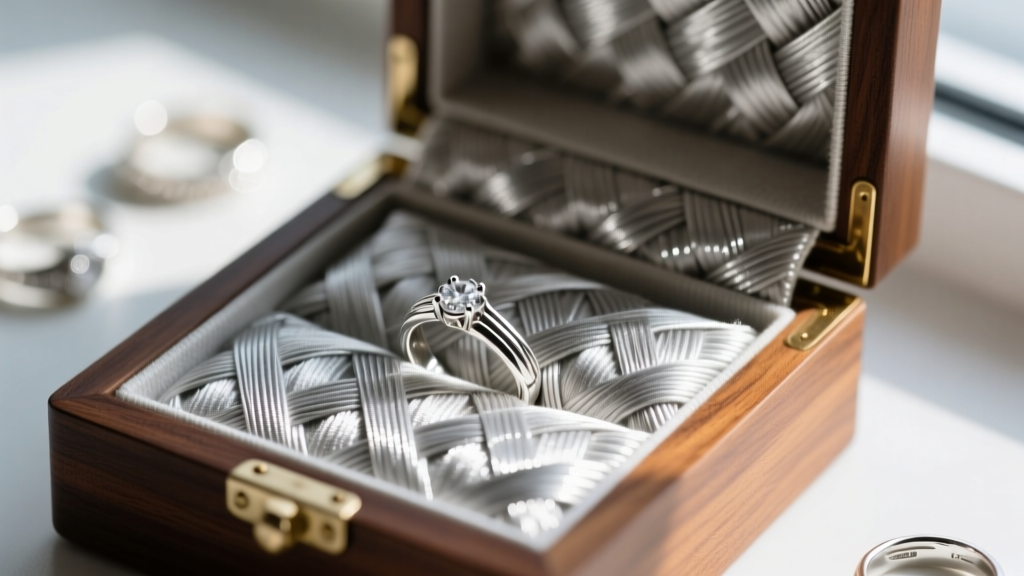
The exterior shell of a jewelry box standing on your vanity dictates its structural integrity, but the interior lining dictates the chemical safety of your jewelry. The Gemological Institute of America (GIA) emphasizes that improper storage materials are a leading cause of preventable jewelry damage. Below is a comparison of common lining materials and their properties.
| Lining Material | Chemical Properties | Best For | Avoid For |
|---|---|---|---|
| Pacific Silvercloth | Woven cotton embedded with microscopic zinc and silver particles that absorb and neutralize hydrogen sulfide (H2S) gases. | Sterling silver, copper, and brass pieces. | Porous gemstones (pearls, opals) which need slight moisture exchange. |
| Polyurethane Foam | Synthetic foam that often contains sulfur-based blowing agents and plasticizers that degrade over time. | None. Avoid entirely. | All fine jewelry, especially silver and pearls. |
| Untreated Silk | Natural protein fiber, chemically neutral, low static electricity generation. | Pearls, opals, emeralds, and high-karat gold. | Heavy items with sharp prongs that can snag the delicate weave. |
| Microfiber Velvet | Synthetic polyester blend, highly durable, lint-free, and chemically stable if dyed with azo-free dyes. | Diamonds, sapphires, and everyday gold/platinum. | Unsealed MDF boxes (microfiber does not block off-gassing). |
Humidity, Tarnish, and Environmental Controls
A standing jewelry box acts as a microclimate. When you close the drawer, you trap the ambient humidity of the room inside. For a vanity located near a bathroom, humidity spikes can exceed 70% relative humidity (RH), which drastically accelerates tarnishing and can cause organic gemstones like amber or tortoiseshell to warp. To combat this, high-end standing jewelry boxes now feature integrated environmental controls. Look for models with a dedicated, ventilated compartment for replaceable silica gel cassettes or activated charcoal sachets. These desiccants maintain the interior RH between 40% and 50%, the optimal range for preserving both metal alloys and organic gems. Additionally, some premium boxes utilize airtask silicone gaskets around the drawer perimeters to create a true hermetic seal against ambient airborne pollutants.
Final Verdict: Matching Material to Your Collection
Choosing the right jewelry box standing on your vanity requires matching the exterior material and interior lining to your specific collection. If your primary concern is protecting a large sterling silver collection from tarnish, a solid hardwood box (like Walnut or Mahogany) lined entirely with Pacific Silvercloth is the undisputed champion, offering both the necessary weight for stability and the chemical inertness required for long-term preservation. For those with a modern aesthetic and a collection focused on diamonds, platinum, and high-karat gold, a UV-stabilized cast acrylic standing box with a weighted glass base provides excellent visibility and chemical safety. By understanding the Janka hardness of woods, the off-gassing risks of engineered boards, and the sulfur-neutralizing properties of specialized linings, you can transform your vanity storage from a simple container into a true preservation vault.
For further reading on the conservation of precious metals and gems, consult the guidelines provided by the Wood Database regarding timber acidity and the aforementioned conservation resources to ensure your storage solutions are built to last generations.


