Vintage Green Jewelry Box Materials & Preservation Guide
Discover how materials in a vintage green jewelry box impact tarnish prevention. Compare Catalin, enameled tin, and serpentine for safe storage.

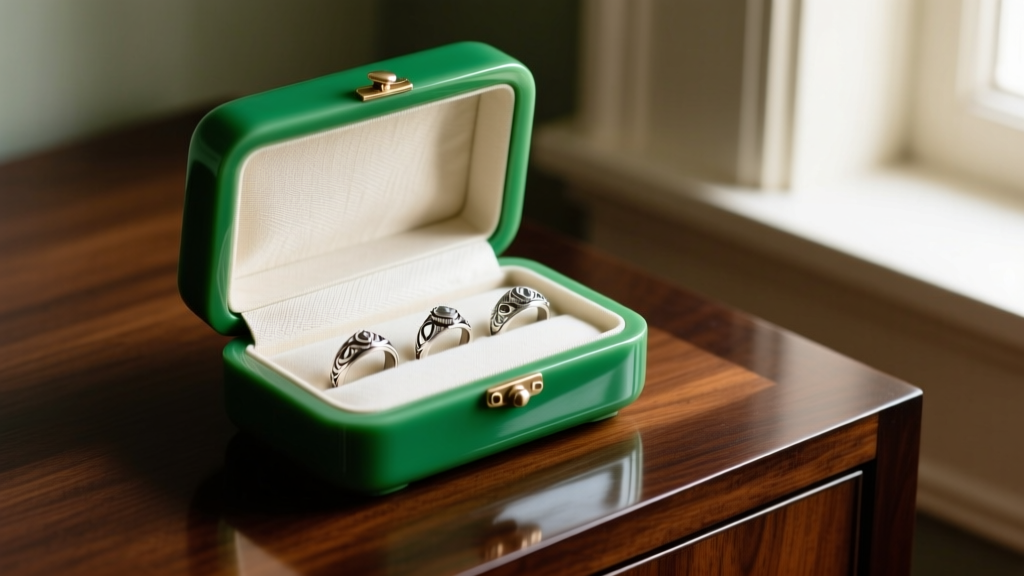
The Hidden Chemistry of Vintage Green Storage
Collectors and jewelry enthusiasts are universally drawn to the aesthetic charm of a vintage green jewelry box. Whether it is the translucent apple green of 1930s Catalin, the opaque jadeite of mid-century ceramics, or the rich emerald enamel of lithographed tin, these vessels evoke a sense of timeless elegance. However, from a material science and preservation perspective, the very compounds that give these boxes their iconic green hues can pose severe risks to the precious metals and gemstones stored within them.
As a jewelry storage specialist, I frequently encounter vintage boxes that have inadvertently destroyed their contents. The microclimate inside a closed jewelry box is a closed-loop chemical environment. When unstable vintage materials degrade, they off-gas volatile organic compounds (VOCs), acids, and sulfur-bearing particulates. This guide breaks down the specific material properties of vintage green jewelry boxes, analyzing their structural integrity, off-gassing risks, and the precise archival interventions required to make them safe for modern jewelry preservation.
Catalin and Bakelite: The Phenolic Green Era
When collectors refer to a 'vintage green jewelry box' from the 1920s or 1930s, they are usually describing Catalin. While often mistakenly grouped with Bakelite, Catalin is a distinct, un-filled phenol formaldehyde resin. Because it lacks the wood flour or asbestos fillers found in standard Bakelite, Catalin can be cast in translucent, vibrant colors, including highly sought-after shades of jade, apple green, and emerald.
The Degradation Mechanism
Phenolic resins are thermosetting plastics, meaning they are incredibly durable structurally. However, they are chemically susceptible to hydrolysis and oxidative degradation over decades. According to the Smithsonian Museum Conservation Institute, aging phenolics release formaldehyde and phenolic acids into their immediate environment.
In the sealed microclimate of a jewelry box, these acidic vapors accumulate. The pH level inside the box can drop significantly, creating an acidic atmosphere that aggressively accelerates the oxidation of sterling silver and copper alloys. If you store silver jewelry in an un-lined, original Catalin box, you will notice rapid, heavy black tarnishing (silver sulfide formation) that requires frequent, abrasive polishing, ultimately wearing down the silver.
Enameled Tin and Lithographed Steel
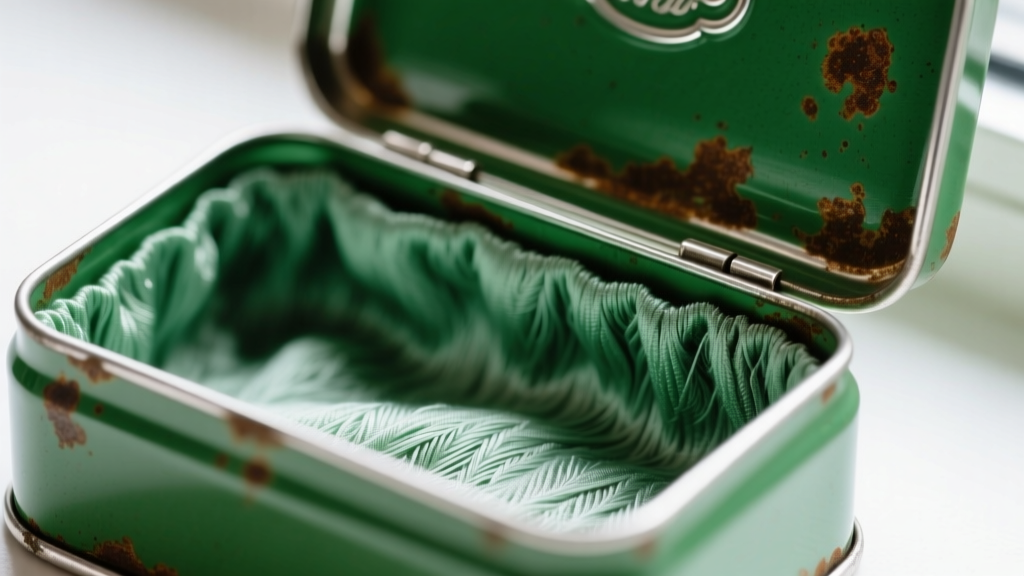
Moving into the 1940s and 1950s, the vintage green jewelry box transitioned from cast resins to mass-produced lithographed tin and enameled steel. These boxes often feature vibrant, glossy green exteriors with intricate floral or Art Deco patterns. While the steel core provides excellent structural rigidity and protects against physical crushing, the green exterior coating presents unique preservation challenges.
Enamel Chipping and Iron Oxide Abrasion
The green pigments used in mid-century enamels and lithographic paints frequently relied on lead chromate or copper-based compounds. Over time, the mechanical stress of opening and closing the lid causes micro-fractures in the enamel, particularly around the hinges and corners. Once the enamel chips, the underlying low-carbon steel is exposed to ambient humidity.
This exposure leads to iron oxidation (rust). Rust is not merely a cosmetic issue; iron oxide dust is a particulate abrasive. As the hinge operates, it grinds this rust into a fine powder that circulates inside the box. If this dust settles on soft, porous gemstones like pearls or opals, the microscopic iron particles can embed themselves into the nacre or the stone's surface, causing permanent grey and brown spotting. The Library of Congress Preservation Guidelines emphasize that preventing ferrous corrosion is paramount when storing sensitive organic gems near steel enclosures.
Carved Serpentine and Aventurine Glass
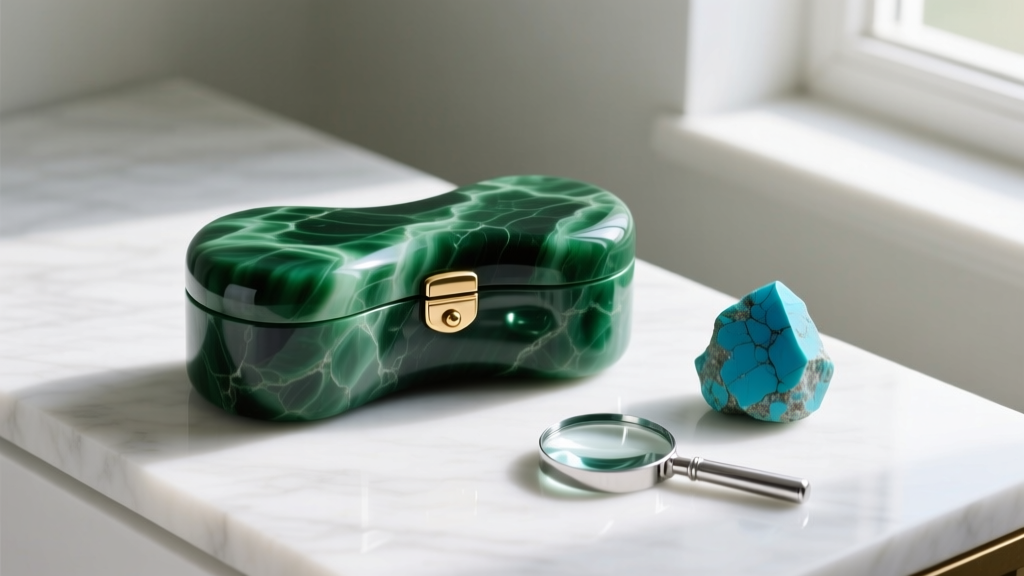
For high-end vintage storage, carved serpentine (often mislabeled as 'new jade') and aventurine glass were popular choices for heavy, luxurious green boxes. Serpentine is a magnesium silicate mineral with a Mohs hardness of 2.5 to 4.0, making it relatively soft and easy to carve into intricate, ornate boxes with brass fittings.
Porosity and Wax Transfer
Unlike glass, serpentine is naturally porous. To enhance the green chatoyancy and provide a glossy finish, vintage lapidaries heavily polished these boxes with carnauba wax, beeswax, or shellac. In environments with high humidity or direct sunlight, these organic coatings can soften and melt. When you place porous gemstones—such as turquoise, coral, or lapis lazuli—directly against the waxed interior of a serpentine box, the wax transfers to the stones. This wax penetrates the microscopic pores of the gems, dulling their natural luster and complicating future professional cleaning.
Material Comparison Matrix
To help collectors and archivists make informed decisions, the following table compares the primary materials used in vintage green jewelry boxes against critical preservation metrics.
| Material | Era | Primary Degradation Risk | Safe for Sterling? | Safe for Pearls? |
|---|---|---|---|---|
| Catalin (Phenolic) | 1920s-1940s | Off-gassing phenolic acids | No (Accelerates tarnish) | Yes (If lined) |
| Enameled Steel | 1930s-1950s | Enamel chipping, iron rust | Yes | No (Abrasive dust) |
| Serpentine Stone | 19th-20th C. | Wax transfer, moisture retention | Yes | No (Wax transfer) |
| Aventurine Glass | 1920s-1960s | Structural fragility, lead solder | Yes | Yes |
Upgrading the Interior: Archival Linings for Vintage Shells
The most critical point of failure in any vintage green jewelry box is the interior lining. Original mid-century linings were typically constructed from early synthetic rayons, acetates, or cheap cottons, all adhered to the interior shell using animal hide glue or early synthetic rubber cements.
"Original vintage linings are highly acidic, often testing at a pH between 4.0 and 5.5. As these materials break down, they release sulfur compounds and acetic acid, creating a highly corrosive environment for both metals and organic gems." — American Institute for Conservation (AIC)
To safely use a vintage green jewelry box today, the original lining must be carefully removed and replaced with archival-grade materials. Here is the precise protocol for retrofitting your vintage storage:
- Base Layer (Moisture & Acid Barrier): Line the bare interior shell with Tyvek (flash-spun high-density polyethylene). Tyvek is completely inert, pH-neutral, and acts as an impermeable barrier against the acidic off-gassing of Catalin or the rust dust of enameled tin.
- Cushioning Layer: Use unbleached, undyed muslin or acid-free suede board for structural padding. Avoid standard polyurethane foams, which degrade into sticky, acidic residues.
- Contact Layer (For Silver): If storing sterling silver, wrap the pieces in Pacific Silvercloth before placing them in the box. This specialized cotton flannel is embedded with microscopic silver particles that intercept and absorb sulfur gases before they can reach your jewelry.
- Archival Adhesives: Never use PVA (white school glue) or hot glue to secure your new linings, as these off-gas acetic acid during curing. Instead, use 3M 415 double-sided archival tape or a traditional wheat starch paste applied with a bone folder.
Hardware and Hinge Maintenance
The hardware on a vintage green jewelry box is usually solid brass or brass-plated steel. Brass is an alloy of copper and zinc. In the presence of the phenolic acids released by aging Catalin, brass can suffer from 'dezincification,' a form of corrosion where the zinc is leached out, leaving behind a porous, brittle copper structure that eventually snaps.
To preserve the hardware, hinges should be cleaned twice a year using a micro-crystalline wax, such as Renaissance Wax. This museum-grade wax creates a stable, non-yellowing barrier that seals the brass away from acidic vapors and ambient humidity, ensuring the mechanical integrity of the box for decades to come.
Conclusion
Owning a vintage green jewelry box is a rewarding intersection of history, art, and material science. Whether you are preserving a translucent Catalin treasure or a vibrant enameled tin keepsake, understanding the chemical reality of these materials is essential. By identifying the specific degradation risks and investing time in proper archival retrofitting, you can transform a beautiful but hazardous vintage shell into a safe, functional, and historically significant sanctuary for your most prized jewelry collections.


