Armoire Jewelry Box Guide: Smart Storage for Beginners
Discover how to choose, organize, and maintain an armoire jewelry box. Learn about anti-tarnish linings, wood types, and smart spatial planning.

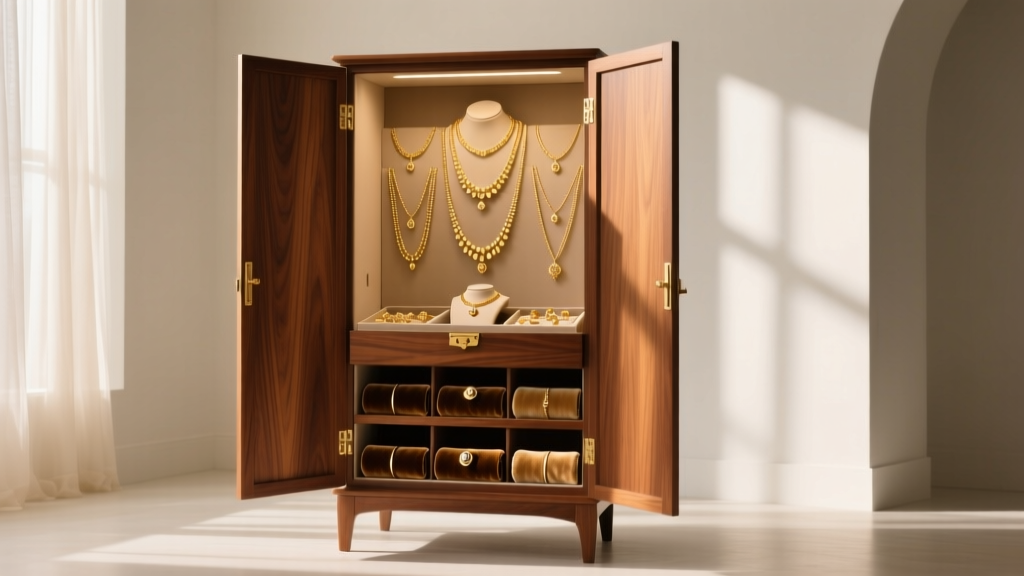
Upgrading from a cluttered flat box or a tangled drawer to a freestanding armoire jewelry box is one of the most impactful investments you can make for your collection. For beginners, the sheer variety of sizes, materials, and interior configurations on the market can be overwhelming. An armoire is not merely a piece of furniture; it is a specialized micro-environment designed to protect precious metals and gemstones from the primary enemies of jewelry: humidity, friction, UV exposure, and sulfur-induced tarnish.
This comprehensive guide breaks down the anatomy of a high-quality armoire jewelry box, providing you with the exact specifications, material grades, and spatial planning strategies needed to make an informed purchase in 2026 and beyond.
Decoding Armoire Materials and Build Quality
The exterior shell of your armoire dictates its longevity, weight distribution, and aesthetic appeal. When shopping, you will generally encounter three tiers of construction materials:
- Solid Hardwoods (Walnut, Oak, Mahogany): Priced between $350 and $800+, solid kiln-dried hardwoods offer superior structural integrity. They resist warping in fluctuating humidity and can support the heavy weight of large glass doors and multiple loaded drawers without bowing.
- Engineered Wood (MDF) with Veneer: Typically ranging from $120 to $250, MDF (Medium-Density Fiberboard) is budget-friendly and stable. However, it is highly susceptible to moisture damage if the veneer chips, and it struggles to hold heavy hardware over time.
- Composite Plastics and Acrylics: Often found in modern, minimalist designs ($150–$300). While visually striking, acrylics can scratch easily and offer zero breathability, which can trap moisture inside the cabinet.
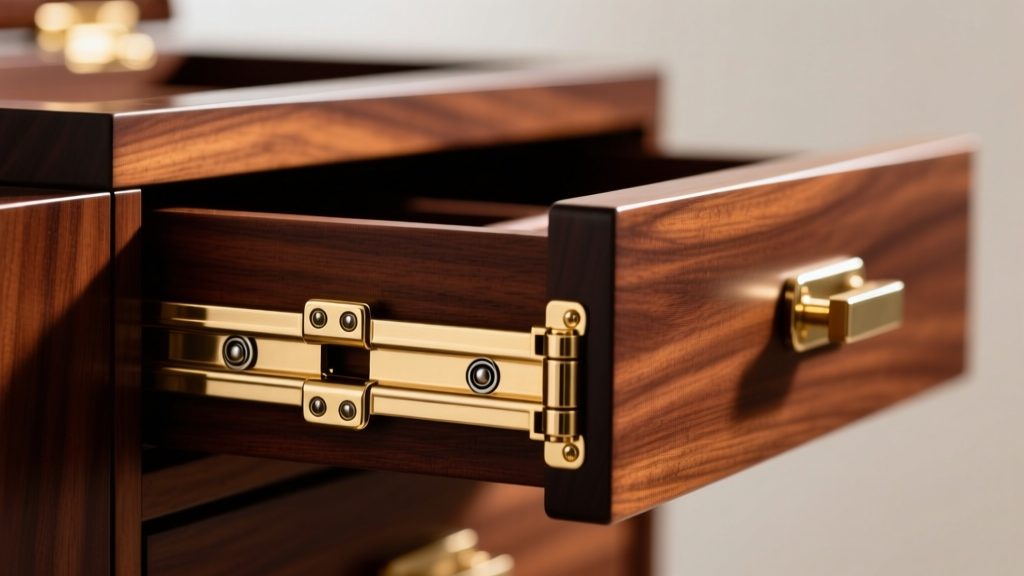
Hardware: The Unsung Hero of Longevity
Do not overlook the hinges and drawer glides. A heavy armoire door equipped with cheap butt hinges will inevitably sag, causing the door to scrape the base. Look for piano hinges (running the full length of the door) or heavy-duty brass ball-bearing hinges. For drawers, insist on metal ball-bearing glides with a soft-close mechanism. This prevents the violent slamming that can dislodge delicate gemstone settings or tangle chains inside the compartments.
The Anti-Tarnish Lining: What Actually Works?
Tarnish on silver and copper alloys is a chemical reaction caused by hydrogen sulfide in the air, resulting in black silver sulfide. The interior lining of your armoire jewelry box is your first line of defense. According to the Gemological Institute of America (GIA), proper storage environments are critical to slowing this oxidation process.
Not all velvet or felt is created equal. Standard synthetic felt can actually trap moisture and accelerate tarnishing. Here is a breakdown of the most effective interior linings:
| Lining Material | Anti-Tarnish Efficacy | Best For | Cost Impact |
|---|---|---|---|
| Pacific Silvercloth | Exceptional (Absorbs sulfides) | Sterling silver, vintage pieces | High ($$$) |
| Treated Flannel | High (Chemically treated to neutralize gases) | Mixed metals, daily wear | Medium ($$) |
| Polyurethane Foam | Moderate (Provides cushioning, inert) | Heavy bangles, watches | Low ($) |
| Standard Synthetic Felt | Poor (Traps moisture, no chemical barrier) | Costume jewelry only | Lowest ($) |
Pro Tip: If your dream armoire features standard felt lining, you can easily upgrade it by lining the drawers with Pacific Silvercloth fabric or by placing 3M Anti-Tarnish strips in the back corners of each drawer.
Spatial Planning: Mapping Your Collection
A common beginner mistake is buying an armoire based solely on exterior dimensions without analyzing the interior spatial mapping. Your collection's specific makeup should dictate the drawer configuration you choose.
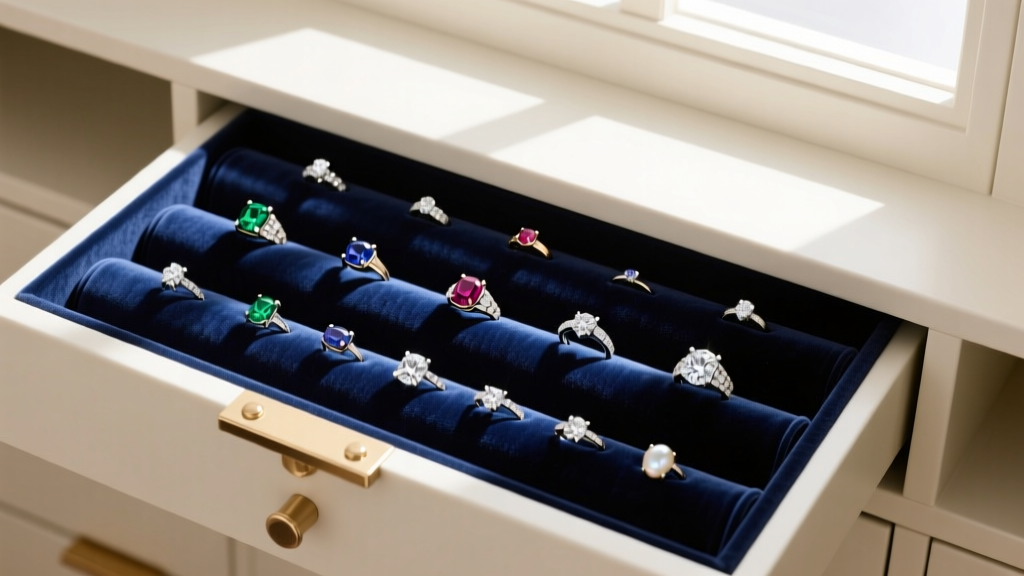
Ring Rolls and Compartment Sizing
For rings, the spacing of the velvet rolls is crucial. Standard ring rolls are spaced at 1.25 to 1.5 inches apart. If you collect wide-band rings, signet rings, or pieces with large halo settings, 1.25-inch spacing will cause the rings to press against one another, risking diamond-on-diamond scratching (since diamonds rank a 10 on the Mohs scale and can easily scratch each other). Always opt for 1.5-inch spacing or individual adjustable dividers.
Necklace Drops and Door Panels
Necklaces require vertical clearance to prevent knotting. A standard 18-inch princess-length necklace requires a minimum 10-inch drop from hook to base to hang freely. If you favor long 24-inch opera chains or layered pendants, ensure the armoire doors offer at least 14 to 16 inches of unbroken vertical hanging space. Look for doors with built-in elasticized bottom pouches to catch the ends of longer chains and prevent them from swinging and tangling when the door is closed.
Security, Placement, and Weight Distribution
Because armoire jewelry boxes are tall and narrow, they are inherently top-heavy when the upper doors are fully loaded with metal jewelry. Safety and security must be part of your selection process.
- Anchoring: Any armoire exceeding 30 inches in height should come with an anti-tip wall anchor kit. Always secure it to a wall stud.
- Weight Distribution: Store your heaviest items (solid gold bangles, heavy gemstone necklaces, watch winders) in the bottom drawers. Keep lightweight items (hollow chains, pearl earrings, silk cords) in the top drawers and doors to maintain a low center of gravity.
- Locking Mechanisms: While most armoire locks are simple barrel locks meant to deter casual snooping rather than professional theft, they are essential for households with young children or frequent guests. Look for armoires with a master key override in case the primary key is lost.
Climate Control and Routine Maintenance
The American Institute for Conservation emphasizes that fluctuating relative humidity (RH) and direct UV exposure are highly detrimental to both organic gems and metal alloys. An armoire should be placed in a climate-controlled room, away from direct sunlight and HVAC vents.
Wood expands and contracts with humidity. If your armoire is kept in a room where RH swings wildly between 20% and 60%, the drawers may eventually stick or the veneer may crack. To maintain an optimal micro-climate inside the cabinet:
- Place rechargeable silica gel desiccant canisters in the bottom corners of the armoire to absorb excess ambient moisture. Replace or recharge them every 3 to 6 months.
- Avoid storing organic gems like pearls, opals, and amber in completely airtight plastic bags inside the armoire. These gems require a slight amount of ambient moisture to prevent drying and crazing.
- Dust the exterior wood monthly with a microfiber cloth and a pH-neutral wood cleaner. Never use aerosol polishes containing silicone, as they can degrade the finish over time and leave a residue that attracts dust.
By understanding the mechanics of materials, the chemistry of tarnish, and the physics of spatial organization, you can select an armoire jewelry box that not only beautifully displays your collection but actively preserves its value and brilliance for decades to come.


