How to Clean a Hand Jewelry Holder: Material Care Guide
Learn expert cleaning and maintenance tips for velvet, ceramic, acrylic, and brass hand jewelry holders to protect your rings from damage.

The Hidden Danger of Dirty Display Stands
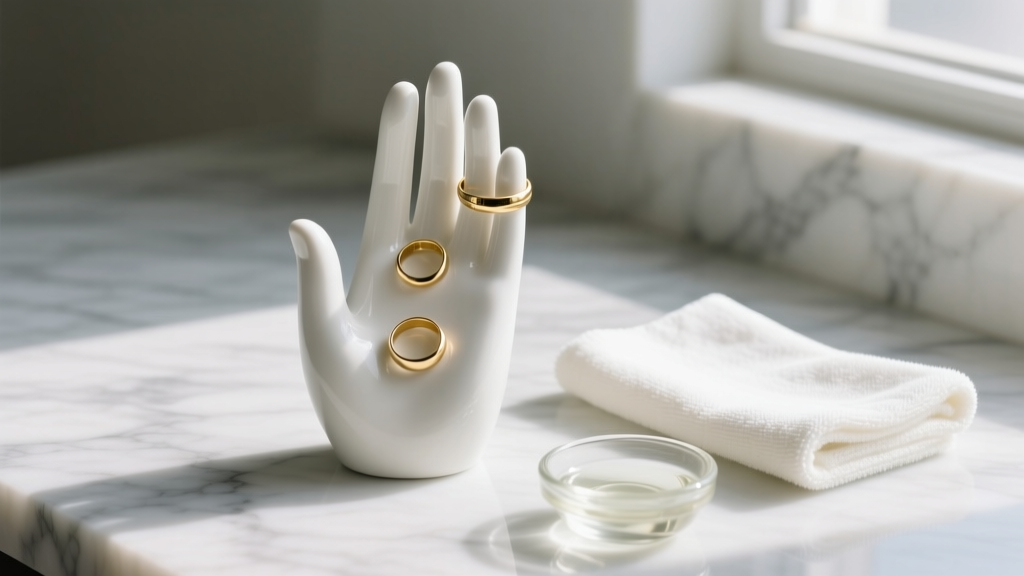
When we think of jewelry maintenance, our focus naturally drifts toward polishing metals, checking prongs, and ultrasonic cleaning. Yet, the very surfaces we use to display our collections are often overlooked. A hand jewelry holder is a staple on vanities and dressers worldwide, designed to showcase rings and bracelets elegantly. However, if improperly maintained, these holders can become active agents of deterioration. Dust accumulation, trapped skin oils, and environmental pollutants can transfer directly onto your precious metals and gemstones, causing micro-scratches, accelerated tarnishing, and even chemical reactions.
Maintaining your display pieces requires a nuanced understanding of material science. The cleaning protocol for a porous ceramic hand is vastly different from that of a synthetic velvet or acrylic display. According to the Gemological Institute of America (GIA), environmental contaminants are a primary catalyst for jewelry degradation. By mastering the care of your hand jewelry holder, you create a sterile, safe micro-environment for your most prized pieces.
Material-Specific Cleaning Protocols
Hand jewelry holders are manufactured from a diverse range of materials, each with unique vulnerabilities. Using the wrong cleaning agent can permanently ruin the display and endanger the jewelry it holds.
Velvet and Suede Hand Holders
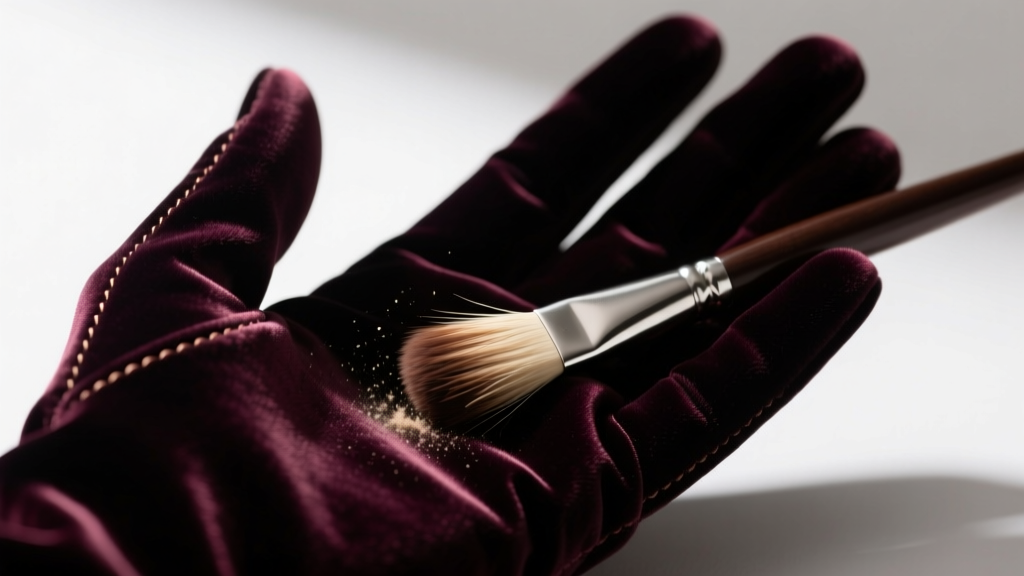
Velvet hand holders offer a luxurious, high-friction surface that prevents rings from slipping. However, the dense pile acts as a magnet for microscopic dust, dead skin cells, and cosmetic powders. Over time, this debris settles deep into the fibers, creating an abrasive paste that can scratch soft metals like 24k gold or polished silver.
- Dry Brushing: Use a soft-bristle horsehair detailing brush to gently sweep the fingers and palm crevices weekly. Never use stiff nylon brushes, which can fray the velvet pile.
- Stain Removal: Avoid water at all costs. Water causes the backing adhesive to seep through, leaving permanent dark spots. For localized stains, apply a specialized dry textile foam cleaner, let it sit for three minutes, and gently blot with a cotton swab.
- Pile Revival: If the velvet fingers become crushed and matted, gently pass a garment steamer at least six inches away from the surface to lift the fibers, then brush lightly while damp.
Ceramic and Porcelain Displays
Ceramic hand jewelry holders are favored for their weight and aesthetic versatility. The care regimen depends entirely on the glaze. High-fire glazed ceramics are vitrified and non-porous, making them highly resistant to moisture and oils. Low-fire or unglazed terracotta hands, however, are incredibly porous.
For glazed ceramic, a simple solution of distilled water and a pH-neutral dish soap (like Dawn) is sufficient. Apply with a microfiber cloth, avoiding abrasive sponges that can leave micro-scratches on the glossy finish. For unglazed ceramic, liquid cleaners will absorb into the clay body, potentially harboring bacteria and emitting a rancid odor over time. Instead, use a dry melamine sponge to gently lift surface oils, and consider sealing the unglazed holder with a matte acrylic spray sealer to create a protective barrier.
Acrylic and Lucite Hands
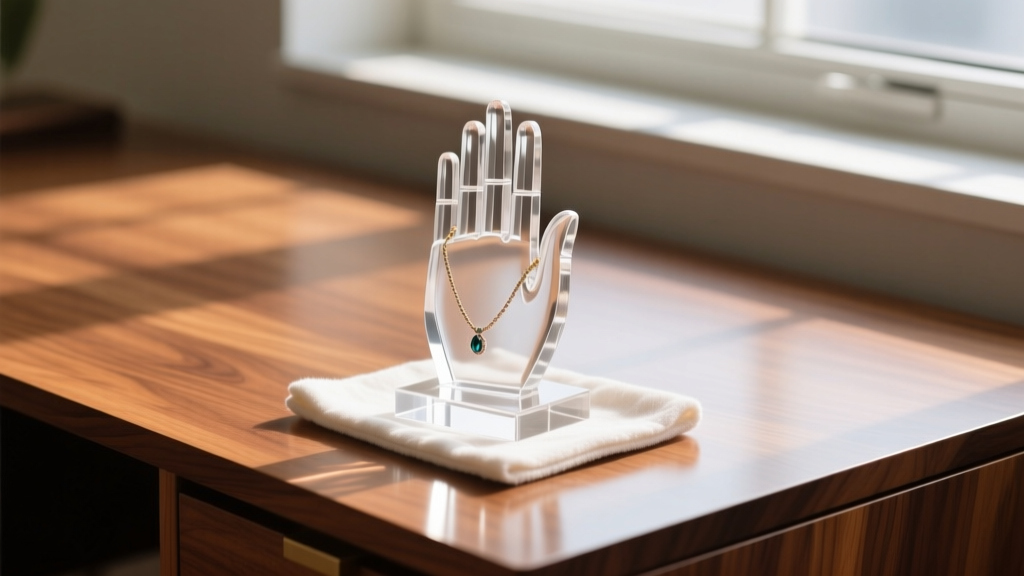
Acrylic (polymethyl methacrylate, or PMMA) hand holders provide a modern, floating aesthetic. The most common failure mode for acrylic is chemical clouding, often caused by well-meaning owners using household glass cleaners. Ammonia-based cleaners like Windex cause solvent crazing—a network of microscopic cracks that permanently ruins the optical clarity of the plastic.
Furthermore, wiping acrylic with paper towels introduces wood pulp fibers that leave permanent swirl marks. Always clean acrylic hand jewelry holders with a dedicated plastic polish (such as Novus Plastic Clean) or a 50/50 mix of distilled water and white vinegar, applied exclusively with a non-abrasive cotton flannel cloth.
Brass and Metallic Forms
Brass and copper hand holders develop a natural patina, but bare, oxidizing metals pose a severe threat to your jewelry. This brings us to a critical phenomenon known as tarnish transfer.
The Tarnish Transfer Phenomenon
When a silver or copper-alloy ring rests against an oxidizing brass hand jewelry holder, a micro-galvanic cell can form in the presence of ambient humidity. This accelerates the oxidation of the silver ring, leaving black sulfide marks exactly where the metal touches the holder. To prevent this, metallic display hands must be sealed.
"Museum conservation standards dictate that reactive metals on display should be isolated from sensitive artifacts using inert barriers. Micro-crystalline waxes provide an invisible, stable shield against atmospheric sulfur and moisture without altering the visual patina of the object."
— Adapted from the Canadian Conservation Institute guidelines on metal care.
To protect both your brass hand holder and your silver rings, apply a thin layer of Renaissance Wax. This micro-crystalline wax, originally developed by the British Museum, dries completely hard and inert. Buff it with a soft cloth to maintain the metallic luster while neutralizing the risk of chemical transfer.
Cleaning Agent Compatibility Chart
Use this quick-reference table to ensure you are using the correct chemistry for your specific hand jewelry holder.
| Holder Material | Safe Cleaning Agents | Strictly Avoid | Maintenance Frequency |
|---|---|---|---|
| Velvet / Suede | Horsehair brush, dry textile foam | Water, liquid soaps, steam contact | Weekly dry dusting |
| Glazed Ceramic | Distilled water, pH-neutral dish soap | Abrasive sponges, bleach, harsh acids | Monthly wash |
| Unglazed Ceramic | Dry melamine sponge, compressed air | Liquids, oils, cosmetic sprays | Bi-weekly dusting |
| Acrylic / Lucite | Novus Plastic Clean, cotton flannel | Ammonia, Windex, paper towels, alcohol | Bi-weekly polish |
| Bare Brass / Copper | Renaissance Wax, specialized brass polish | Moisture, sulfur-rich environments | Quarterly waxing |
The Dangers of Ultrasonic and Steam Cross-Contamination
A frequent and costly mistake occurs when jewelry enthusiasts use their ultrasonic jewelry cleaners or steam cleaners to sanitize their display stands. Never submerge a hand jewelry holder in an ultrasonic bath. The high-frequency cavitation bubbles will strip velvet adhesives, shatter acrylics with internal stress fractures, and force water deep into the microscopic pores of ceramics, leading to structural failure.
Similarly, directing a high-pressure jewelry steam cleaner at a display hand can melt synthetic velvet fibers, warp acrylic fingers, and blast abrasive cleaning solution residue into the crevices of the holder, which will later transfer onto your jewelry.
Preventative Maintenance and Environmental Control
Proper care extends beyond active cleaning; it requires strategic placement and environmental awareness.
- UV Protection: Prolonged exposure to direct sunlight will cause synthetic velvets to fade and become brittle, while UV radiation accelerates the yellowing of acrylic polymers. Position your hand jewelry holder in a shaded area of your vanity or inside a UV-filtered glass cabinet.
- Humidity Regulation: Maintain your dressing room's relative humidity between 40% and 50%. High humidity causes metallic holders to oxidize rapidly and encourages mold growth on organic textile holders. Use silica gel packets in enclosed display cases to absorb excess ambient moisture.
- Cosmetic Sequencing: Always apply perfumes, hairsprays, and lotions before putting on your jewelry, and ensure your hands are completely dry before sliding rings onto your hand holder. Aerosolized cosmetics create a sticky film on display surfaces that traps dust and degrades acrylic finishes.
Frequently Asked Questions
Can I use isopropyl alcohol to disinfect my acrylic hand holder?
No. Isopropyl alcohol is a harsh solvent that attacks the molecular bonds in PMMA (acrylic). Even brief exposure can cause severe clouding, micro-fractures, and permanent structural weakening. Stick to dedicated acrylic cleaners or mild soap and distilled water.
How do I remove green oxidation from a brass hand jewelry holder?
Green oxidation (verdigris) occurs when copper alloys react with moisture and chlorides. Create a paste of equal parts white vinegar, salt, and flour. Apply it to the affected areas for 15 minutes, then gently scrub with a soft-bristle toothbrush. Rinse thoroughly with distilled water, dry completely, and immediately seal with Renaissance Wax to prevent recurrence.
Is it safe to use a lint roller on velvet display hands?
While a standard sticky lint roller might seem convenient, the aggressive adhesive can pull and permanently distort the delicate pile of high-quality velvet. If you must use an adhesive method, opt for a low-tack painter's tape or a specialized velvet-safe lint brush that relies on directional friction rather than chemical adhesives.


