Is a Cherry Wood Jewelry Armoire Worth the Investment?
Assess the true value of a cherry wood jewelry armoire. We break down pricing tiers, wood grades, hardware, and anti-tarnish linings to guide your buy.

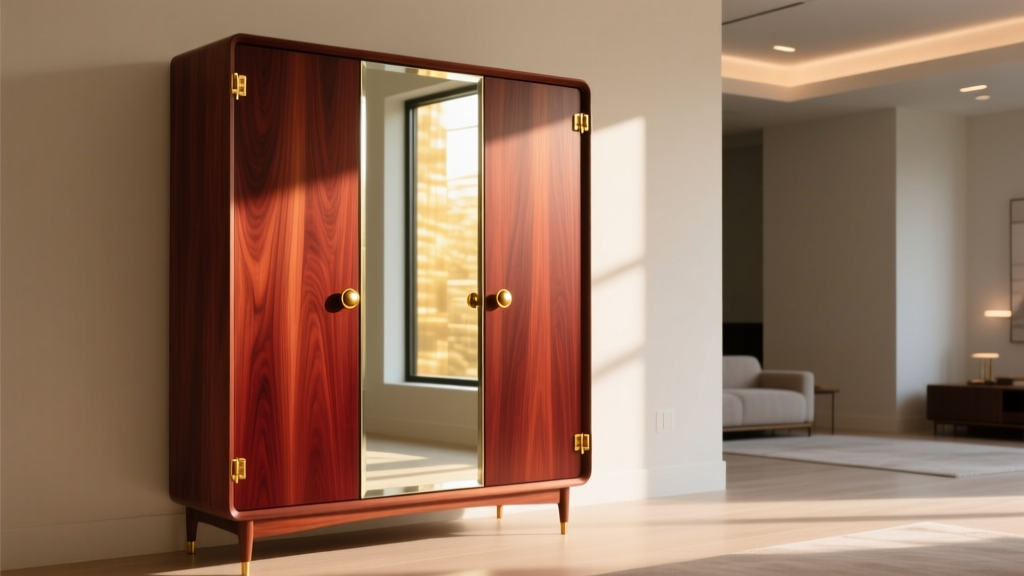
The Allure and Anatomy of Genuine Cherry Wood
When evaluating high-capacity jewelry storage, the phrase "cherry wood jewelry armoire" is frequently tossed around by mass-market furniture brands. However, as a collector of fine jewelry, understanding the material reality behind this keyword is the first step in assessing true value. Genuine American Black Cherry (Prunus serotina) is a premium hardwood prized for its Janka hardness rating of 950 lbf, making it highly resistant to the dings and dents that plague softer woods like pine or engineered MDF. According to industry insights from the Woodworking Network, authentic cherry wood possesses a unique photochemical property: it oxidizes and darkens when exposed to UV light, evolving from a light pinkish-tan to a deep, rich reddish-brown over its first year of use.
This natural patina process is a primary indicator of value. If you purchase a "cherry" armoire and the color remains entirely static over a decade, you have likely purchased rubberwood or medium-density fiberboard (MDF) coated in a cherry-toned polyurethane stain. For serious collectors housing heavy gold pieces, delicate estate pearls, and silver flatware, the structural integrity of solid hardwood is non-negotiable. Solid cherry provides the necessary weight to prevent the armoire from tipping when multiple heavy drawers are extended simultaneously, a critical safety feature often overlooked in budget assessments.
Decoding the Price Tiers: What Are You Actually Paying For?
The market for a cherry wood jewelry armoire spans a massive spectrum, from sub-$100 flat-pack imports to $1,200+ artisan-crafted heirlooms. To accurately assess budget and value, we must segment the market into three distinct tiers based on material composition, joinery, and interior technology.
| Value Tier | Price Range (2026) | Primary Materials | Joinery & Hardware | Interior Lining |
|---|---|---|---|---|
| Budget / Entry | $80 - $160 | MDF core, paper-thin cherry veneer, plastic backing | Stapled butt joints, basic friction hinges, zinc alloy pulls | Standard polyester felt (acidic) |
| Mid-Range Value | $220 - $450 | Solid wood secondary, thick cherry veneer primary, plywood backing | Doweled joints, side-mount ball-bearing glides, brass-plated pulls | Acid-free flannel, basic ring rolls |
| Premium / Heirloom | $550 - $1,200+ | 100% Solid American Cherry, solid hardwood backing | English dovetail drawers, undermount soft-close, solid brass hardware | Pacific Silvercloth, anti-tarnish treated suede |
The mid-range tier ($220–$450) represents the "sweet spot" for most buyers seeking a cherry wood jewelry armoire. At this price point, you sacrifice the solid wood exterior but gain structural plywood backing and reliable side-mount ball-bearing drawer glides. These glides are crucial; they support up to 100 lbs of dynamic weight, ensuring that a drawer loaded with heavy gemstone rings and silver bangles will not rack or jam over time.
Critical Value Metrics: Beyond the Wood Grain
A beautiful exterior means nothing if the interior environment actively damages your collection. When conducting your value assessment, you must scrutinize the hardware and the chemical composition of the interior linings.
Hardware and Drawer Glides
Budget armoires utilize epoxy-coated friction slides that degrade within two years, leading to wood-on-wood friction that splinters the drawer sides. A high-value armoire will feature steel ball-bearing tracks. Furthermore, inspect the hinges on the main mirror door. A continuous piano hinge distributes the weight of the heavy mirrored glass evenly across the frame, whereas cheap butt hinges will eventually pull the screws out of the wood grain, causing the door to sag and misalign.
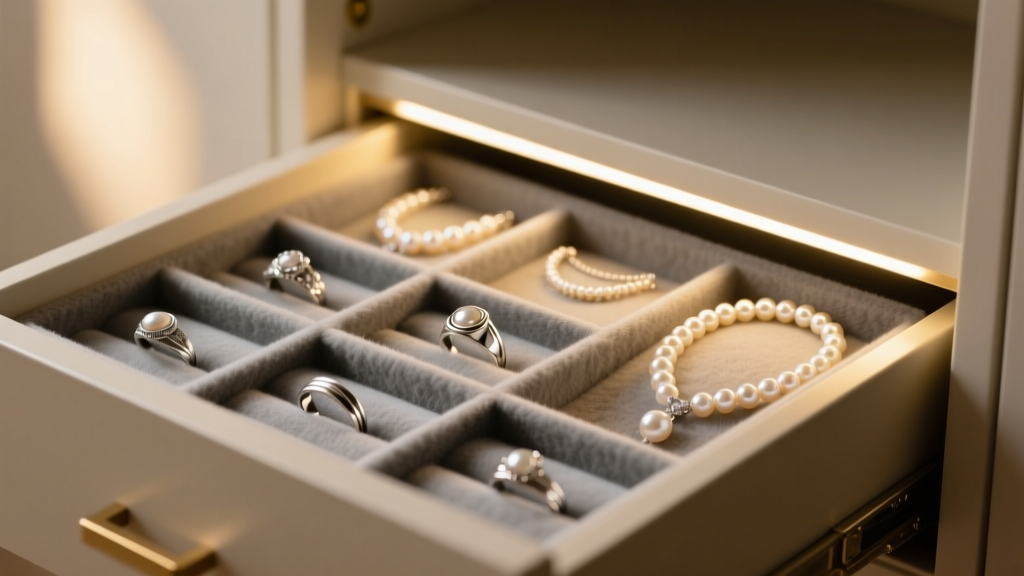
Interior Linings and Anti-Tarnish Tech
The lining of your armoire is the microenvironment where your jewelry lives. The Gemological Institute of America (GIA) emphasizes that improper storage materials can accelerate tarnishing and degrade delicate organic gems. Budget armoires often use polyurethane foam or PVC-backed fabrics. As these materials age, they off-gas sulfur compounds and acidic vapors that will rapidly turn sterling silver black and degrade the nacre on natural pearls.
High-value armoires utilize acid-free, unbleached cotton flannel or specialized anti-tarnish fabrics like Pacific Silvercloth, which embeds microscopic silver particles into the cloth to intercept and neutralize airborne tarnishing gases before they reach your jewelry. If a cherry wood jewelry armoire does not explicitly state that its linings are acid-free and lignin-free, deduct points from its overall value proposition, as you will need to spend extra on aftermarket anti-tarnish strips and individual zip-bags to protect your assets.
Common Failure Modes in Budget Armoires
When assessing long-term value, it is vital to understand how cheaper alternatives fail. Recognizing these failure modes will save you from making a false economy purchase.
- Veneer Delamination: In environments with fluctuating humidity (like a bedroom near an HVAC vent), the MDF core of a budget armoire expands and contracts at a different rate than the cherry veneer. This leads to bubbling, peeling, and eventual exposure of the raw fiberboard beneath.
- Drawer Racking: Without precision-machined drawer boxes and high-grade glides, drawers slowly twist out of square. Once a drawer racks, it grinds against the frame, permanently scarring the interior wood and eventually jamming completely.
- Necklace Hook Failure: Budget armoires glue plastic or cheap metal necklace hooks directly to the interior wood panel. The weight of heavy chain necklaces eventually pulls these hooks out, taking a chunk of the wood veneer with them. Premium models screw the hooks directly into a solid wood backing stud.
- Mirror Desilvering: Cheap mirrors use low-grade backing that allows moisture to penetrate, causing the reflective silver layer to oxidize and flake off from the edges inward (known as "black edge"). High-value armoires use copper-free, moisture-sealed mirror glass.
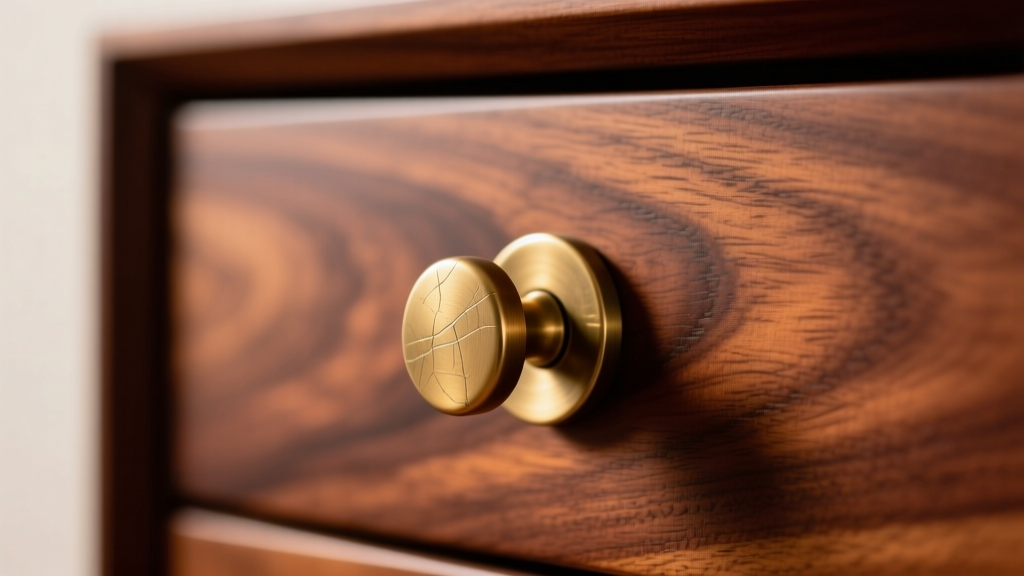
The Verdict: How to Maximize Your ROI
Is a cherry wood jewelry armoire worth the investment? The answer depends entirely on your collection and your definition of longevity. If you are storing fashion jewelry or low-karat gold pieces that are easily replaced, a $150 veneer model with basic hardware will suffice, provided you line the drawers with your own acid-free tissue and anti-tarnish tabs.
However, if you are housing estate pieces, high-karat gold, untreated sterling silver, and organic gems like pearls or coral, the ROI of a premium solid cherry armoire ($550+) becomes undeniable. The structural stability of English dovetail joinery, the protective qualities of undermount soft-close glides, and the chemical safety of anti-tarnish linings act as an insurance policy for your valuables. When shopping, always demand transparency from the manufacturer regarding the core materials, the specific lining fabrics, and the load ratings of the drawer hardware. By prioritizing these internal metrics over the superficial "cherry finish," you will secure a storage solution that protects your collection and ages as beautifully as the jewelry it holds.


