Christmas Jewelry Box Care: Cleaning & Winter Maintenance
Learn expert tips to clean, maintain, and protect your Christmas jewelry box. Discover how to care for velvet linings, wood finishes, and musical parts.

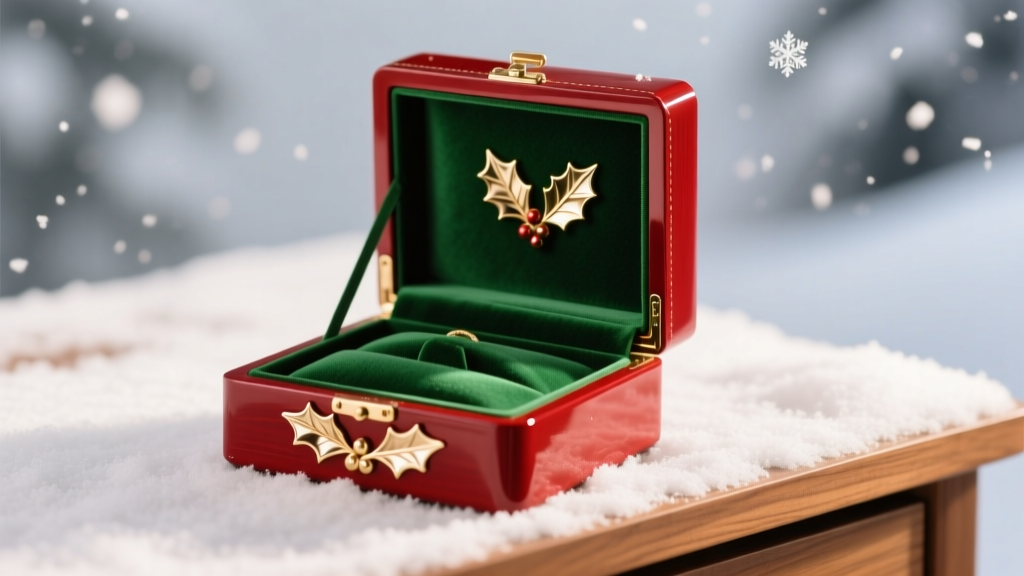
Why Holiday Jewelry Boxes Require Specialized Care
A Christmas jewelry box is often more than just a storage vessel; it is a seasonal heirloom, a cherished holiday gift, or a intricate musical novelty piece. Unlike standard daily organizers, holiday-themed boxes frequently feature delicate materials such as flocked velvet interiors, hand-painted lacquer exteriors, metallic glitter accents, and complex brass musical movements. As we move through 2026, the market has seen a surge in artisanal holiday boxes combining vintage aesthetics with modern materials, making proper maintenance more critical than ever.
Improper cleaning can strip vintage shellac finishes, melt the adhesive on flocked velvet, or permanently seize a Sankyo musical mechanism. Furthermore, winter storage introduces severe environmental challenges. The combination of dry indoor heating and fluctuating attic or basement humidity creates the perfect storm for silver sulfide formation (tarnish) and wood warping. This comprehensive guide provides actionable, expert-level maintenance protocols to preserve both the structural integrity of your Christmas jewelry box and the precious metals stored within.
Step-by-Step Cleaning Guide for Christmas Jewelry Box Exteriors
The exterior of a holiday jewelry box is typically crafted from wood, MDF (medium-density fiberboard), or cast resin, finished with protective coatings. Identifying the finish is the first step in safe cleaning.
Lacquered Wood and Shellac Finishes
Vintage or high-end artisanal Christmas boxes often use traditional shellac or nitrocellulose lacquer. These finishes are highly sensitive to alcohol and ammonia. According to conservation guidelines from the Smithsonian Museum Conservation Institute, applying standard household glass cleaners to shellac will instantly cloud and dissolve the finish. Instead, use a microfiber cloth lightly dampened with distilled water and a single drop of pH-neutral castile soap. Buff immediately with a dry, lint-free cotton cloth.
For modern boxes featuring polyurethane finishes, you have more flexibility. Polyurethane is highly resistant to solvents. You can safely use a diluted vinegar and water solution (1:4 ratio) to cut through winter dust and fingerprint oils without damaging the clear coat. For deeper conditioning of wooden exteriors, apply a thin layer of carnauba-based paste wax once a year to protect the wood from drying out in heated winter environments, as recommended by Wood Magazine.
Metallic, Glitter, and Painted Accents
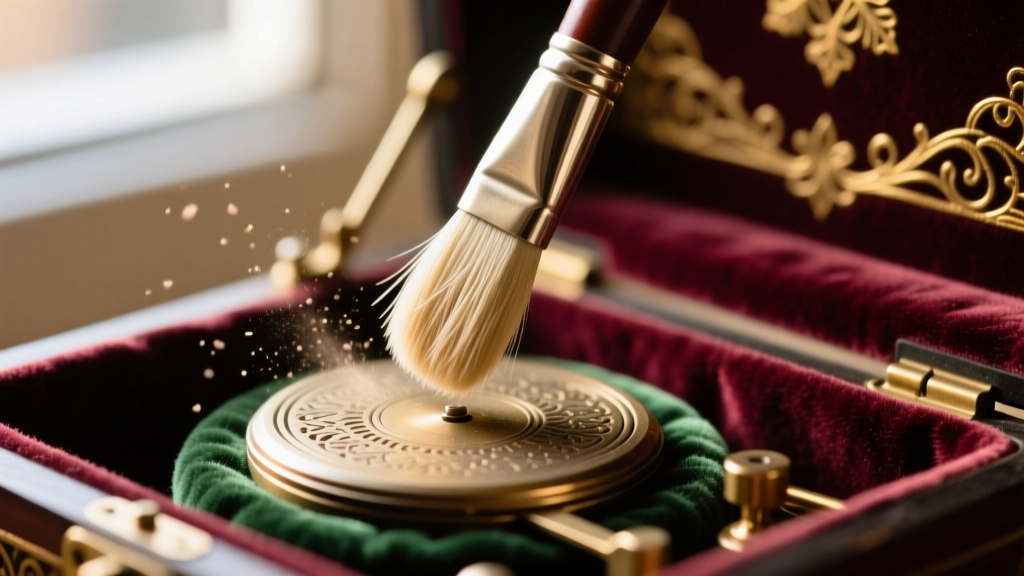
Holiday boxes frequently feature gold-leaf holly motifs, silver-painted snowflakes, or glued glitter accents. Never use liquid cleaners on these surfaces. Liquids can reactivate water-soluble craft adhesives, causing the metallic leaf to flake or the glitter to bleed. Use a soft, dry makeup brush (like a kabuki brush) to gently sweep dust from crevices and painted reliefs.
Restoring and Protecting Flocked Velvet Linings
The interior lining of a Christmas jewelry box is usually flocked velvet, suede, or silk. Flocked velvet is created by electrostatically applying tiny nylon or cotton fibers to a glue-coated fabric backing. This makes it incredibly prone to trapping dust, dead skin cells, and cosmetic residues, which can transfer to your jewelry and accelerate tarnishing.
Expert Warning: Never use liquid spot removers, steam cleaners, or wet wipes on flocked velvet. Moisture will dissolve the underlying adhesive, causing the fibers to clump, mat, and permanently expose the hard backing board.
To clean the interior, use a soft horsehair brush to gently loosen embedded dust, followed by a micro-vacuum attachment or a low-tack lint roller. If the velvet has become crushed or matted from the weight of heavy brooches or bangles, you can revive the pile using a specialized velvet steamer held at least six inches away, brushing gently in one direction as the fibers dry.
| Lining Material | Cleaning Agent | Tool | Drying Time |
|---|---|---|---|
| Flocked Velvet | None (Dry Only) | Horsehair Brush & Micro-Vacuum | N/A |
| Genuine Suede | Suede Eraser | Brass-bristle Suede Brush | N/A |
| Silk / Satin | Mild Woolite Dilution | Damp Microfiber Cloth | 2-4 Hours (Air Dry) |
| Anti-Tarnish Cloth | None (Never Wash) | Soft Dry Brush | N/A |
Maintaining Musical and Moving Parts (Nutcrackers, Carousels)
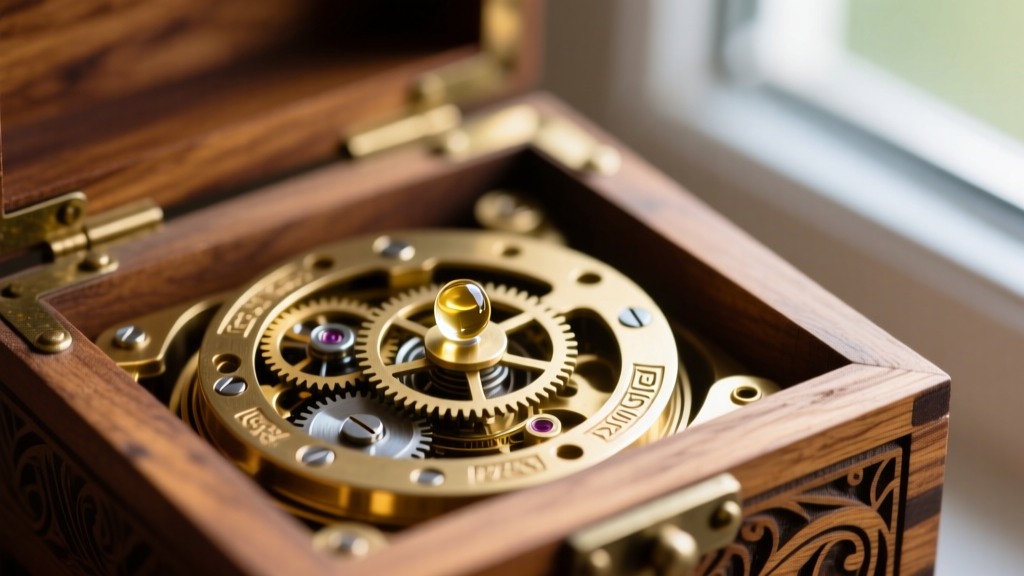
Many premium Christmas jewelry boxes incorporate mechanical elements, such as rotating carousels, opening nutcracker figures, or 18-note Sankyo and Yunsheng musical movements. These mechanisms rely on a series of brass gears, steel pins, and a coiled mainspring.
The most common failure mode for musical jewelry boxes is the improper application of lubricants. Never use WD-40 or standard 3-in-One oil. These petroleum-based products attract dust, gum up the delicate brass gears, and eventually harden into a resin-like sludge that seizes the movement. If your holiday music box begins to sound sluggish or off-key, apply a microscopic drop of synthetic clock oil (such as Moebius 9010) directly to the gear arbors using a fine needle oiler. Wind the key only until you feel resistance; over-winding is the primary cause of mainspring snapping.
Winter Storage: Preventing Tarnish and Moisture Damage
Storing a Christmas jewelry box in an attic or basement during the off-season exposes it to extreme temperature and humidity fluctuations. According to the Gemological Institute of America (GIA), silver tarnish (silver sulfide) forms when silver reacts with sulfur compounds in the air, a process drastically accelerated by high humidity and the presence of certain wood off-gassing chemicals.
Implementing a Micro-Climate Strategy
To protect both the box and its contents during long-term storage, you must create a stable micro-climate inside the compartments.
- Silica Gel Desiccants: Place two or three indicating silica gel packets (the type that changes from orange to green when saturated) inside the main compartment. Ensure the packets do not directly touch silver or pearl jewelry, as the beads can scratch soft metals. Recharge the packets in a 250°F oven for two hours when they turn green.
- Anti-Tarnish Strips: Utilize 3M Anti-Tarnish Strips or Pacific Silvercloth tabs. These contain copper-based polymers that intercept and neutralize airborne sulfur gases before they reach your silver. Replace these strips every six months to maintain maximum efficacy.
- Avoid Acidic Woods: If your Christmas box is made from unsealed cedar or oak, be aware that these woods emit acetic acid, which can corrode silver and lead. Line the drawers with acid-free archival tissue paper or a specialized silver-storage flannel barrier before placing jewelry inside.
Frequently Asked Questions
Can I use a magic eraser on scuffed painted holiday boxes?
No. Melamine foam (Magic Erasers) acts like ultra-fine sandpaper. While it will remove scuffs, it will also permanently strip the glossy clear coat and painted details from your Christmas jewelry box, leaving a dull, matte patch that attracts more dirt.
How do I remove sticky residue from price tags on the glass lid?
Apply a small amount of food-grade mineral oil or a dedicated adhesive remover like Goo Gone to a cotton swab. Gently roll it over the residue, let it sit for three minutes, and wipe clean with a microfiber cloth. Avoid getting any solvent near the wood seams or metal hinges.
Conclusion
A well-maintained Christmas jewelry box is a functional work of art that safeguards your most precious accessories while evoking the magic of the holiday season. By understanding the specific material science behind your box's finishes, linings, and mechanical parts, you can avoid common cleaning disasters. Implementing a rigorous winter storage protocol with silica gel and anti-tarnish technology ensures that when the holidays return, your jewelry box—and the treasures inside—will remain in pristine, museum-quality condition.


