A Beginner's Guide to Choosing a Dark Wood Jewelry Box
Learn how to choose the perfect dark wood jewelry box. We cover wood types, anti-tarnish linings, and hardware to protect your collection.

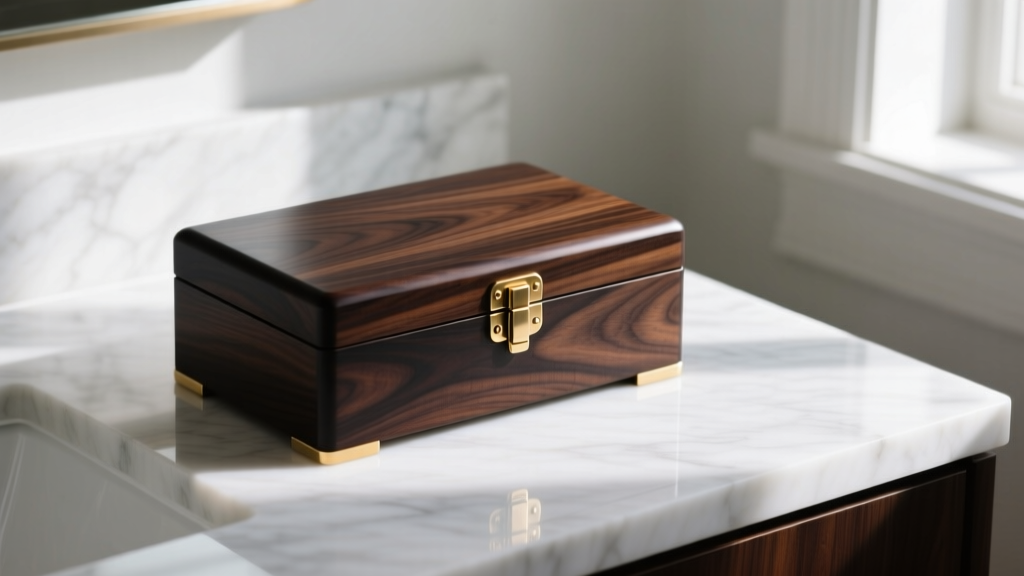
When you begin curating a meaningful jewelry collection, the vessel you choose to house it becomes just as important as the pieces themselves. For beginners, navigating the world of fine storage can feel overwhelming, especially when trying to balance aesthetics with functional preservation. A dark wood jewelry box offers a timeless, sophisticated solution that elevates any bedroom or dressing area while providing robust protection for your valuables. However, not all wooden boxes are created equal. Some can actually damage your precious metals over time if they lack the proper interior engineering.
In this beginner-friendly explainer, we will decode the essential elements of selecting a high-quality dark wood jewelry box. From understanding wood density and Janka hardness ratings to identifying the hidden chemistry of anti-tarnish linings, this guide will give you the actionable expertise needed to make an informed, heirloom-grade purchase.
Decoding Dark Wood Species: Walnut vs. Mahogany vs. Ebony
The exterior of your jewelry box dictates its durability, weight, and visual warmth. Dark woods are highly prized for their rich, deep tones and striking grain patterns, but they vary wildly in structural integrity. To understand how a wood will hold up to decades of opening, closing, and moving, experts look to the Janka hardness scale, which measures the force required to embed a steel ball into the wood.
Here is a breakdown of the three most common dark woods used in premium jewelry storage:
- Black Walnut (Juglans nigra): With a Janka rating of 1,010 lbf, American Black Walnut is the gold standard for luxury boxes. It features a deep chocolate brown color with striking purple and grey undertones. It is hard enough to resist everyday dents but soft enough for master craftsmen to carve intricate dovetail joints.
- Honduran Mahogany (Swietenia macrophylla): Rating at 900 lbf, genuine mahogany offers a reddish-brown hue that darkens beautifully over time. Its interlocking grain makes it incredibly stable, meaning it will not warp or crack even in humid environments like coastal bedrooms.
- Gaboon Ebony (Diospyros crassiflora): Boasting a massive Janka rating of 3,080 lbf, ebony is so dense it sinks in water. It is jet-black with subtle grey streaks. Because it is rare and heavily regulated, ebony boxes are usually small, ultra-premium investment pieces reserved for high-end watches or single statement rings.
Wood Species Comparison Chart
| Wood Species | Janka Hardness (lbf) | Color Profile | Typical Price Range | Best Used For |
|---|---|---|---|---|
| Black Walnut | 1,010 | Deep chocolate brown | $150 - $400 | Everyday multi-piece collections |
| Honduran Mahogany | 900 | Reddish-brown | $120 - $350 | Humid climates, travel trunks |
| Gaboon Ebony | 3,080 | Jet black with grey streaks | $800 - $2,500+ | Heirloom watches, single rings |
The Hidden Hero: Interior Linings and Anti-Tarnish Tech
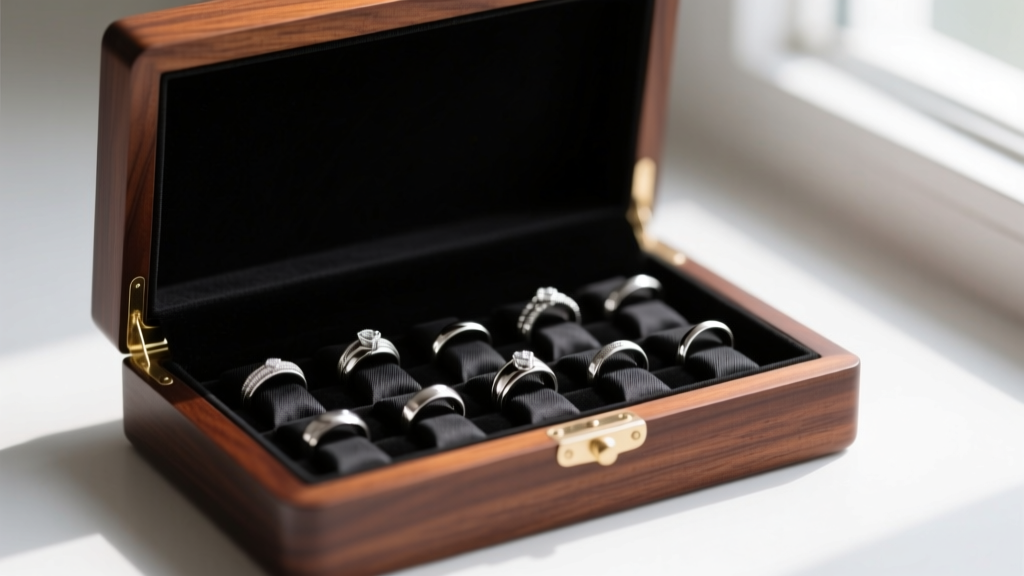
The biggest mistake beginners make when buying a dark wood jewelry box is ignoring the interior lining. Raw wood is highly acidic. As it ages, it off-gasses volatile organic compounds (VOCs), primarily acetic acid and formaldehyde. When these acids interact with the sulfur in the air, they create a highly corrosive environment that accelerates the formation of silver sulfide—the black tarnish that ruins sterling silver and copper pieces.
To prevent this, a premium jewelry box must feature a complete chemical barrier between the wood and your jewelry. Look for these specific lining materials:
Expert Tip: Never store sterling silver directly against raw wood or standard synthetic velvet. Standard velvet traps moisture and does nothing to halt acidic off-gassing, leading to rapid tarnishing and pitting.
- Pacific Silvercloth: This is the industry standard for high-end boxes. It is a 100% cotton flannel embedded with microscopic particles of fine silver. These particles act as a sacrificial anode, catching and neutralizing sulfur gases before they can reach your jewelry.
- Acid-Free Untreated Flannel: A safe, budget-friendly alternative that provides a physical barrier against wood acids, though it lacks the active tarnish-fighting properties of silvercloth.
- Polyurethane Foam Inserts: Often used for ring rolls and necklace hooks. Ensure the foam is certified acid-free; cheap polyurethane breaks down into a sticky, acidic residue over time that can ruin pearl finishes and gold plating.
Hardware and Hinges: What Separishes Heirlooms from Firewood
A dark wood jewelry box is only as strong as its hardware. The hinge is the single most common failure point on any storage box. When a lid is dropped or forced past its natural stopping point, cheap hinges will rip right out of the wood, taking a chunk of your expensive walnut or mahogany with them.
When inspecting a box, look for solid brass butt hinges or quadrant hinges. Quadrant hinges feature a sliding brass arm that locks the lid open at exactly 90 degrees. This mechanical stop prevents the lid from falling backward and snapping the hinge pins. Avoid stamped steel or plated pot-metal hinges at all costs; they will rust, squeak, and eventually snap under the weight of a solid wood lid.
Additionally, check the clasp mechanism. A traditional brass lock and key add a beautiful heirloom touch, but modern magnetic catch closures offer superior daily functionality without the risk of losing a microscopic key. Ensure any magnetic catches are recessed into the wood so they do not scratch your bracelets when closing the lid.
Maintenance 101: Caring for Your Dark Wood Finish
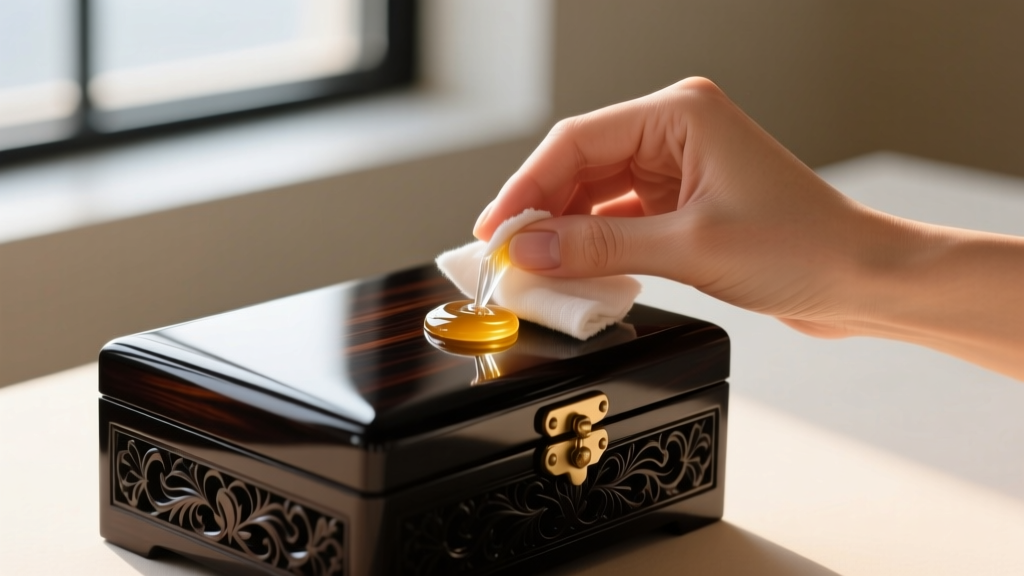
Once you have invested in a quality dark wood jewelry box, proper maintenance is crucial to preserve the finish and protect the structural integrity of the wood. Many beginners mistakenly use household furniture polishes or silicone-based aerosol sprays. These products leave a sticky residue that traps dust, dulls the wood grain, and can eventually seep into the interior, contaminating your jewelry linings.
According to conservation guidelines from the Smithsonian Museum Conservation Institute, the safest and most effective way to protect fine wood is by using a microcrystalline paste wax, such as Renaissance Wax. Originally developed by the British Museum to protect historical artifacts, this pH-neutral wax creates a hard, moisture-resistant barrier that will not bloom or turn white over time.
Step-by-Step Waxing Guide
- Clean: Wipe the exterior of the box with a slightly damp, lint-free microfiber cloth to remove surface dust. Let it dry completely.
- Apply: Using a clean cotton cloth, apply a very thin, even layer of microcrystalline wax to the exterior wood. Avoid getting wax on the brass hardware or interior linings.
- Wait: Allow the wax to dry to a hazy finish (usually 10 to 15 minutes).
- Buff: Vigorously buff the surface with a fresh, soft cloth until the dark wood achieves a deep, satin luster.
By understanding the nuances of wood density, the chemistry of anti-tarnish linings, and the mechanics of solid brass hardware, you can confidently select a dark wood jewelry box that will not only organize your current collection but also serve as a beautiful, protective heirloom for generations to come.


