How to Clean and Care for Your Jewelry Holder Organizer
Learn how to properly clean, maintain, and protect your jewelry holder organizer to prevent tarnish, dust buildup, and material degradation.

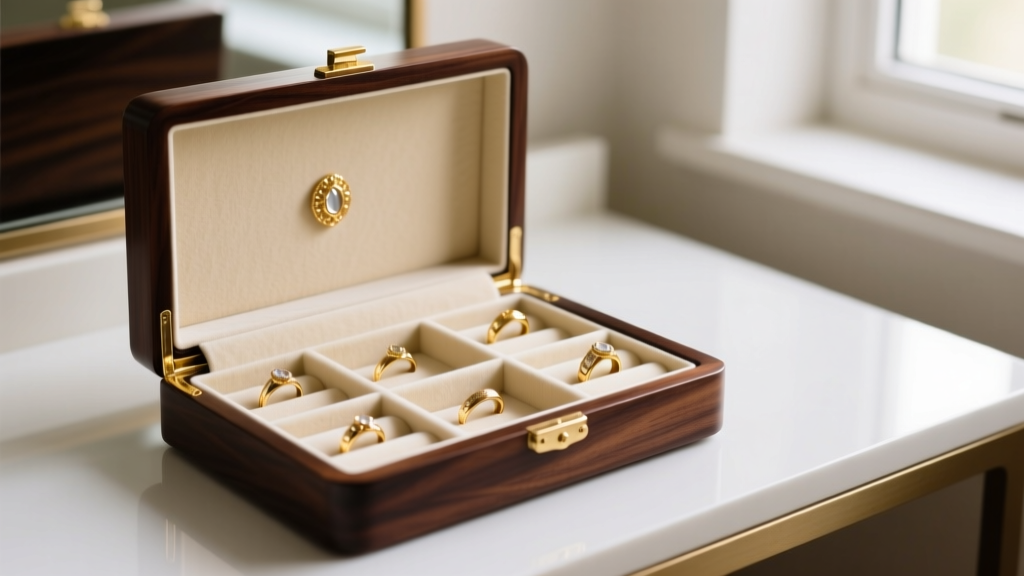
Most jewelry collectors invest heavily in polishing cloths, ultrasonic cleaners, and professional servicing, yet completely neglect the environment where their pieces spend 90% of their time. A neglected jewelry holder organizer is not just an eyesore; it is an active catalyst for micro-abrasions, galvanic corrosion, and accelerated tarnishing. When dust, dead skin cells, and ambient moisture accumulate in the crevices of your storage, they create a hostile microclimate that degrades precious metals and dulls gemstones.
To preserve the structural integrity and optical brilliance of your collection, maintaining your storage infrastructure is just as critical as cleaning the jewelry itself. This guide provides a material-specific, scientifically grounded approach to cleaning and optimizing your jewelry holder organizer.
The Hidden Dangers of a Dirty Storage Environment
The primary threat inside a dusty organizer is not chemical, but mechanical. Household dust is heavily composed of silica and quartz particles, which rank at a 7 on the Mohs hardness scale. By contrast, pure gold and sterling silver sit at a mere 2.5 to 3. When you place a gold ring into a dusty velvet slot, the quartz particles act like microscopic sandpaper. Over months of repeated insertion and removal, this friction causes micro-scratches that destroy the metal's mirror finish and weaken prong settings.
Furthermore, organic debris—such as shed skin cells, cosmetic residue, and hair products—traps ambient humidity against the metal. According to the Gemological Institute of America (GIA), this trapped moisture accelerates oxidation and can lead to the degradation of porous gemstones like pearls and opals if they are stored in a contaminated environment.
Material-Specific Cleaning Protocols
Different organizer materials require vastly different cleaning approaches. Using the wrong solvent can permanently ruin the interior lining or cause off-gassing that tarnishes your metals.
Velvet, Suede, and Microfiber Interiors
Never use water or liquid cleaners on velvet or suede inserts. Moisture crushes the delicate 'pile' (the raised fibers) and traps dampness against the base board, leading to mildew and warping. Instead, use a clean, soft-bristle horsehair detailing brush to gently agitate the fibers and lift trapped dust. Follow this by using a vacuum with a HEPA filter and a soft brush attachment on the lowest suction setting to extract the particulate matter. For localized stains, a specialized dry-cleaning sponge (vulcanized rubber) can lift oils without introducing moisture.
Leather and Faux Leather Exteriors
Leather requires hydration to prevent cracking, but standard leather conditioners often contain silicones and petroleum distillates. These chemicals can off-gas volatile organic compounds (VOCs) that react with silver and copper, causing rapid sulfide tarnishing. Use a pH-neutral, water-based leather cleaner and conditioner, such as Leather Honey or Chamberlain's Leather Milk. Apply sparingly with a lint-free cloth, ensuring no residue transfers to the interior compartments.
Acrylic and Glass Display Stands
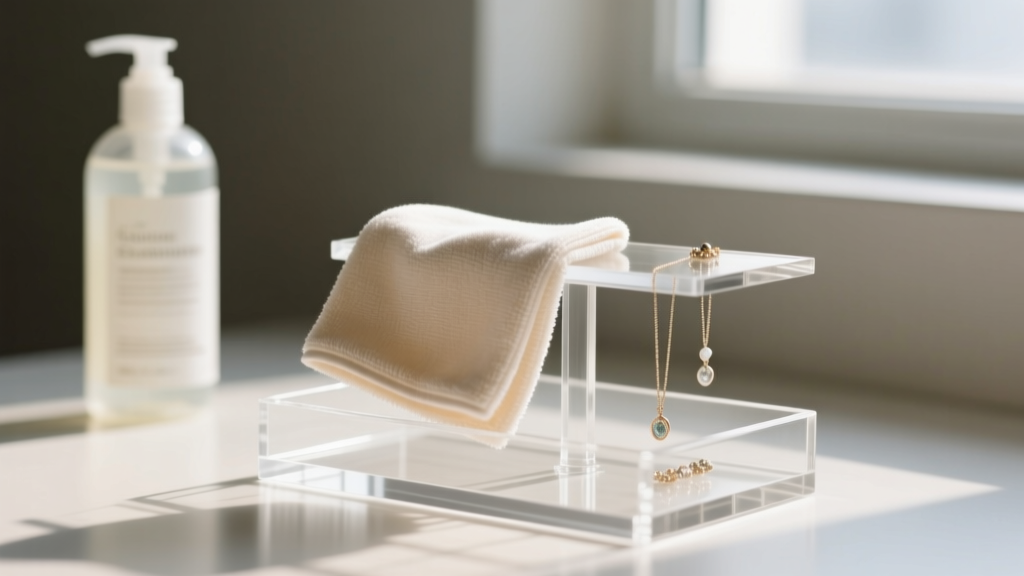
Acrylic (PMMA) is highly susceptible to 'crazing'—a network of micro-fractures caused by harsh chemicals. Never use Windex, ammonia, or alcohol-based glass cleaners on an acrylic jewelry holder organizer. These solvents break down the polymer chains, turning the acrylic cloudy and brittle. Instead, use a dedicated plastic polish like Novus 1 applied with a premium edgeless microfiber towel. For glass components, a 50/50 mix of distilled water and white vinegar is safe, provided it does not seep into the metal hinges or felt backing.
The Science of Tarnish Prevention Inside Your Organizer
Cleaning the physical dirt is only half the battle; controlling the atmospheric chemistry inside your jewelry holder organizer is essential for silver and copper alloys. Tarnish (silver sulfide) forms when silver reacts with hydrogen sulfide in the air. To combat this, you must integrate passive anti-tarnish technologies into your storage.
| Technology | Mechanism of Action | Effective Lifespan | Best Use Case |
|---|---|---|---|
| 3M Anti-Tarnish Strips | Chemisorption (absorbs sulfur gases) | 6 to 12 months | Enclosed drawers and zippered travel cases |
| Pacific Silvercloth | Embedded silver particles sacrifice themselves to sulfur | 3 to 5 years (until brown) | Lining drawers or wrapping individual heirlooms |
| Silica Gel Packets | Physical desiccant (lowers relative humidity) | 1 to 3 months (rechargeable) | Preventing moisture-induced oxidation in humid climates |
| Activated Charcoal | Adsorption of VOCs and ambient odors | 2 to 4 months | Neutralizing cosmetic and perfume off-gassing |
For optimal results, combine a moisture absorber (silica) with a sulfur neutralizer (3M strips). The Canadian Conservation Institute (CCI) recommends maintaining a relative humidity (RH) below 50% to significantly slow the electrochemical reactions that cause tarnish.
Preventing Galvanic Corrosion Through Strategic Organization
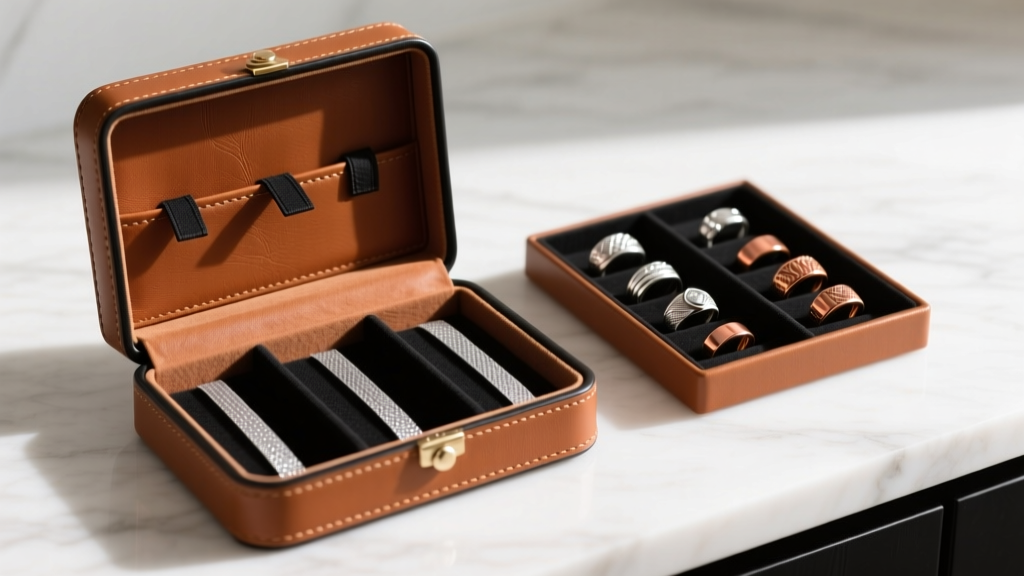
How you arrange your pieces inside the jewelry holder organizer is just as important as how you clean it. Galvanic corrosion occurs when two dissimilar metals come into physical contact in the presence of an electrolyte (even ambient humidity). In this electrochemical cell, the more 'anodic' metal will corrode rapidly to protect the 'cathodic' metal.
For example, if a sterling silver chain (which contains 7.5% copper) is stored touching a piece of costume jewelry made of zinc or base brass, the base metal will act as an anode and degrade, leaving a corrosive, crusty residue that can permanently pit the silver. To prevent this, enforce a strict segregation policy within your organizer:
- Dedicate specific drawers or slots to specific metal families: Keep fine golds, sterling silvers, and platinum completely separated from base metals and fashion jewelry.
- Utilize individual polyethylene zip-bags: For pieces that must share a drawer, seal them in 2-mil thick polyethylene bags. Polyethylene is chemically inert and does not trap sulfur like PVC plastics do.
- Isolate gemstones by hardness: Never allow diamonds (Mohs 10) or sapphires (Mohs 9) to rest against softer stones like emeralds (Mohs 7.5-8) or opals (Mohs 5.5-6.5) in a shared compartment, as movement will cause severe scratching.
The Ultimate Maintenance Schedule
To keep your jewelry holder organizer functioning as a true preservation vault, adhere to this maintenance cadence:
Weekly
- Wipe down acrylic and glass exteriors with a dry microfiber cloth to remove fingerprints and cosmetic overspray.
- Ensure all clasps and closures are fully shut to maintain a sealed microclimate.
Monthly
- Vacuum velvet and suede interiors with a HEPA brush attachment.
- Check silica gel packets; if they have changed color (indicating moisture saturation), recharge them in the oven at 200°F (93°C) for two hours or replace them.
Bi-Annually
- Replace 3M anti-tarnish strips, regardless of whether the jewelry has been worn.
- Condition leather and wood exteriors with pH-neutral, non-silicone products.
- Inspect the structural integrity of ring rolls and earring posts; repair or replace any exposed base-metal wire that could scratch your jewelry.
By treating your jewelry holder organizer as an active preservation tool rather than a passive box, you drastically reduce the need for aggressive chemical polishing, thereby preserving the metal's mass, the gemstone's faceting, and the collection's long-term value.


