What Makes a Cool Jewelry Box? Tech & Material Deep Dive
Discover what makes a cool jewelry box in 2026. We analyze biometric security, micro-climate humidity control, and aerospace-grade materials.

The Evolution of 'Cool': From Velvet to Micro-Climates
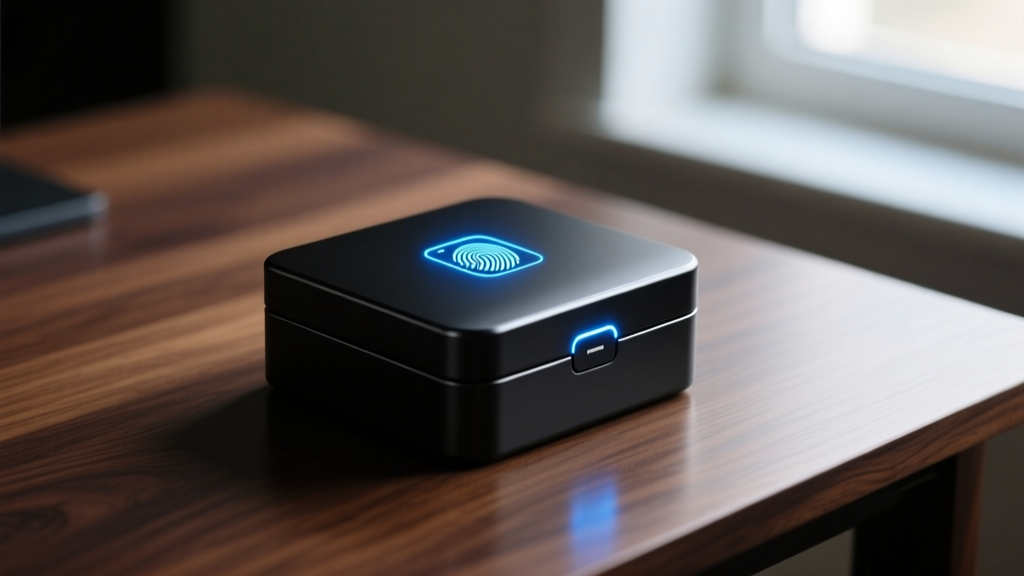
When collectors and horology enthusiasts search for a cool jewelry box in 2026, the definition of 'cool' has fundamentally shifted. It is no longer about gaudy LED lights or mirrored exteriors. Today, true luxury storage is defined by aerospace-grade material science, active micro-climate engineering, and seamless biometric integration. High-end jewelry and luxury timepieces are highly susceptible to environmental degradation, meaning the modern storage vessel must act as a functional preservation vault rather than a mere decorative container.
In this technical deep dive, we deconstruct the engineering behind the most advanced jewelry storage systems on the market. We will examine the metallurgical properties of modern chassis designs, the thermodynamics of active dehumidification, and the polymer chemistry of interior linings. If you are investing in high-carat gemstones, precious metals, or complex mechanical watches, understanding these technical specifications is non-negotiable.
Aerospace-Grade Aluminum & Carbon Fiber Chassis
Traditional jewelry boxes are predominantly constructed from MDF (Medium-Density Fiberboard) or solid woods like walnut and mahogany. While aesthetically pleasing, wood is a fundamentally flawed material for long-term precious metal preservation. Wood naturally off-gasses volatile organic compounds (VOCs), including formaldehyde and acetic acid. According to the EPA, these emissions can accelerate the corrosion of silver and degrade the nacre of natural pearls over time.
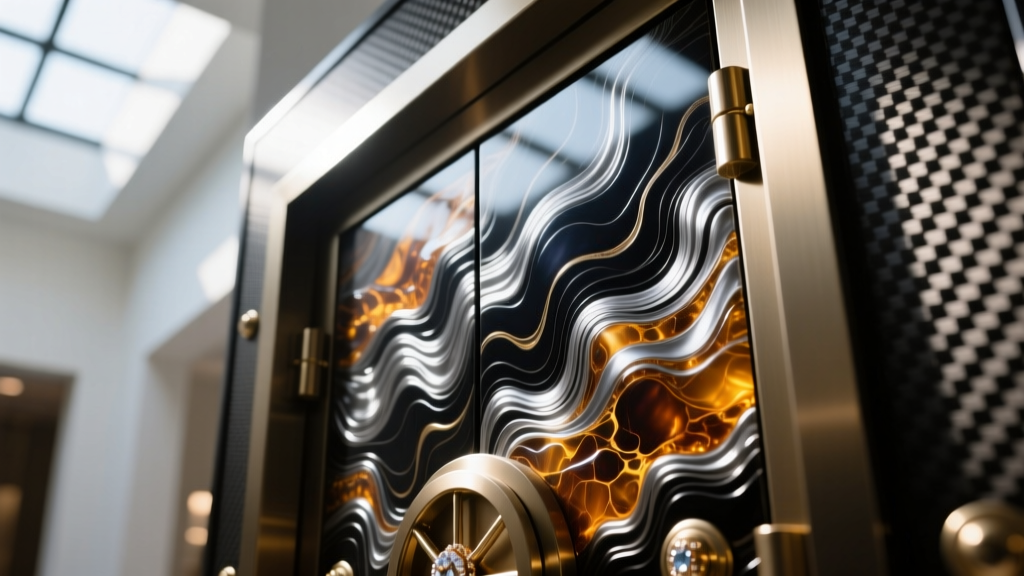
To combat this, the most technically advanced 'cool' jewelry boxes utilize 6061-T6 aluminum or forged carbon fiber for their primary chassis. 6061-T6 is an aerospace-grade alloy containing magnesium and silicon, offering a yield strength of 276 MPa (40,000 psi). This ensures the vault is impervious to warping, crushing, and environmental off-gassing. Forged carbon fiber, created by compressing chopped carbon strands with an epoxy resin matrix under high heat and pressure, offers an even higher strength-to-weight ratio and a striking, marbled aesthetic that cannot be replicated by wood veneers.
Material Hardness & Scratch Resistance Comparison
When evaluating the exterior durability of high-end storage, we must look at impact resistance and surface hardness. The table below compares traditional and modern chassis materials.
| Material | Density (g/cm³) | Off-Gassing Risk | Impact Resistance | Machinability |
|---|---|---|---|---|
| MDF Wood | 0.70 - 0.85 | High (VOCs, Acids) | Low | High |
| Solid Walnut | 0.60 - 0.65 | Moderate (Tannins) | Medium | High |
| 6061-T6 Aluminum | 2.70 | None (Inert) | Very High | Excellent |
| Forged Carbon Fiber | 1.55 - 1.60 | None (Inert) | Extreme | Low (Requires CNC) |
Active Micro-Climate & Anti-Tarnish Engineering
The most critical failure mode for sterling silver and copper-alloy jewelry is tarnish, specifically the formation of silver sulfide (Ag2S). This occurs when silver reacts with hydrogen sulfide (H2S) or sulfur dioxide (SO2) in the ambient air. While traditional boxes rely on passive 3M anti-tarnish strips (which use copper-based polymers to absorb sulfur), these strips saturate within 3 to 6 months and require constant replacement.
A truly advanced jewelry box employs an active micro-climate system. These units utilize miniaturized Peltier-effect thermoelectric coolers paired with hygroscopic silica chambers to actively pull moisture from the air. By maintaining the internal Relative Humidity (RH) at a strict 40% to 45%, the box effectively halts the electrochemical reactions required for tarnish and verdigris formation. Furthermore, high-end models incorporate HEPA and activated carbon micro-filters to scrub airborne sulfur compounds before they can enter the primary storage compartment.
For collectors of high-jewelry, maintaining a stable micro-climate is also vital for preserving the structural integrity of certain gemstones. Opals, for instance, contain up to 20% water; if the ambient RH drops too low, they can craze or crack. The Gemological Institute of America (GIA) emphasizes that stable environmental controls are essential for the long-term preservation of porous and water-bearing gems.
Biometric Security & Smart Inventory Integration
Security in modern jewelry storage has moved far beyond simple brass keys and combination dials. The latest cool jewelry box designs feature capacitive fingerprint scanners operating at 508 DPI (dots per inch), providing a False Acceptance Rate (FAR) of less than 1/100,000. Unlike older optical scanners, capacitive sensors map the microscopic ridges and valleys of the fingerprint using electrical currents, making them virtually impossible to spoof with lifted prints.
Beyond physical access, these vaults integrate BLE 5.0 (Bluetooth Low Energy) modules that connect to encrypted mobile applications. This allows collectors to maintain a digital ledger of their assets. When a piece is removed from the RFID-lined interior, the system automatically logs the time and date of removal. For insurance purposes, this smart inventory tracking provides an immutable chain of custody, and the app can store high-resolution macro photography and GIA certification PDFs directly linked to the physical item's RFID tag.
Power Consumption & Fail-Safe Protocols
Integrating active electronics into a jewelry vault introduces the risk of power failure. Premium models address this with dual-redundant power systems:
- Primary Power: USB-C PD (Power Delivery) input, drawing a mere 5W for the Peltier cooler and logic board.
- Backup Battery: Integrated 5000mAh LiFePO4 (Lithium Iron Phosphate) battery. Unlike standard lithium-ion, LiFePO4 is chemically stable, poses zero fire risk, and provides up to 14 days of backup climate control and biometric access during a grid outage.
- Mechanical Override: A hidden, laser-cut titanium tubular key mechanism ensures physical access if both electronic systems fail.
Interior Architecture: Modular TPU & Silicone
The interior lining of a jewelry box is where the physical interaction with the assets occurs. Historically, velvet and suede were the standards. However, these textiles are highly hygroscopic (moisture-attracting) and generate micro-static, which attracts dust and abrasive particulate matter. Over time, rubbing a gold ring (Mohs hardness 2.5-3) against dust-laden velvet will result in micro-scratches and a loss of polish.
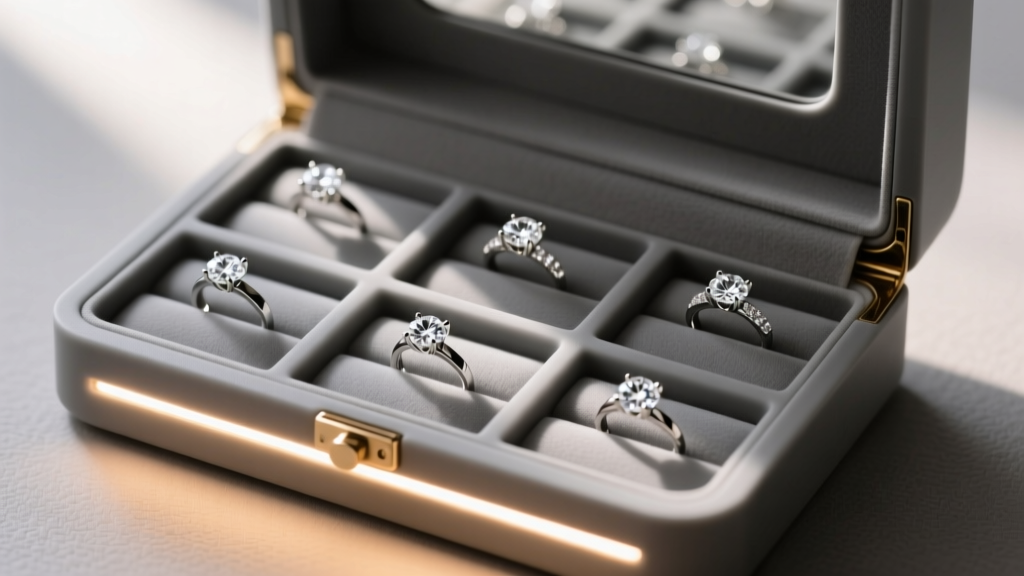
Modern engineering has replaced textiles with medical-grade TPU (Thermoplastic Polyurethane) and platinum-cured silicone. TPU with a Shore A hardness of 80 provides the perfect balance of tactile grip and shock absorption. It is entirely inert, non-hygroscopic, and easily wiped clean with isopropyl alcohol. Furthermore, modular TPU inserts are typically CNC-milled to accommodate specific jewelry profiles—from 16-gauge titanium septum clickers to heavy 50-gram Cuban link chains—ensuring that items do not shift and collide during transit or drawer actuation.
Final Verdict: Investing in Technical Storage
The era of the simple wooden jewelry box is ending for serious collectors. When evaluating what makes a cool jewelry box today, the focus must remain on material inertness, active environmental control, and verifiable security. While a 6061-T6 aluminum vault with Peltier dehumidification and biometric access commands a premium price point—often ranging from $1,500 to over $5,000—it is a fractional insurance cost compared to the value of the assets it protects. By prioritizing engineering over mere aesthetics, collectors ensure their pieces remain in pristine, unworn condition for generations.


