Upgrade a Dollar Tree Jewelry Organizer to Prevent Tarnish
Learn how to troubleshoot and upgrade a Dollar Tree jewelry organizer to prevent tarnish, scratching, and tangling with expert material hacks.

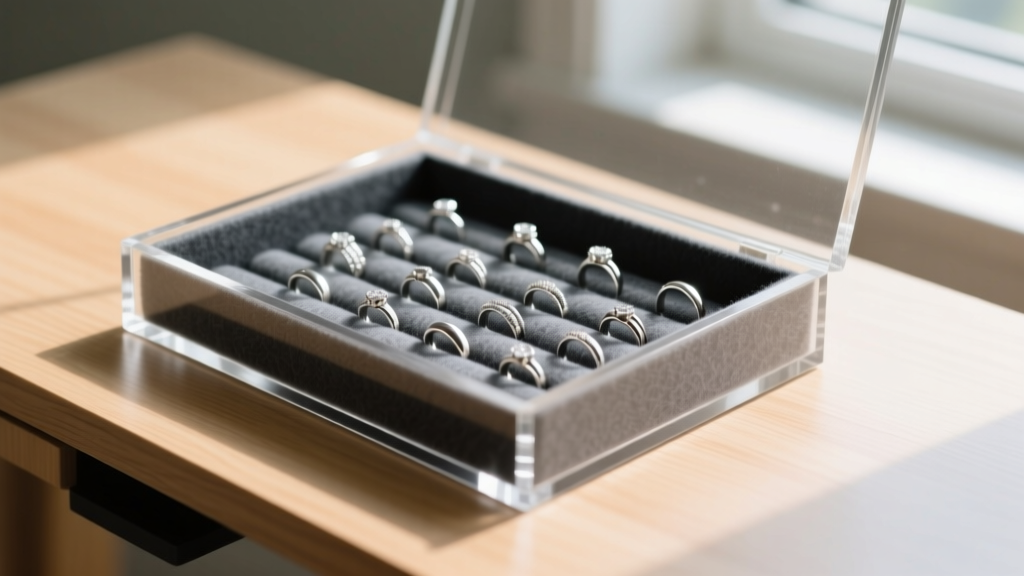
The Hidden Chemistry of Budget Storage
There is undeniable satisfaction in finding a multi-drawer acrylic or wire Dollar Tree jewelry organizer for just $1.25. However, for serious collectors and everyday wearers of fine metals, these budget-friendly storage solutions often harbor a hidden threat: accelerated chemical degradation. The primary issue is not the organizer itself, but the volatile organic compounds (VOCs) and sulfur-based plasticizers used in the manufacturing of low-grade polystyrene and polyvinyl chloride (PVC). When trapped in a closed drawer, these off-gassing chemicals create a microenvironment that rapidly oxidizes sterling silver, copper, and brass.
According to the Smithsonian Institution's guidelines on silver care, sulfur compounds in the air are the primary catalyst for silver sulfide formation, which manifests as yellow, brown, or black tarnish. Cheap plastics and the industrial adhesives binding the drawers often contain trace sulfur and chlorine. In this guide, we will troubleshoot the inherent flaws of budget acrylic organizers and provide archival-grade modification protocols to make them safe for your most prized pieces.
Troubleshooting Tarnish: The Anti-Tarnish Lining Protocol
Raw acrylic is non-porous, meaning it does not breathe. If you place a sterling silver ring into an unlined Dollar Tree drawer, any ambient humidity and off-gassed VOCs are trapped directly against the metal. To solve this, you must introduce an active chemical scavenger.
Step-by-Step Archival Lining Hack
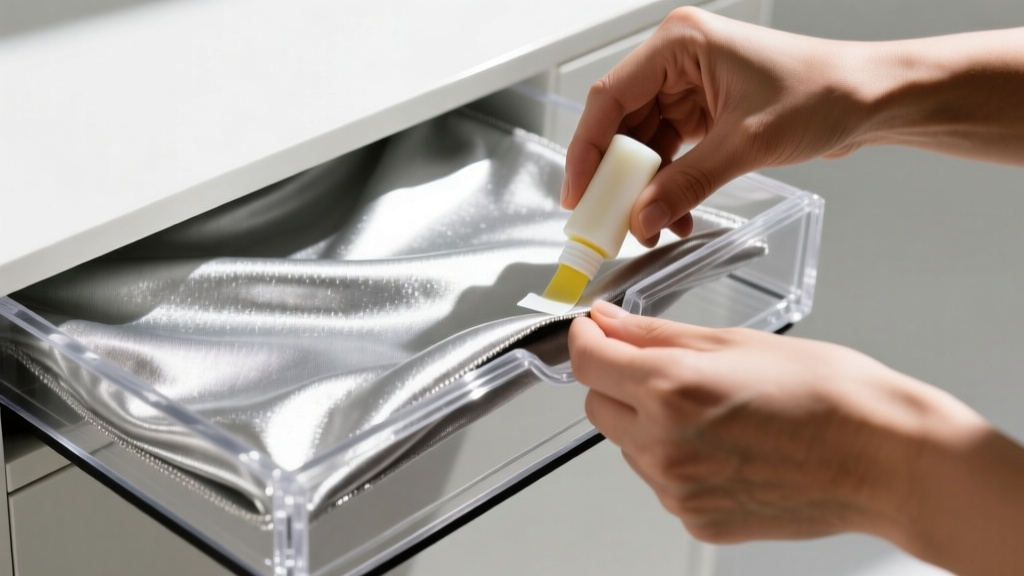
- Measure and Cut: Purchase a yard of Pacific Silvercloth or a charcoal-infused anti-tarnish felt. Cut the material to the exact dimensions of the drawer floor, adding a 2mm overhang for the edges.
- Select the Right Adhesive: Never use standard super glue (cyanoacrylate) or hot glue. Cyanoacrylate off-gasses during curing and leaves a permanent white 'bloom' on plastics, while hot glue can warp thin Dollar Tree acrylic. Instead, use Lineco Neutral pH Adhesive, an archival-quality, acid-free glue used by museum conservators.
- Apply and Cure: Apply a thin, even layer of the neutral pH adhesive to the acrylic base. Press the felt firmly, place a flat weight on top, and let it cure for 24 hours in a well-ventilated area before introducing any jewelry.
Expert Troubleshooting Tip: If your silver is turning yellow rather than black, it is in the early stages of tarnishing caused by low-level sulfur exposure. Adding 3M Anti-Tarnish Strips to the back corners of each drawer will actively absorb airborne sulfides, extending the time between polishing sessions by up to 6 months.
Solving the Scratching Epidemic: Mohs Hardness Mismatches
One of the most frequent complaints regarding hard plastic organizers is micro-scratching on high-polish metals. To understand why this happens, we must look at the Mohs scale of mineral hardness. Pure gold and silver sit at a mere 2.5 to 3 on the Mohs scale. Standard injection-molded acrylic used in budget organizers typically rates between 3.5 and 4. This means the plastic is physically harder than your precious metals; every time a ring slides across the drawer, the acrylic acts like mild sandpaper.
The Flocking and Silicone Solutions
To troubleshoot this material mismatch without replacing the entire unit, you must introduce a softer friction barrier. You have two primary options:
- Electrostatic Flocking: You can purchase DIY flocking kits (often used for model making or toolboxes). By painting a thin layer of specialized flocking adhesive and sprinkling rayon or cotton flocking fibers over it, you create a soft, velvet-like surface that is completely inert and softer than gold.
- Plasti Dip Coating: For wire basket organizers often found at Dollar Tree, spray-coating the metal wires with clear Plasti Dip creates a soft, rubberized barrier. This prevents the bare steel or low-grade aluminum wires from scratching pearls (Mohs 2.5) or leaving oxidation marks on porous gemstones like turquoise.
Fixing Flimsy Hinges and Structural Failures
Budget flip-top jewelry boxes and hinged acrylic lids frequently suffer from catastrophic hinge failure within the first few months. The metal pins are often undersized, and the plastic housing is brittle. When a hinge snaps, do not attempt to melt it back together with a soldering iron, as this releases toxic fumes and weakens the structural integrity of the polystyrene.
Instead, use a two-part clear epoxy or E6000 Jewelry and Bead Adhesive. E6000 remains slightly flexible after curing, which is critical for hinges that endure repetitive kinetic stress. Apply a micro-drop to the pin housing, re-seat the metal pin, and wrap the exterior tightly with painter's tape to act as a clamp while it cures for 72 hours. For a more permanent structural fix, drill a 1/16-inch pilot hole through the hinge housing and insert a stainless steel micro-screw, securing it with a drop of threadlocker.
Compartment Sizing: Preventing Tangling and Chain Knots
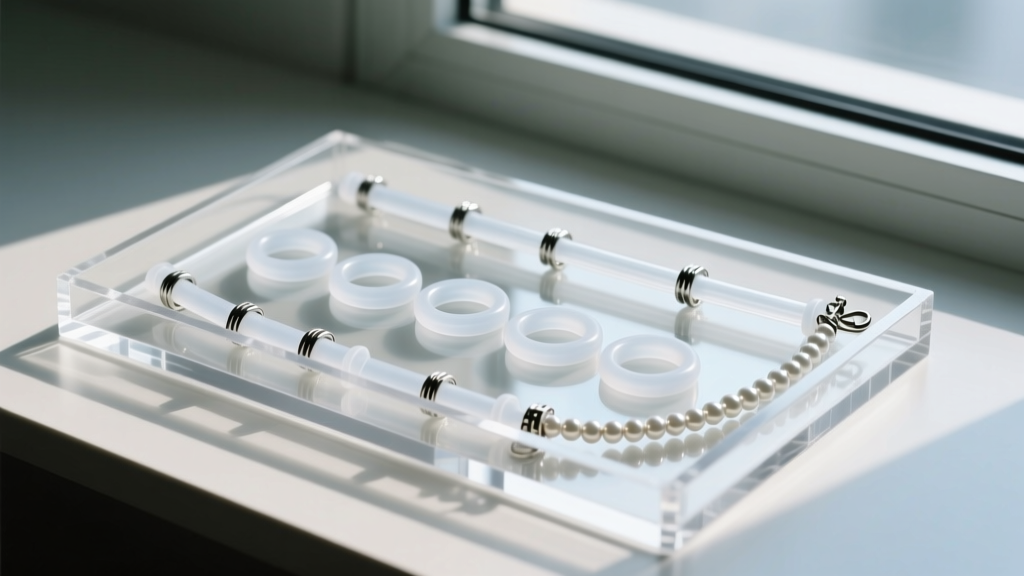
Dollar Tree organizers are notorious for featuring oversized, undivided compartments that allow delicate chains to slide, overlap, and knot. Untangling a 0.8mm snake chain or a fragile 14k gold paperclip chain can result in permanent kinking and metal fatigue.
The Aquarium Tubing Hack: To create custom, adjustable dividers without permanently gluing plastic walls, purchase a length of clear, food-grade silicone aquarium tubing (usually 4mm to 6mm in diameter). Cut the tubing to the exact width of the drawer. Because silicone has a high coefficient of friction, the tubing will grip the acrylic walls tightly, acting as a removable barrier that prevents chains from sliding into adjacent zones. Furthermore, you can slice small slits into the tubing to slide the clasps of necklaces in, keeping the chains taut and completely knot-free.
Material Comparison: Budget vs. Archival Storage
Understanding the material limitations of your organizer is the first step in effective troubleshooting. Below is a comparison of common materials found in budget versus premium storage solutions, referencing data aligned with Gemological Institute of America (GIA) care standards.
| Material | Source / Cost | Off-Gassing Risk | Mohs Hardness | Best Used For |
|---|---|---|---|---|
| Low-Grade PVC / Polystyrene | Dollar Tree ($1.25) | High (Sulfur/Chlorine) | 3.5 - 4.0 | Costume jewelry, beads (with modifications) |
| Injection-Molded Acrylic | Mid-Range ($15 - $30) | Moderate (Adhesives) | 3.5 - 4.0 | Hard gemstones, plated metals (requires lining) |
| Polypropylene (PP) | Archival Boxes ($40+) | None (Inert) | 2.0 - 2.5 | Fine silver, gold, porous gems, pearls |
| ABS Plastic with PU Leather | Premium Valets ($80+) | Low (if PU is cured) | 3.0 | Watches, daily-wear gold, diamonds |
Final Verdict: When to DIY and When to Invest
A Dollar Tree jewelry organizer is an excellent canvas for DIY modification, provided you understand the chemistry of the materials involved. By investing an additional $10 to $15 in archival linings, neutral pH adhesives, and silicone friction barriers, you can transform a $1.25 plastic shell into a highly functional, tarnish-resistant storage system capable of protecting hundreds of dollars worth of inventory.
However, if you are storing untreated porous gemstones (like opals, pearls, or turquoise) or heirloom antique silver, skip the DIY route. The risk of micro-scratches and trapped VOCs in modified budget plastics remains too high. For those irreplaceable pieces, invest in dedicated polypropylene archival boxes lined with unbleached, acid-free cotton. For everything else, grab your Dollar Tree acrylics, your flocking powder, and get to work.


