Troubleshooting Acrylic Jewelry Box Tarnish, Static & Scratches
Is your acrylic jewelry box damaging your collection? Learn how to troubleshoot and fix tarnish, static buildup, and micro-scratches effectively.

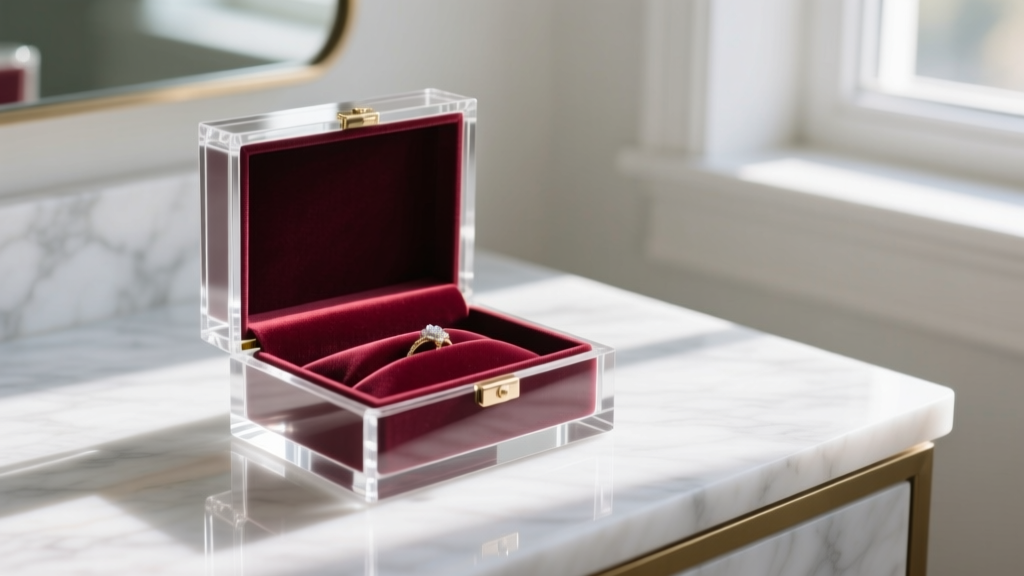
The Hidden Dangers of Acrylic Storage
Acrylic, scientifically known as Polymethyl Methacrylate (PMMA), has become the dominant material for modern jewelry organizers due to its glass-like clarity and shatter resistance. However, as jewelry conservation standards have evolved through 2026, experts have identified several critical failure modes associated with storing precious metals and gems in an acrylic jewelry box. Unlike traditional hardwood or lined leather boxes, acrylic presents unique chemical and physical challenges. From triboelectric static buildup that tangles fine chains to the off-gassing of volatile organic compounds (VOCs) from cheap manufacturing adhesives, your clear organizer might be actively degrading your collection. This guide provides expert-level troubleshooting to diagnose and resolve the most common acrylic storage issues.
Troubleshooting 1: Static Cling and Dust Attraction
If you frequently open your acrylic jewelry box only to find a fine layer of dust coating your pieces, or if delicate gold chains seem to magnetically cling to the plastic dividers, you are experiencing the triboelectric effect. PMMA sits high on the positive end of the triboelectric series. Every time you slide an acrylic drawer or lift a friction-fitted lid, the material loses electrons, creating a strong positive static charge.
The Anti-Static Fix
To neutralize this charge without damaging your jewelry, you must alter the surface conductivity of the acrylic. Avoid spraying liquid anti-static agents directly into the box, as the solvents can cause micro-crazing in the plastic.
- Ionization: Use a handheld anti-static ionizing gun (commonly used in vinyl record care) to blast the interior of the box for 5 seconds before loading jewelry. This neutralizes the surface charge instantly.
- Humidity Control: Static electricity thrives in environments with relative humidity (RH) below 30%. Maintain your dressing room or closet at a stable 40% to 50% RH. According to the American Gem Society, this humidity range is also optimal for preventing organic gems like pearls and opals from drying out and cracking.
- Surface Wiping: Wipe the exterior and interior acrylic panels with a microfiber cloth lightly dampened with a 1:10 dilution of liquid fabric softener and distilled water. This leaves a microscopic surfactant layer that dissipates static for up to two weeks.
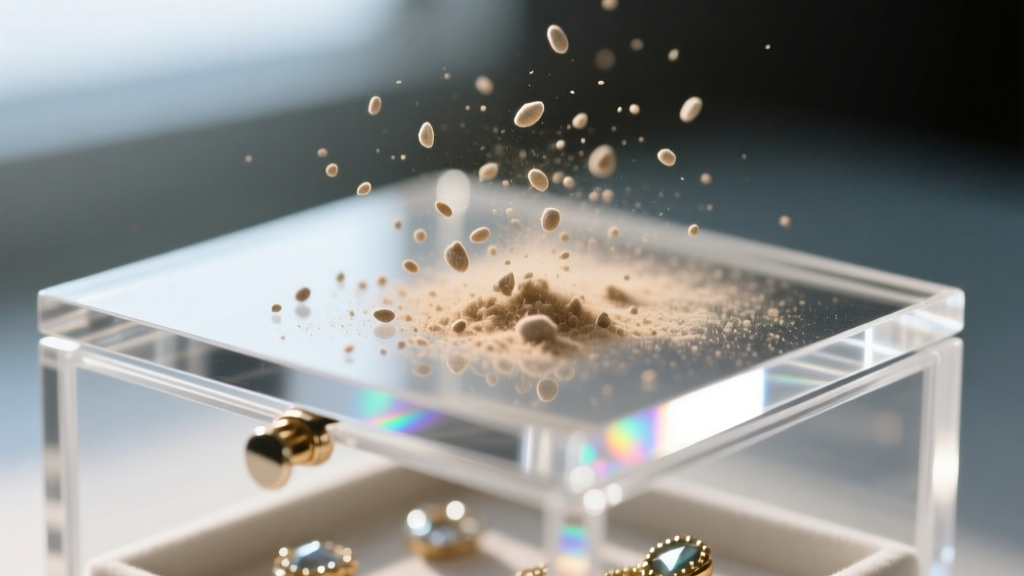
Troubleshooting 2: Accelerated Tarnish and Off-Gassing
A common misconception is that acrylic is completely inert. While pure, cell-cast acrylic is highly stable, the vast majority of commercial acrylic jewelry boxes are injection-molded or assembled using UV-cured cyanoacrylate adhesives. These manufacturing shortcuts introduce sulfur compounds and plasticizers into the enclosed microclimate. When trapped in an airtight acrylic drawer, these gases react with the copper alloys in sterling silver and rose gold, accelerating the formation of silver sulfide (tarnish) at an alarming rate.
Neutralizing the Microclimate
To troubleshoot this, you must introduce chemical scavengers into the acrylic environment to absorb VOCs and sulfur before they reach your metals. The Canadian Conservation Institute explicitly warns against storing silver in unventilated plastic enclosures without active tarnish-inhibiting materials.
| Mitigation Method | Mechanism of Action | Effectiveness for Silver | Effectiveness for Gold/Gems | Estimated Cost |
|---|---|---|---|---|
| 3M Anti-Tarnish Strips | Absorbs airborne sulfur compounds via chemically treated paper. | Exceptional (Lasts 6-12 months) | Neutral / Safe | $8 - $12 per pack |
| Activated Bamboo Charcoal | Physical adsorption of moisture and VOCs via porous surface area. | Moderate (Requires monthly recharging) | Excellent (Controls humidity) | $5 - $10 per bag |
| Pacific Silvercloth Liners | Micro-embedded silver particles sacrifice themselves to sulfur gases. | Superior (Lasts up to 3 years) | Safe, but unnecessary | $20 - $35 per yard |
| Silica Gel Packets | Desiccant that lowers RH to slow chemical tarnish reactions. | Moderate (Slows, but does not stop, sulfur) | Excellent for porous gems | $10 - $15 for bulk |
Expert Tip: Never use standard silica gel packets meant for shoe boxes. They often contain cobalt chloride, a toxic and potentially corrosive indicator dye. Always opt for indicating silica gel that uses non-toxic, color-changing clay alternatives.
Troubleshooting 3: Micro-Scratches on Soft Metals
Acrylic has a Mohs hardness rating of approximately 3.5 to 4.0. By comparison, pure 24k gold is 2.5, sterling silver is 2.5 to 2.7, and 14k gold is around 3.0 to 3.5. This means the acrylic dividers and drawer floors in your organizer are physically harder than your precious metals. Dragging a sterling silver bangle across an acrylic surface will inevitably result in micro-scratches. Furthermore, injection-molded acrylic often features microscopic 'flash' or sharp seams along the edges of dividers that act like tiny files against soft gemstones like opals or turquoise.
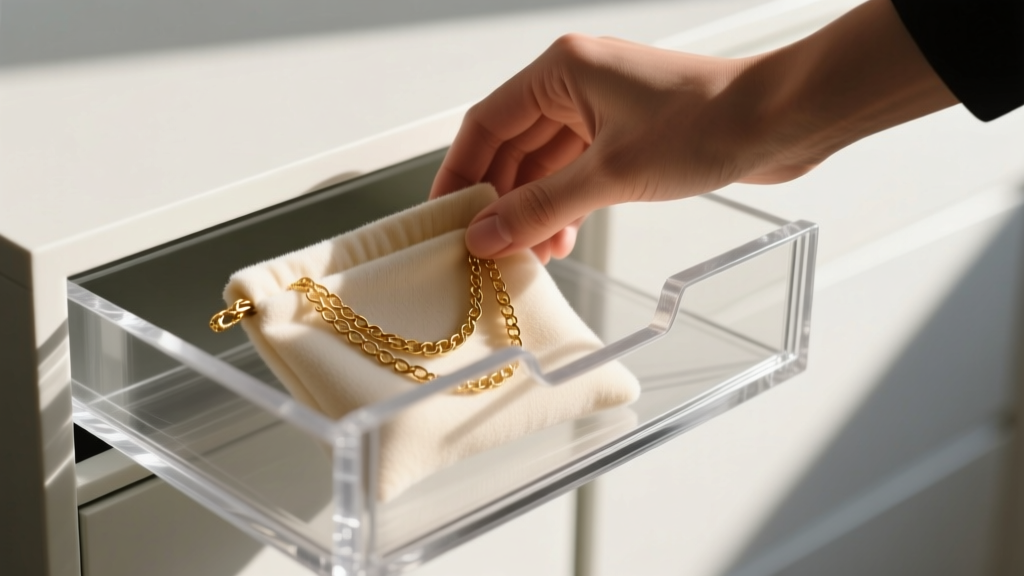
Padding and Bumper Solutions
To resolve mechanical abrasion, you must create a physical barrier between the PMMA and your jewelry without introducing acidic materials like standard wood-pulp paper or acidic felts.
- Archival-Grade Flocking: Apply acid-free, rayon-based flocking to the bottoms of acrylic drawers using a water-based, pH-neutral adhesive. This provides a velvety surface that prevents sliding and absorbs minor impacts.
- Microfiber Inserts: Cut custom inserts from high-density, untreated microfiber cloth. Unlike velvet, which can trap moisture, microfiber is highly breathable and lint-free, making it ideal for lining acrylic compartments.
- Silicone Bumpers: Apply 2mm clear polyurethane or silicone bumper dots to the corners of acrylic lids and drawer stops. This prevents the 'slap' of acrylic-on-acrylic closing, which can send shockwaves through the box and chip brittle gemstones like emeralds or tanzanite.
When to Retire Your Acrylic Organizer
Acrylic is susceptible to UV degradation and chemical crazing. If your jewelry box is placed on a vanity near a window, prolonged exposure to ultraviolet light will cause the PMMA polymer chains to break down, leading to yellowing and structural brittleness. Similarly, if you frequently spray perfumes, hairsprays, or alcohol-based cleaners near the box, the solvents will induce 'crazing'—a network of microscopic internal cracks that look like a spiderweb inside the plastic.
Once crazing begins, the plastic can no longer be polished out, and the micro-fissures become breeding grounds for dust and moisture. According to guidelines from the Gemological Institute of America (GIA), maintaining a stable, chemical-free environment is paramount for long-term gem preservation. If your acrylic box exhibits deep crazing or severe yellowing, it is time to retire it and transfer your collection to a UV-stable, archival-quality wooden or metal storage solution.
Expert Verdict
An acrylic jewelry box offers unparalleled visibility and modern aesthetics, but it requires active management to prevent static, tarnish, and abrasion. By integrating anti-tarnish scavengers, managing ambient humidity, and introducing soft, acid-free barriers, you can safely mitigate the inherent flaws of PMMA plastic. Treat your acrylic organizer not just as a display case, but as a microclimate that requires careful calibration to ensure your fine jewelry remains pristine for decades to come.


