Is a Budget Jewelry Armoire Cabinet Worth the Investment?
We break down the true cost of a budget jewelry armoire cabinet, comparing MDF vs. solid wood, lining quality, and long-term durability.

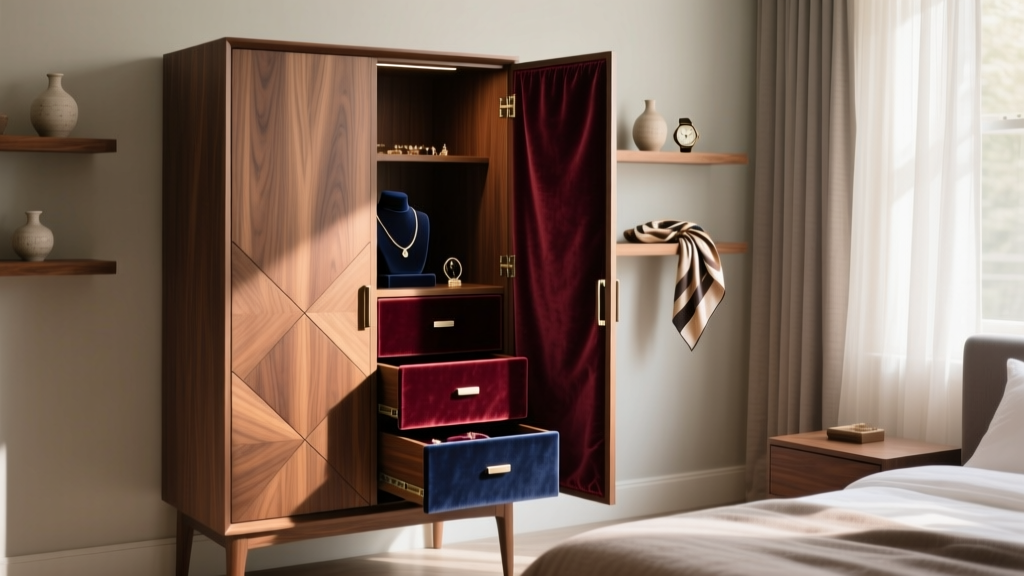
As jewelry collections grow, the transition from a simple bedside valet to a dedicated storage solution becomes inevitable. In the 2026 furniture market, the allure of a budget jewelry armoire cabinet is stronger than ever, with big-box retailers and online marketplaces offering towering, multi-drawer units for under $150. But when you are storing heirloom gold, porous pearls, and easily tarnished sterling silver, does a budget-friendly price tag come with hidden costs that could damage your most prized possessions?
As a domain expert in jewelry organization, I frequently see collectors make the mistake of prioritizing exterior aesthetics over interior chemistry. This comprehensive value assessment breaks down the structural integrity, material off-gassing, and hardware longevity of budget armoires to help you determine if they are a smart financial move or a long-term liability for your collection.
The Allure of the Budget Jewelry Armoire Cabinet
At first glance, a $120 budget jewelry armoire cabinet seems like an absolute steal. These units typically stand between 40 and 50 inches tall, featuring a mirrored front door, multiple velvet-lined drawers, and dedicated compartments for rings, watches, and hanging necklaces. They offer a massive upgrade in spatial organization compared to stacking jewelry boxes on a dresser.
However, the economics of furniture manufacturing dictate that to hit a sub-$150 retail price point while including mirrors, glass, and metal hardware, severe compromises must be made in the core materials. Understanding these compromises is the key to assessing true value. A budget armoire might organize your pieces beautifully for the first six months, but if it accelerates tarnishing or suffers catastrophic hinge failure, the cost of replacing damaged jewelry or the cabinet itself will quickly eclipse the initial savings.
Material Breakdown: The Hidden Chemistry of MDF
The most critical point of failure in a budget jewelry armoire cabinet is the wood composite used for the carcase. High-end armoires utilize kiln-dried solid woods like oak, walnut, or rubberwood, which are naturally stable and inert. Budget models, almost exclusively, rely on Medium-Density Fiberboard (MDF) or particleboard covered with a printed paper or thin PVC veneer.
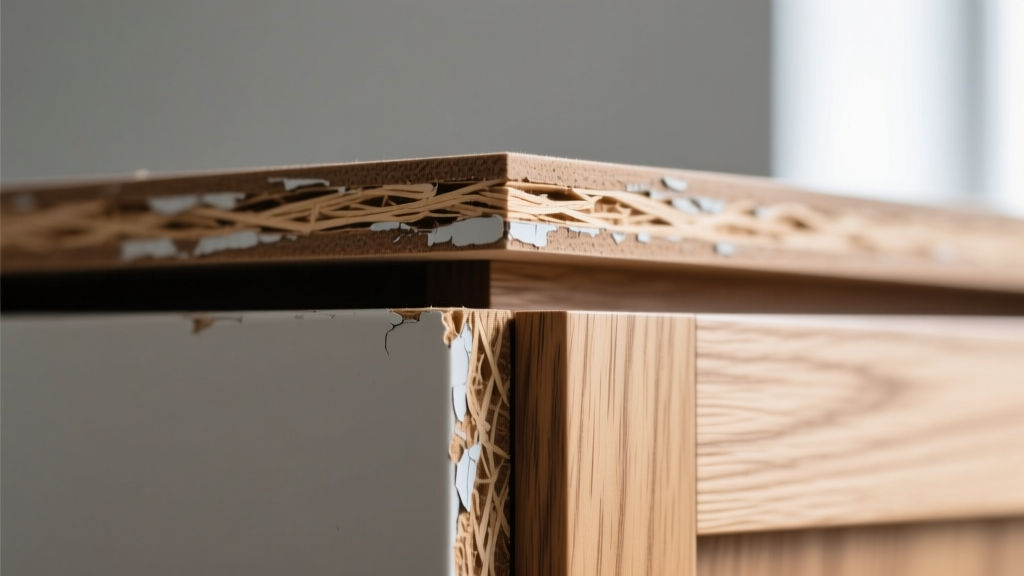
The issue with MDF is not just its lack of structural longevity; it is the chemistry of the adhesives used to bind the wood fibers. According to the Gemological Institute of America (GIA), jewelry storage environments must be carefully controlled to prevent chemical reactions that lead to oxidation and tarnish. Cheap urea-formaldehyde resins and sulfur-containing rubberized adhesives used in low-tier MDF manufacturing can slowly off-gas in enclosed spaces like a closed armoire drawer.
"Sulfur compounds and high acidity in enclosed storage environments are the primary catalysts for silver sulfide formation, commonly known as tarnish. Storing silver in poorly ventilated, adhesive-heavy composite wood furniture can accelerate this process significantly."
If you are storing sterling silver, copper alloys, or even porous gemstones like turquoise and pearls that can absorb acidic off-gassing, a budget MDF cabinet can actually become a destructive environment. To mitigate this, budget buyers must invest in standalone anti-tarnish tabs or activated charcoal sachets for every single drawer, adding to the hidden cost of ownership.
The Hidden Costs: Linings, Hinges, and Tarnish Prevention
Beyond the wood composite, the interior dressing and mechanical hardware of a budget jewelry armoire cabinet reveal where manufacturers cut corners to maintain low price points.
Velvet vs. Felt vs. Microfiber
The plush interior of a budget armoire is rarely true velvet. It is typically a 100% polyester knit or a cheap synthetic felt. While these materials feel soft to the touch, they are highly hygroscopic, meaning they trap ambient moisture against the surface of your jewelry. Furthermore, synthetic fabrics can generate static electricity, which attracts microscopic dust and abrasive particles that can scratch high-polish gold and platinum.
True value in jewelry storage requires treated flannel or specialized anti-tarnish fabrics, such as Pacific Silvercloth. These fabrics are embedded with microscopic silver particles that act as a sacrificial anode, absorbing sulfur gases from the air before they can reach your jewelry. Budget cabinets never include these linings, requiring the owner to retrofit the drawers with anti-tarnish mats, which can cost $30 to $50 per roll.
Hardware and Hinge Failure Modes
The doors of a jewelry armoire bear a surprising amount of weight, especially when the interior is loaded with heavy statement necklaces, metal-backed mirrors, and glass perfume trays. Budget cabinets utilize thin, 1.5mm stamped steel butt hinges. Over time, the sheer weight of the door causes the screws to strip out of the soft MDF, leading to sagging doors that no longer close flush.
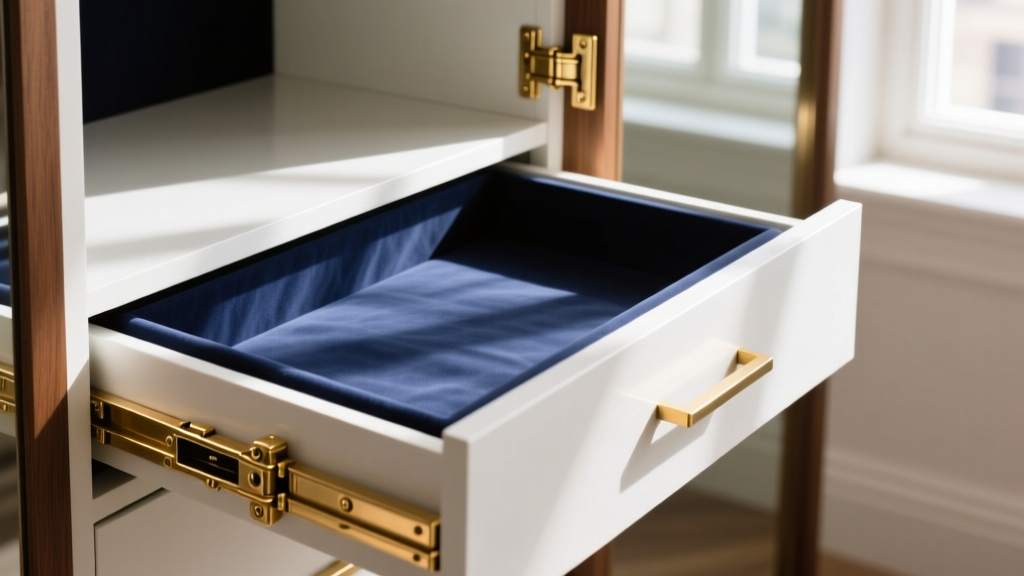
When a door fails to close flush, the interior is exposed to ambient room humidity and airborne pollutants, completely defeating the purpose of enclosed storage. Mid-tier and premium armoires solve this by using continuous brass piano hinges or heavy-duty concealed European soft-close hinges, which distribute the weight evenly across the entire length of the door frame. For a comprehensive guide on maintaining jewelry in various environments, Jewelers of America emphasizes the importance of secure, climate-controlled enclosures to prevent both physical damage and environmental degradation.
Price Tier Comparison Chart
To contextualize the value proposition, here is a breakdown of what you can expect across different market tiers for a standard 45-inch tall jewelry armoire cabinet in 2026.
| Feature | Budget ($80 - $150) | Mid-Tier ($250 - $500) | Premium/Heirloom ($800+) |
|---|---|---|---|
| Core Material | MDF / Particleboard | Solid Rubberwood / Pine | Kiln-Dried Oak / Walnut |
| Joinery | Staples and Glue | Dado joints, Wood Dowels | Hand-cut Dovetails |
| Interior Lining | Polyester Knit / Felt | Anti-Tarnish Flannel | Silk / Pacific Silvercloth |
| Hinges | Stamped Steel Butt | Continuous Piano Hinge | Solid Brass / Soft-Close |
| Drawer Slides | Wood-on-Wood Friction | Side-Mounted Metal Rollers | Undermounted Soft-Close |
| Estimated Lifespan | 1 - 3 Years | 5 - 10 Years | Lifetime / Generational |
When to Buy Budget vs. When to Invest
Does this mean you should entirely avoid a budget jewelry armoire cabinet? Not necessarily. The value equation depends entirely on the composition of your collection and your living environment.
The Case for Buying Budget
If your collection consists primarily of stainless steel, titanium, solid 14k/18k gold, and platinum, these metals are highly resistant to the off-gassing and humidity issues inherent in MDF furniture. Furthermore, if you live in a climate-controlled environment with low ambient humidity, and you are storing fashion jewelry or costume pieces, a budget armoire provides excellent spatial organization and visual appeal without risking your assets. It serves as a highly functional, disposable organizational tool.
The Case for Investing in Mid-Tier or Premium
If you collect sterling silver, antique gold alloys, or organic gemstones (pearls, coral, amber), a budget cabinet is a liability. The cost of constantly polishing tarnished silver or having porous stones professionally restored will quickly outweigh the savings of a cheap cabinet. In these cases, investing in a mid-tier solid wood armoire with proper anti-tarnish linings is not just a furniture purchase; it is an active preservation strategy for your wealth and heirlooms.
Final Verdict on Value
A budget jewelry armoire cabinet offers undeniable short-term organizational value and aesthetic charm for modern bedrooms. However, from a strict preservation standpoint, the use of MDF, synthetic linings, and lightweight hardware introduces chemical and physical risks to sensitive metals and gemstones. By understanding the hidden chemistry of cheap adhesives and the mechanical limits of stamped hinges, you can make an informed decision. If you opt for the budget route, be prepared to supplement the interior with aftermarket anti-tarnish solutions and perform regular maintenance on the hardware to ensure your collection remains safe, organized, and brilliant for years to come.


