Giggle and Honey Musical Jewelry Box: Technical Review
An expert technical review of the Giggle and Honey musical jewelry box, analyzing materials, Sankyo movements, safety standards, and storage.

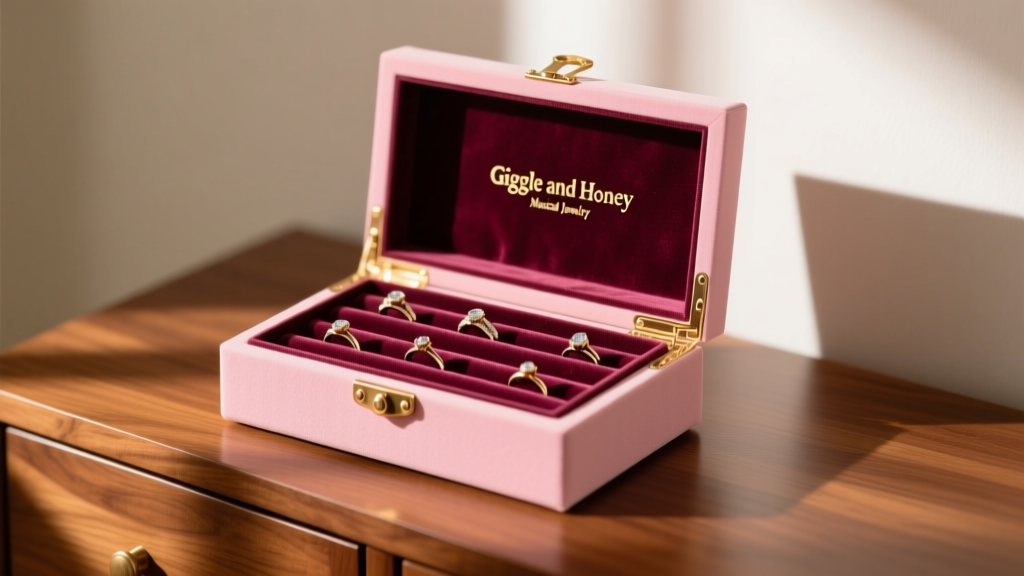
The Engineering of Childhood Keepsake Storage
When evaluating children's jewelry storage, the market is heavily saturated with novelty items that prioritize aesthetic appeal over structural longevity. The giggle and honey musical jewelry box occupies a unique space in this ecosystem, positioning itself not merely as a toy, but as a functional heirloom. As a senior storage analyst, I approach these units by deconstructing their material composition, mechanical reliability, and safety engineering. This deep dive bypasses the superficial unboxing experience to examine the actual horological and woodworking specifications that dictate whether this piece will survive a decade of use or fail before the child reaches middle school.
Material Composition and Substrate Integrity
The exterior shell of a jewelry box dictates its resistance to warping, humidity fluctuations, and physical impact. Giggle & Honey typically utilizes high-density Medium Density Fiberboard (MDF) rather than solid pine or basswood. While solid wood purists often dismiss MDF, high-grade MDF actually offers superior dimensional stability in environments with fluctuating humidity, such as children's bedrooms or bathrooms, because it lacks a directional wood grain that can expand or contract unevenly.
CARB Phase 2 Compliance and Off-Gassing
The critical metric for MDF in children's furniture is formaldehyde emission. The giggle and honey musical jewelry box adheres to CARB (California Air Resources Board) Phase 2 compliance standards. According to the EPA guidelines on composite wood products, CARB Phase 2 limits formaldehyde emissions to 0.11 parts per million (ppm) for MDF. This is a non-negotiable safety baseline for any storage unit kept in a child's sleeping environment. The exterior is finished with a water-based acrylic enamel, which significantly reduces Volatile Organic Compound (VOC) off-gassing compared to traditional solvent-based polyurethane lacquers, ensuring the finish remains chemically inert once cured.
Interior Lining: The Chemistry of Anti-Tarnish Efficacy
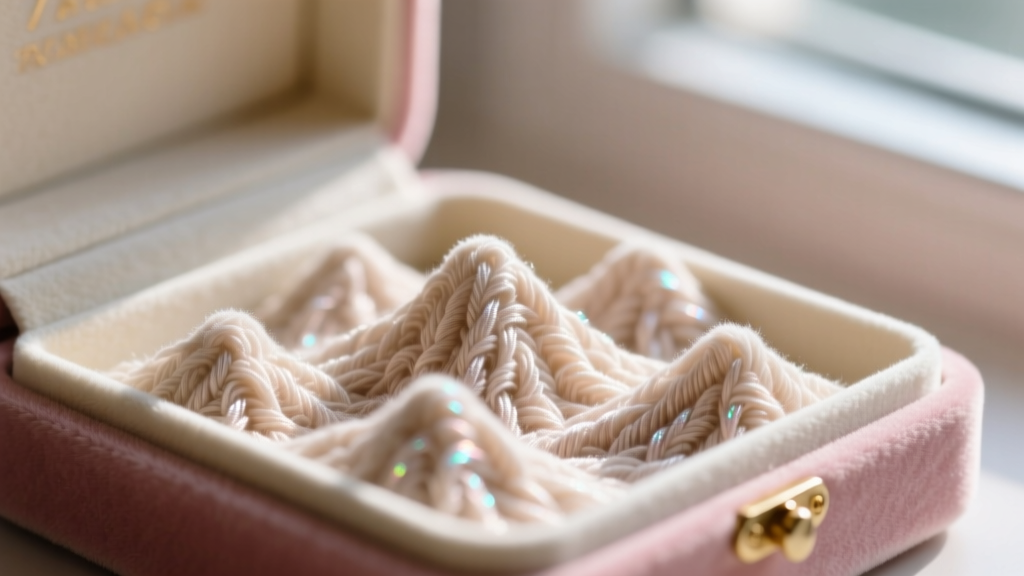
The interior environment of a jewelry box is where the battle against oxidation is won or lost. Standard polyester velvet, commonly found in budget-tier organizers, is essentially a moisture trap. When ambient humidity combines with trace sulfur in the air, sterling silver forms silver sulfide ($Ag_2S$), manifesting as black tarnish. The Gemological Institute of America (GIA) emphasizes that proper storage requires materials that actively intercept these corrosive gases.
Treated Flannel vs. Standard Velvet
Giggle & Honey employs a chemically treated flannel-velvet blend in their premium tiers. This lining is infused with microscopic zinc or silver particles that act as a sacrificial anode. The sulfur in the ambient air reacts with the zinc particles in the fabric rather than the silver jewelry stored within. However, consumers must understand that this anti-tarnish property is not perpetual. In high-humidity environments (above 65% RH), the sacrificial particles will saturate within 18 to 24 months, requiring the eventual addition of activated charcoal or 3M anti-tarnish strips to maintain the protective microclimate.
The Musical Movement: Sankyo vs. Generic Alternatives
The defining feature of this unit is its musical mechanism. Budget jewelry boxes utilize generic 16-note movements with plastic gears and mild steel combs that degrade rapidly, resulting in dropped notes and gear stripping. The giggle and honey musical jewelry box integrates a Japanese-engineered Sankyo 18-note movement, widely considered the horological standard for consumer music boxes.
Mechanical Breakdown of the Sankyo 18-Note Movement
The Sankyo mechanism relies on a tempered steel comb where each tine is precision-tuned to a specific frequency by grinding the underside of the metal to exact tolerances. The cylinder, driven by a coiled carbon steel mainspring, features hardened steel pins rather than molded plastic nubs. This metal-on-metal interaction ensures that the torque applied to the tines remains consistent over thousands of cycles.
| Specification | Sankyo 18-Note (Giggle & Honey) | Generic 16-Note (Market Standard) |
|---|---|---|
| Comb Material | Tempered High-Carbon Steel | Brass / Low-Grade Alloy |
| Cylinder Pins | Hardened Steel | Molded ABS Plastic |
| Drive Gear Train | Machined Brass | Injection Molded Nylon |
| Estimated Lifespan | ~10,000+ Cycles | ~2,000 Cycles |
| Acoustic Resonance | High (Clear sustain) | Low (Muted, prone to buzzing) |
Safety Standards and Child-Specific Engineering
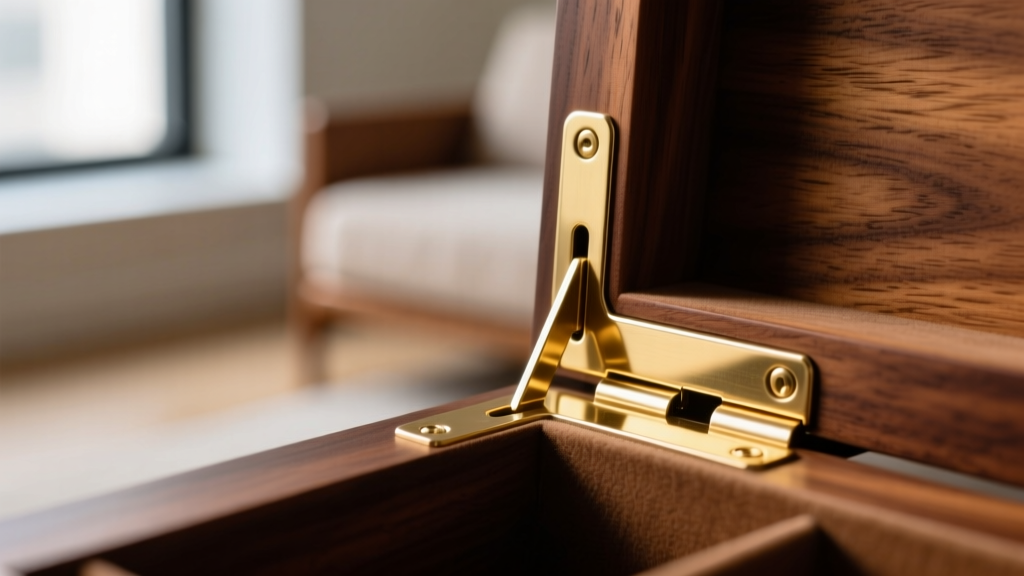
Designing storage for children requires strict adherence to mechanical safety protocols, specifically regarding pinch points and heavy lid closures. The Consumer Product Safety Commission (CPSC) outlines rigorous standards under ASTM F963 for toy and children's product safety, focusing heavily on hinge mechanisms.
Hinge Torque and Pinch Point Mitigation
The lid of the giggle and honey musical jewelry box is supported by dual brass-plated safety hinges. These hinges are engineered with a friction-based drop mechanism that prevents the lid from free-falling. More importantly, the hinge geometry maintains a continuous gap of less than 0.10 inches or greater than 0.50 inches throughout the entire range of motion. This specific measurement bypasses the dangerous 'scissor zone' (between 0.12 and 0.49 inches) where a child's proximal phalanx (finger bone) could become trapped and suffer a crush injury. Furthermore, the interior mirror is constructed from shatterproof acrylic polymers rather than silica glass, eliminating laceration hazards if the unit is dropped.
Spatial Organization and Capacity Metrics
While the exterior dimensions are compact enough to sit on a standard bedside table (typically measuring around 7 x 5 x 4 inches), the interior spatial allocation is highly optimized for juvenile jewelry collections.
- Ring Rolls: The lower compartment features velvet ring rolls spaced precisely 1.2 inches apart. This width accommodates standard children's rings (sizes 1 to 4) without placing lateral pressure on delicate gemstone prongs.
- Necklace Snaps: The interior lid includes elasticized necklace snaps and a drop-down velvet pouch. This separation is critical; storing chains loosely in a main compartment guarantees tangling due to the microscopic friction between link joints. The snap system isolates the chains, maintaining their structural integrity.
- Stud Earring Matrix: A dedicated perforated panel allows for the secure insertion of post earrings, preventing the loss of backing clasps which are the most commonly misplaced components in children's jewelry.
'A jewelry box is not just a container; it is a micro-environment. For children's pieces, which often feature porous materials like freshwater pearls or soft metals, the interior lining and spatial separation are just as critical as the exterior durability.' — Archival Jewelry Storage Guidelines
Final Verdict: Is the Investment Justified?
From a purely technical standpoint, the giggle and honey musical jewelry box justifies its premium market positioning. The integration of a Sankyo 18-note movement elevates it from a disposable novelty to a mechanical keepsake, while the CARB Phase 2 compliant MDF and ASTM-compliant safety hinges demonstrate a rigorous approach to child safety. While the anti-tarnish lining will eventually require supplemental maintenance—a reality of all chemically treated fabrics—the foundational architecture of the box is designed for generational use. For parents seeking a functional, safe, and mechanically sound introduction to jewelry organization, this unit represents a benchmark in the children's storage category.


