IKEA Jewelry Organizer Value: Budget Hacks & Review
We assess the true value of using an IKEA jewelry organizer. Discover budget hacks, hidden costs, and material safety for your fine pieces.

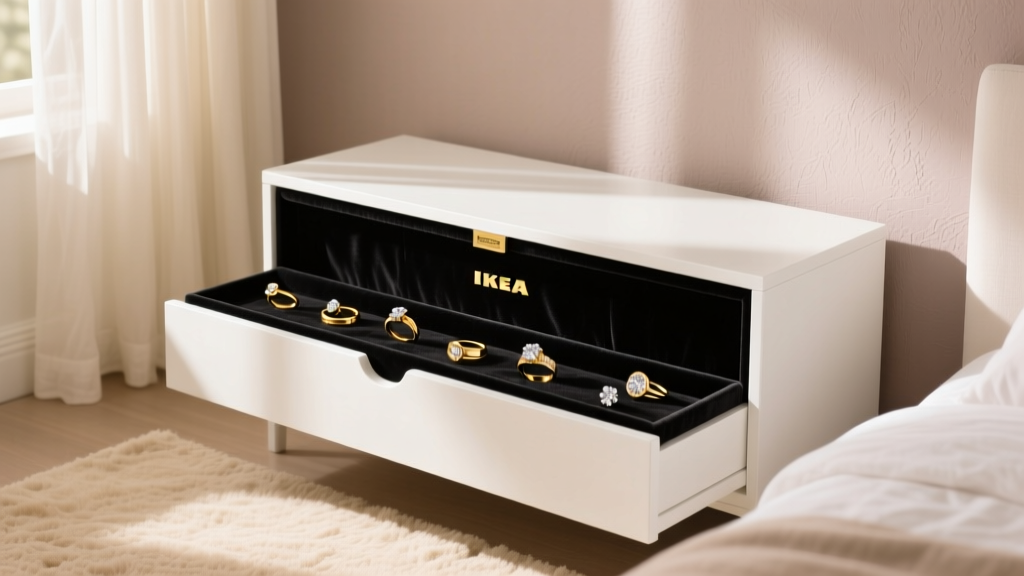
The Allure of the Budget-Friendly IKEA Jewelry Organizer
When you search for an affordable, modular storage solution, the idea of repurposing an IKEA jewelry organizer inevitably surfaces. The appeal is undeniable: clean Scandinavian aesthetics, stackable configurations, and a price point that undercuts dedicated luxury jewelry armoires by hundreds of dollars. For collectors with expansive inventories of fashion jewelry, everyday essentials, and travel pieces, big-box store hacks seem like a no-brainer. But when it comes to storing fine metals, delicate gemstones, and heirloom pieces, the true cost of budget storage goes far beyond the sticker price on the showroom tag.
In this comprehensive value assessment, we are tearing down the viral Pinterest hacks to evaluate the material science, hidden modification costs, and long-term viability of using big-box store organizers for precious accessories. If you are considering an IKEA jewelry organizer setup in 2026, you need to understand the chemistry of your storage environment before you compromise your collection.
Material Reality Check: Particleboard vs. Precious Metals
The most critical factor in jewelry storage is the chemical inertness of the surrounding materials. Fine jewelry—particularly sterling silver (925), copper alloys, and low-karat gold—is highly susceptible to tarnishing caused by hydrogen sulfide and volatile organic compounds (VOCs). According to conservation guidelines outlined by the Gemological Institute of America (GIA), jewelry should be stored in acid-free, chemically neutral environments to prevent surface degradation.
Most popular IKEA drawer units, such as the MOPPE or ALEX series, are constructed from medium-density fiberboard (MDF), particleboard, and acrylic paints. The adhesives and binders used in MDF manufacturing can off-gas trace amounts of sulfur compounds and formaldehyde for months or even years after assembly. When trapped inside a closed drawer, these gases create a microclimate that actively accelerates the oxidation of silver and brass. Therefore, placing bare silver directly into an unlined MDF drawer is a recipe for rapid, stubborn tarnish.
Conversely, IKEA's plastic storage lines—specifically those made from polypropylene (PP) or ABS plastic—are generally chemically inert. Polypropylene does not off-gas sulfur, making plastic bins inherently safer for raw metal storage than composite wood, provided you control the ambient humidity.
Cost-Benefit Analysis: Dedicated Box vs. DIY Hacks
Is the DIY route actually cheaper once you factor in the necessary protective modifications? Let us break down the real-world costs of building a safe IKEA jewelry organizer versus purchasing a purpose-built alternative.
| Storage Solution | Base Cost | Mod Cost | Total | Anti-Tarnish Safe? |
|---|---|---|---|---|
| IKEA MOPPE + Mods | $17.99 | $28.00 | $45.99 | Yes (with mods) |
| Mid-Range Wolf Box | $160.00 | $0.00 | $160.00 | Yes (Lacquer/Flannel) |
| High-End Burlwood | $450.00 | $0.00 | $450.00 | Yes (Silica/Treated) |
While the IKEA route saves you roughly $115 compared to a mid-range dedicated jewelry box, it requires significant manual labor. You must purchase custom-cut velvet liners, acrylic drawer dividers, and anti-tarnish strips to make the environment safe for fine jewelry. For fashion jewelry or everyday wear-and-tear pieces, the DIY route offers unbeatable value. For high-end investment pieces, the time and material costs narrow the gap significantly.
Top 3 IKEA Pieces Actually Worth Hacking
Not all IKEA storage solutions are created equal. Based on dimensional analysis and material safety, here are the three best candidates for a jewelry storage conversion.
1. MOPPE Mini Chest (The Ring & Stud Vault)
Measuring exactly 12 ¼ x 9 ¾ x 12 ¼ inches, the MOPPE chest features shallow drawers that are perfect for preventing necklaces from tangling. However, the raw MDF drawers must be sealed. The Hack: Line the bottom of each drawer with adhesive-backed craft foam, then overlay it with Pacific Silvercloth. This creates a physical barrier against MDF off-gassing while providing a tarnish-inhibiting surface. Use acrylic ice cube trays or modular makeup dividers to separate diamond studs from gold bands, preventing the diamonds (Mohs hardness 10) from scratching the gold (Mohs hardness 2.5-3).
2. SOCKERBIT Box (The Statement Necklace Tier)
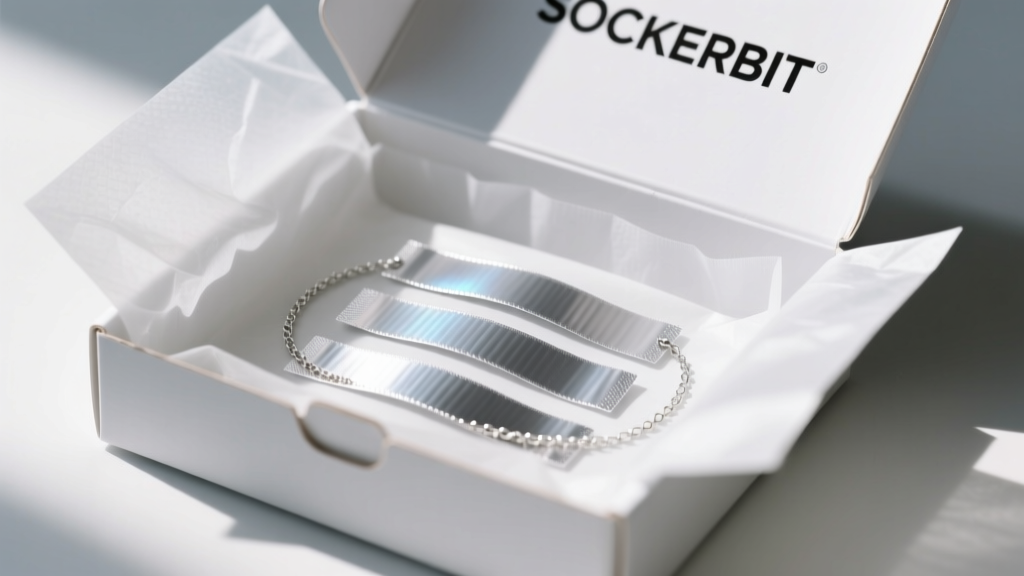
Long, heavy statement necklaces require flat, wide storage to prevent chain kinking and clasp stress. The SOCKERBIT box with lid is made of polypropylene, making it chemically safe for metals. The Hack: Cut a piece of acid-free foam core to fit the base, and use stainless steel pushpins to create anchor points for necklace clasps. This keeps chains taut and separated. Because the plastic is inert, you only need to drop in one 3M anti-tarnish strip per box to control ambient sulfur.
3. GLIS Clear Box (The Visual Inventory System)
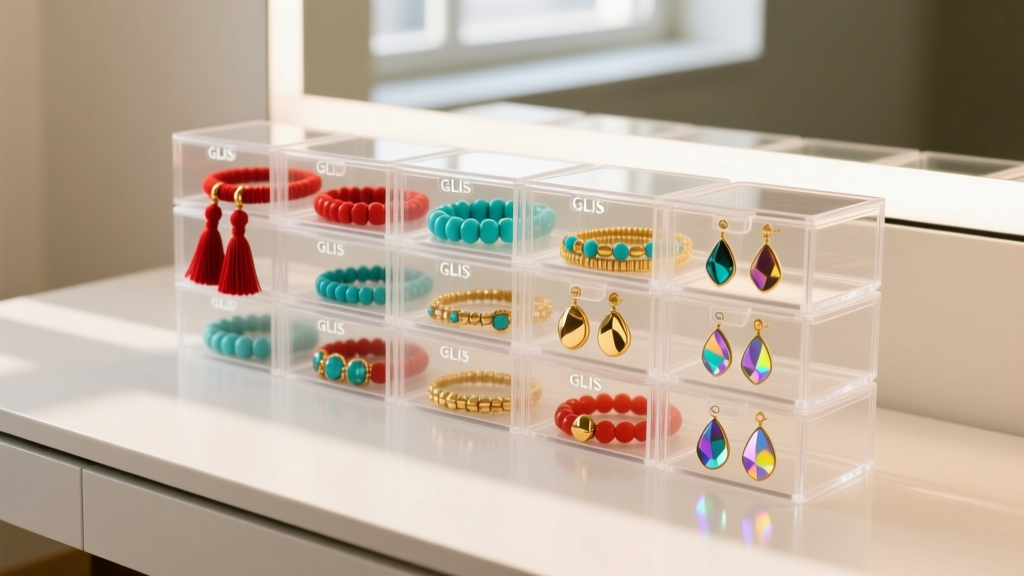
The GLIS clear boxes (6 ¾ x 3 7/8 x 2 inches) are excellent for creating a modular, stackable visual inventory of your fashion jewelry, resin pieces, and beaded bracelets. The Warning: Clear plastic allows UV light penetration. Prolonged exposure to direct sunlight will fade UV-sensitive gemstones like amethyst, kunzite, and turquoise, and can degrade dyed resins. Only use GLIS boxes for opaque materials, metals, or glass/crystal beads, and store them inside a closed drawer or away from windows.
The Hidden Costs of DIY Jewelry Storage
Before you commit to a massive IKEA organization project, budget for the hidden costs that viral videos often omit:
- Adhesive Residue: Using cheap double-sided tape to secure velvet liners often results in a gummy residue that ruins the drawer base. Always use acid-free glue sticks or archival-quality photo corners.
- Humidity Control: IKEA organizers are not airtight. If you live in a high-humidity climate, you must budget for rechargeable silica gel desiccant packs for every single enclosed bin to prevent moisture-induced corrosion on copper and brass.
- Drawer Slippage: The MOPPE drawers are made of lightweight cardboard and wood glue. Overloading a single drawer with heavy metal bangles or chunky chains will cause the bottom panel to bow and eventually detach. Reinforce the drawer bottoms with thin plywood or heavy-duty cardstock before loading.
Final Verdict: Who Should Buy IKEA for Jewelry?
An IKEA jewelry organizer is a brilliant, high-value solution for a specific type of collector. If your inventory consists primarily of fashion jewelry, stainless steel pieces, chunky acrylics, and everyday beaded accessories, the modular flexibility and low cost of IKEA systems cannot be beaten. The SOCKERBIT and GLIS lines offer incredible, chemically safe utility for these materials.
However, if you are storing heirloom estate jewelry, high-karat gold, untreated pearls, or unsealed sterling silver, the MDF construction of IKEA's wooden units poses a genuine chemical risk. The cost and labor required to properly seal, line, and treat these wooden drawers to museum-conservation standards often outweigh the initial savings. In those cases, investing in a purpose-built, lacquered, and flannel-lined jewelry armoire remains the superior choice for long-term asset preservation. Know your materials, respect the chemistry, and organize accordingly.


