Is a Standing Wood Jewelry Box Worth It? 2026 Value Guide
We assess the true value of a standing wood jewelry box in 2026, comparing wood grades, hardware, and price tiers to help you avoid overpriced veneers.

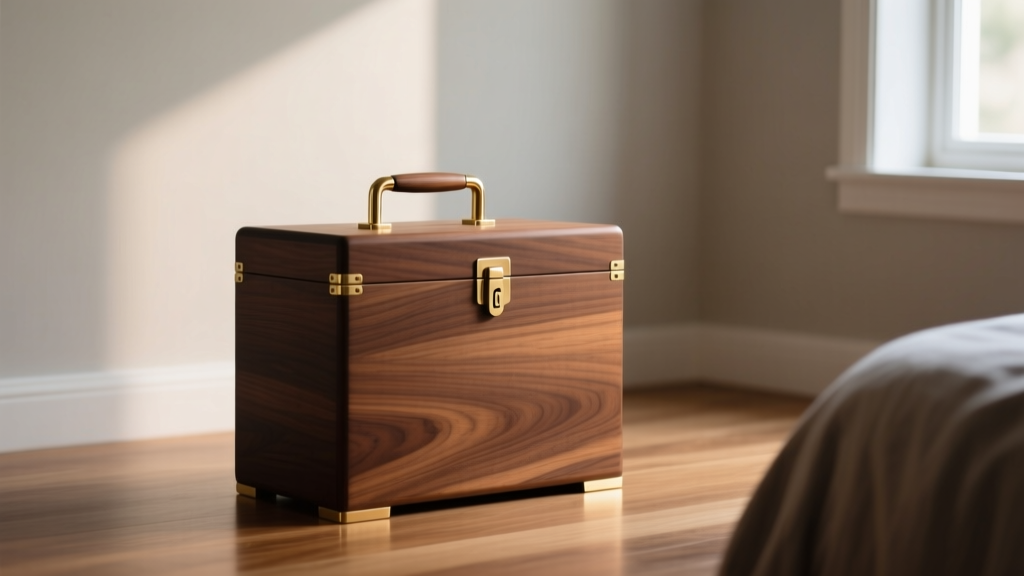
When organizing an extensive collection, a standing wood jewelry box often emerges as the ultimate storage solution. Unlike compact tabletop valets, floor-standing armoires offer massive capacity, dedicated compartments for heavy statement necklaces, and a commanding aesthetic presence. However, the market is currently flooded with deceptive pricing. In 2026, consumers are frequently paying premium hardwood prices for boxes constructed from glued sawdust and synthetic veneers. As a jewelry storage specialist, I routinely see collectors damage their pieces by storing them in poorly constructed, off-gassing wooden cabinets. This comprehensive value assessment breaks down the true cost, material realities, and structural benchmarks you must demand when investing in a standing wood jewelry box.
The Structural Demands of a Standing Wood Jewelry Box
A standing jewelry armoire is not merely a scaled-up version of a bedside ring box. These pieces typically range from 35 to 45 inches in height and feature multiple pull-out drawers, swing-out side doors, and top-lid compartments. This vertical architecture creates significant structural stress. When fully loaded with heavy silver bangles, gold chains, and gemstone-encrusted brooches, the internal shelving can easily bear 20 to 30 pounds of distributed weight.
If the standing wood jewelry box is constructed from low-density fiberboard, the horizontal shelves will inevitably sag over time. Furthermore, the vertical stiles (the side panels) must resist warping from ambient humidity fluctuations. A warped frame leads to misaligned drawers, which in turn crushes delicate chains and bends earring posts. Therefore, assessing the value of these pieces requires looking far beyond the exterior finish and examining the core engineering.
Material Realities: Veneer vs. Solid Hardwoods
The single largest factor dictating the price and longevity of your storage unit is the wood grade. Manufacturers often use ambiguous terms like 'wood finish' or 'crafted from wood' to disguise engineered composites. Here is how the primary materials compare in terms of durability and value.
| Material Grade | Janka Hardness | Avg. Price Range | Longevity & Value Verdict |
|---|---|---|---|
| MDF with Wood Veneer | N/A (Composite) | $60 - $140 | Poor. Prone to chipping, heavy, and hardware screws strip out easily. Avoid for long-term use. |
| Solid Pine / Rubberwood | 380 - 960 lbf | $150 - $280 | Fair. Authentic wood but soft. Dents easily and drawer joints may loosen after 3-5 years. |
| Solid Oak / Maple | 1,290 - 1,450 lbf | $350 - $600 | Excellent. Highly durable, resists sagging, and holds heavy brass hardware securely. |
| Solid Black Walnut | 1,010 lbf | $700 - $1,200+ | Heirloom. Stunning grain, naturally rot-resistant, and appreciates in aesthetic value over time. |
For a standing wood jewelry box that will survive decades of daily use, solid Oak or Maple represents the optimal intersection of structural integrity and budget. While MDF might look identical in a showroom, the moment you need to tighten a loose hinge screw, the MDF will crumble, rendering the door useless.
Hardware, Glides, and Lining: The Hidden Value Killers
A premium wood exterior is worthless if the internal mechanics fail or, worse, chemically damage your jewelry. When assessing a box's true value, inspect these three critical components:
1. Hinges and Screws
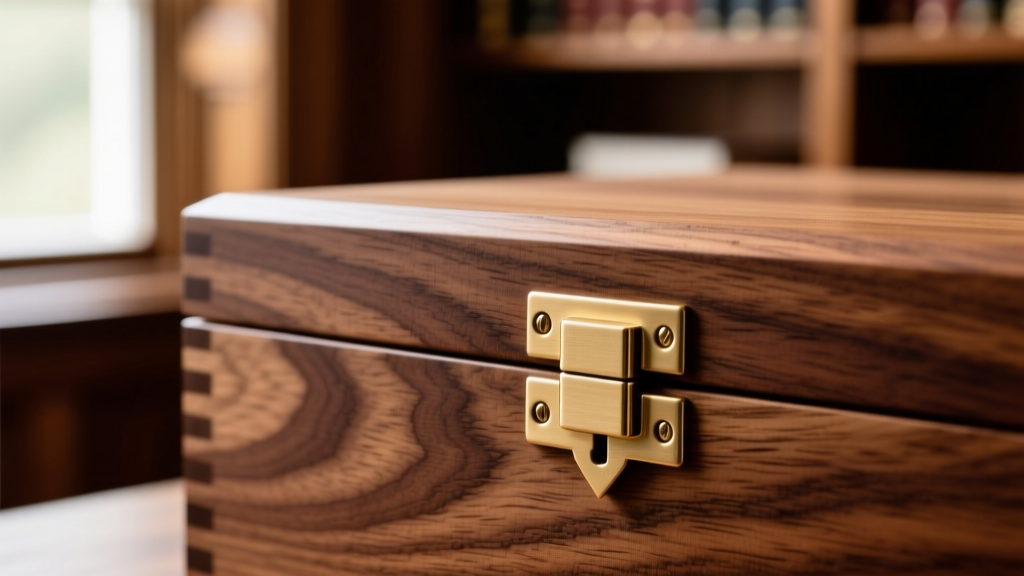
Cheap standing boxes use zinc-alloy or stamped steel hinges that corrode and squeak within months. High-value boxes feature solid extruded brass hinges with steel ball bearings. Additionally, check the screws. If they are driven directly into the wood without threaded brass inserts, the repeated opening and closing of heavy side doors will eventually strip the wood fibers.
2. Drawer Glides
Drawer operation is paramount. Budget models rely on wood-on-wood friction glides, which bind and stick when humidity rises. Mid-tier boxes use side-mounted metal roller tracks. The gold standard for a standing wood jewelry box is a center-mounted, soft-close wooden glide with a felt underbelly, or a heavy-duty side-mount ball-bearing steel track rated for at least 35 pounds. This ensures smooth operation without jolting your gemstones.
3. Anti-Tarnish Lining
This is where many expensive-looking boxes fail catastrophically. Standard synthetic suede or cheap polyester linings can trap moisture and off-gas volatile organic compounds (VOCs) from the adhesive used to bind them to the wood. According to Jewelers of America, silver tarnishes when exposed to sulfur compounds and moisture. A high-value standing box will be lined with Pacific Silvercloth or a zinc-impregnated anti-tarnish flannel. These specialized linings act as a sacrificial anode, absorbing sulfur before it reaches your sterling silver. If the lining smells strongly of chemicals or glue upon opening, do not store porous gems like pearls or opals inside, as warned by the GIA Gem Encyclopedia.
2026 Price Tier Breakdown
To help you budget accurately, here is what you should expect to pay in the current market, and the specific features that justify the cost.
- The Budget Tier ($70 - $150): You will find MDF construction, staple-and-glue joinery, synthetic linings, and pot-metal hardware. Value assessment: Only recommended for fashion jewelry or temporary staging. Not suitable for fine metals.
- The Mid-Range Tier ($250 - $450): This is the sweet spot for value. Expect solid rubberwood or pine frames with oak veneers, metal ball-bearing drawer glides, brass-plated hinges, and basic anti-tarnish flannel linings. Value assessment: Excellent for the everyday collector with a mix of gold, silver, and semi-precious stones.
- The Heirloom Tier ($600 - $1,500+): Solid North American Black Walnut or Cherry, hand-cut dovetail joinery, mortise-and-tenon frame construction, solid brass hardware, and premium Pacific Silvercloth interiors. Value assessment: A true furniture piece that protects high-carat investment pieces and vintage estates.
The Pre-Purchase Inspection Checklist
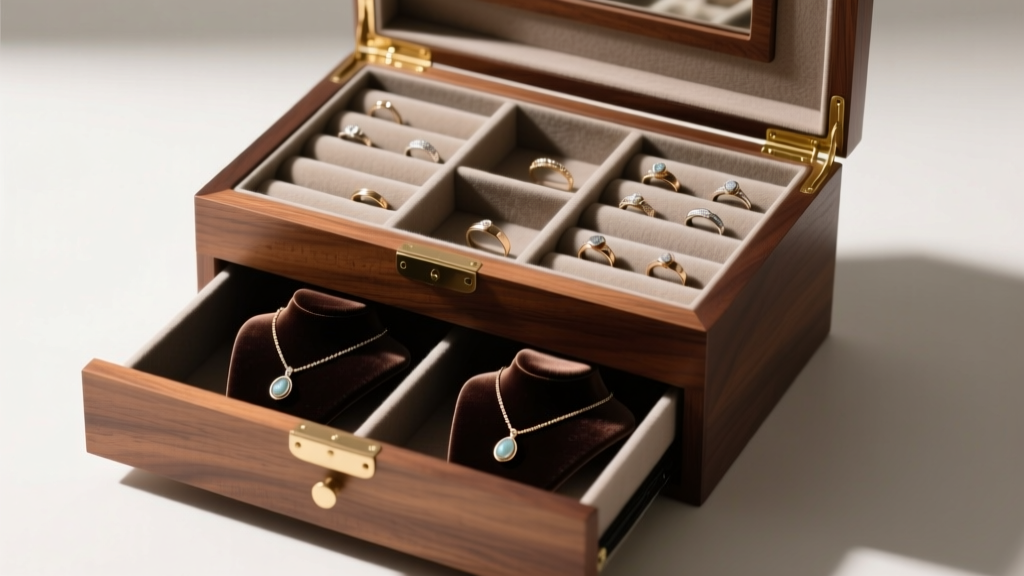
If you are evaluating a standing wood jewelry box in person or reviewing high-resolution images from a custom woodworker, run through this rapid assessment framework:
- The Weight Test: A quality solid wood standing armoire should feel remarkably heavy. If a 40-inch box can be easily lifted by one person, it is likely hollow-core MDF.
- The Drawer Pull: Open the widest, bottom-most drawer. It should glide smoothly without lateral wobbling. Push it closed; it should catch softly, not slam.
- The Sniff Test: Open the main cabinet and close your eyes. You should smell natural wood, tung oil, or beeswax. If you detect sharp, acidic, or plastic odors, the adhesives and lacquers are off-gassing and will damage sensitive organic gems.
- The Corner Inspection: Look at the exterior corners. You want to see interlocking wood (dovetail or box joints). If you see a visible seam filled with wood putty or a thin strip of edge-banding tape, the box is made of particleboard.
Final Verdict: Maximizing Your Investment
A standing wood jewelry box is a significant spatial and financial commitment. The value is not found merely in its ability to hold items, but in its capacity to preserve them in a stable, chemically neutral micro-environment. By rejecting deceptive veneers and demanding solid joinery, proper mechanical glides, and scientifically sound anti-tarnish linings, you transform a simple storage purchase into a long-term preservation strategy for your most prized possessions. In 2026, bypass the budget MDF traps and aim squarely for the solid hardwood mid-tier to secure the best return on your investment.


